Artwork
Maica Domnului cu Pruncul, floarea neveștejită
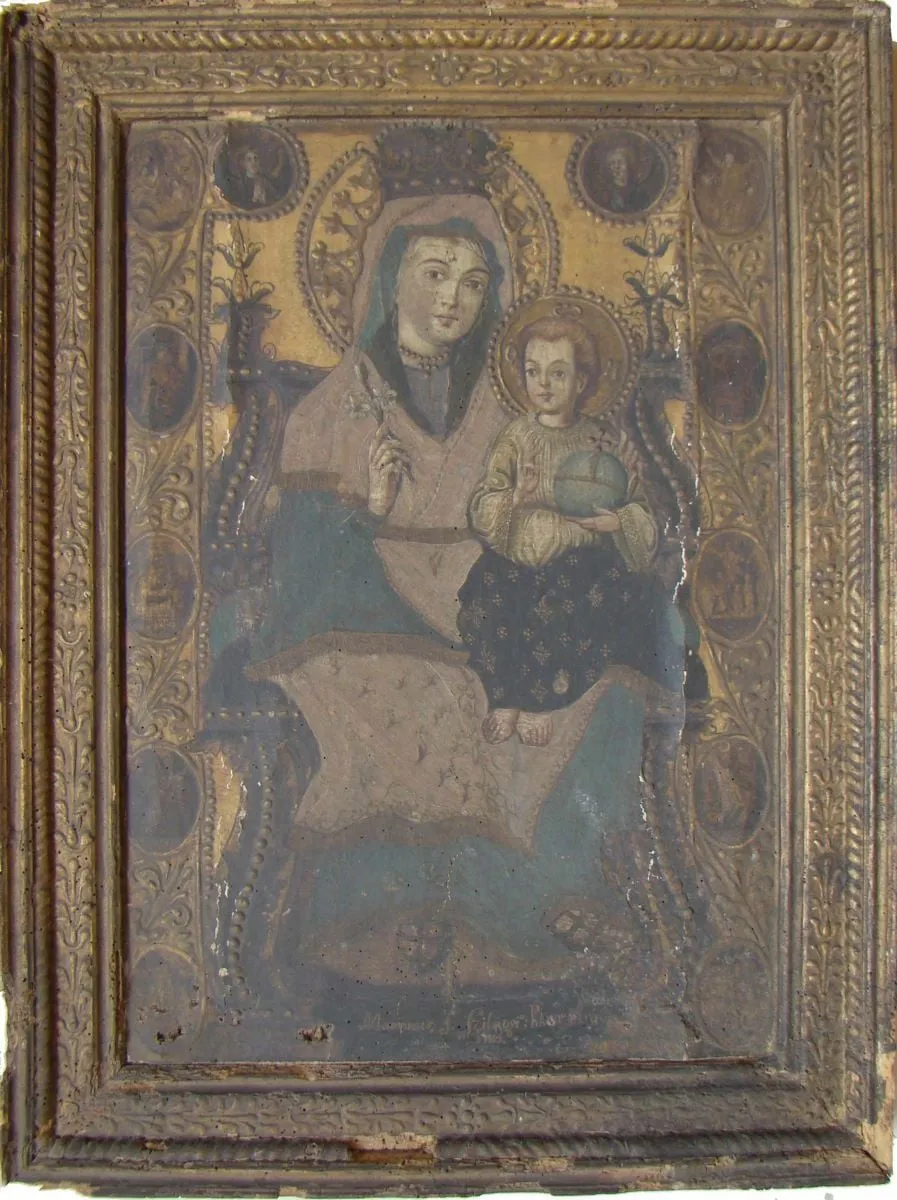
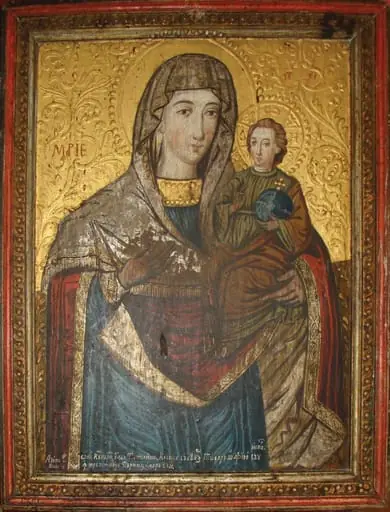
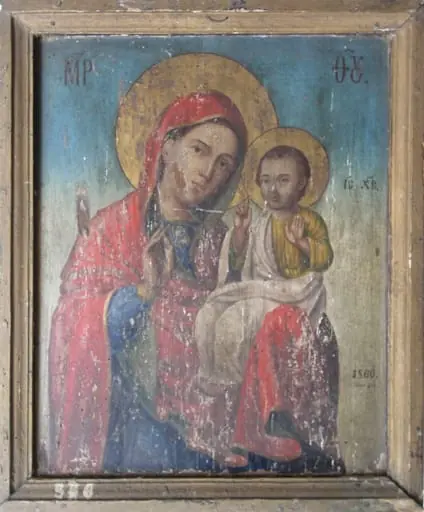
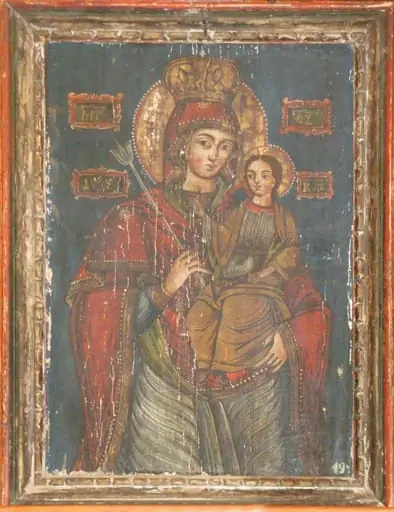
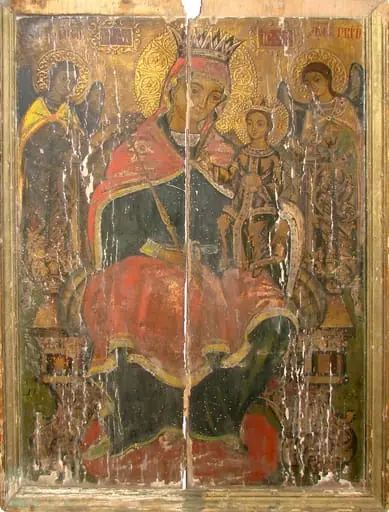
Maica Domnului cu Pruncul, floarea neveștejită is a drawing by the Baroque artist Simion Silaghi-Sălăgeanu. It dates from 1780 and is held in the collection of the Alba Iulia Orthodox Archdiocese.
About this work
Overview
Simion Silaghi‑Sălăgeanu’s 1780 panel, titled *Maica Domnului cu Pruncul, floarea neveștejită*, is part of the collection of the Museum of Ethnography.
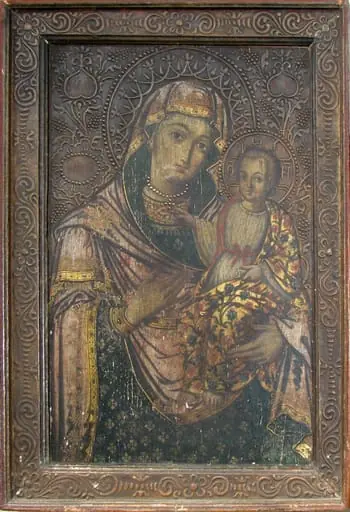
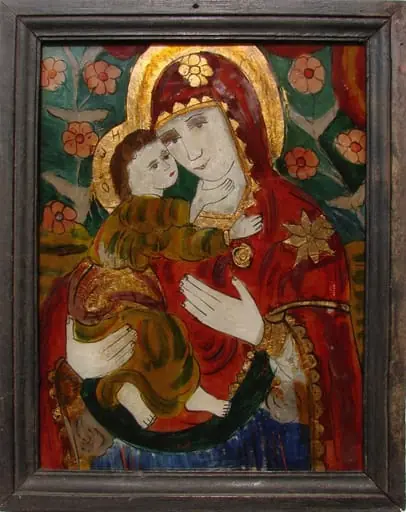
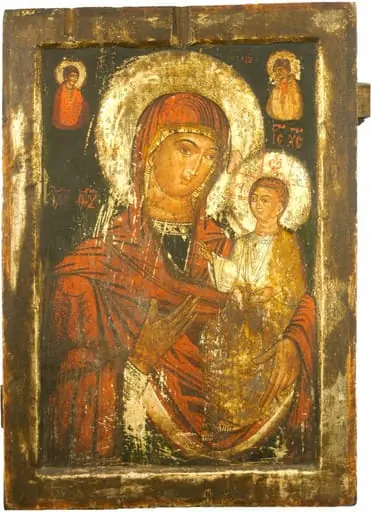
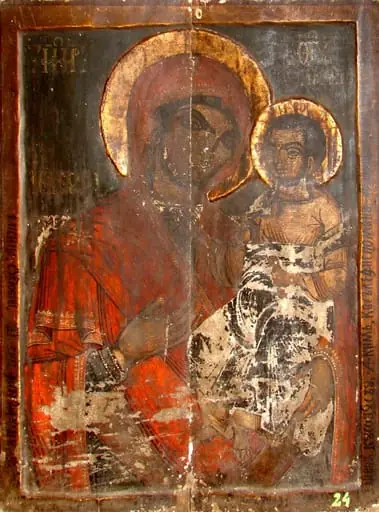
Simion Silaghi‑Sălăgeanu’s 1780 panel, titled *Maica Domnului cu Pruncul, floarea neveștejită*, is part of the collection of the Museum of Ethnography. The work depicts a seated Virgin Mary holding a staff topped with a cross, with the infant Christ on her lap clutching a globe. The surrounding field is filled with gold‑toned circles bearing stylised faces and floral motifs, all set within an intricately carved frame.
Subject & Meaning
The composition presents the traditional iconography of the Theotokos and Child, emphasizing Mary’s role as intercessor and protector. The globe in the child’s hands symbolizes Christ’s dominion over the world, while the cross‑adorned staff underscores his salvific mission. The serene expressions convey a sense of divine calm, inviting contemplation of the holy family’s spiritual authority.
Technique & Style
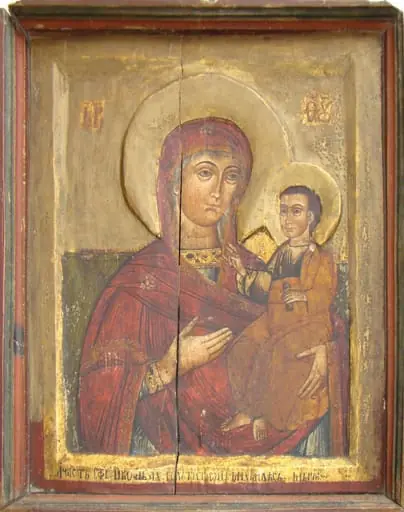
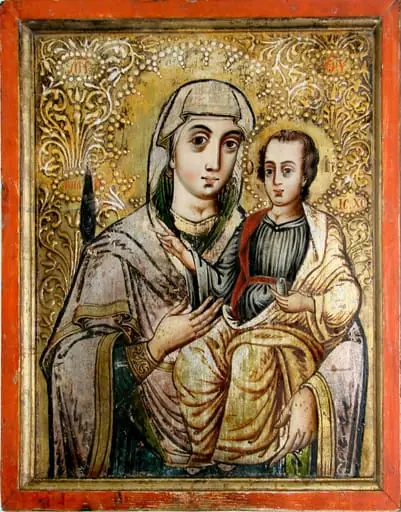
Executed in a medium that retains a muted, aged palette, the piece shows a blend of folk‑art sensibility and ecclesiastical conventions. Gold leaf or pigment outlines the decorative circles and floral patterns, creating a luminous backdrop. The figures are rendered with modest modeling, the drapery indicated by simple folds, and the overall effect balances flat decorative surfaces with a subtle sense of volume.
History & Provenance
Created in 1780, the panel entered the Museum of Ethnography’s holdings at an unspecified later date, where it has been conserved as part of the institution’s representation of religious folk art. Its survival in relatively good condition, despite some fading and surface wear, attests to careful preservation within the museum’s collection.
Context
The work belongs to a tradition of Romanian religious imagery that merged Orthodox iconography with local decorative motifs. During the late 18th century, such panels were often used in domestic chapels or community churches, serving both devotional and didactic purposes. The ornamental circles and floral designs reflect contemporary aesthetic preferences for integrating symbolic and ornamental elements.
Artist & collection
Artist
Religious images fill these drawings and paintings by Simion Silaghi-Sălăgeanu, rooted in Orthodox icon traditions.
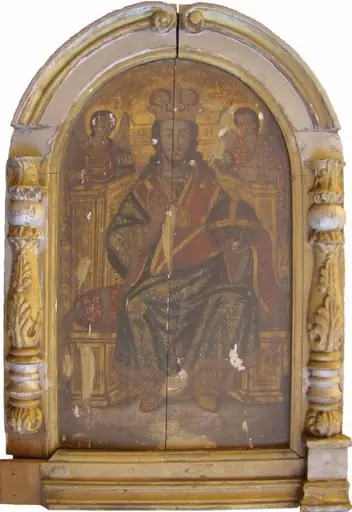
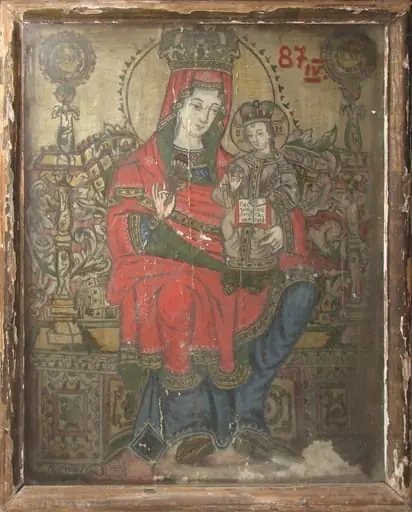 Maica Domnului cu Pruncul, floarea neveștejită
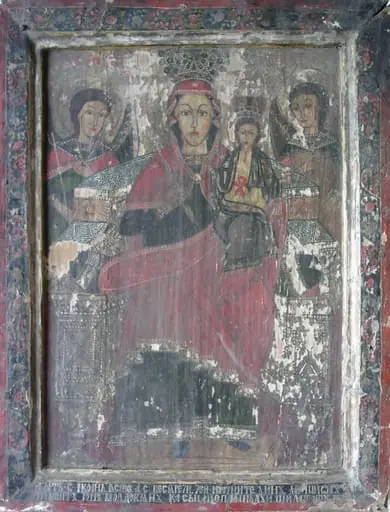 Maica Domnului cu Pruncul
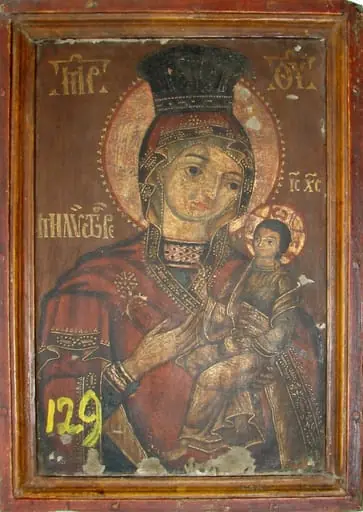 Maica Domnului cu Pruncul
 Maica Domnului cu Pruncul
 Maica Domnului cu Pruncul, floarea neveștejită
 Maica Domnului cu Pruncul
 Maica Domnului cu Pruncul
 Maica Domnului cu Pruncul
 Maica Domnului cu Pruncul
 Maica Domnului cu Pruncul
 Maica Domnului cu Pruncul
 Maica Domnului cu Pruncul