Artwork
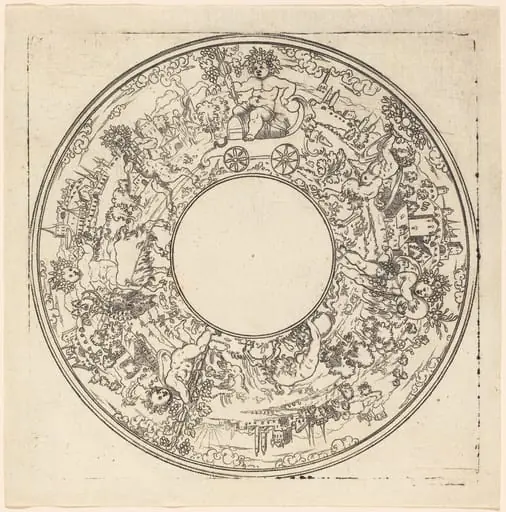
Triumphal Procession of Bacchus
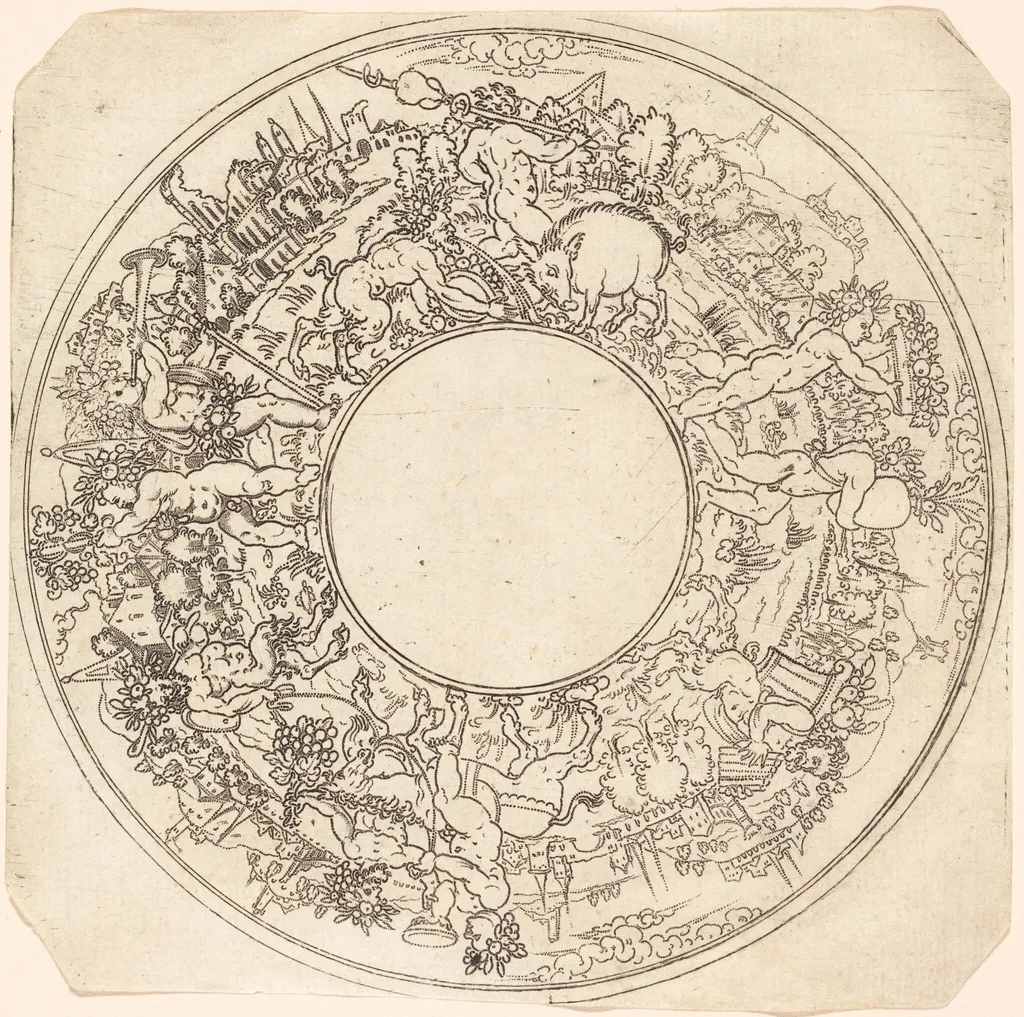
Triumphal Procession of Bacchus is an ink print by the Renaissance artist Jonas Silber. It dates from 1580 and is held in the collection of the National Gallery of Art.
About this work
Overview
Executed through engraving and punch work on laid paper, with selective black ink retouching, the image channels dense visual energy.
Created in 1580 by Jonas Silber, this print depicts a mythological procession in the form of a circular composition. Executed through engraving and punch work on laid paper, with selective black ink retouching, the image channels dense visual energy. The design is organized around a central void, surrounded by a tightly packed ring of figures, animals, and ornamental forms, all rendered with fine, controlled lines and meticulous hatching.
Subject & Meaning
The scene alludes to the mythological entourage of Bacchus, god of wine and revelry, though no central figure is clearly defined. The absence of a focal deity in the empty center may suggest the chaotic, all-encompassing nature of the celebration. The swirling mass of participants—humans, satyrs, beasts, and fantastical creatures—evokes a ritualistic, uncontained festivity, emphasizing movement and abundance over narrative clarity.
Technique & Style
Silber employed fine-line engraving and punch tools to incise the copper plate, creating intricate textures through cross-hatching and stippling. The dark, precise lines and dense patterning produce a sense of rhythmic motion. The use of a circular format enhances the illusion of continuous procession, while the central void draws attention to the surrounding density, a compositional choice that heightens the work’s hypnotic, almost kaleidoscopic effect.
History & Provenance
The print originates from the late 16th-century German printmaking tradition, where mythological themes were popular among collectors. Jonas Silber, active in Nuremberg, was known for his detailed engravings, though few of his works survive in significant numbers. This piece likely circulated as a decorative print, valued for its craftsmanship rather than its narrative, and may have been owned by humanist or artistic circles of the period.
Context
In the late Renaissance, engraved circular compositions often served as decorative or allegorical objects, reflecting contemporary interest in classical mythology and optical complexity. Silber’s work aligns with Northern European traditions that favored intricate detail over grandeur. The absence of a clear narrative center may reflect a shift toward decorative abstraction, where visual rhythm and technical virtuosity took precedence over storytelling.
Legacy
Though Silber’s name remains obscure, this print exemplifies the technical precision and imaginative density characteristic of late 16th-century German engraving. Its circular format and layered imagery anticipate later explorations of visual infinity in printmaking. The work stands as a quiet testament to the skill of artisans who translated myth into intricate, hand-carved surfaces before the age of mechanical reproduction.
Artist & collection


 Neptune's Kingdom
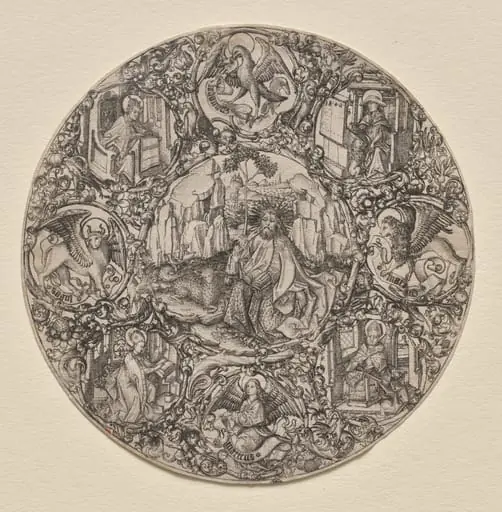 St. John the Baptist Surrounded by the Evangelists and Four Fathers of the Latin Church
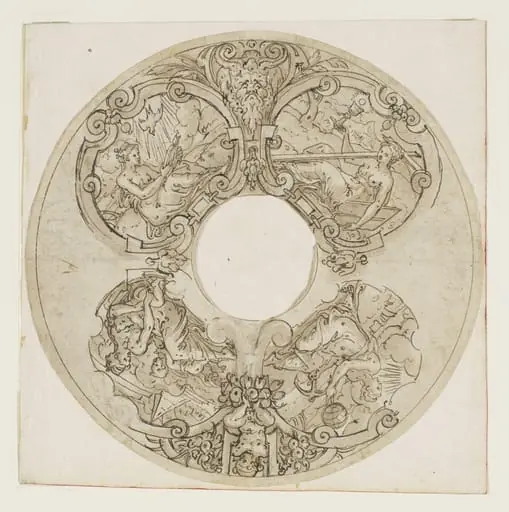 Design for the decoration of the underside of a tazza
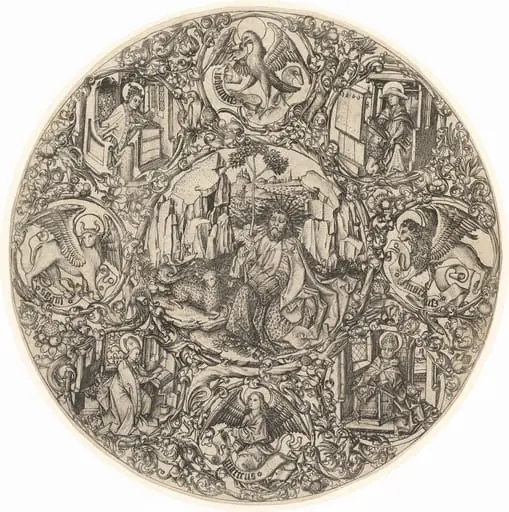 Saint John the Baptist in the Wilderness with the Lamb of God, Surrounded by the Symbols of the Evangelists and the Four Fathers of the Church
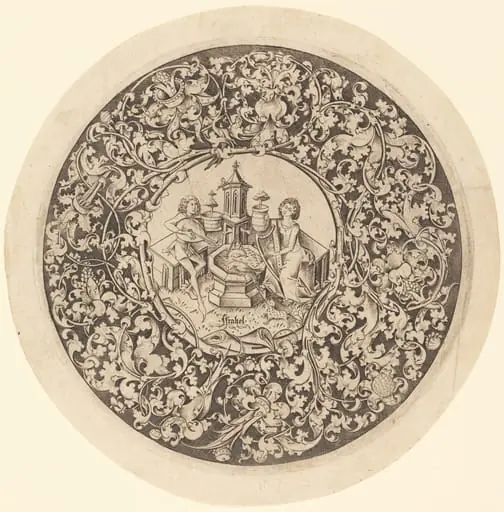 Circular Ornament with Musicians Playing near a Well
 Design for a Standing Dish
 Saint Michael Defeating Heresy and Satan