Artwork
Triumphal Procession of Bacchus
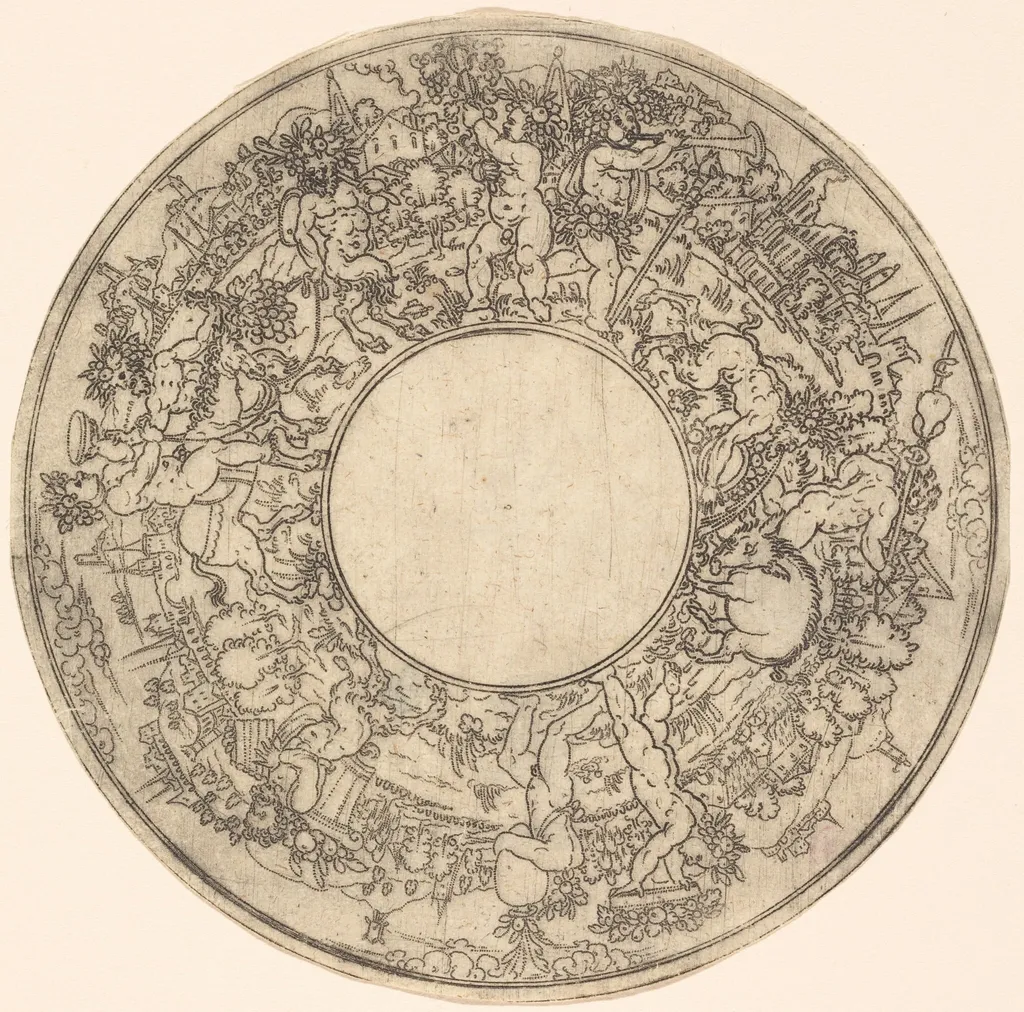
Triumphal Procession of Bacchus is an ink print by the Renaissance artist Jonas Silber. It dates from 1580 and is held in the collection of the National Gallery of Art.
About this work
Overview
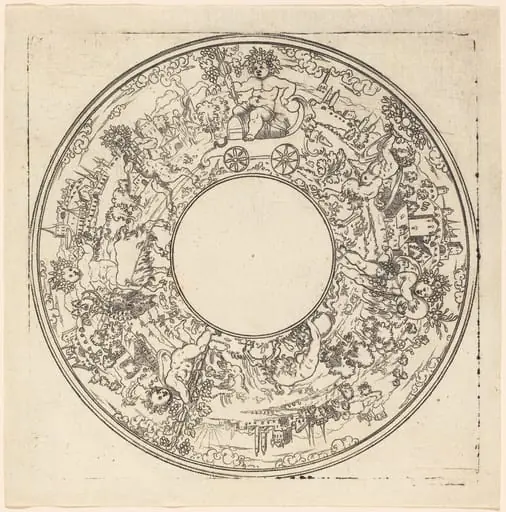
The work titled *Triumphal Procession of Bacchus* is a print created by Jonas Silber in 1580. Executed as an engraving and punch engraving on laid paper, the composition is circular, featuring a central medallion surrounded by an outer ring populated with a variety of figures and objects that convey a festive, mythological scene.
Subject & Meaning
The engraving depicts a Bacchic procession, a celebration of the Roman god of wine. Within the outer circle, a bearded man brandishes a large club, a crowned woman stands beside a figure holding a goat, and assorted symbols such as a shield, spear and clusters of grapes reinforce the themes of revelry, fertility and the rustic aspects of the deity’s cult.
Technique & Style
Silber employed fine, intersecting lines typical of Renaissance printmaking, combining traditional engraving with punch techniques to achieve texture and depth. The dense arrangement of overlapping figures creates a sense of motion, while the meticulous hatching renders the drapery, metalwork and foliage with a high degree of realism characteristic of the period’s classical revival.
Context
Produced during the late Renaissance, the print reflects the era’s fascination with antiquity and mythological subjects. Its circular format and elaborate detailing echo contemporary celebratory motifs used in courtly festivals and printed ephemera, illustrating how print media disseminated classical iconography beyond the confines of painted panels.
Artist & collection


 Neptune's Kingdom
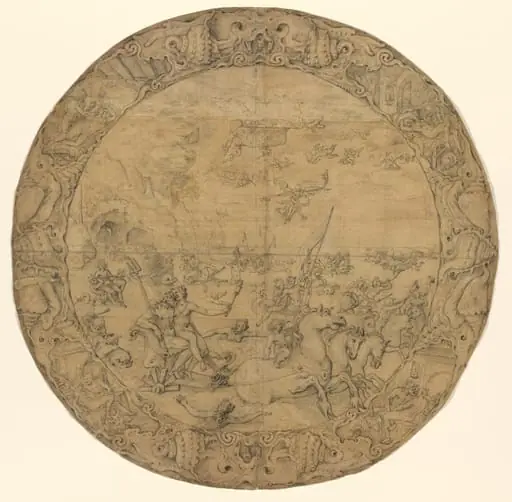 Design for a Standing Dish
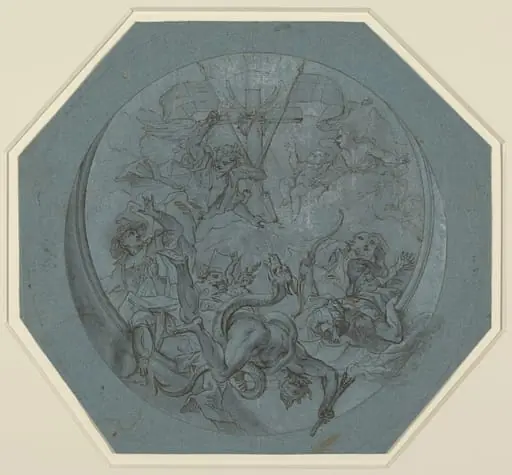 Saint Michael Defeating Heresy and Satan
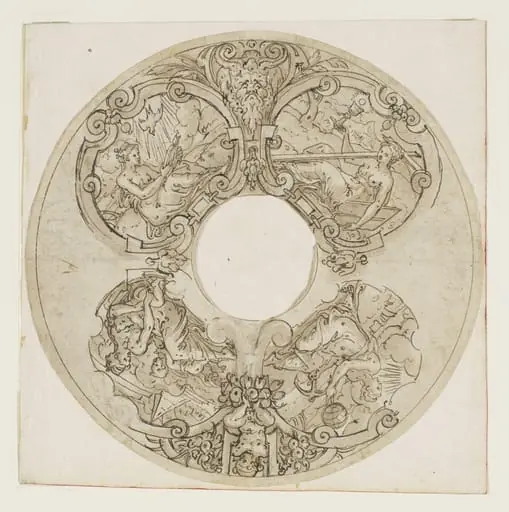 Design for the decoration of the underside of a tazza
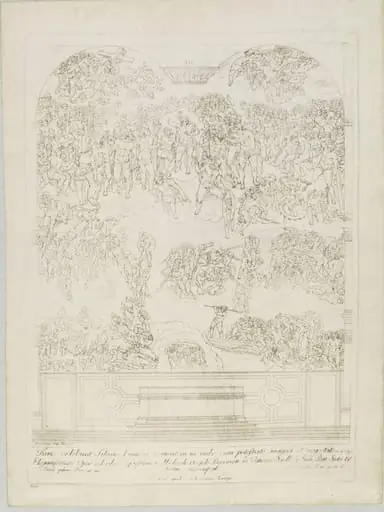 Last Judgment
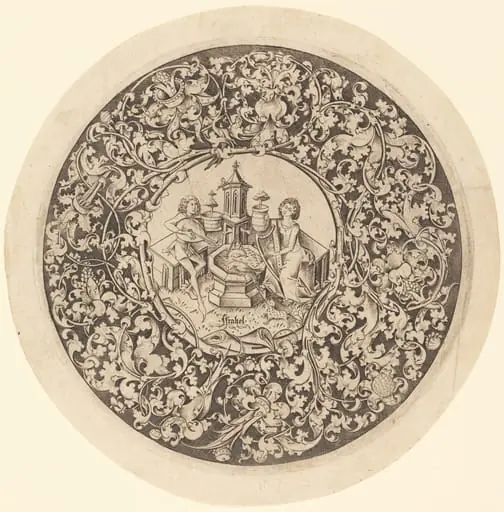 Circular Ornament with Musicians Playing near a Well
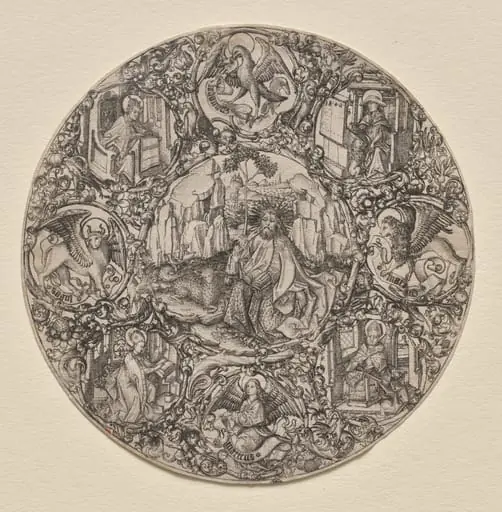 St. John the Baptist Surrounded by the Evangelists and Four Fathers of the Latin Church
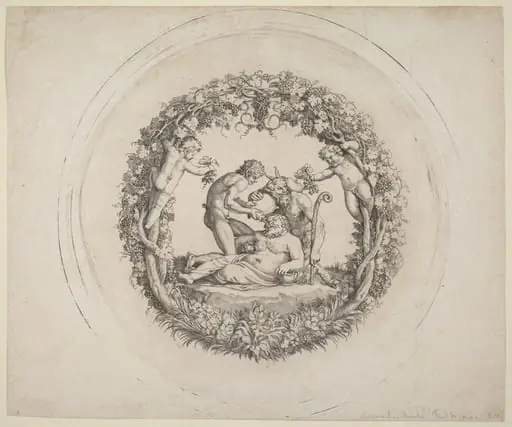 The Drunken Silenus ("The Tazza Farnese")
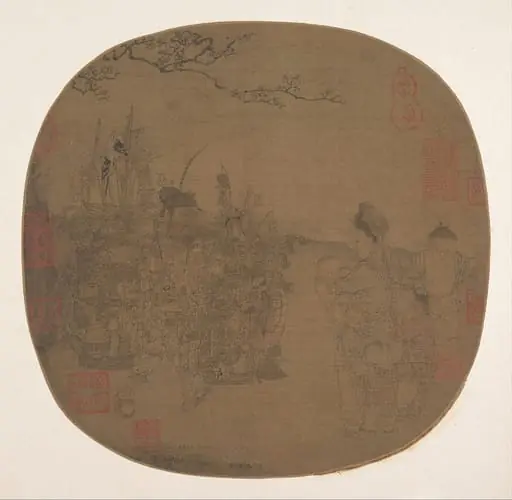 元/明 佚名 絹本設色 貨郎嬰戲圖 扇頁|Knickknack Peddler