Artwork
Sf. Nicolae
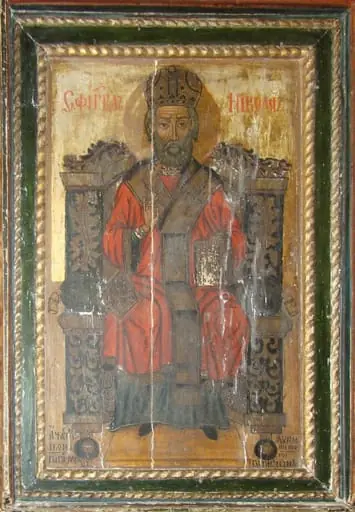
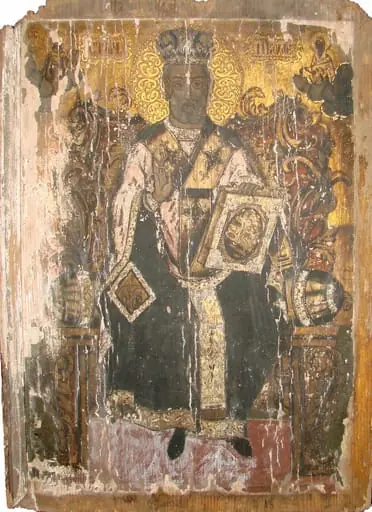
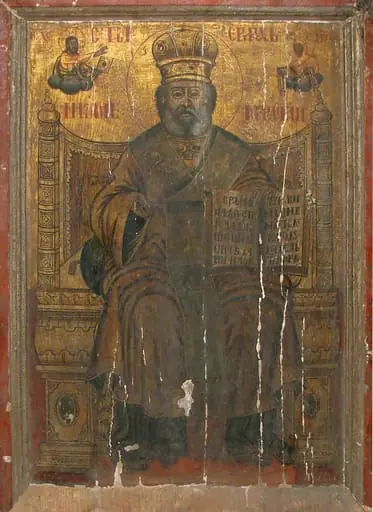
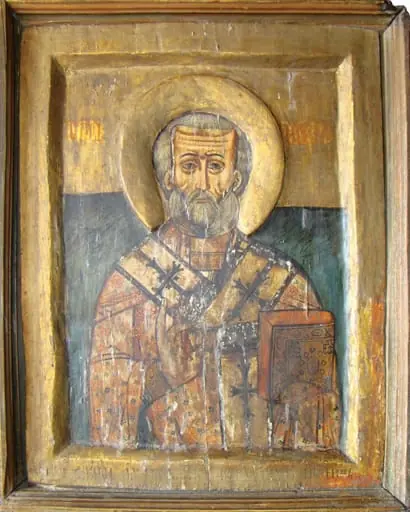
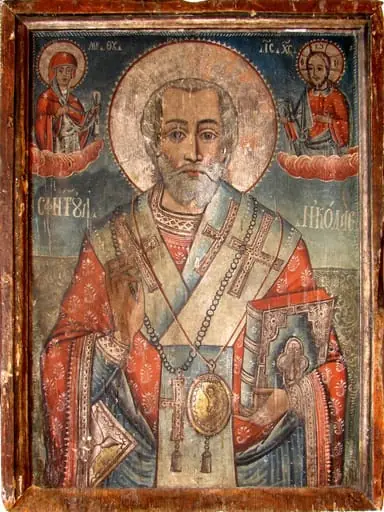
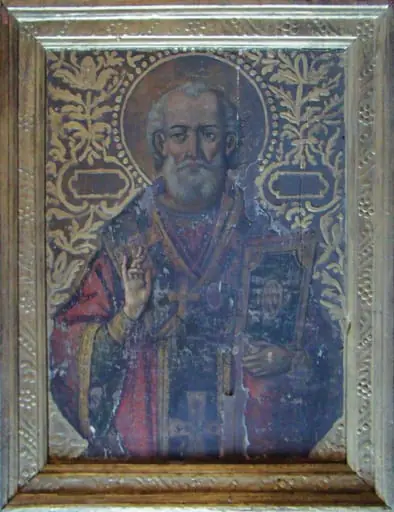
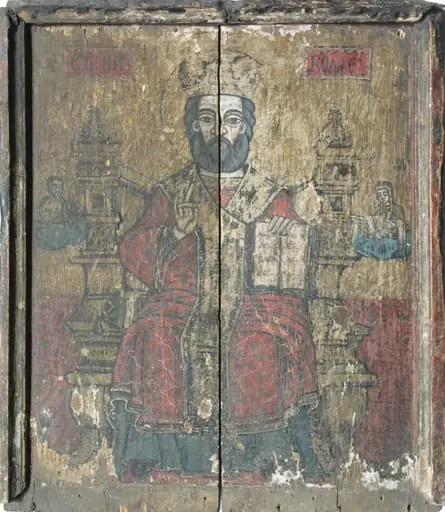
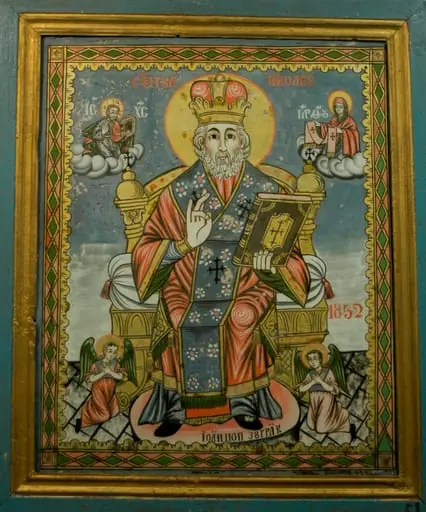
Sf. Nicolae is a drawing by the Romanticist artist Simon din Bălgrad. It dates from 1780 and is held in the collection of the Alba Iulia Orthodox Archdiocese. Sf.
About this work
Overview
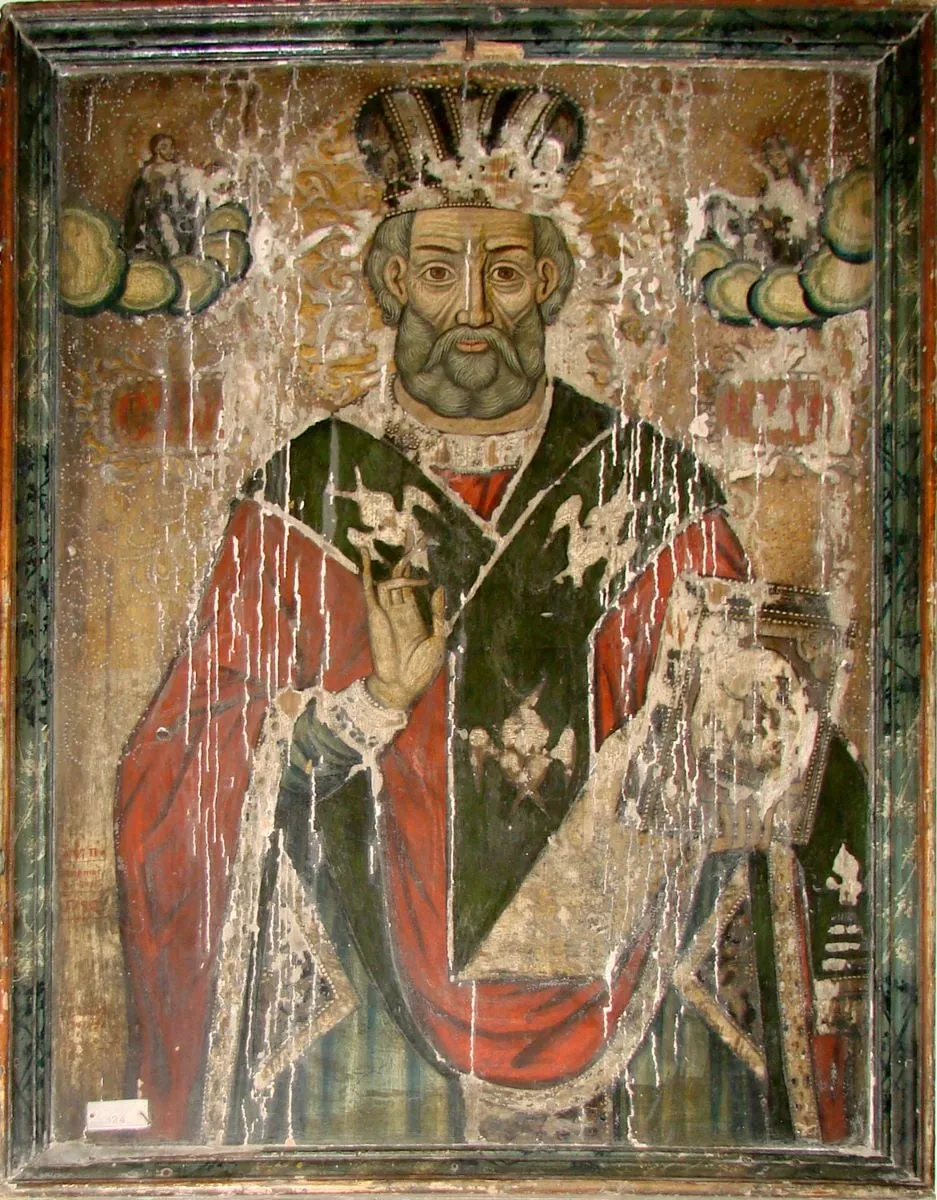
Surface deterioration, including cracking and pigment loss, reflects its age and use in a religious context, likely within a local Orthodox community.
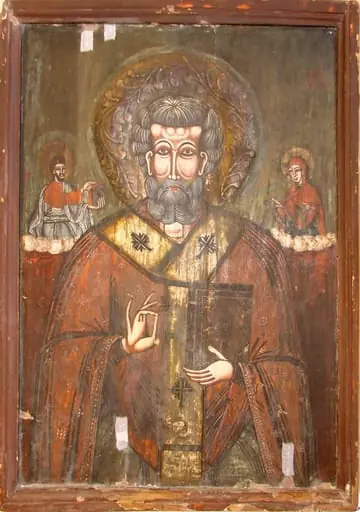
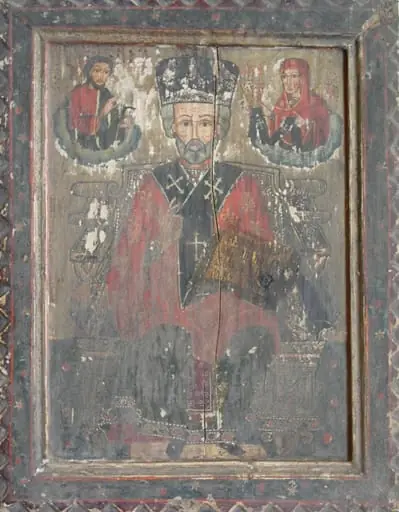
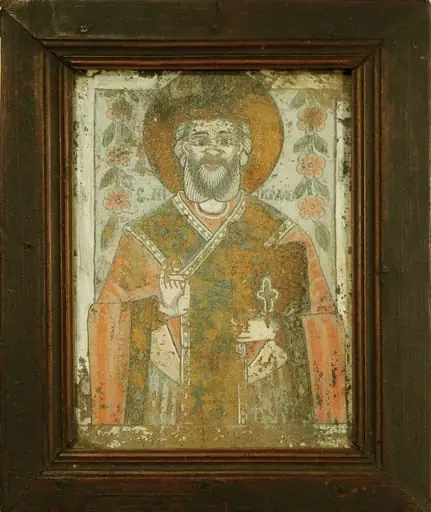
Sf. Nicolae is an 18th-century devotional painting attributed to Simon din Bălgrad, dated around 1780. It is preserved in the Museum of Ethnography. The work portrays a solemn male figure in ecclesiastical garments, rendered with traditional iconographic conventions. Surface deterioration, including cracking and pigment loss, reflects its age and use in a religious context, likely within a local Orthodox community.
Subject & Meaning
The figure is Saint Nicholas, recognized by his bishop’s attire: a red mantle, ornate vestment, and ceremonial staff. The crown signifies his spiritual authority, not royal status. His direct gaze and composed expression align with Orthodox iconography, where saints serve as intercessors. The image was likely used for private or communal veneration, reinforcing faith through visual presence rather than narrative storytelling.
Technique & Style
The painting employs tempera or oil on wood, typical of regional religious art in Transylvania. Colors are muted yet warm, with gold-toned backgrounds suggesting divine light. Brushwork is deliberate but not refined, indicating an artisanal rather than academic approach. The style draws from Byzantine traditions, adapted locally, with minimal spatial depth and emphasis on symbolic form over naturalism.
History & Provenance
Created in the late 18th century in the region of Transylvania, the painting likely originated in a village church or household shrine. It entered the Museum of Ethnography’s collection as part of efforts to document folk religious practices. Its condition suggests prolonged exposure to environmental and ritual use, including smoke from candles and handling during feast days.
Context
In 18th-century Transylvania, Orthodox Christian communities maintained distinct visual traditions despite Habsburg and Protestant influences. Saint Nicholas was a widely venerated figure, associated with protection and charity. This painting reflects a localized expression of faith, where iconography remained rooted in medieval models, even as broader European art movements shifted toward secularism and realism.
Legacy
The painting stands as a testament to the persistence of Orthodox devotional practices in rural Eastern Europe. It contributes to scholarly understanding of how religious imagery was produced and used outside urban centers. Its preservation highlights the cultural value placed on vernacular art, offering insight into the spiritual life of communities often overlooked in mainstream art history.
Artist & collection
Artist
These drawings come from a 18th-century Romanian church tradition. They show scenes from the life of Jesus and Mary, like Botezul lui Iisus and Învierea lui Iisus, drawn in dark ink on paper. The figures are posed…