Artwork
Sf. Nicolae
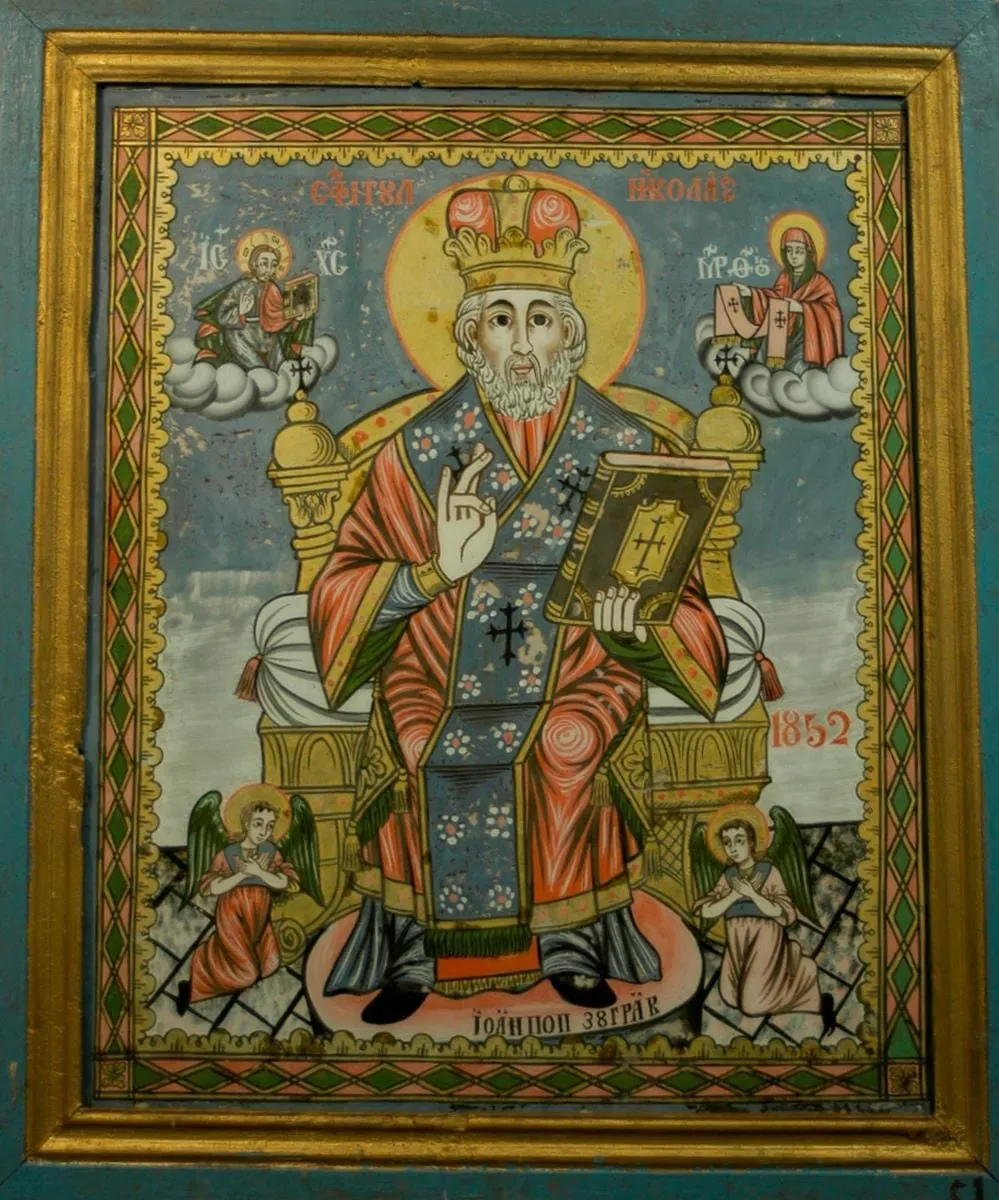
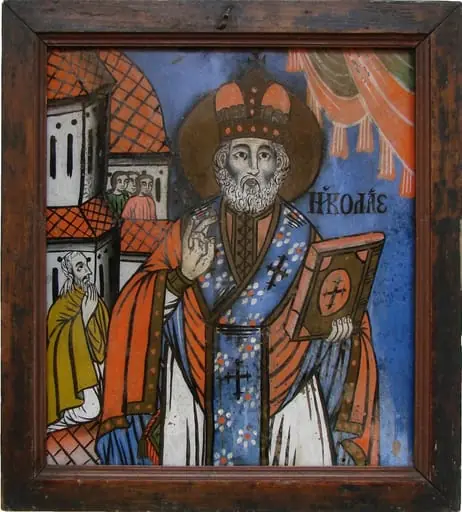
Sf. Nicolae is an unspecified painting by the Baroque artist Ioan Pop de la Făgăraș. It dates from 1852 and is held in the collection of the Alba Iulia Orthodox Archdiocese.
About this work
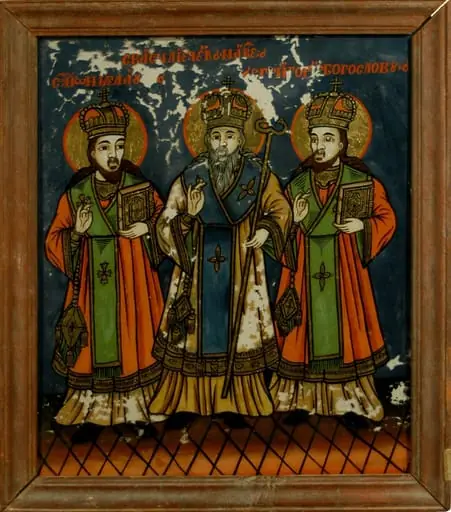
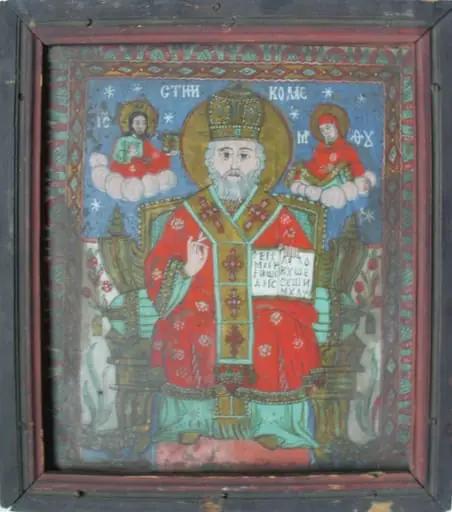
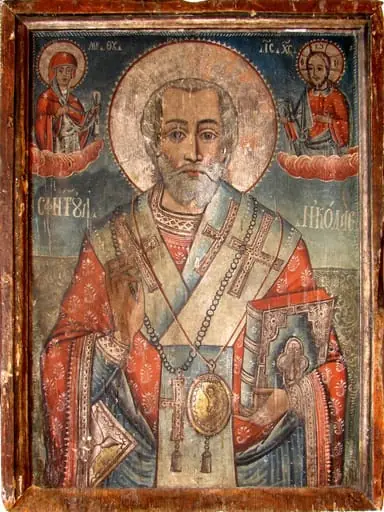
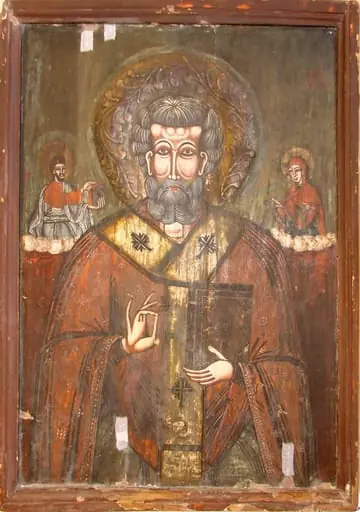
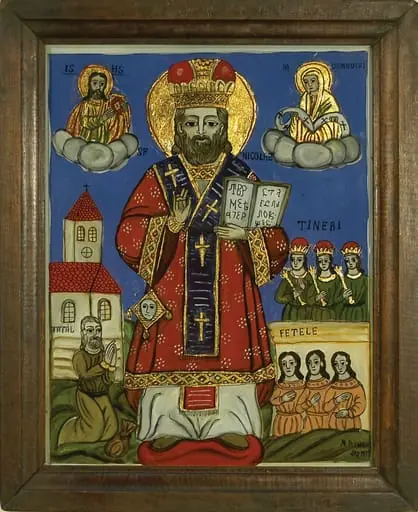
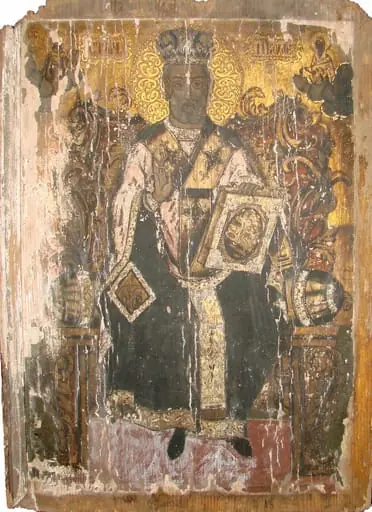
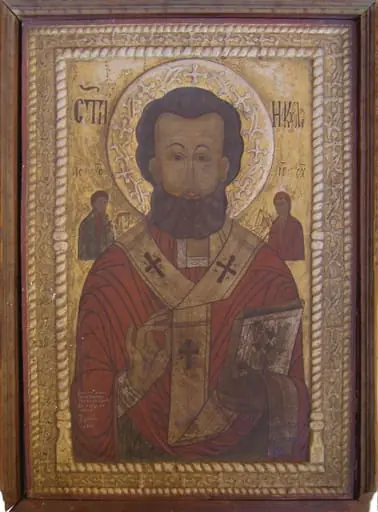
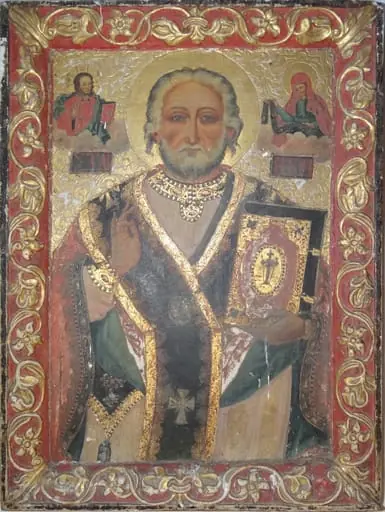
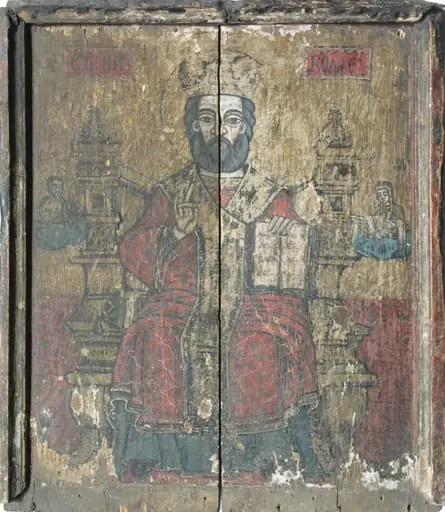
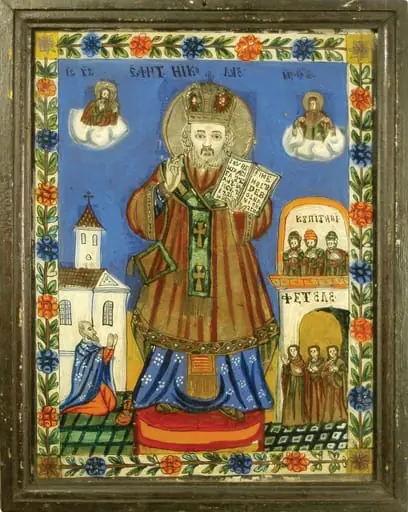
This painting shows a bearded man in bright robes and a golden crown, holding a book and blessing with one hand.
This painting shows a bearded man in bright robes and a golden crown, holding a book and blessing with one hand. Around him, smaller figures float on clouds or kneel below, all outlined in bold black. The colors are flat and vivid—deep blues, fiery reds, and gold—with a dark border framed in gold.
The man’s face glows with a golden halo, and the text above his head names him. The year 1852 is written in the corner, hinting at when this was made.
Look up composition next to see how artists arrange figures like this.
Overview
Created in 1852 by the Romanian painter Ioan Pop de la Făgăraș, this panel depicts a saintly figure in a richly colored composition now conserved by the Museum of Ethnography. The central character, a bearded man crowned in gold, holds a book and raises a hand in benediction, while surrounding figures are positioned on clouds or kneeling below, all delineated with strong black outlines.
Subject & Meaning
The work portrays Saint Nicholas, identifiable by the golden halo and the inscription of his name above his head. The saint’s gesture of blessing and the presence of the book suggest his role as a protector and patron of travelers and merchants, themes traditionally associated with his cult in Eastern Orthodox iconography.
Technique & Style
Pop de la Făgăraș employs a flat, vivid palette of deep blues, intense reds, and luminous golds, each area bounded by a dark, gold‑framed border. The figures are rendered with bold, black contour lines that emphasize their silhouettes, a stylistic choice reminiscent of folk‑art conventions while also reflecting the influence of academic painting of the mid‑nineteenth century.
History & Provenance
The painting was produced in the mid‑19th century, a period of growing national consciousness in Transylvania. After its creation, it entered the collection of the Museum of Ethnography, where it remains on display, providing insight into the visual language of religious devotion and local artistic practice of the era.
Artist & collection
Artist
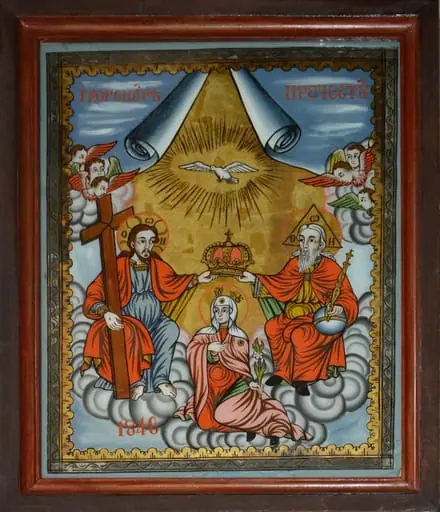
Ioan Pop de la Făgăraș painted religious scenes in the mid-1800s, like *Încoronarea Fecioarei* (1846) and *Duminica Floriilor*.