Artwork
Chevalier
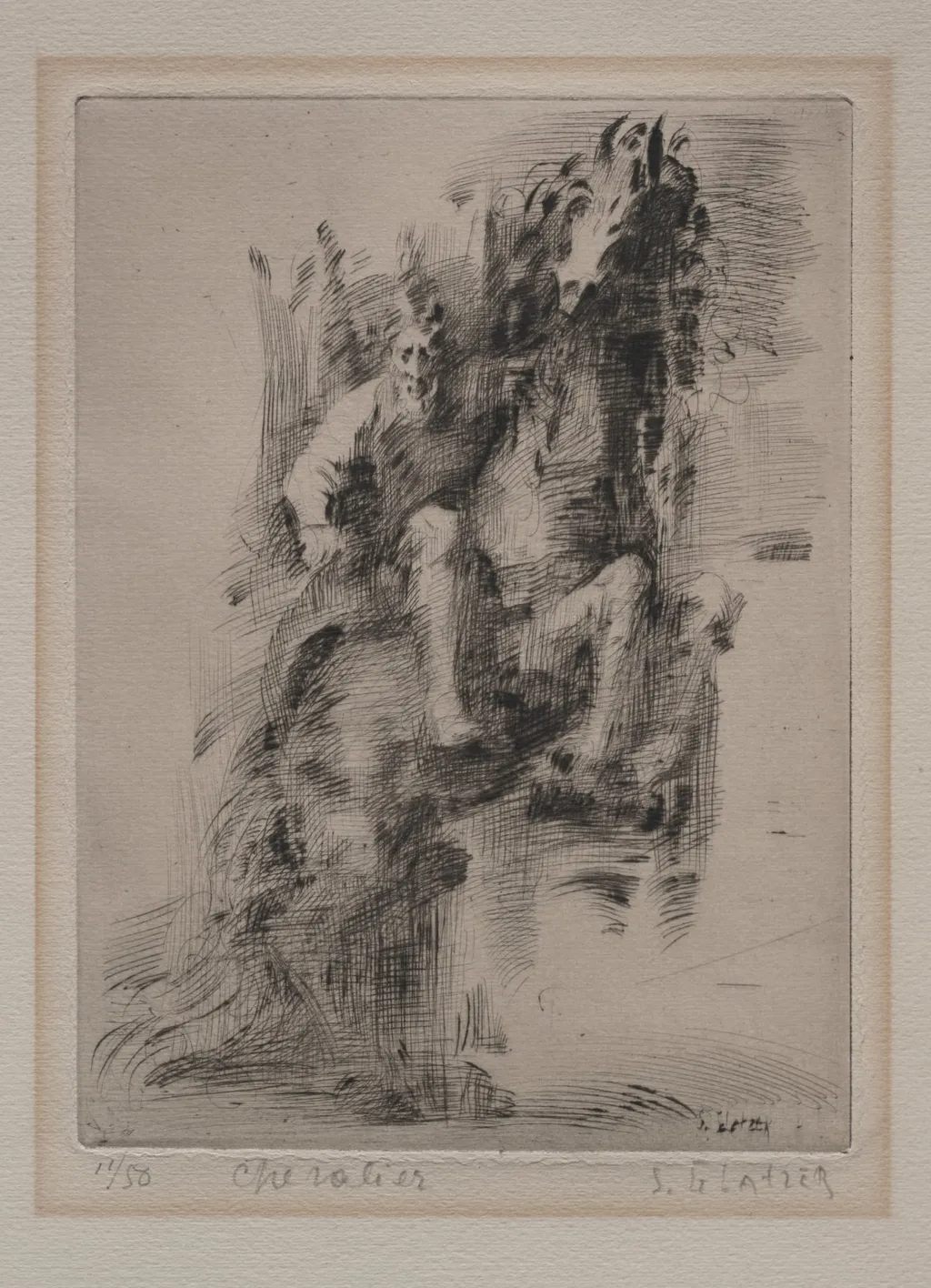
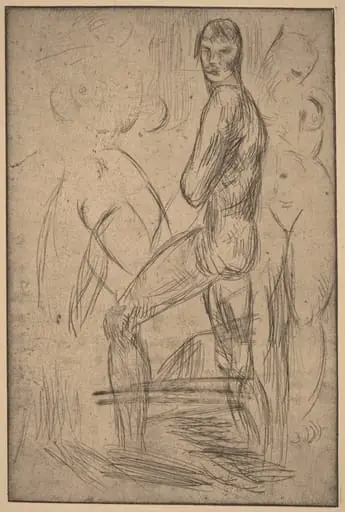
Chevalier is a print by Simon Glatzer. It dates from 1930 and is held in the collection of the Cleveland Museum of Art.
About this work
Overview
Chevalier, created in 1930 by Simon Glatzer, is a print that captures a rider on horseback in a dynamic, loosely rendered composition.
Chevalier, created in 1930 by Simon Glatzer, is a print that captures a rider on horseback in a dynamic, loosely rendered composition. Held in the collection of The Cleveland Museum of Art, the work conveys motion through its energetic lines and textured surface. The figure and animal are suggested rather than fully defined, emphasizing gesture over detail. The medium’s inherent roughness enhances the sense of immediacy and transient action.
Subject & Meaning
The subject is a solitary equestrian, his face hidden and posture forward-leaning, suggesting urgency or focus. The horse’s raised head and taut stance imply readiness to move, reinforcing a sense of momentum. The anonymity of the rider invites interpretation—perhaps a soldier, a hunter, or a figure from memory—without anchoring the image to a specific narrative. The ambiguity deepens the emotional resonance of the scene.
Technique & Style
Glatzer employs a sketch-like approach with visible, expressive marks and uneven shading. The contrast between the light background and the dark, fragmented forms creates a subtle chiaroscuro effect, lending volume without traditional modeling. The texture is deliberately raw, with uneven ink application and exposed paper, rejecting polish in favor of spontaneity. This method aligns with early 20th-century interest in capturing essence over finish.
History & Provenance
The work entered The Cleveland Museum of Art’s collection as part of its broader engagement with modern prints from the interwar period. While details of its early ownership are not widely documented, its inclusion in the museum’s holdings reflects institutional interest in lesser-known European artists who explored expressive figuration during the 1920s and 1930s. The print’s condition suggests it was produced in a limited run, consistent with artist-led printmaking practices of the time.
Context
Created in 1930, Chevalier emerged during a period when European artists were redefining representation through abstraction and emotional intensity. Glatzer’s work aligns with contemporaries who favored expressive line and tonal contrast over realism, influenced by Expressionism and the legacy of German printmaking. The absence of detailed context in the image reflects a broader trend toward psychological or symbolic interpretation in interwar visual culture.
Legacy
Though Simon Glatzer is not widely known today, Chevalier remains a representative example of the expressive printmaking practiced by mid-century European artists seeking to convey movement and mood through minimal means. Its presence in a major American museum underscores its role as a quiet but significant artifact of a generation that valued emotional truth over technical refinement. The work continues to be studied for its economy of form and evocative use of texture.
Artist & collection

 Mountains (Berge)
 Mountain Stream with Bathers
 Plate with Sketches
 Tiger Sleeping at the Entrance to its Lair (Tigre couché à l'entrée de son antre)
 Untitled
 Untitled
 Untitled
 Akt mit hochgehobenem Hemd (Woman Undressing)
 Man on his Back, Nude, Second State
 Untitled
 Untitled
 Standing Male Nude and Two Female Nudes