Artwork
Pir Panjal Pass into Cashmere, 11,400 feet
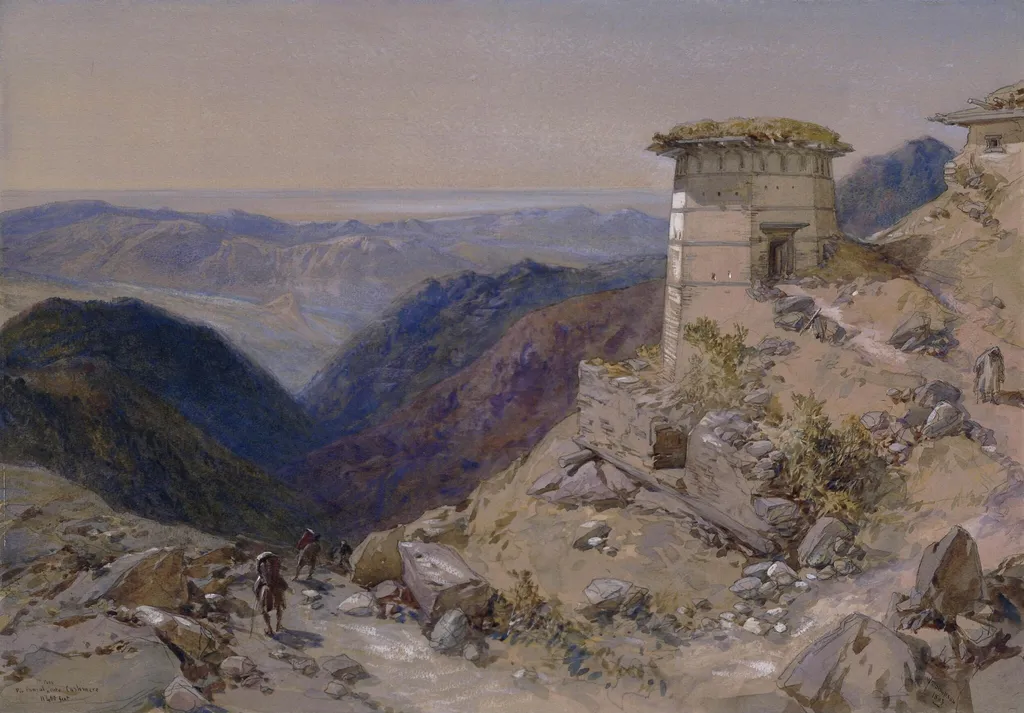
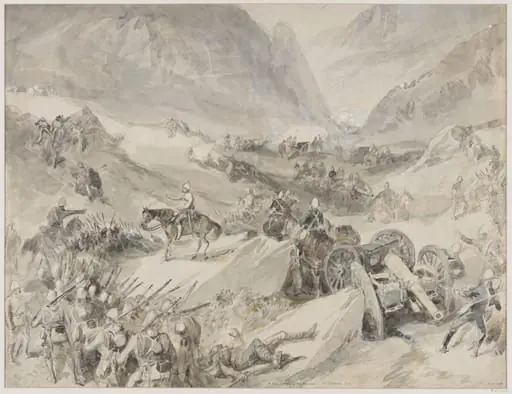
Pir Panjal Pass into Cashmere, 11,400 feet is a watercolor work on paper by the Impressionist artist William R.I. F.R.G.S. Simpson. It dates from 1863 and is held in the collection of the Victoria and Albert Museum. William Simpson's watercolour captures the Pir Panjal Pass at 11,400 feet, a high-altitude route through the Himalayas.
About this work
Overview
William Simpson's watercolour captures the Pir Panjal Pass at 11,400 feet, a high-altitude route through the Himalayas.
William Simpson's watercolour captures the Pir Panjal Pass at 11,400 feet, a high-altitude route through the Himalayas. The scene presents a quiet journey along a narrow trail, framed by rugged peaks and distant valleys. Rendered in soft, earth-toned pigments, the work conveys the stillness of the landscape without dramatic flourish, reflecting the artist’s observational approach to remote terrain.
Subject & Meaning
The painting portrays travelers moving along a winding path beneath a watchtower, suggesting the pass as a point of transit rather than a destination. The human figures are small against the vastness of the mountains, emphasizing the scale of nature and the quiet persistence of movement through difficult terrain. There is no narrative climax—only the subdued rhythm of travel in a remote region.
Technique & Style
Simpson employed delicate watercolour washes to suggest form and atmosphere, avoiding bold outlines. Muted browns, greys, and pale blues dominate, creating a restrained tonal harmony. The sky is lightly glazed with cloud formations, while the mountains recede into hazy distance through subtle gradations of pigment. The technique prioritizes atmospheric effect over detailed realism.
History & Provenance
Created during Simpson’s travels in northern India in the 1860s, the work stems from his commission to document British military and geographic interests in the region. As a war artist and illustrator, he produced numerous sketches and watercolours of Himalayan routes, many later used in publications. This piece likely originated from field studies later refined in his studio.
Context
Simpson’s depiction aligns with 19th-century British imperial documentation, where landscapes served both cartographic and cultural purposes. The pass was a strategic corridor between regions under colonial influence. Unlike romanticized Alpine scenes, his work avoids idealization, instead recording topography and human presence with restrained accuracy.
Legacy
The painting contributes to a body of work that preserved visual records of Himalayan geography before widespread modern mapping. While not widely exhibited today, it remains a reference for historians studying colonial-era visual documentation. Its quiet realism distinguishes it from later romantic or impressionist treatments of mountain scenery.
Artist & collection
Artist
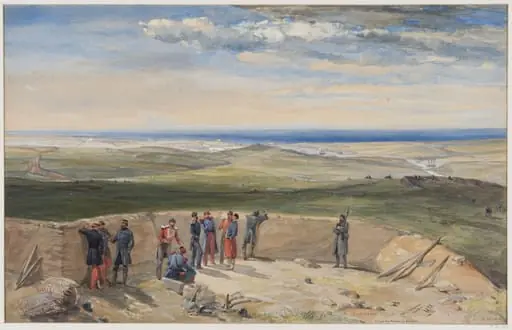
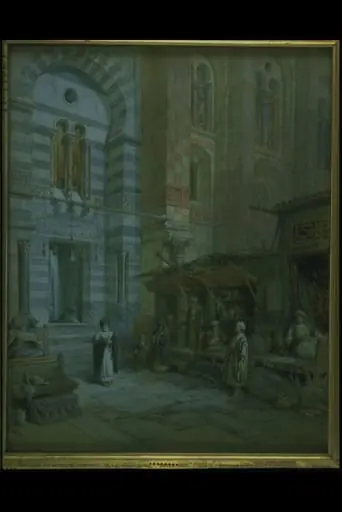
William Simpson drew travel scenes in watercolor and pencil during the 1800s. He sketched A Doorway in Cairo in 1884, showing arched doorways and sunlight on stone. His 1855 Sebastopol: View from the Victoria Redoubt…

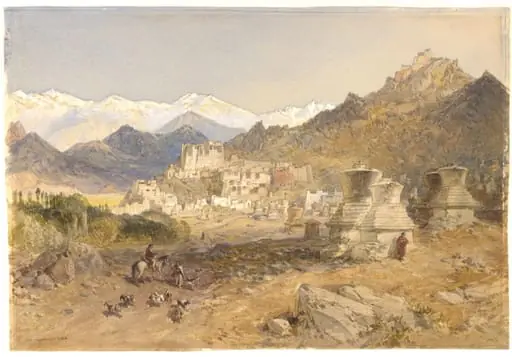 The Palace at Leh with stupas in the foreground
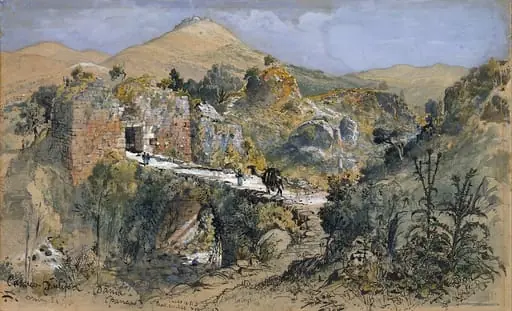 Caesarea Philippi (Banias)
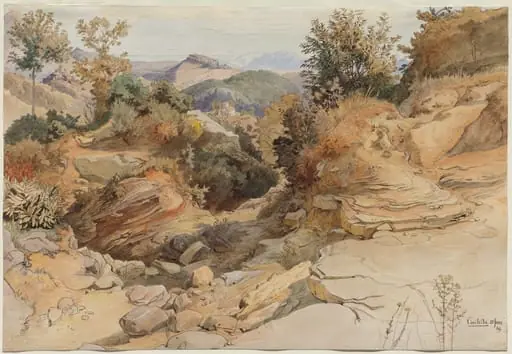 The Sabine Hills and Rocca Santo Stefano, Seen from Civitella
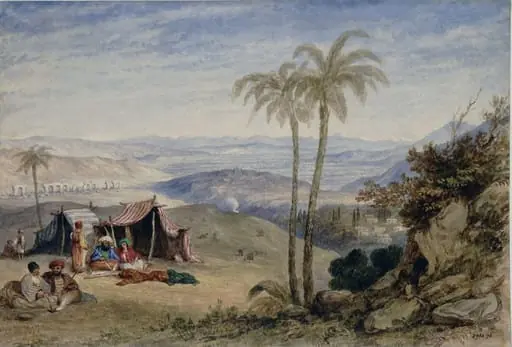 Laodicea, Asia Minor
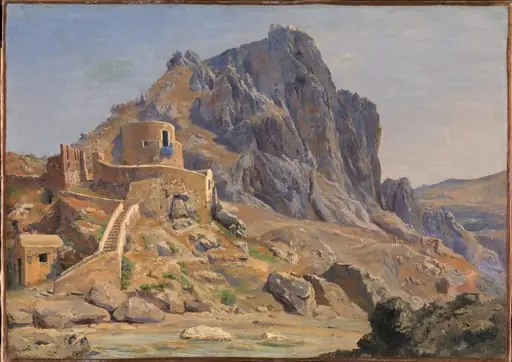 View of Marina Piccola, Capri: Morning Light
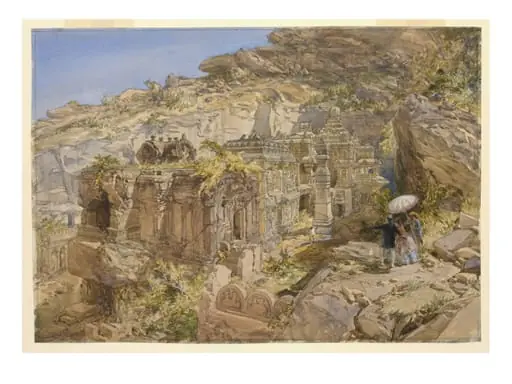 Kailasanatha temple, Ellora
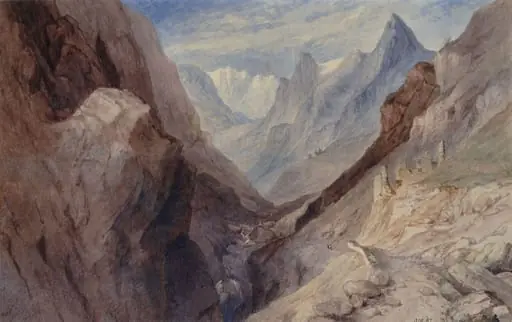 An Alpine pass
 Mountainous landscape in 'Salvator Rosa's country'
 Amber, Rajpootana