Artwork
The Mâristan or Mosque-Hospital of Kalaun, Cairo
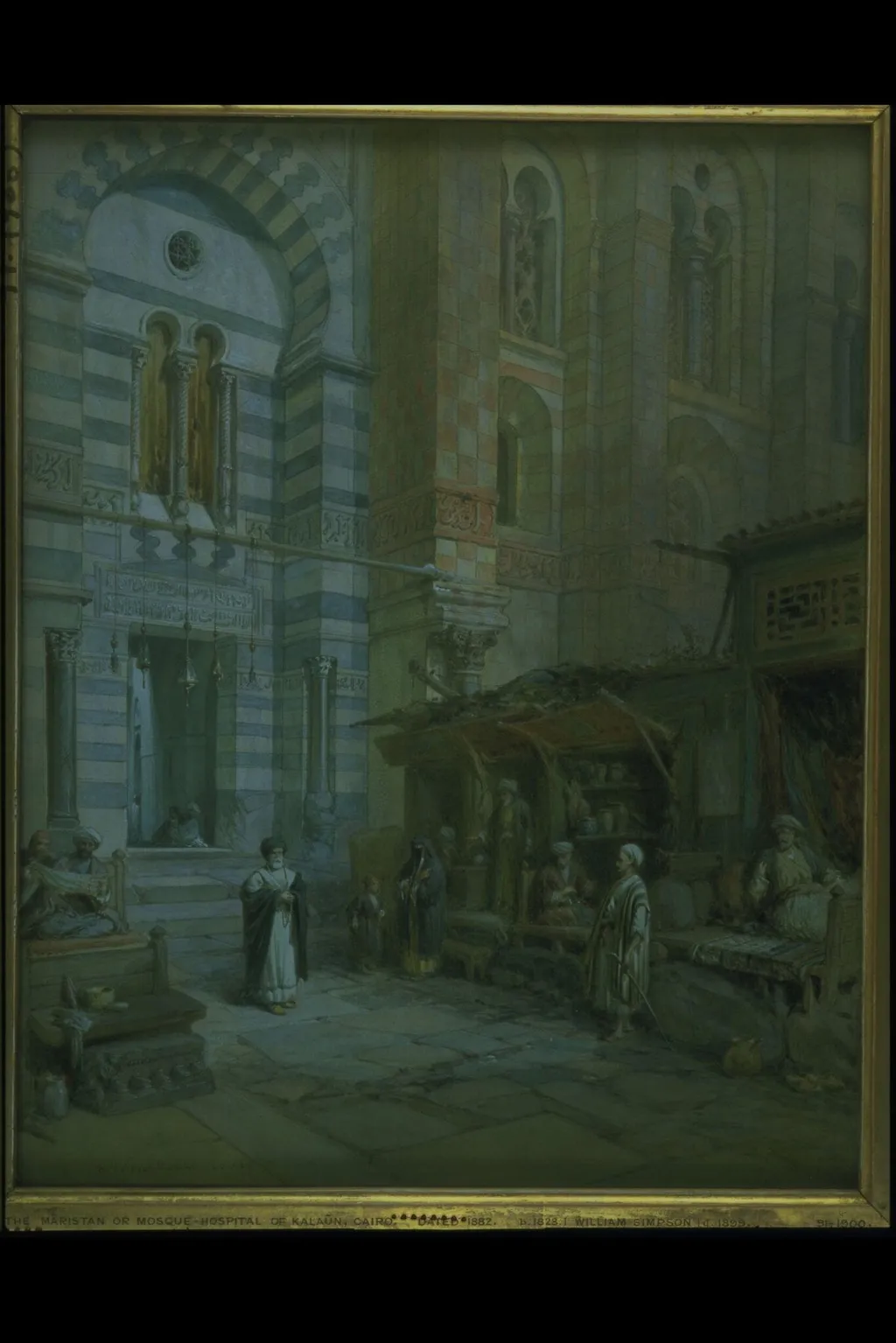
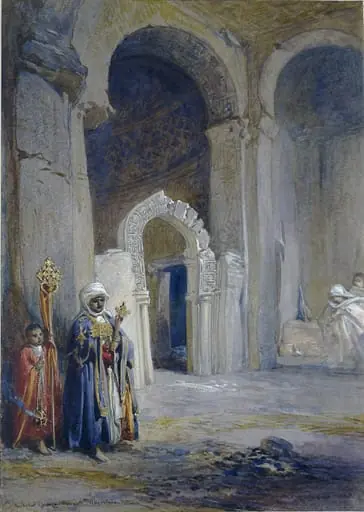
The Mâristan or Mosque-Hospital of Kalaun, Cairo is a watercolor work on paper by the Impressionist artist William R.I. F.R.G.S. Simpson. It dates from 1882 and is held in the collection of the Victoria and Albert Museum. William Simpson’s 1882 watercolour captures the Mosque‑Hospital of Kalaun in Cairo.
About this work
Overview
William Simpson’s 1882 watercolour captures the Mosque‑Hospital of Kalaun in Cairo. The composition centers on the expansive, richly detailed façade, its arches and columns framing a bustling courtyard. Sunlight bathes the scene, casting pronounced shadows that accentuate the building’s stone texture and the surrounding figures.
Subject & Meaning
The work records a functional religious and medical complex, illustrating the interaction between architecture and daily life. Cloaked individuals occupy the courtyard, some in conversation, suggesting the site’s role as both a place of worship and a communal gathering point within the urban fabric of late‑19th‑century Cairo.
Technique & Style
Simpson employs a restrained palette of muted blues and earth tones, allowing subtle tonal variations to convey depth. Fine brushwork renders the stone’s roughness and the fabrics’ folds, while delicate washes model light and shade, creating a tranquil atmosphere without resorting to dramatic coloration.
History & Provenance
Created during Simpson’s travels in Egypt, the watercolour was produced in 1882, a period when Western artists documented Middle Eastern architecture. The piece entered a private collection before being acquired by a museum specializing in 19th‑century travel sketches, where it remains part of the institution’s Egyptian holdings.
Artist & collection
Artist
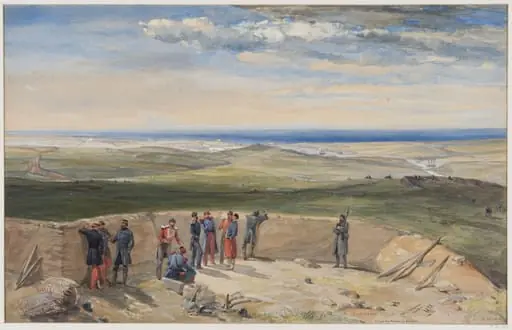
William Simpson drew travel scenes in watercolor and pencil during the 1800s. He sketched A Doorway in Cairo in 1884, showing arched doorways and sunlight on stone. His 1855 Sebastopol: View from the Victoria Redoubt…

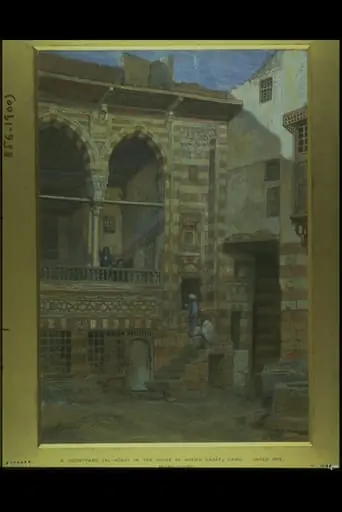 Courtyard and Maq'ad (Loggia) of the Mufti House in Cairo
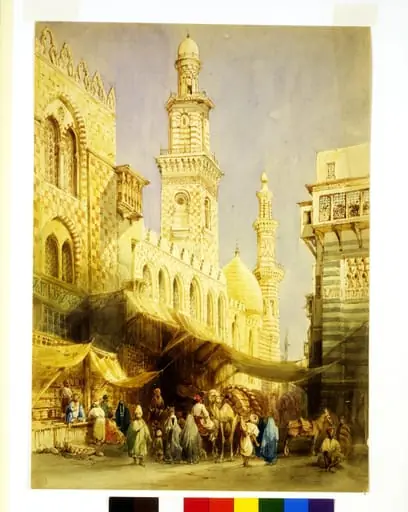 The Sharia 'El-Gohargiyeh, Cairo
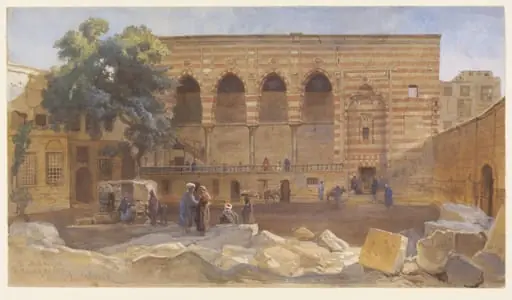 El Mahkemeh or Court of the Cadi Cairo
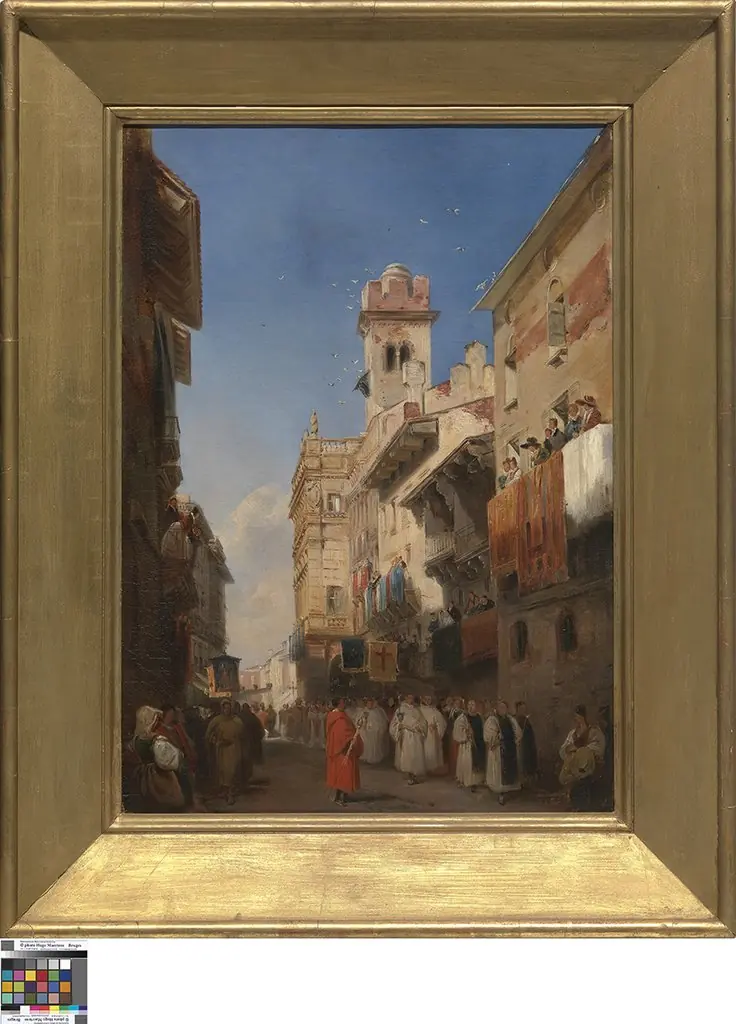 Processie in Verona
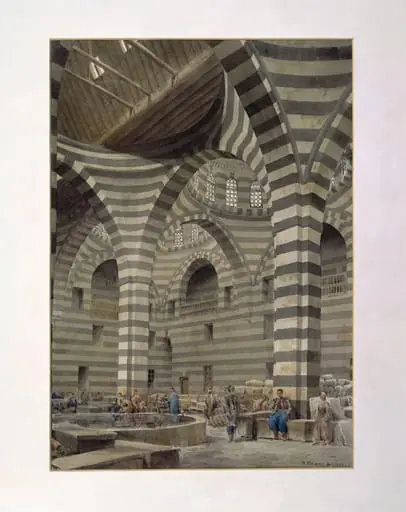 The Great Khan, Damascus
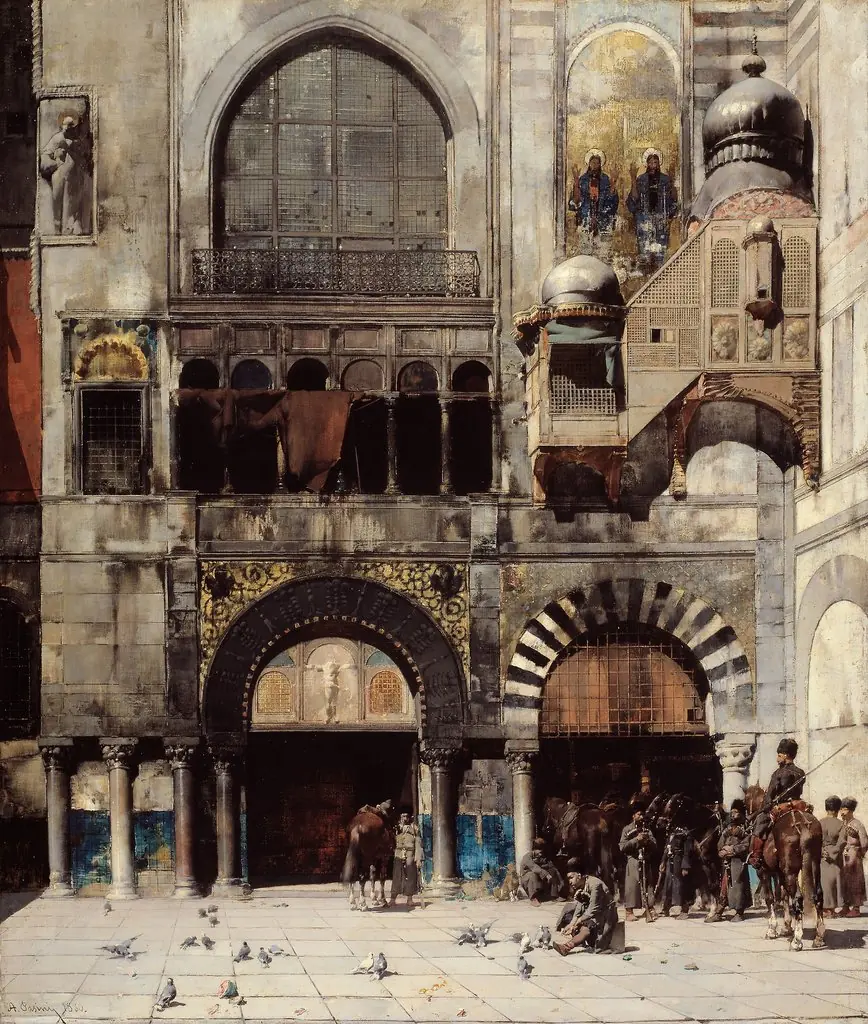 Circassian Cavalry Awaiting their Commanding Officer at the Door of a Byzantine Monument; Memory of the Orient
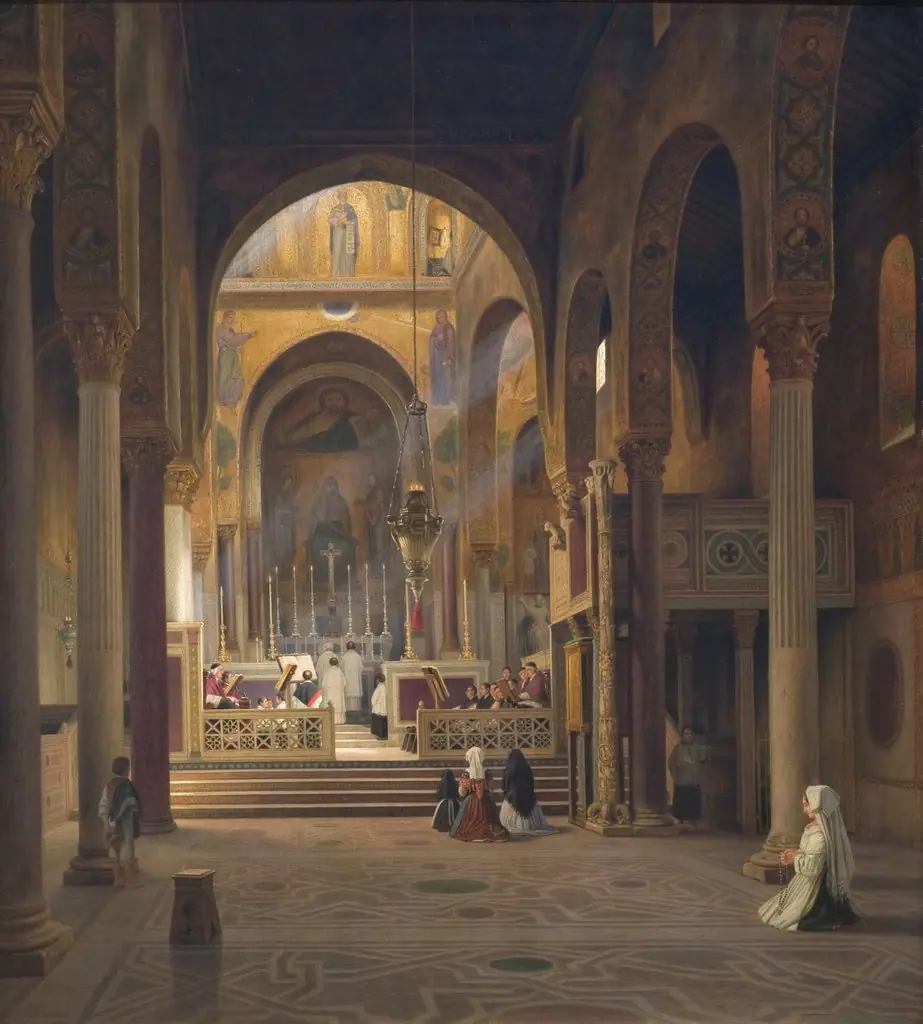 Interior of the Capella Palatina in Palermo, Italy
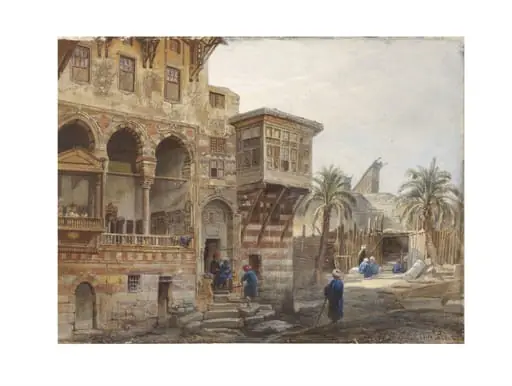 Exterior of the House of the Memluk Raduan Bey, Cairo
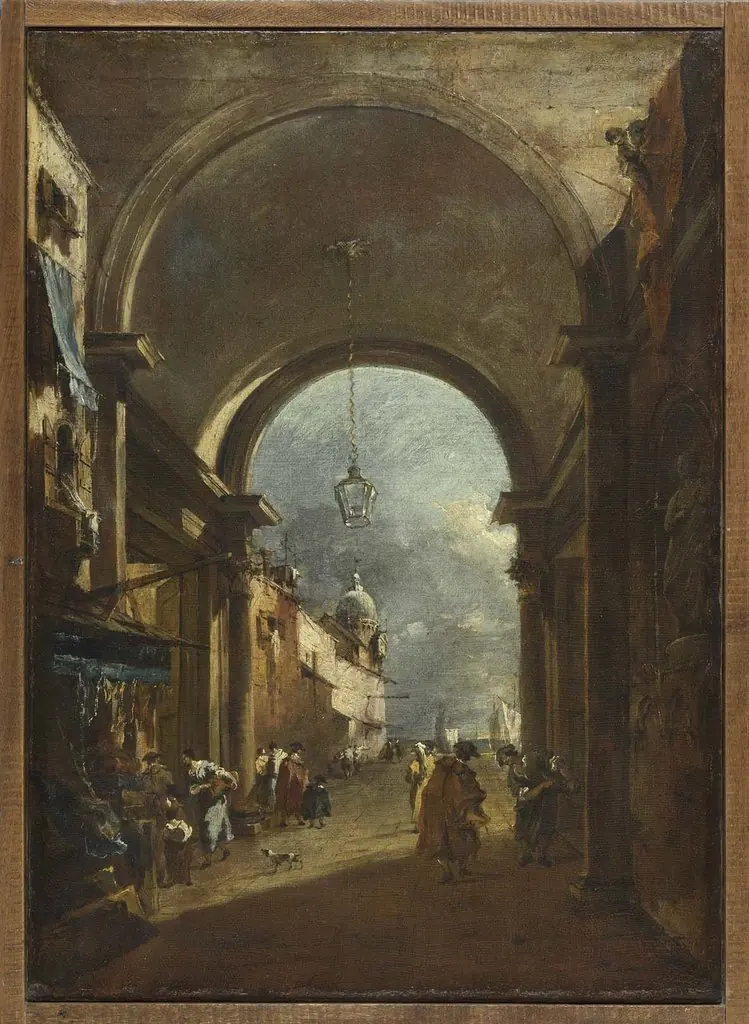 Tordurchblick
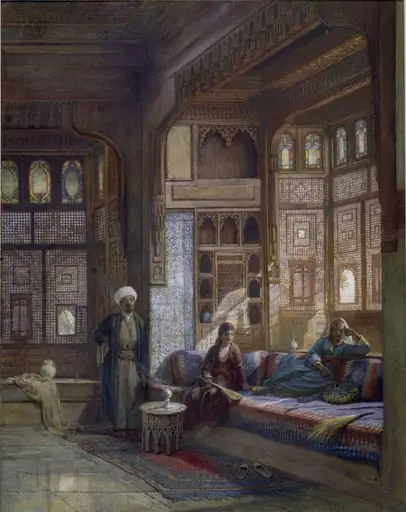 A room in the house of Shayk Sadat, Cairo