Artwork
The Ahin Posh Tope near Jellalabad, excavated
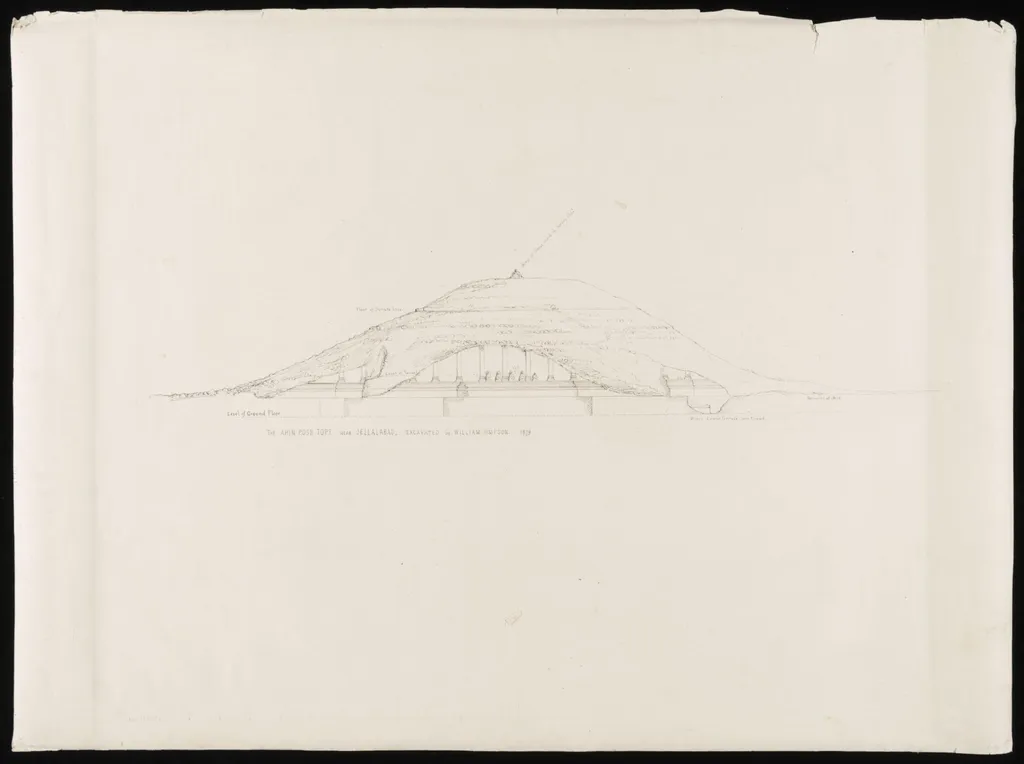
The Ahin Posh Tope near Jellalabad, excavated is a drawing by the Impressionist artist William R.I. F.R.G.S. Simpson. It dates from 1879 and is held in the collection of the Victoria and Albert Museum.
About this work
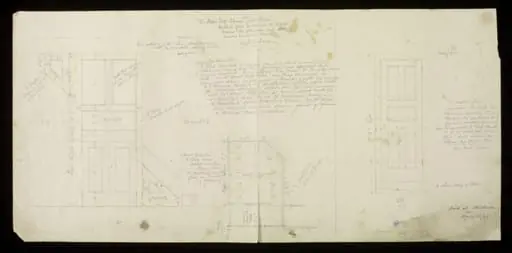
The artist labeled parts like "Level of Ground Floor" and added notes about where coins were found.
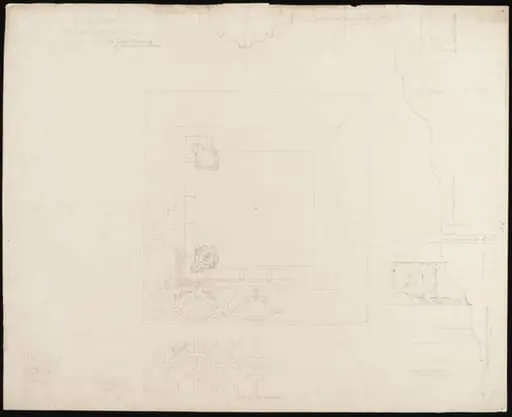
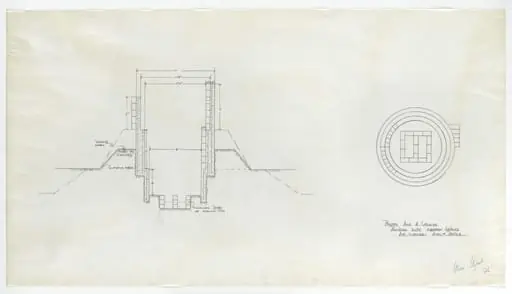
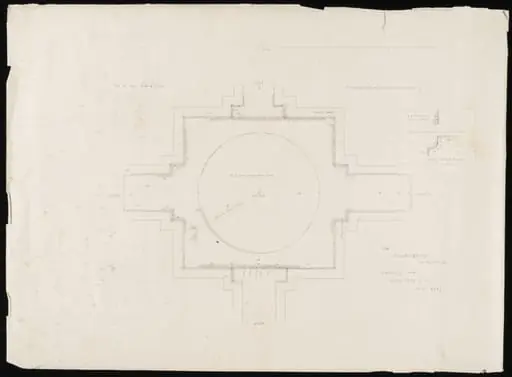
This is a simple black-and-white drawing of a large, dome-shaped building. The structure has steps leading up to it and a few small figures near the entrance. The artist labeled parts like "Level of Ground Floor" and added notes about where coins were found.
The drawing shows an old site called Ahin Posh Tope, which was dug up in 1879. The artist, William Simpson, made careful notes about what he saw during the excavation.
If you like this kind of detailed drawing, look up cross-hatching next.
Overview
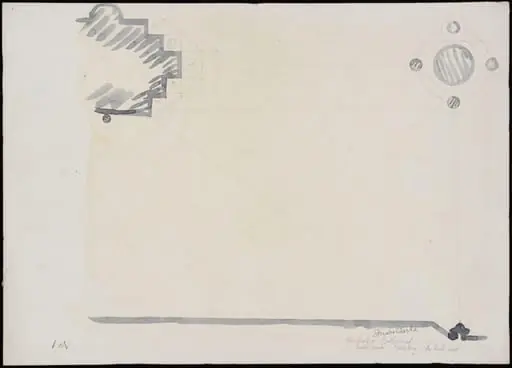
The Ahin Posh Tope near Jellalabad, excavated, is a black-and-white drawing documenting an archaeological site. Created by William Simpson in 1879, it depicts a dome-shaped structure with steps and small figures, accompanied by annotated details.
Subject & Meaning
The drawing's subject is the Ahin Posh Tope excavation site, highlighting its architectural features and excavation findings, such as the location of discovered coins. The work serves as a visual record of the site's state during excavation.
Technique & Style
Executed in simple black-and-white, the drawing features labeled elements like 'Level of Ground Floor' and includes notations on archaeological discoveries, showcasing a methodical, documentary approach. The style is characterized by meticulous detail, typical of 19th-century archaeological illustrations.
History & Provenance
Created in 1879 by William Simpson, the drawing is a firsthand account of the Ahin Posh Tope excavation. Specific provenance details beyond the creator and date are not provided.
Context
The drawing reflects 19th-century archaeological practices and documentation methods, emphasizing accuracy and detail. It aligns with the era's interest in exploring and recording ancient sites in regions like Jellalabad.
Artist & collection
Artist
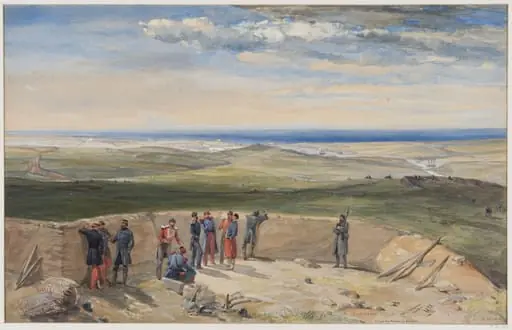
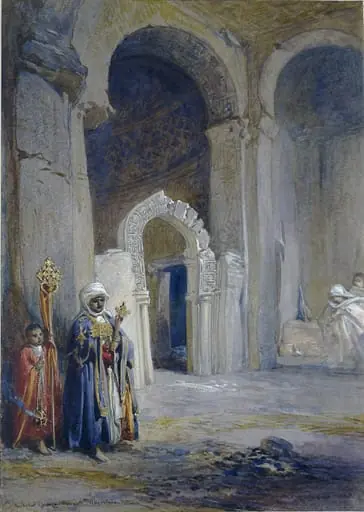
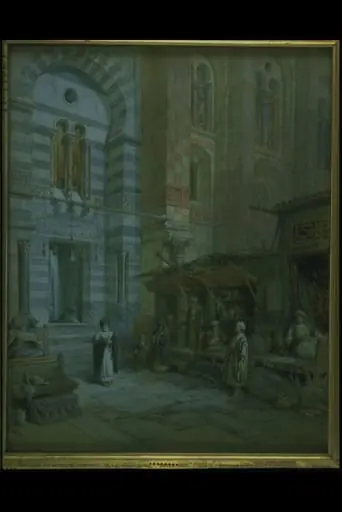
William Simpson drew travel scenes in watercolor and pencil during the 1800s. He sketched A Doorway in Cairo in 1884, showing arched doorways and sunlight on stone. His 1855 Sebastopol: View from the Victoria Redoubt…