Artwork
Philoe. Looking South
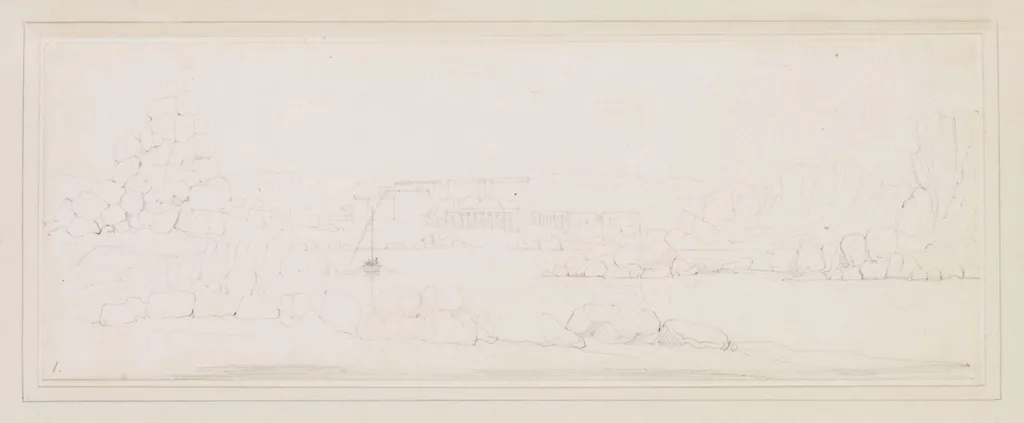
Philoe. Looking South is a drawing by the Romanticist artist Owen Jones. It dates from 1832 and is held in the collection of the Victoria and Albert Museum. Created in 1832, *Philoe.
About this work
Overview
Looking South* is a pencil drawing by Owen Jones that records a view of the island of Philae in southern Egypt.
Created in 1832, *Philoe. Looking South* is a pencil drawing by Owen Jones that records a view of the island of Philae in southern Egypt. It belongs to a series of eleven sketches made during Jones’s journey along the Nile, later compiled into his 1843 publication *Views On The Nile From Cairo To The Second Cataract*. The drawing is part of the Searight Collection and serves as a preparatory study for the published plate.
Subject & Meaning
The drawing captures a quiet, expansive stretch of landscape along the Nile, with a winding path leading toward a distant structure near water. Philae, an island rich in ancient temples, is rendered not as a monument but as a quiet, lived-in place. The focus on terrain and path suggests an interest in geography and movement rather than architectural grandeur, reflecting a traveler’s observational approach.
Technique & Style
Jones employed light, rapid pencil strokes to convey the scene with immediacy. The lines are loose and unrefined, avoiding detailed rendering in favor of suggestive forms. Cross-hatching is minimal, and texture is implied through sparse marks. The sketch’s spontaneity indicates it was made outdoors, likely as a field study, prioritizing atmosphere over precision.
History & Provenance
The drawing originated from Jones’s 1832 expedition along the Nile, commissioned to document sites between Cairo and the Second Cataract. It was later included in his 1843 publication. The work entered the Searight Collection and is now held alongside other Jones drawings in institutions such as the Victoria and Albert Museum and the British Museum, where similar studies from the same journey are preserved.
Context
Jones’s Nile sketches were made during a period of growing European interest in Egyptian antiquities, following Napoleon’s campaign and the decipherment of the Rosetta Stone. While many contemporaries focused on monumental ruins, Jones’s approach emphasized landscape and topography, aligning with emerging practices in topographical drawing and ethnographic observation.
Legacy
The drawing exemplifies Jones’s early commitment to direct observation, a practice that later informed his work in design and architecture. Though less known than his ornamental publications, these sketches reveal a disciplined eye for spatial relationships and environmental detail, contributing to a broader 19th-century shift toward empirical recording in art and archaeology.
Artist & collection
Artist
English architect and designer Owen Jones spent the 1830s in Egypt and later sketched its temples in crisp watercolours.

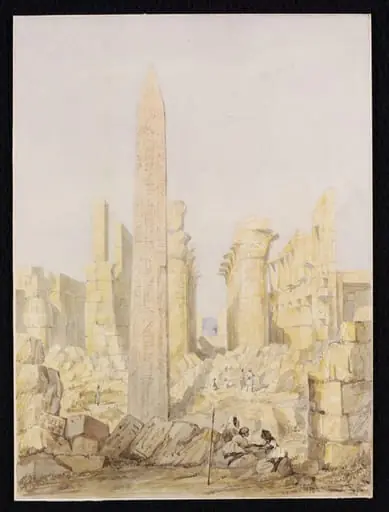 Great Temple. Karnac. Thebes
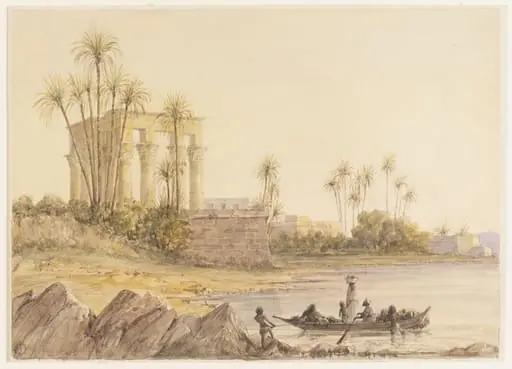 Landing Place. Philoe
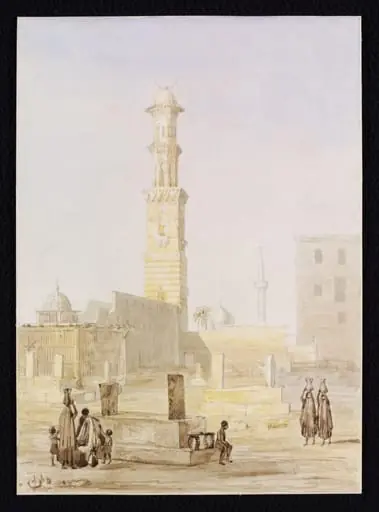 Tombs near Cairo
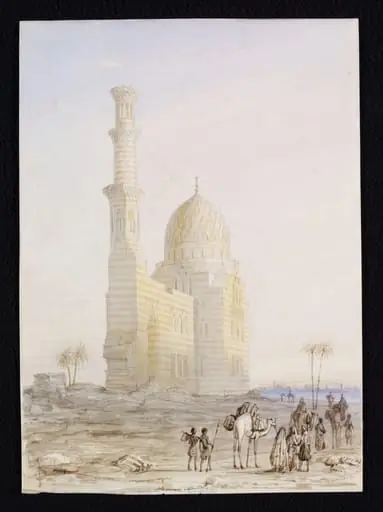 Tomb near Cairo
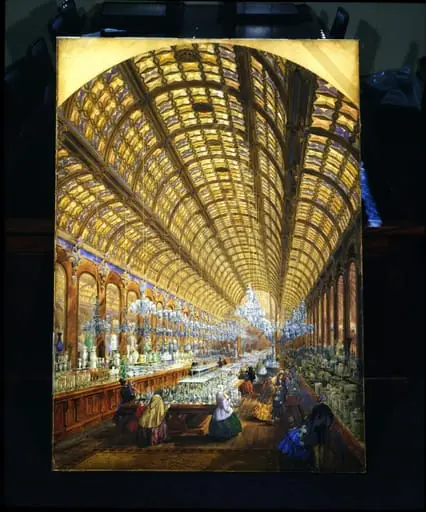 Osler's Gallery, Oxford Street, London
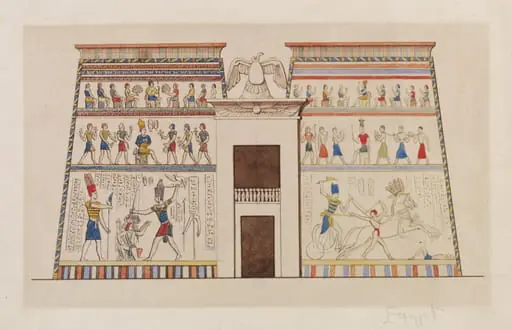 Architectural drawing of an entrance pylon to an Egyptian temple
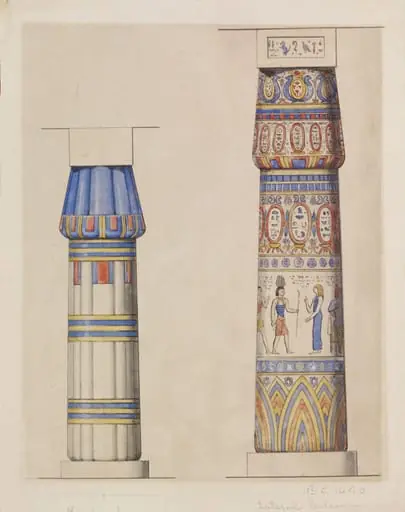 Temple of Luqsor B.C.1490 Lateral Column Temple of Karnak B.C.1490
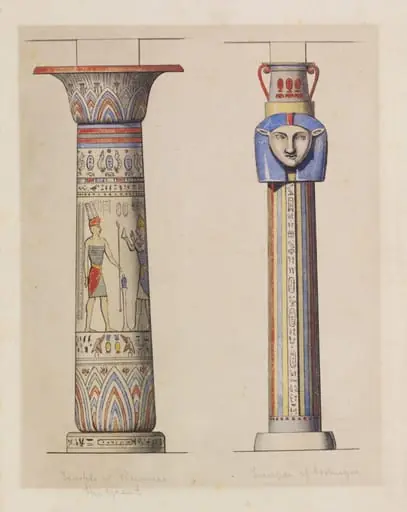 Temple of Ramses the Great B.C.1420. Temple of Sedingar B.C.1490
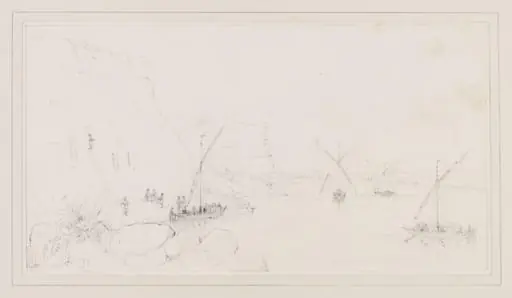 Convent of Siltina (on the Nile)
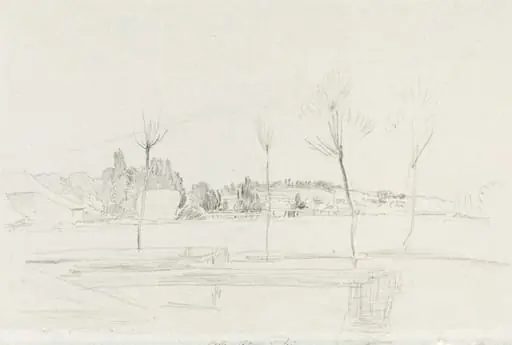 Landscape in Hertfordshire
![The Ripetta in Rome [verso], by Augustin Pajou](https://artifactworldgallery.com/img/augustin-pajou--the-ripetta-in-rome-verso--4bc04e9c9476a91b-w320.webp) The Ripetta in Rome [verso]
The Ripetta in Rome [verso]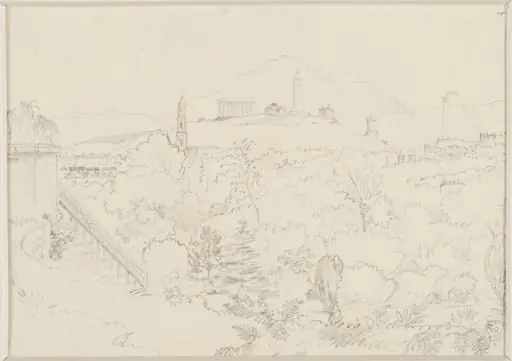 Edinburgh
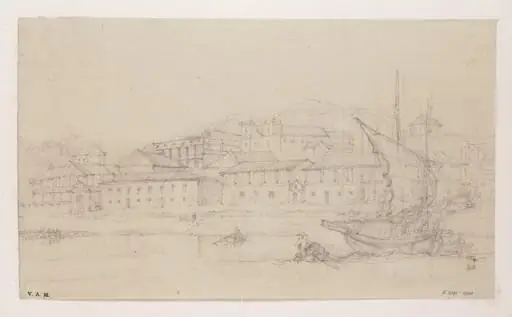 Macau with the church of S. Lourenço
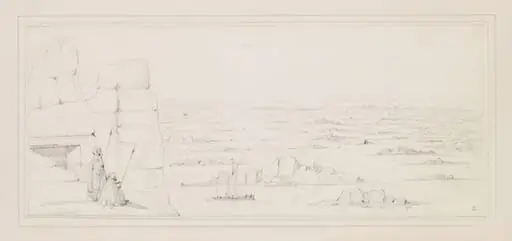 Cataracts of Nubia - Looking North
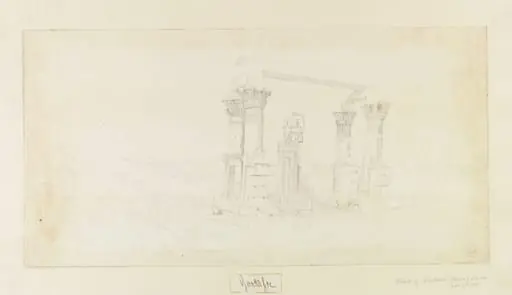 Gartasse
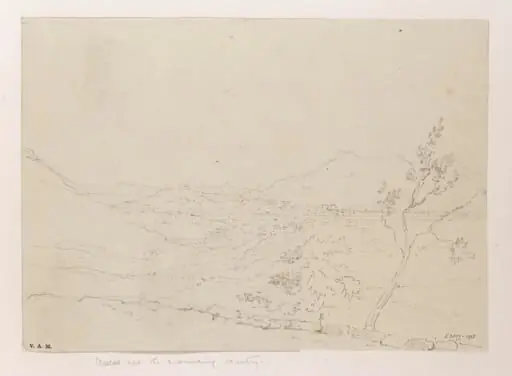 Macau, looking south-west along the peninsula
 Italian City Scene
 Fantasy Panorama of Rome from St. Peter's to the Castel San Angelo
 The Casa, Macao, in the gardens of which is Camoens' Cave (the residence of Lady Pereira), Macao
 Shepperton.