Artwork
Shrine of the Foxes, Kyoto
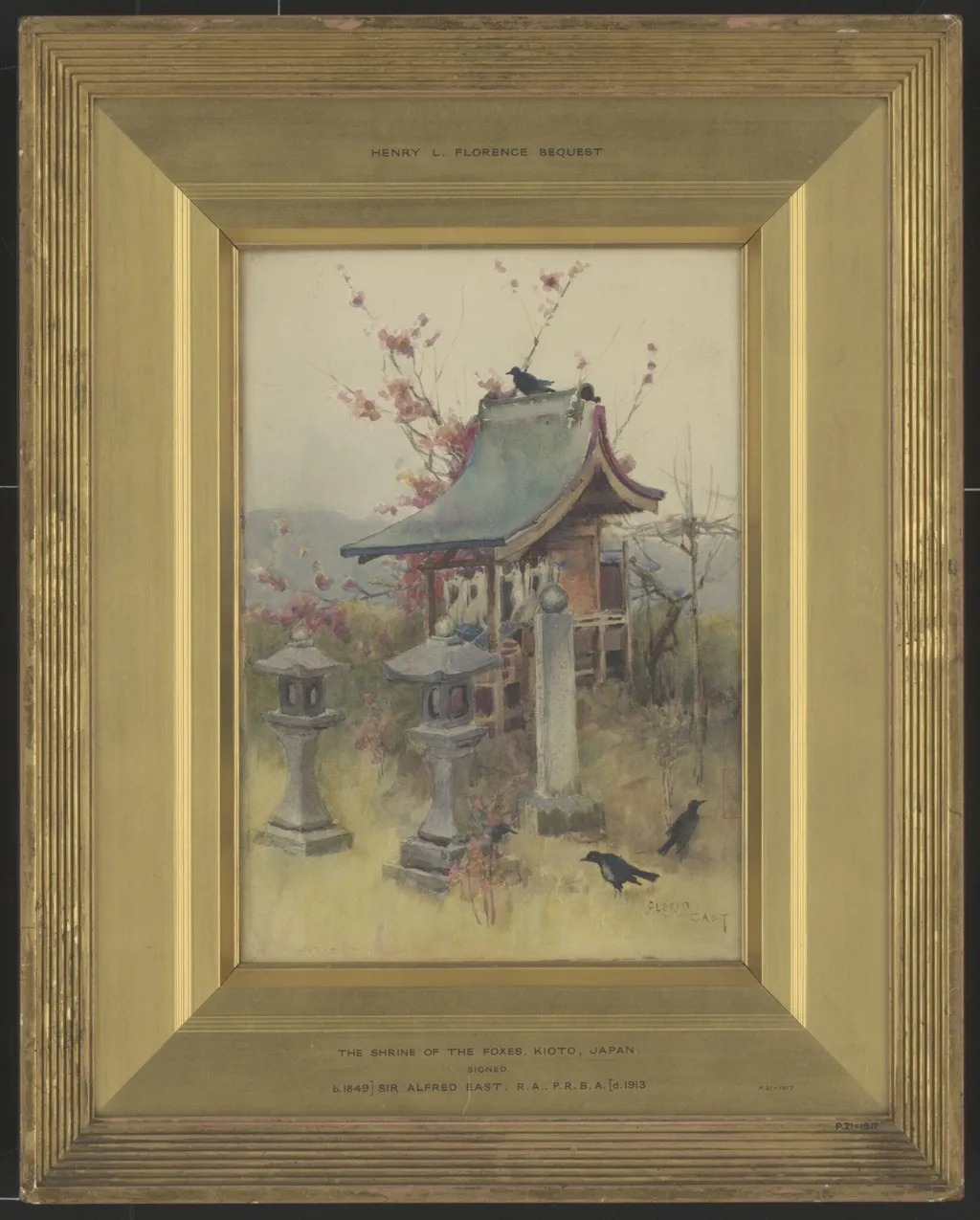
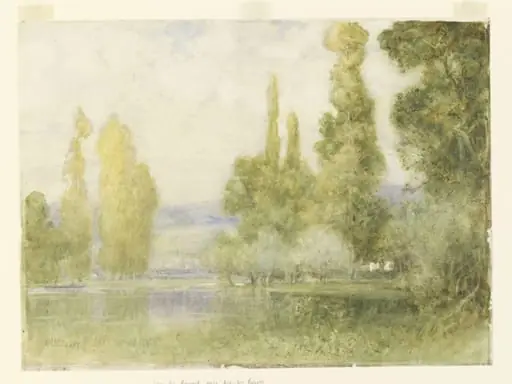
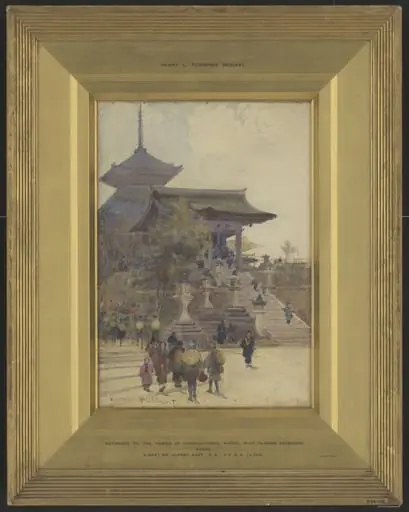
Shrine of the Foxes, Kyoto is a watercolor work on paper by the Impressionist artist Alfred East. It dates from 1889 and is held in the collection of the Victoria and Albert Museum.
About this work
Overview
Created in 1889 by Sir Alfred East, this watercolour depicts a quiet shrine in Kyoto, rendered with transparent pigments on paper. The work bears the artist’s signature, affirming its origin. East, known for his travels in Asia, captured the site with a focus on atmosphere rather than architectural precision, emphasizing the interplay of natural elements and sacred space.
Subject & Meaning
The stillness of the composition, with birds resting on the roof and ground, suggests reverence and the quiet presence of the divine within nature.
The scene centers on a modest Shinto shrine, marked by a tiled roof and a stone lantern, nestled among native trees and flowering branches. Foxes, traditionally messengers of the deity Inari, are implied through the shrine’s context rather than depicted explicitly. The stillness of the composition, with birds resting on the roof and ground, suggests reverence and the quiet presence of the divine within nature.
Technique & Style
East employed loose, fluid brushwork and diluted watercolour washes to convey soft light and seasonal change. The palette is muted—pale pinks, greens, and greys—enhancing the tranquil mood. Rather than sharp outlines, forms emerge through layered transparency, reflecting Impressionist concerns with fleeting light and atmospheric effect, though rooted in observed Japanese landscape rather than European conventions.
History & Provenance
Painted during East’s journey through Japan in the late 1880s, the work reflects his engagement with Eastern aesthetics after years of painting British landscapes. It entered private collections in Britain following his return, later acquired by institutions interested in Victorian-era Orientalist travel art. Its survival as a watercolour on paper speaks to its modest scale and personal nature as a travel sketch elevated to finished work.
Context
East’s depiction aligns with a broader 19th-century European fascination with Japan following its opening to the West. Unlike academic Orientalism, his approach avoids exoticism, favoring quiet observation. The shrine’s simplicity and integration with nature reflect both Japanese design principles and East’s own shift toward lyrical, light-sensitive painting after exposure to Japanese prints and landscapes.
Legacy
Though not widely exhibited today, the painting remains a quiet example of cross-cultural artistic exchange in the Victorian era. It illustrates how Western artists absorbed Japanese visual language without appropriation, using watercolour’s delicacy to mirror the subtlety of their subject. East’s work contributed to a more nuanced understanding of Japan in British art circles, beyond stereotypical representations.
Artist & collection