Artwork
Golden Autumn
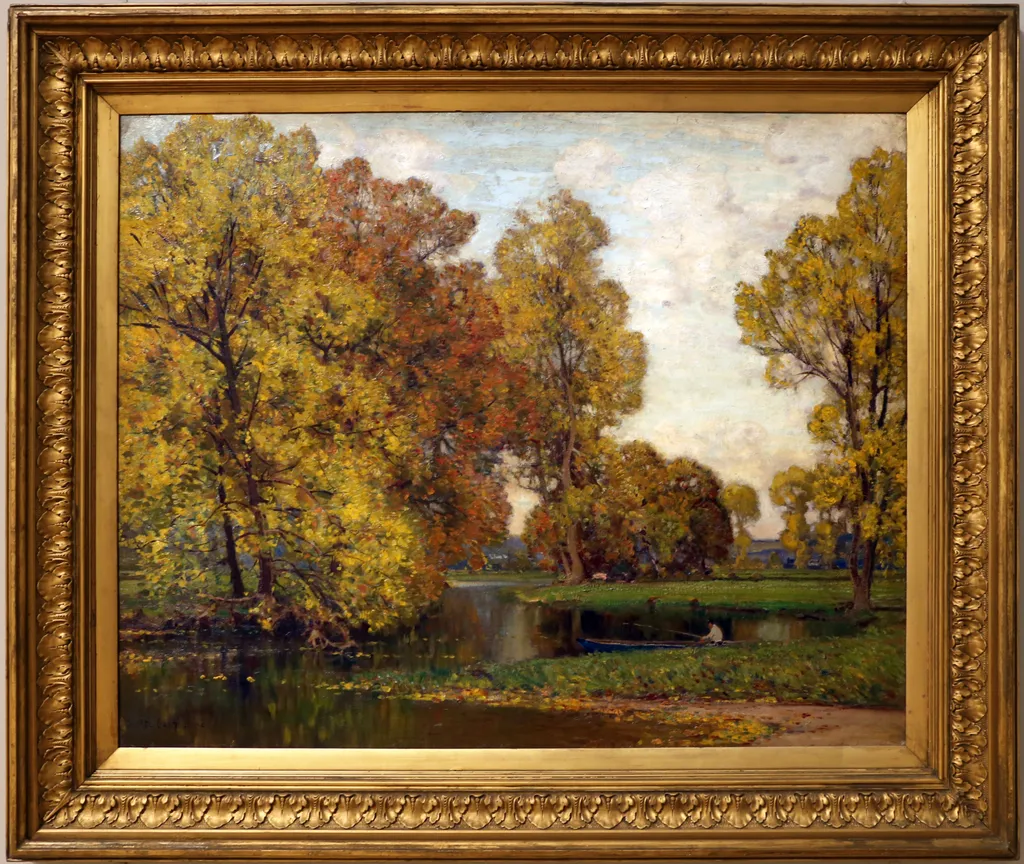
Golden Autumn is an unspecified painting by the Impressionist artist Alfred East. It dates from 1900 and is held in the collection of the Tate Britain.
About this work
Overview
The work is part of the Tate Britain’s collection and exemplifies East’s interest in naturalistic composition and seasonal change.
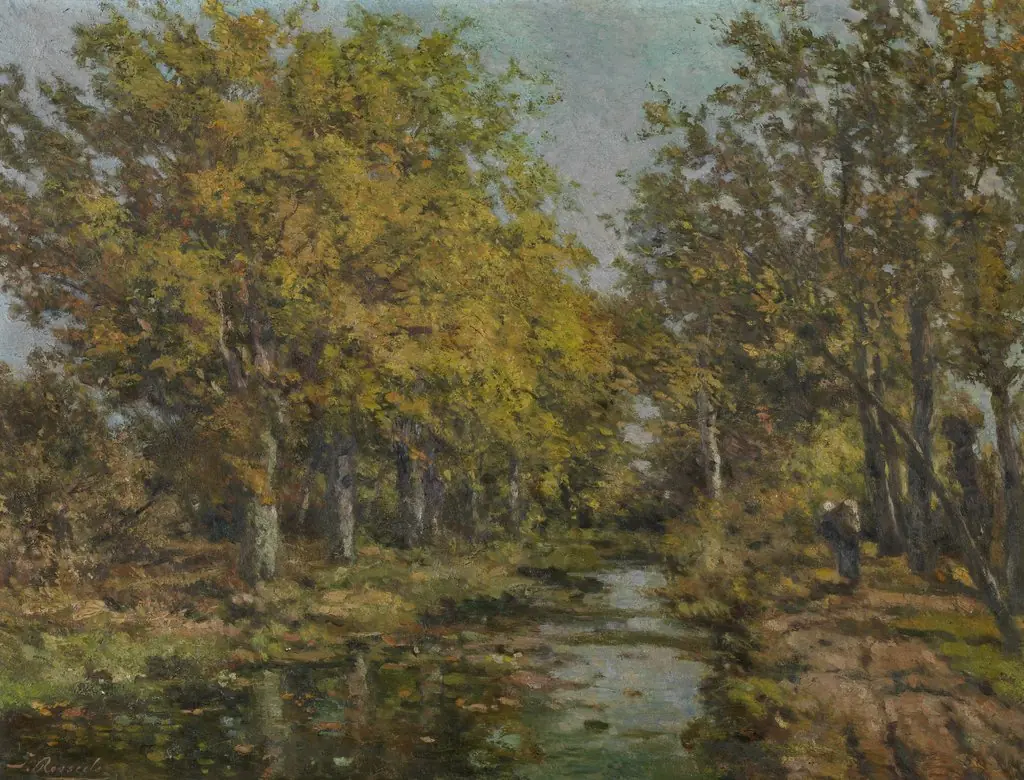
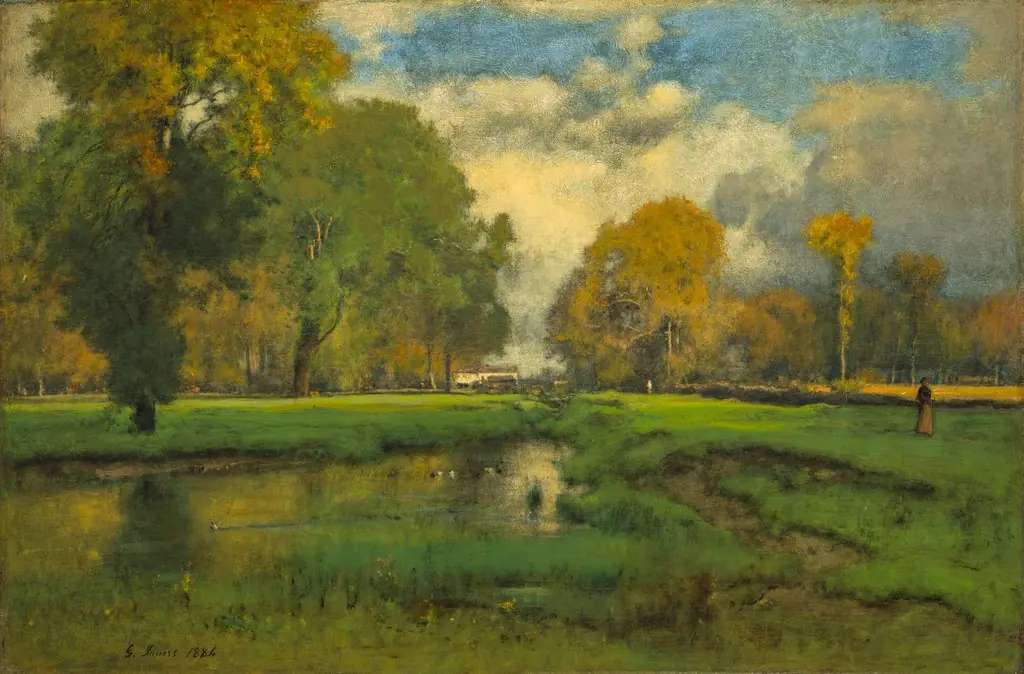
Painted in 1900 by Alfred East, Golden Autumn is a landscape depicting a quiet rural scene in late fall. The work is part of the Tate Britain’s collection and exemplifies East’s interest in naturalistic composition and seasonal change. Its calm atmosphere and restrained palette reflect a deliberate focus on harmony between land and sky, avoiding dramatic contrasts in favor of subtle tonal transitions.
Subject & Meaning
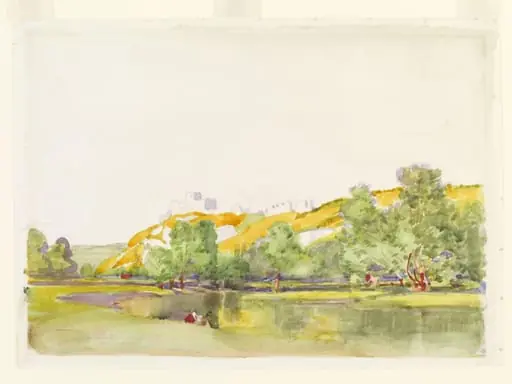
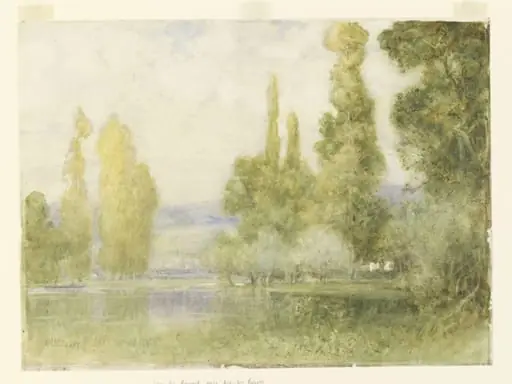
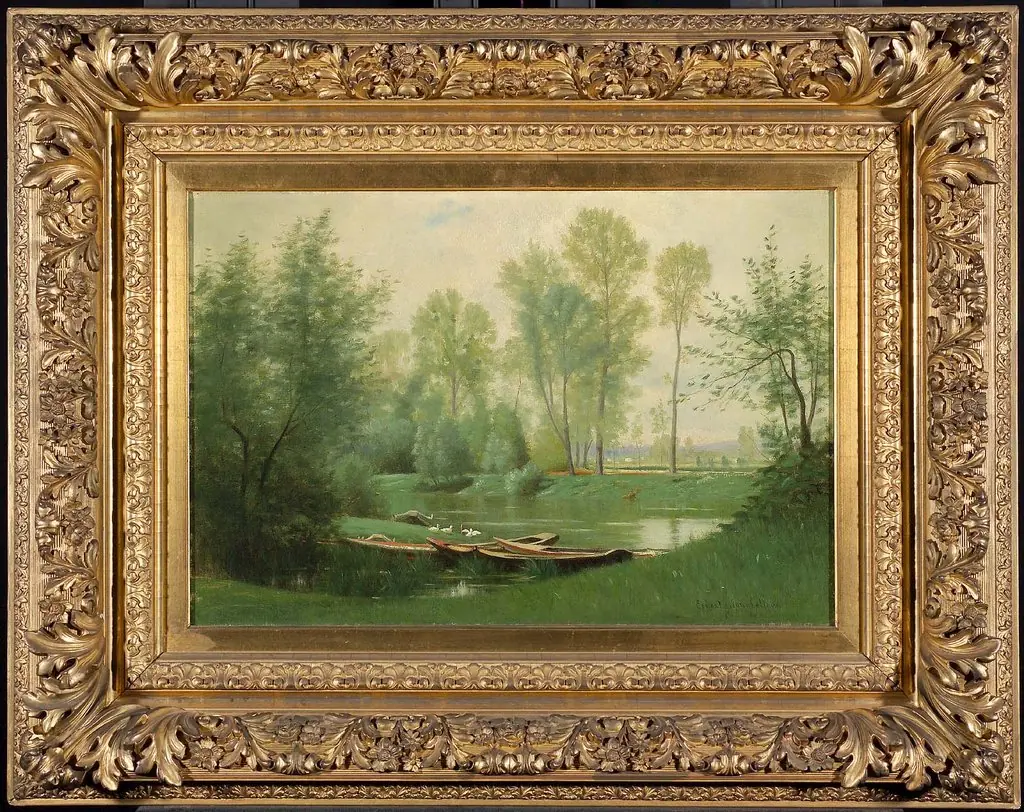
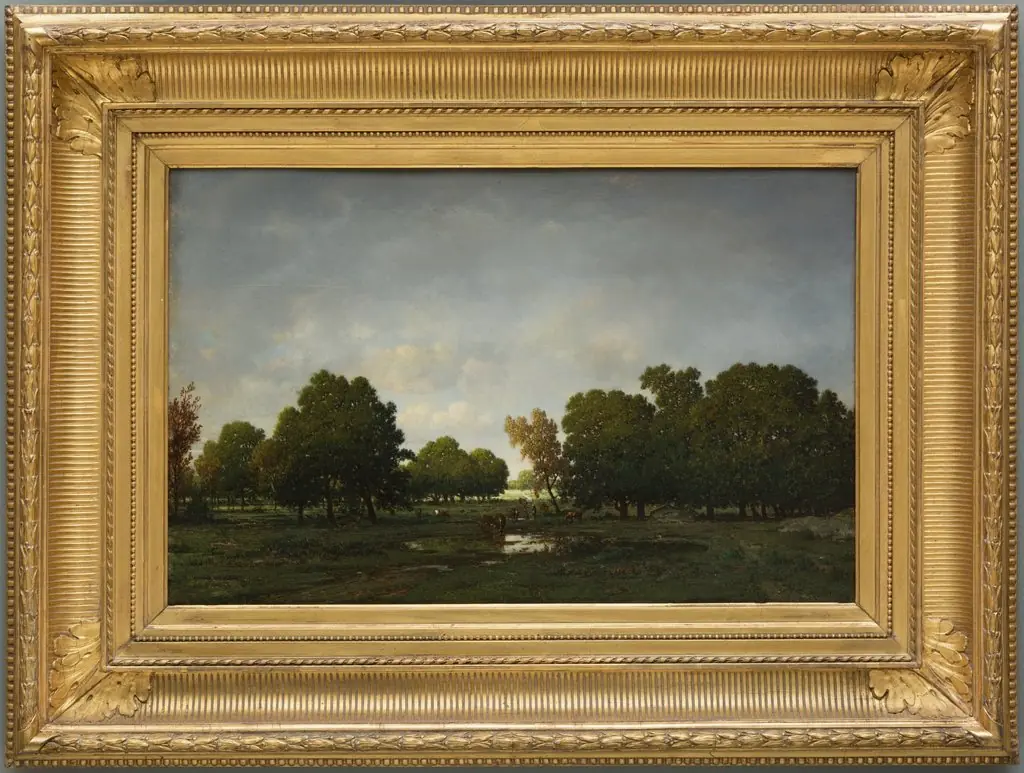
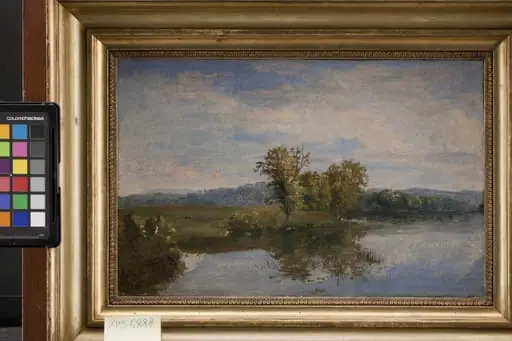
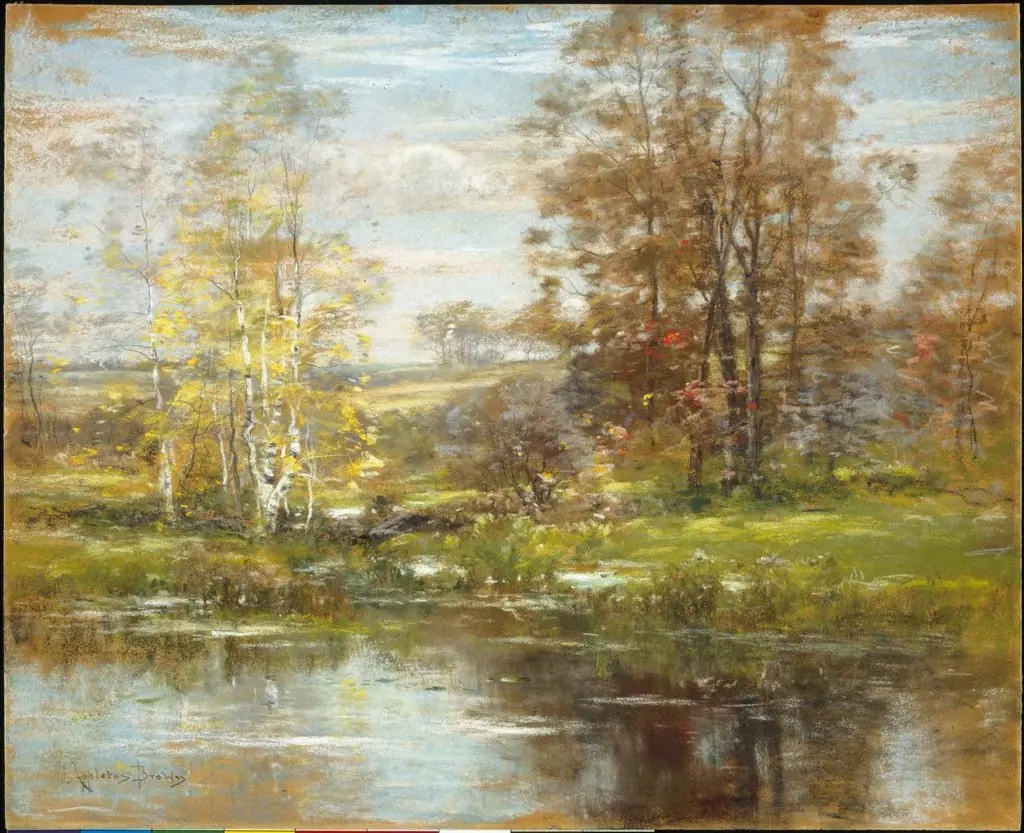
The painting presents a tranquil autumnal scene centered on a still pond reflecting the colored foliage of surrounding trees. Distant fields and soft clouds suggest an expansive, unhurried countryside. There is no human presence, reinforcing a sense of solitude and quiet endurance. The season’s fleeting beauty is rendered not as a symbol of decay, but as a moment of serene stillness, inviting contemplation rather than narrative.
Technique & Style
East employed soft, blended brushwork to render the foliage and water with gentle texture, avoiding sharp outlines. Warm ochres and muted oranges dominate the tree canopies, contrasted by cool blues in the sky and water. The layering of translucent washes creates depth, guiding the eye from foreground to distant horizon. The technique prioritizes atmospheric cohesion over detailed realism, aligning with late 19th-century British landscape traditions.
History & Provenance
Completed in 1900, Golden Autumn was acquired by the Tate Gallery in 1901, shortly after its exhibition. It remained in the collection without significant public attention until the mid-20th century, when interest in British tonal landscapes revived. Its provenance is well-documented, with no known alterations or major restorations, preserving its original surface and tonal integrity.
Context
East painted during a period when British artists were reevaluating landscape as a subject worthy of quiet observation, moving away from Romantic grandeur. Golden Autumn aligns with contemporaries like George Clausen and Edward Burne-Jones, who favored subdued palettes and intimate naturalism. The work reflects broader cultural shifts toward domestic tranquility and the aesthetic value of everyday rural scenes.
Legacy
Though not widely reproduced, Golden Autumn remains a representative example of East’s mature style and the British landscape tradition at the turn of the century. It continues to be studied for its restrained color harmony and meditative composition. The painting contributes to ongoing scholarly interest in lesser-known figures who shaped the evolution of British tonal painting beyond the Pre-Raphaelites and Impressionists.
Artist & collection