Artwork
Study
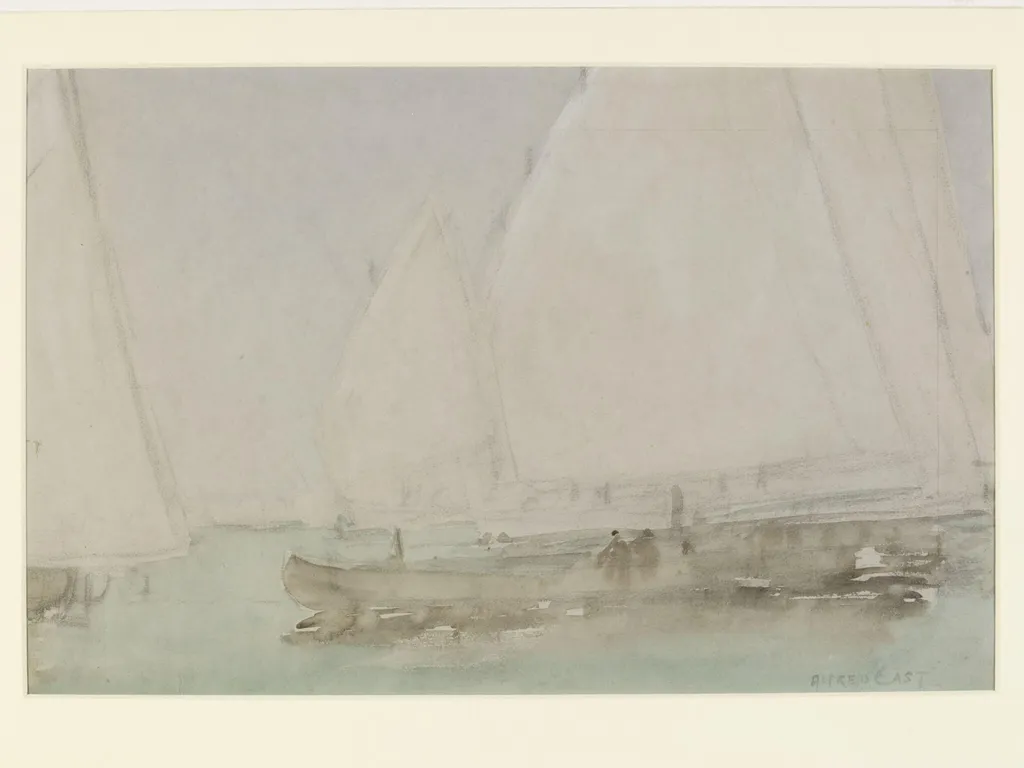
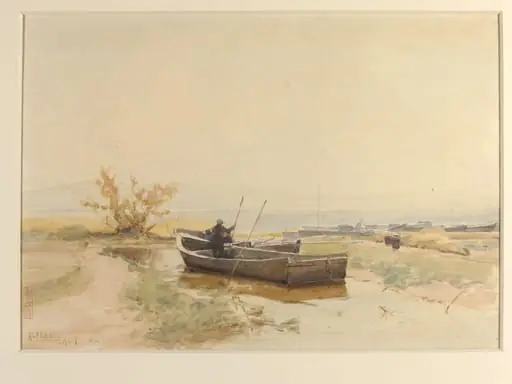
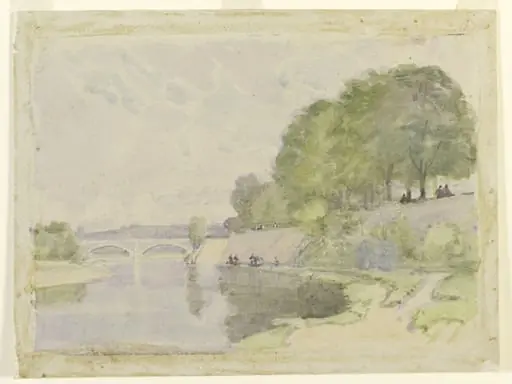
Study is a watercolor work on paper by the Impressionist artist Alfred East. It dates from 1870 and is held in the collection of the Victoria and Albert Museum.
About this work
Overview
The piece is signed by East, confirming its authorship and placing it within his early period of landscape experimentation.
Created in 1870 by Sir Alfred East, this watercolour is a small-scale study capturing a quiet coastal moment. Executed with loose, fluid brushwork, it reflects the artist’s interest in transient light and atmosphere. The piece is signed by East, confirming its authorship and placing it within his early period of landscape experimentation. Its modest size and spontaneous handling suggest it was made outdoors, as a direct response to the scene before him.
Subject & Meaning
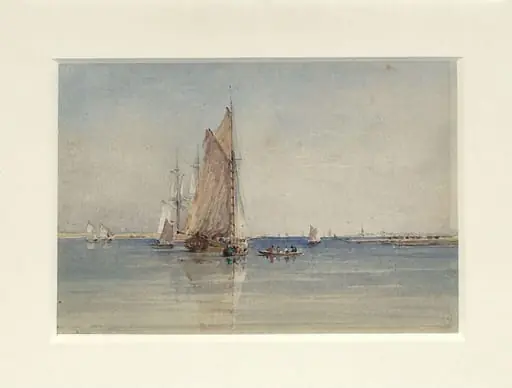
The scene depicts a small rowboat with two figures on calm water, accompanied by a distant sailboat near the shoreline. No narrative is overt; instead, the focus lies in the stillness and solitude of the moment. The absence of dramatic action or clear destination invites contemplation, aligning with 19th-century ideals of nature as a space for quiet reflection rather than grandeur.
Technique & Style
East employed watercolour with minimal layering, allowing the paper’s white to suggest light and air. Soft grays and pale blues dominate, with edges blurred through wet-on-wet washes. The brushwork is rapid and economical, avoiding detail in favor of suggestive forms. This approach, typical of British watercolourists of the era, prioritized mood over precision, capturing the fleeting quality of light on water.
History & Provenance
The work remains in private hands, with no public record of exhibition or ownership prior to its inclusion in scholarly surveys of East’s oeuvre. Its survival as a study rather than a finished piece suggests it was not intended for sale but served as a visual record or preparatory exercise. The signature confirms authenticity, though its full provenance remains undocumented beyond East’s known practice.
Context
In the 1870s, British artists increasingly turned to watercolour for its immediacy and portability, especially for plein air studies. East, influenced by the Barbizon school and Turner’s atmospheric effects, contributed to a movement that valued emotional resonance over topographical accuracy. This piece aligns with contemporaneous works by artists like John Singer Sargent and Samuel Palmer, who similarly explored light and mood in water-based media.
Legacy
Though not widely exhibited, this study exemplifies East’s contribution to the evolution of British watercolour as a medium for personal observation. Its unpolished quality reflects a broader shift away from highly finished landscapes toward more intimate, sensory responses to nature. It remains a quiet testament to the artist’s commitment to capturing ephemeral moments with honesty and restraint.
Artist & collection

 The Thames, Off Gravesend
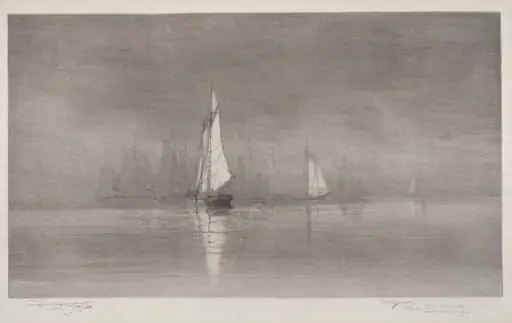 Untitled (Harbor Scene with Sailboats)
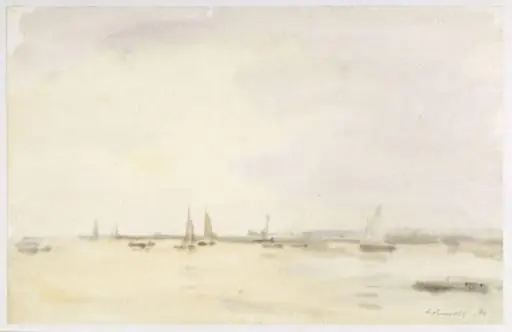 Yachts in the Estuary
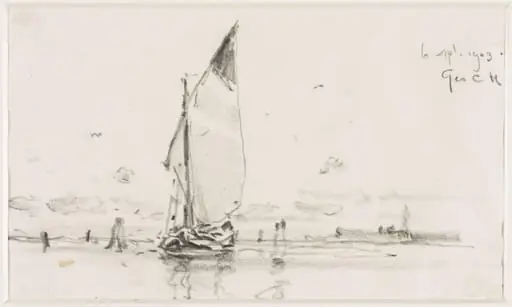 On the Lagoons, Venice.
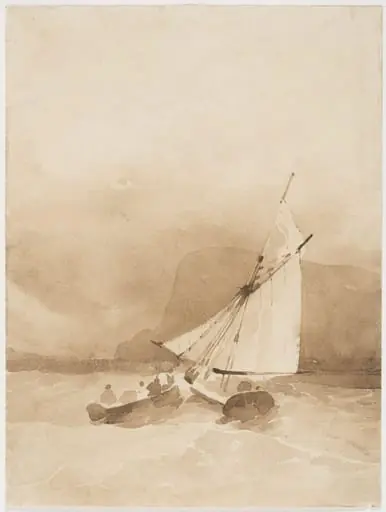 A sailing-vessel and a rowing-boat in rough seas off Beachy Head
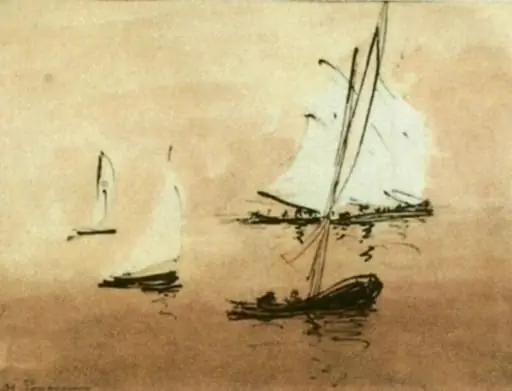 Vele pe mare
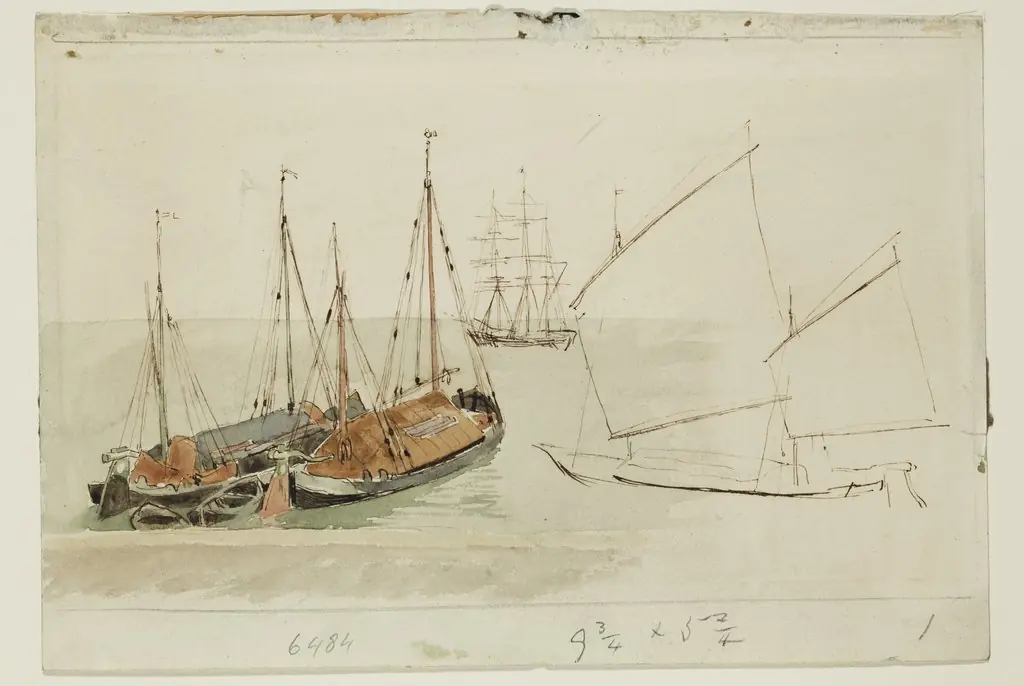 Marine
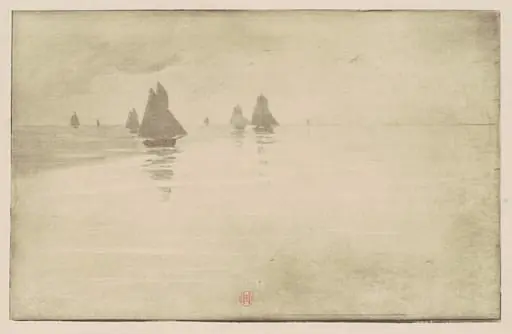 Boats in a Morning Fog
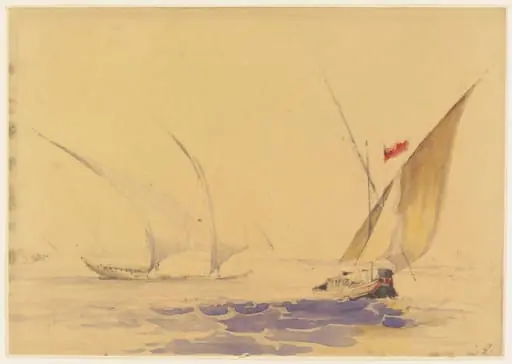 Nile
Nile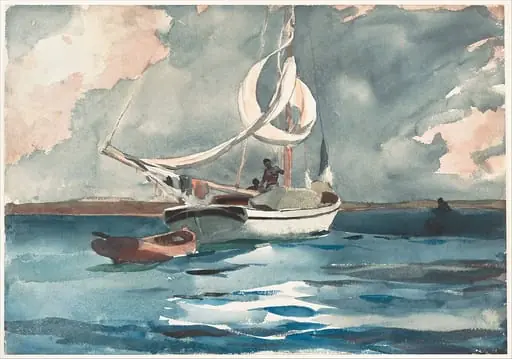 Sloop, Nassau
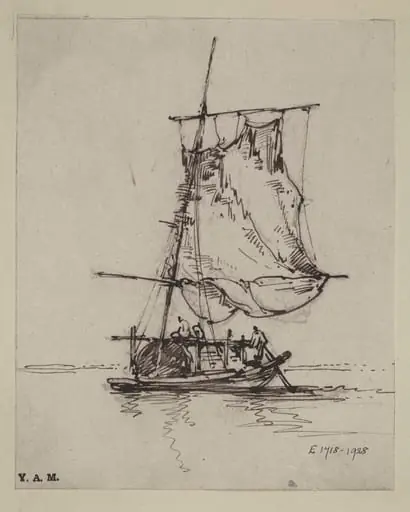 A drawing by George Chinnery of a Tanka boat with a large sail or net raised
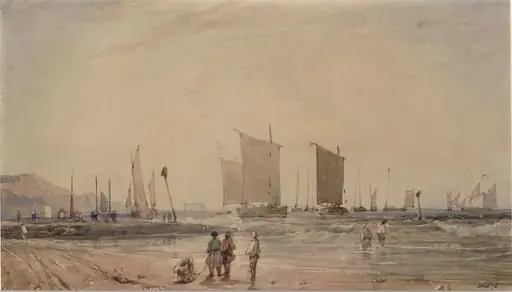 French coast, with fishing boats