Artwork
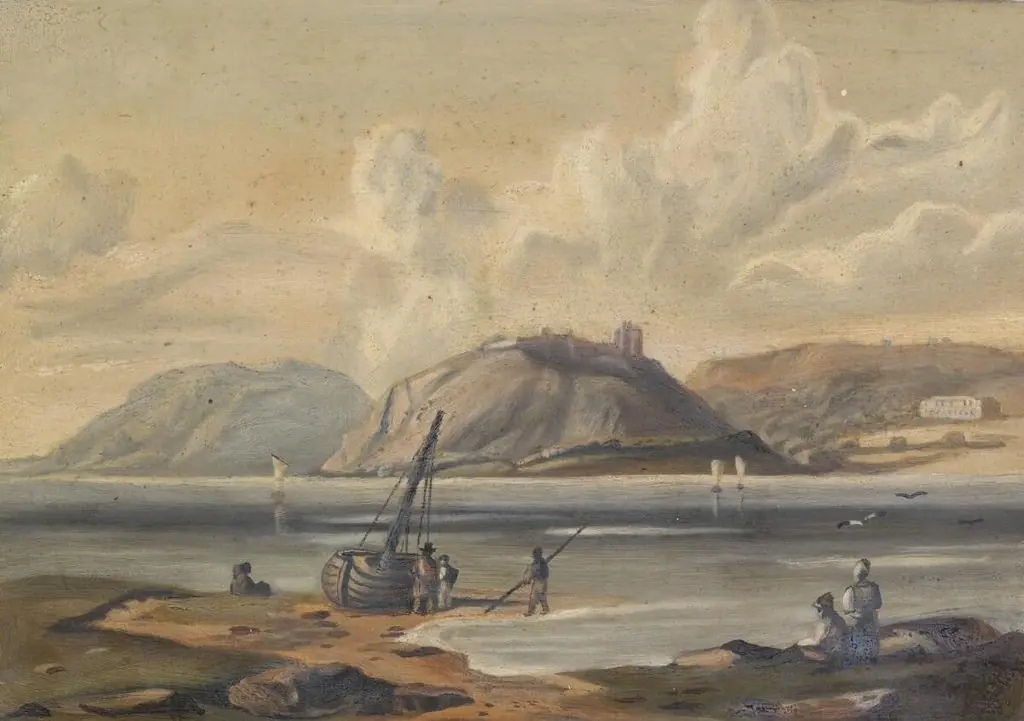
A ponta do calabouço
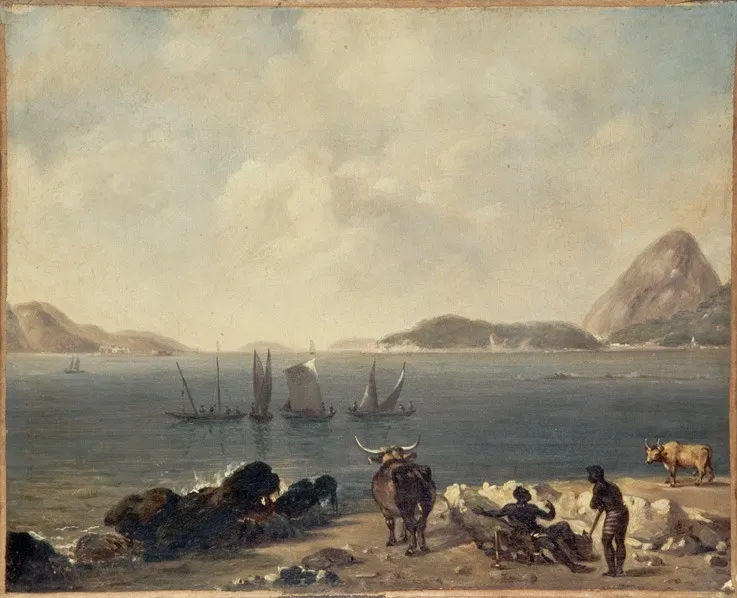
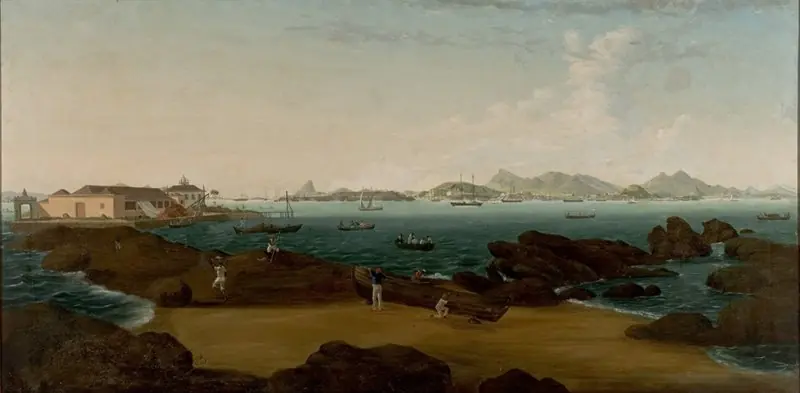
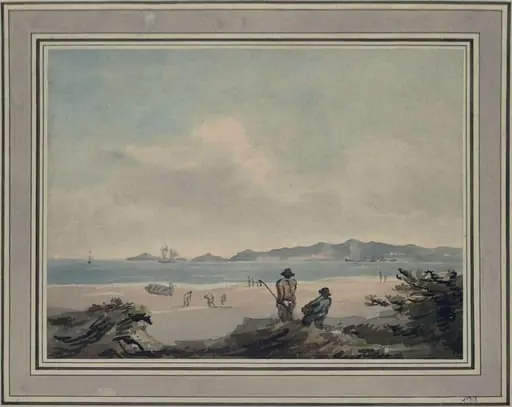
A ponta do calabouço is an oil painting by the Realist artist 2nd Baronet Sir Henry Chamberlain. It is held in the collection of the São Paulo Museum of Art.
About this work
Overview
It is part of the São Paulo Museum of Art’s collection and reflects the artist’s engagement with Brazilian landscapes during the early nineteenth century.
Created around 1850, *A ponta do calabouço* is an oil painting depicting a quiet coastal view of Rio de Janeiro. It is part of the São Paulo Museum of Art’s collection and reflects the artist’s engagement with Brazilian landscapes during the early nineteenth century. Though the painter was British, his work captures local scenes with observational precision, rooted in the realist approach of the period.
Subject & Meaning
The painting portrays two laborers near the shoreline, engaged in quiet activity beside a few small boats. Behind them, a distant mountain rises under a clouded sky, framing a subdued, uneventful moment. There is no dramatic narrative; instead, the scene emphasizes the rhythm of daily life in Rio’s coastal periphery, offering a restrained meditation on place and labor rather than spectacle.
Technique & Style
Executed in oil paint, the work employs soft tonal transitions and muted hues to convey atmospheric calm. The brushwork is restrained, avoiding theatrical effects in favor of observed detail. Light is diffused through the overcast sky, unifying the foreground and background. This approach aligns with realist conventions, prioritizing quiet authenticity over idealized composition.
History & Provenance
The painting was produced by Sir Henry Chamberlain, 2nd Baronet, during his time in Brazil as a British Army officer. His sketches and paintings from the 1820s–1850s served as visual records of Brazilian urban and coastal life. *A ponta do calabouço* entered the São Paulo Museum of Art’s holdings in the twentieth century, where it remains as part of a broader collection of 19th-century Brazilian-themed works.
Context
Chamberlain’s work emerged amid growing European interest in Latin American landscapes and customs. His depictions of Rio, though made by a foreign observer, contributed to early visual documentation of the city’s daily rhythms. Unlike romanticized portrayals common in European art, his images often avoided exoticism, favoring understated, quotidian moments that reflect the city’s quieter corners.
Legacy
Though not widely exhibited beyond Brazil, the painting endures as a modest but significant record of mid-19th-century Rio de Janeiro. Chamberlain’s body of work, including this piece, provides a rare non-indigenous perspective on local life during a period of transition. It remains a reference point for scholars studying early visual ethnography in South America.
Artist & collection
Artist
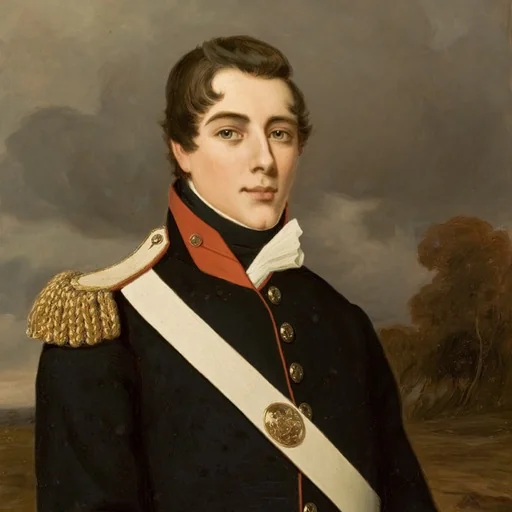
2nd Baronet Sir Henry Chamberlain
Captain Sir Henry Chamberlain, 2nd Baronet (2 October 1796 – 8 September 1843) was a British Army officer of the Royal Artillery and an artist whose series of drawings of Brazil were well known in his time.