Artwork
Allegorical design with figures: Clemency, Prudence and Justice with Pallas, Heroic Poetry, Liberty, Discretion, History and Mercury (preliminary design for a panel from Royal State Coach for George I)
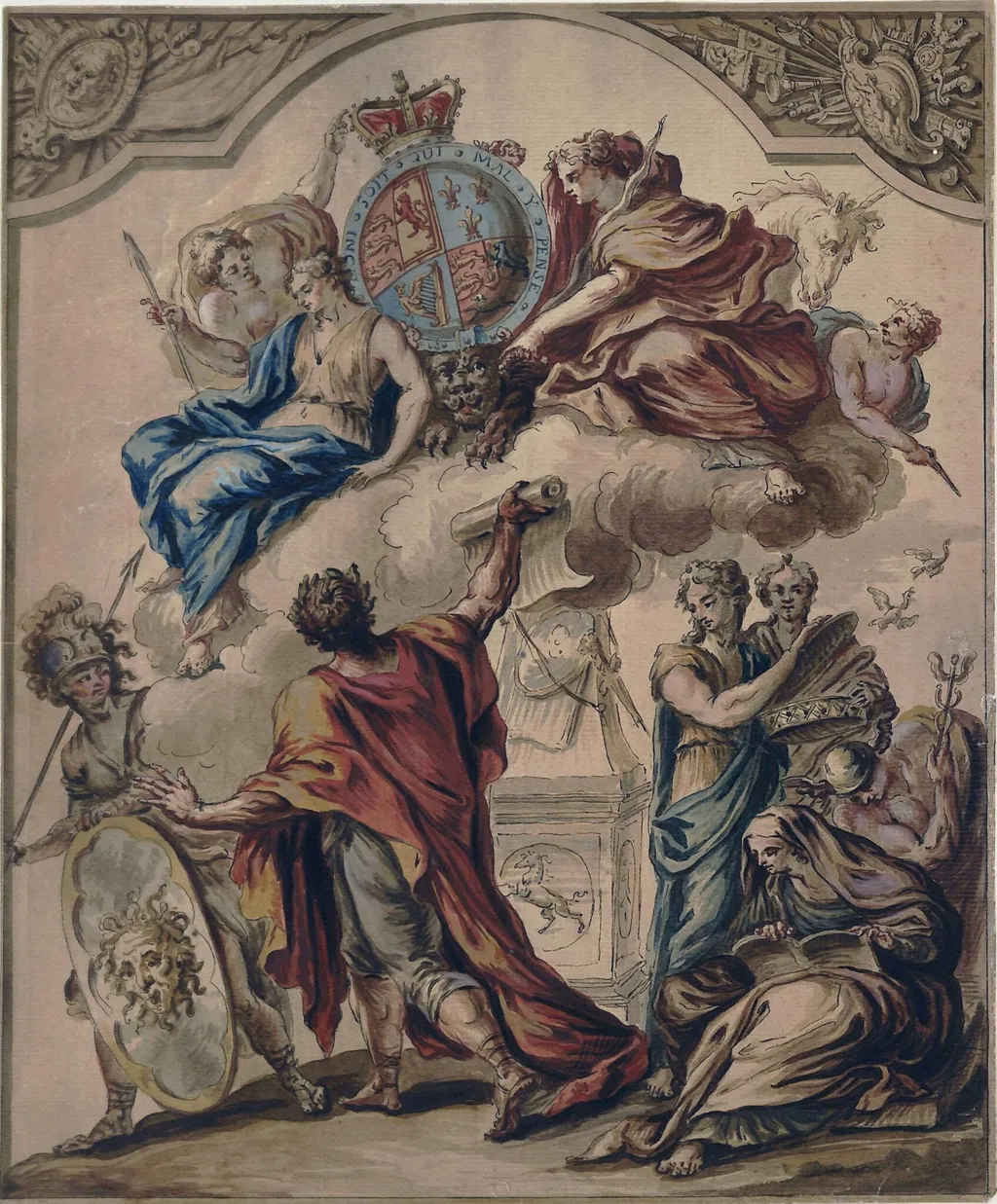
Allegorical design with figures: Clemency, Prudence and Justice with Pallas, Heroic Poetry, Liberty, Discretion, History and Mercury (preliminary design for a panel from Royal State Coach for George I) is a watercolor work on paper by the Rococo painting artist James Thornhill. It is held in the collection of the Victoria and Albert Museum.
About this work
Overview
Sir James Thornhill’s watercolour is a preparatory sketch for a wooden panel intended for the royal state coach commissioned for King George I around 1718. The composition is densely populated with allegorical figures, each embodying a specific virtue or concept, arranged to convey a unified message of sovereign authority during the early, unsettled years of George’s rule.
Subject & Meaning
The design gathers personifications such as Clemency, Prudence, Justice accompanied by Pallas, alongside Heroic Poetry, Liberty, Discretion, History and Mercury. Together they form an allegorical programme that celebrates the monarch’s legitimacy, wisdom, and the stability he is expected to bring, reinforcing the political narrative of a powerful and enlightened ruler.
Technique & Style
Executed in watercolour, the drawing displays Thornhill’s characteristic clarity of line and balanced arrangement. The figures are rendered with a restrained palette, allowing the emphasis to fall on their symbolic attributes and gestures rather than on colouristic effects, reflecting the early‑18th‑century British decorative aesthetic that favored narrative clarity over painterly flourish.
History & Provenance
Thornhill, appointed History Painter to George I in 1718 and later Sergeant Painter in 1720, produced the sketch as part of his duties for royal commissions. Although the panel was never realized, the watercolour survives as evidence of his involvement in state ceremonial design, complementing his more extensive work on ceilings, walls, and theatrical scenery.
Context
The design emerged at a time when George I’s accession in 1714 was marked by political turbulence and the need to assert monarchical authority. Allegorical imagery was a common vehicle for propaganda, and the inclusion of virtues and classical deities aligned the new Hanoverian dynasty with established symbols of good governance and cultural continuity.
Artist & collection
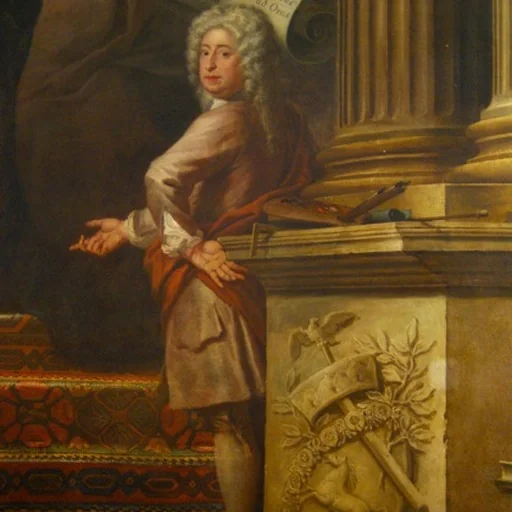
Artist
Sir James Thornhill was an English painter of historical subjects working in the Italian baroque tradition.

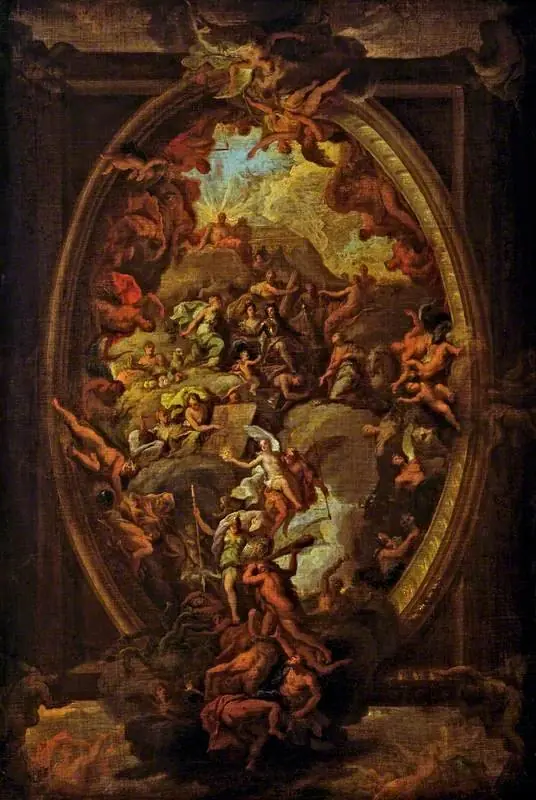 William and Mary Presenting the Cap of Liberty to Europe (sketch for the painted ceiling of the Great Hall, Greenwich Hospital)
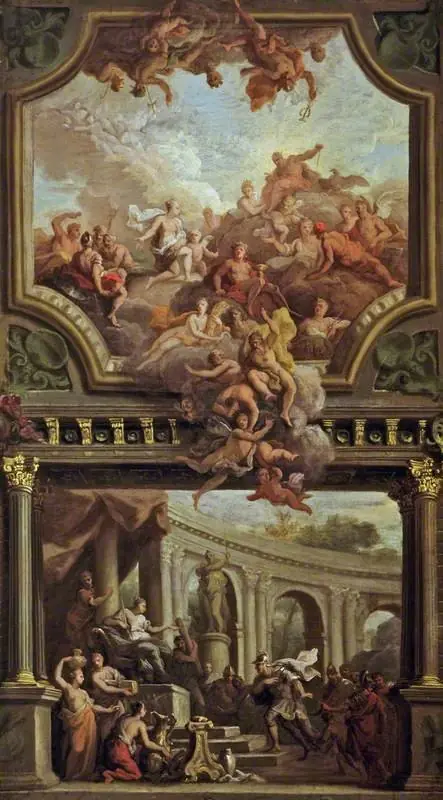 Aeneas before Dido, and Venus Supplicating Jupiter (sketch for a wall and ceiling decoration)
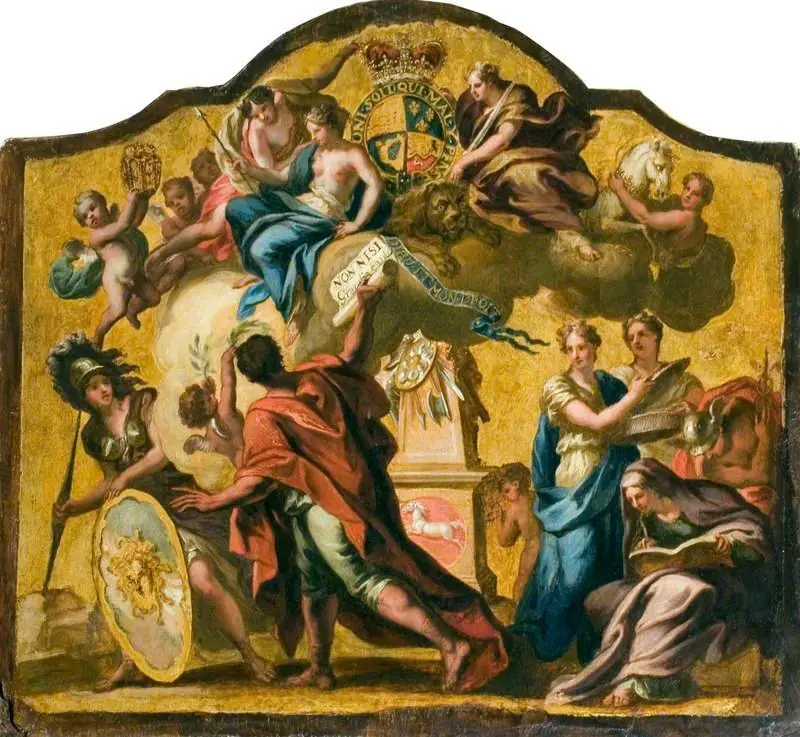 Allegorical Figures: Clemency, Prudence and Justice with Pallas, Heroic Poetry, Liberty, Discretion, History and Mercury (from the Royal State Coach for George I)
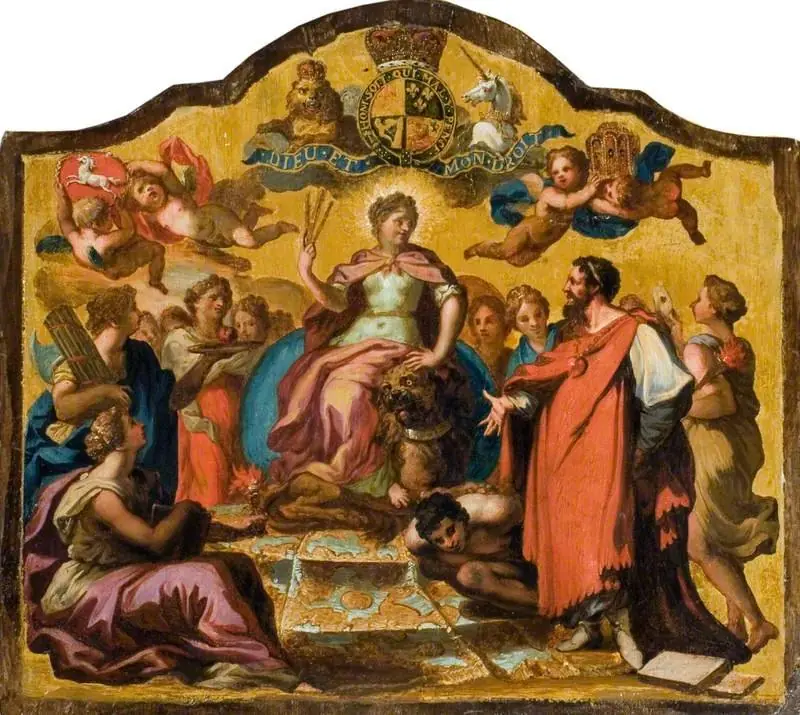 Allegorical Figures: Britannia Enthroned, Surrounded by Concord, Learning and Religion Overcoming Vice (from the Royal State Coach for George I)
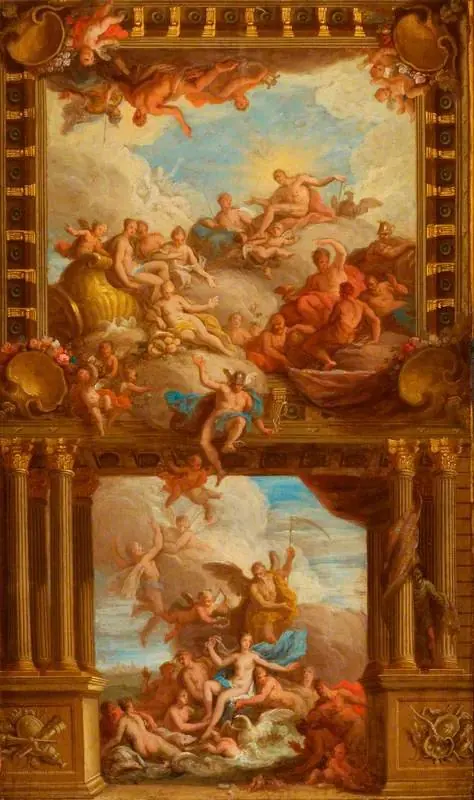 The Birth of Venus, and the Gods of Olympus (sketch for a wall and ceiling decoration)
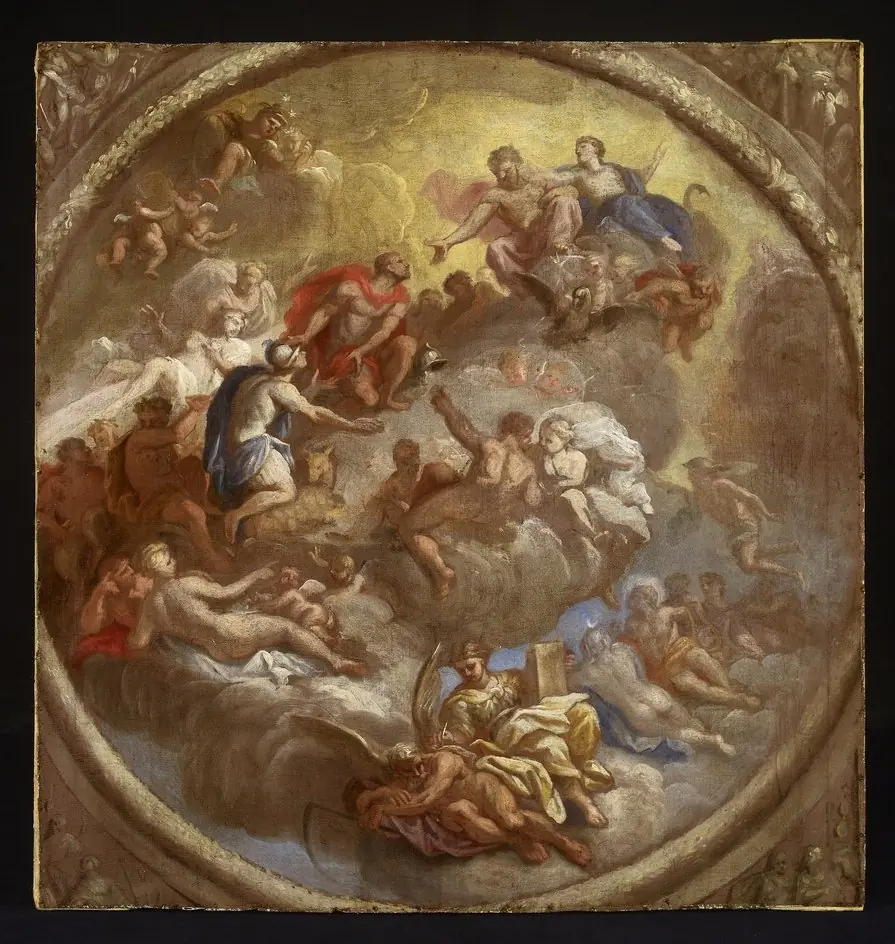 Sketch for a Ceiling Design
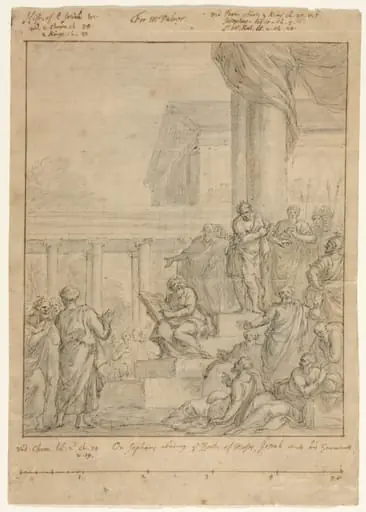 Study for King Josiah Rending his Garments
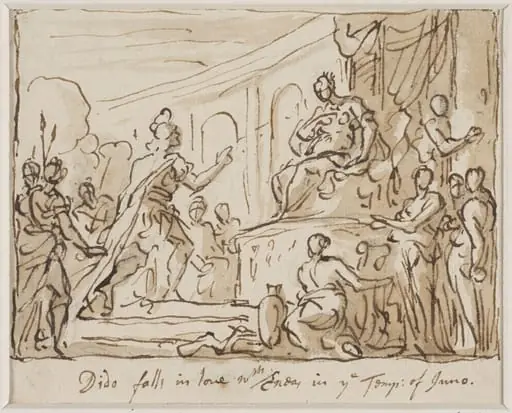 Aeneas before Dido in the Temple of Juno
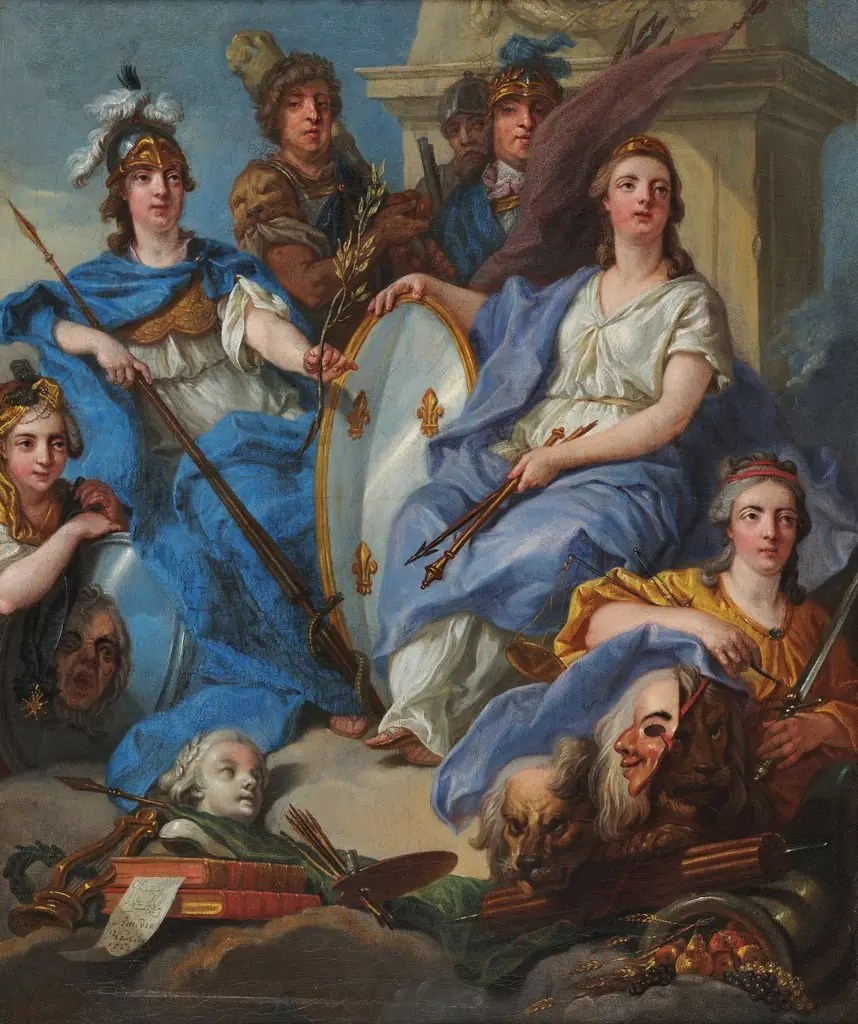 Allegory of the Family Pact
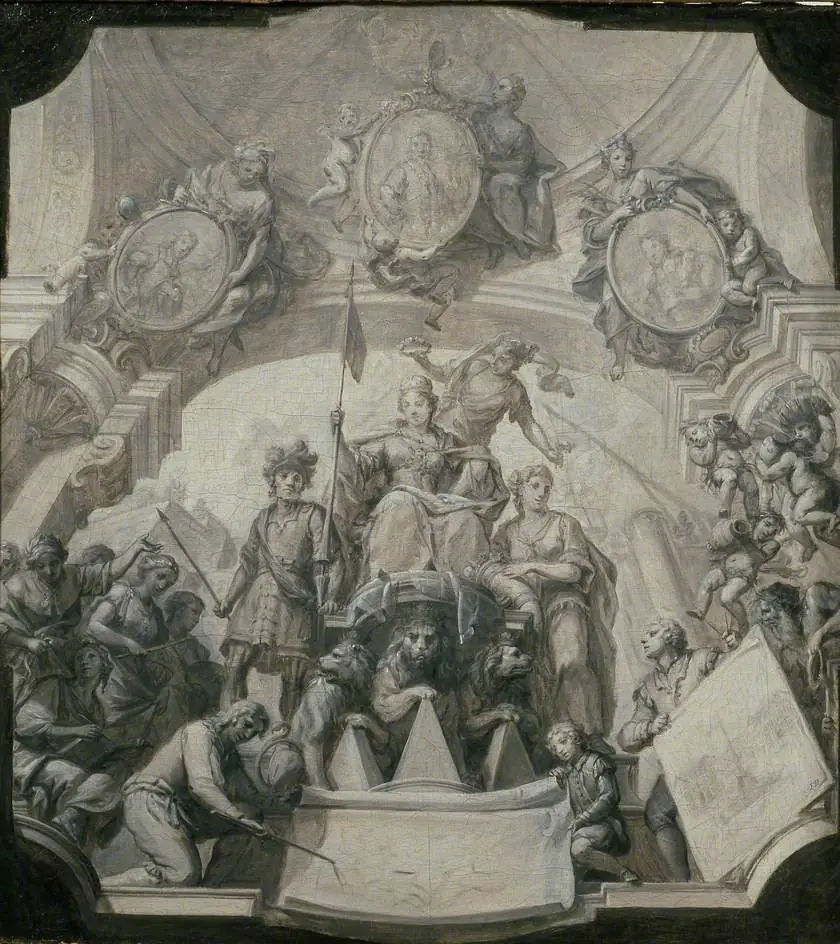 Design for an allegorical Ceiling Painting
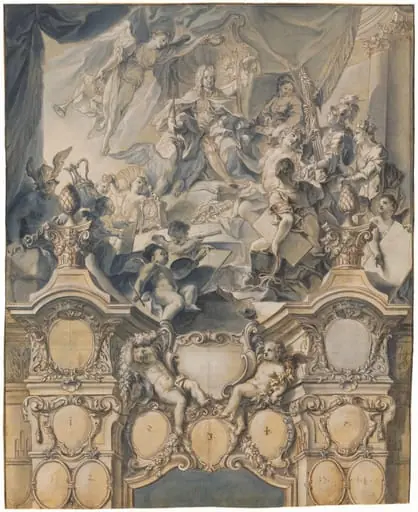 The Arts and Powers Pay Homage to Emperor Charles VI
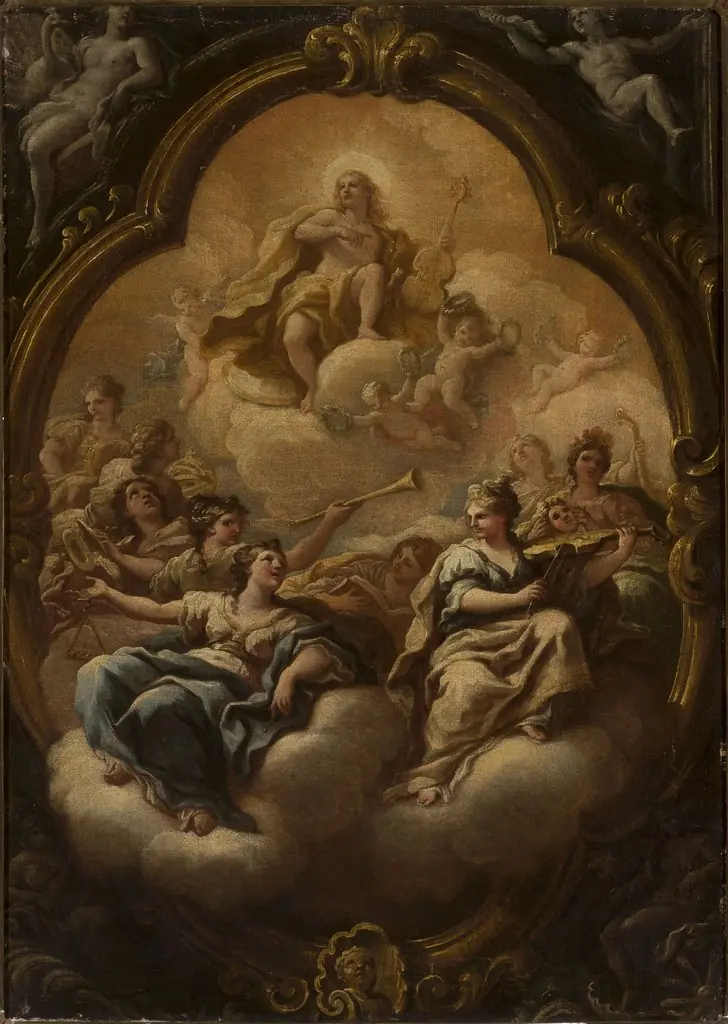 Apollo and Muses
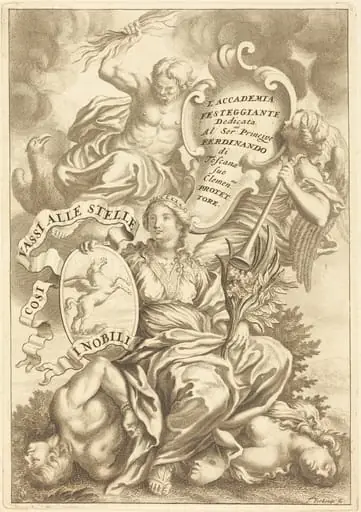 Dedication Plate
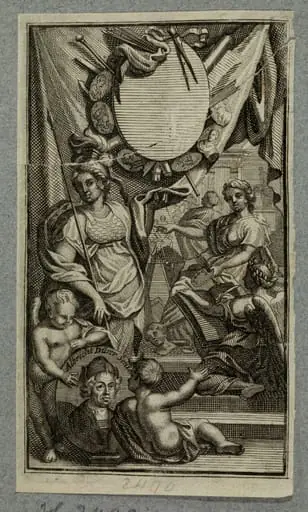 Frontispiece with portrait of Albrecht Dürer d.Ä.
 Britannia Crowning History
 H Beard Print Collection
 Quarts de plafons
 Allegory of the Papacy of Clement XI