Artwork
Sketch for a Ceiling Design
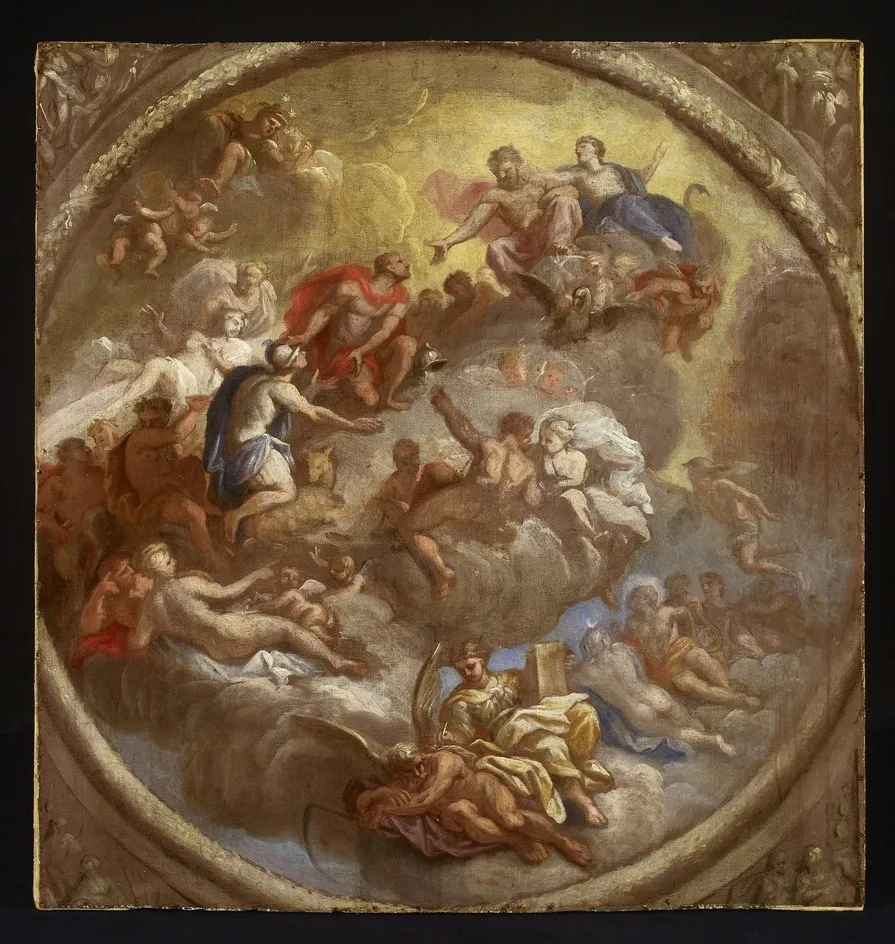
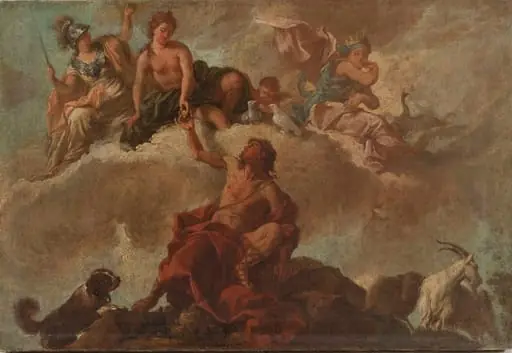
Sketch for a Ceiling Design is an oil painting by James Thornhill. It dates from 1714 and is held in the collection of the Ashmolean Museum.
About this work
Overview
An oil sketch attributed to James Thornhill, dated around 1714, was made as a preparatory study for a ceiling decoration. It is part of the collection at the Ashmolean Museum in Oxford, where it serves as a tangible record of the artist’s planning process for large-scale decorative commissions in early 18th-century Britain.
Subject & Meaning
The composition suggests allegorical or mythological figures arranged in a dynamic, spatially complex formation typical of Baroque ceiling schemes. Though incomplete, the sketch implies a narrative of celestial order or civic virtue, reflecting the ambitions of aristocratic and institutional interiors of the period.
Technique & Style
Thornhill employed loose, fluid brushwork to explore form and light, prioritizing compositional balance over finish. The oil medium allowed for rapid adjustments, enabling him to test spatial relationships and figure groupings. His style blends Italianate grandeur with English sensibilities, characteristic of his role as a leading muralist of the time.
History & Provenance
The sketch remained in Thornhill’s possession until his death in 1734, later entering private collections before being acquired by the Ashmolean Museum. Its survival is uncommon, as most preparatory works for ceilings were discarded or destroyed after execution. Its preservation offers rare insight into his working method.
Context
Created during a period of renewed interest in monumental decoration following the Great Fire of London, the sketch reflects the demand for grand interiors in palaces and public buildings. Thornhill was commissioned by the Crown and aristocracy, aligning his work with the visual language of power and classical revival in early Georgian Britain.
Legacy
This sketch stands as a key example of British decorative practice before the rise of neoclassicism. It documents the transition from Baroque exuberance to more restrained forms and remains a valuable resource for understanding the technical and conceptual stages behind major architectural commissions of the era.
Artist & collection
Artist
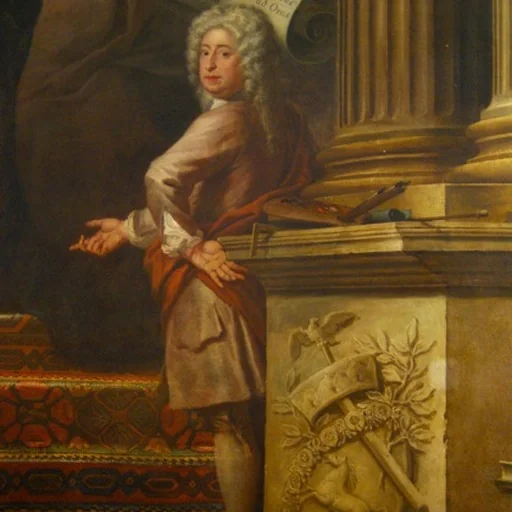
Sir James Thornhill was an English painter of historical subjects working in the Italian baroque tradition.

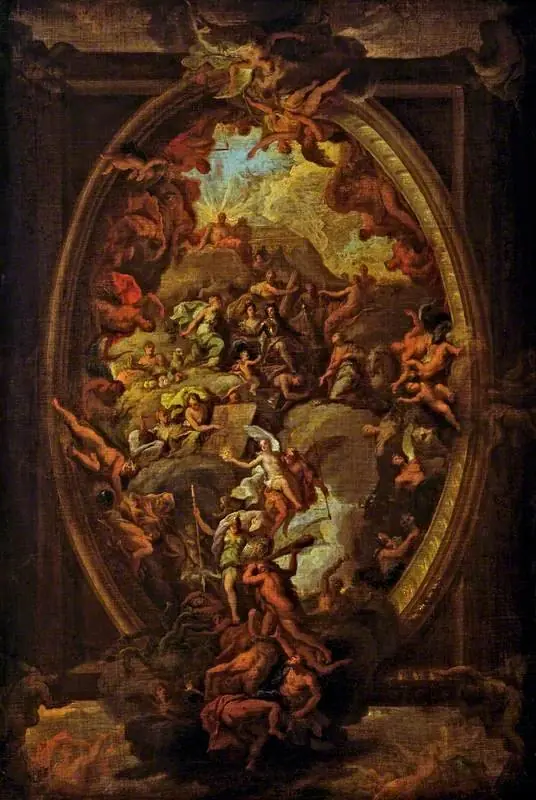 William and Mary Presenting the Cap of Liberty to Europe (sketch for the painted ceiling of the Great Hall, Greenwich Hospital)
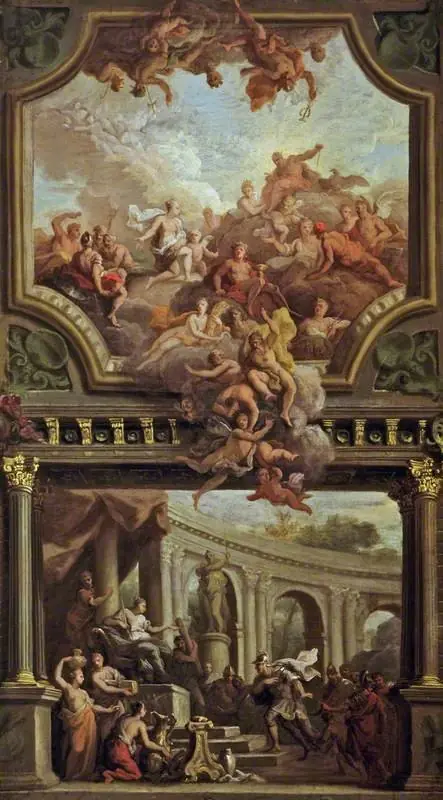 Aeneas before Dido, and Venus Supplicating Jupiter (sketch for a wall and ceiling decoration)
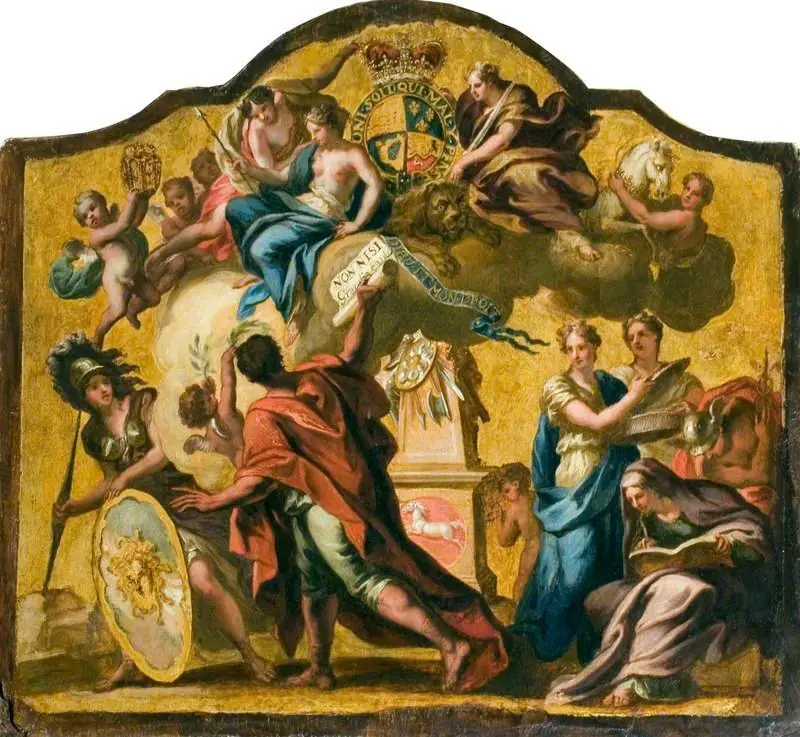 Allegorical Figures: Clemency, Prudence and Justice with Pallas, Heroic Poetry, Liberty, Discretion, History and Mercury (from the Royal State Coach for George I)
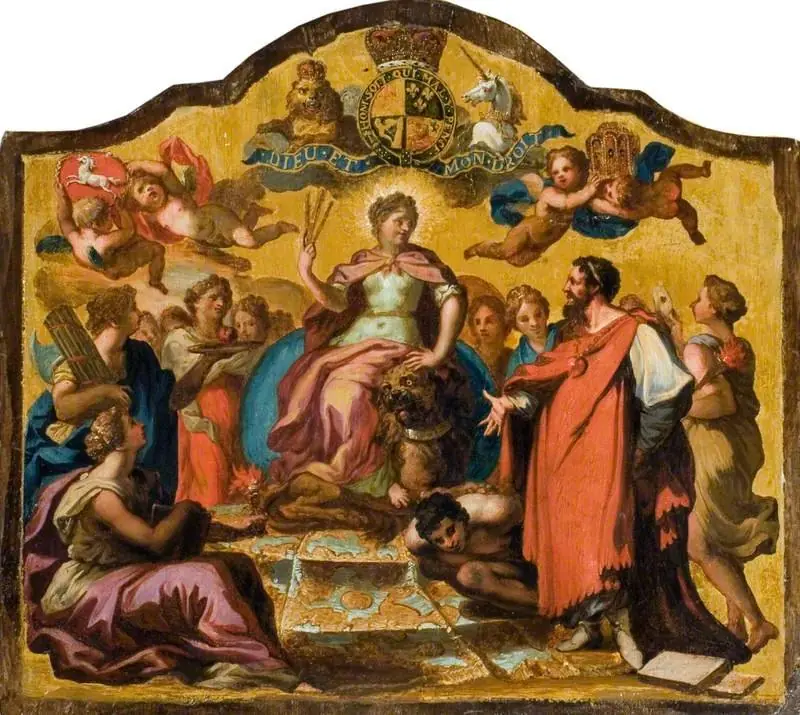 Allegorical Figures: Britannia Enthroned, Surrounded by Concord, Learning and Religion Overcoming Vice (from the Royal State Coach for George I)
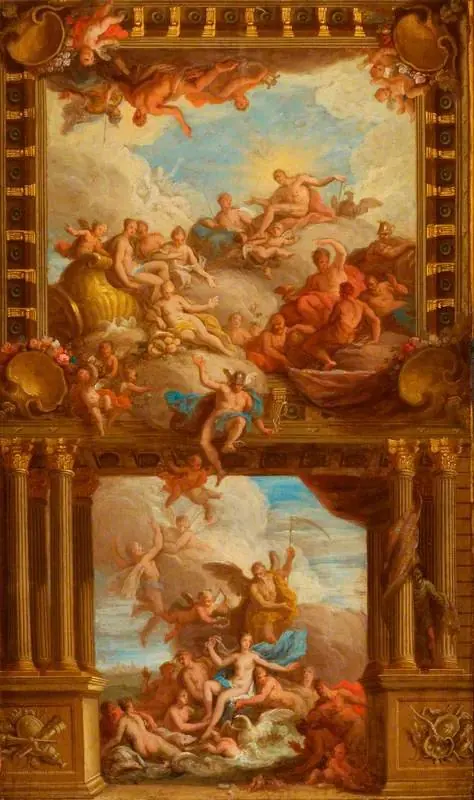 The Birth of Venus, and the Gods of Olympus (sketch for a wall and ceiling decoration)
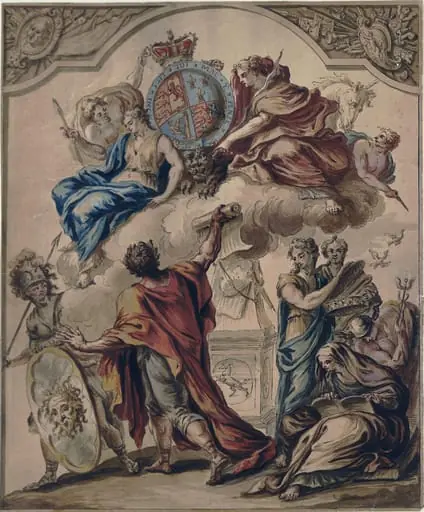 Allegorical design with figures: Clemency, Prudence and Justice with Pallas, Heroic Poetry, Liberty, Discretion, History and Mercury (preliminary design for a panel from Royal State Coach for George I)
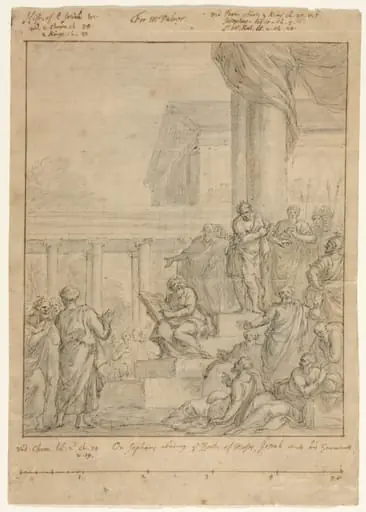 Study for King Josiah Rending his Garments
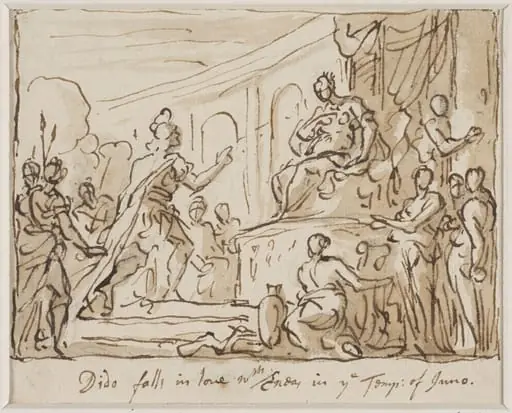 Aeneas before Dido in the Temple of Juno
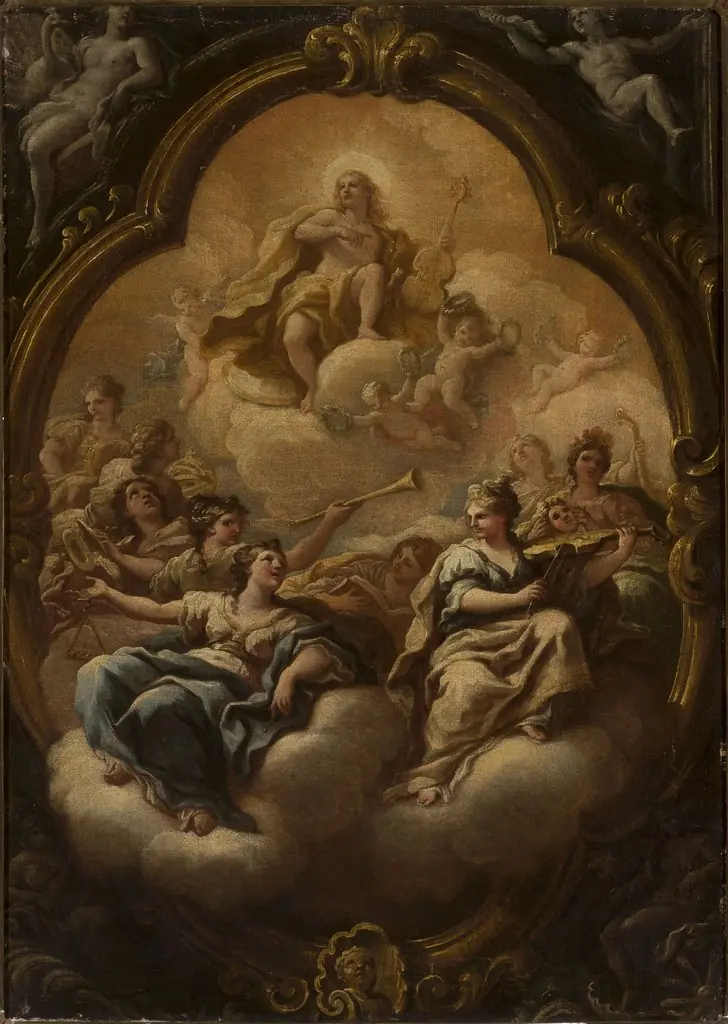 Apollo and Muses
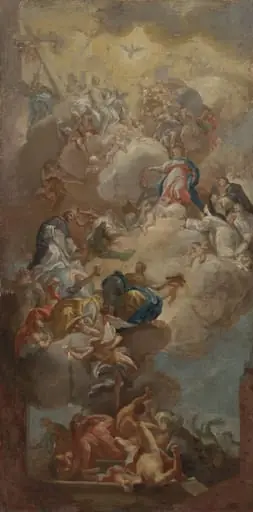 The Glorification of Saint Dominic
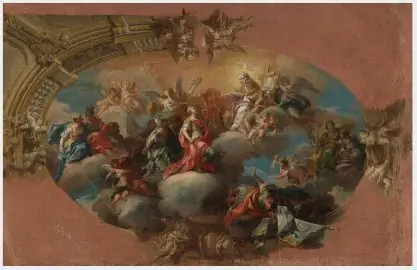 The Glorification of Saint James the Great
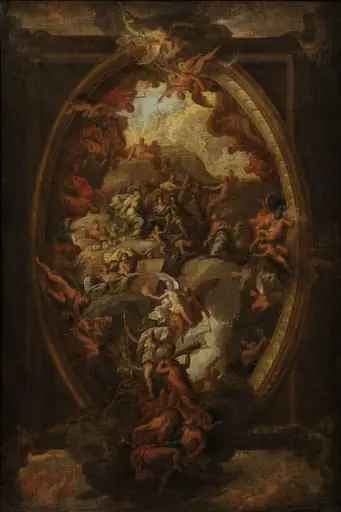 William and Mary Presenting the Cap of Liberty to Europe (sketch for the painted ceiling of the Great Hall, Greenwich Hospital)
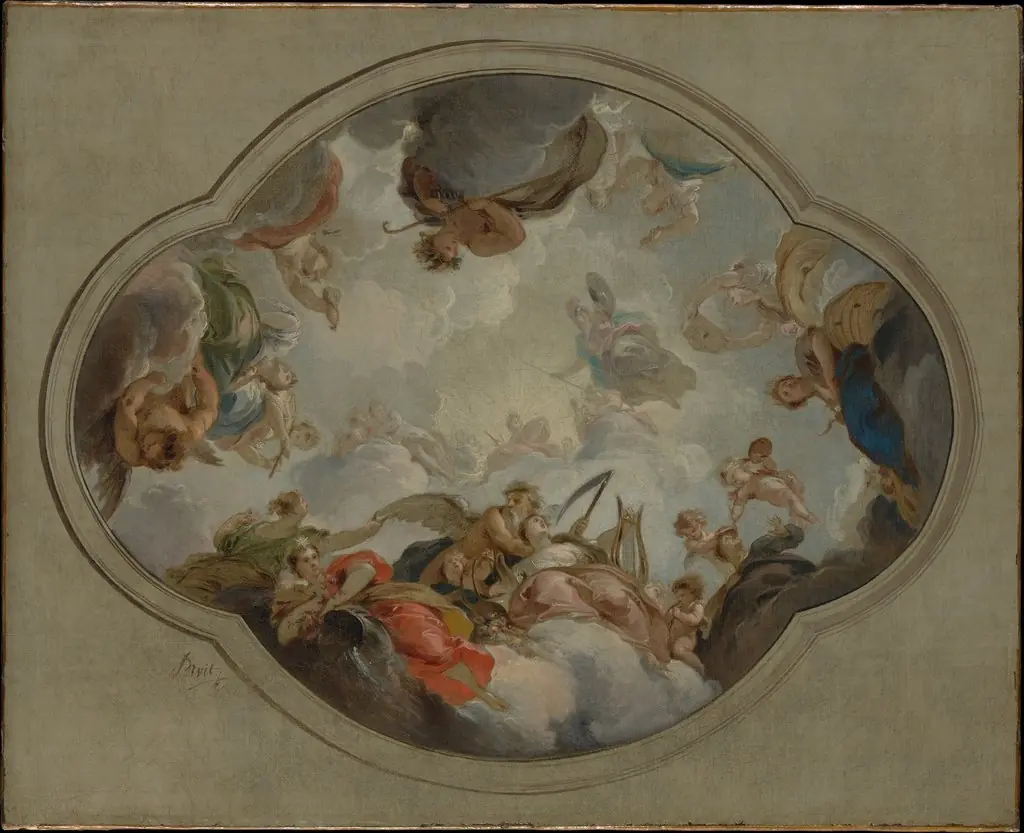 Allegory of the Arts
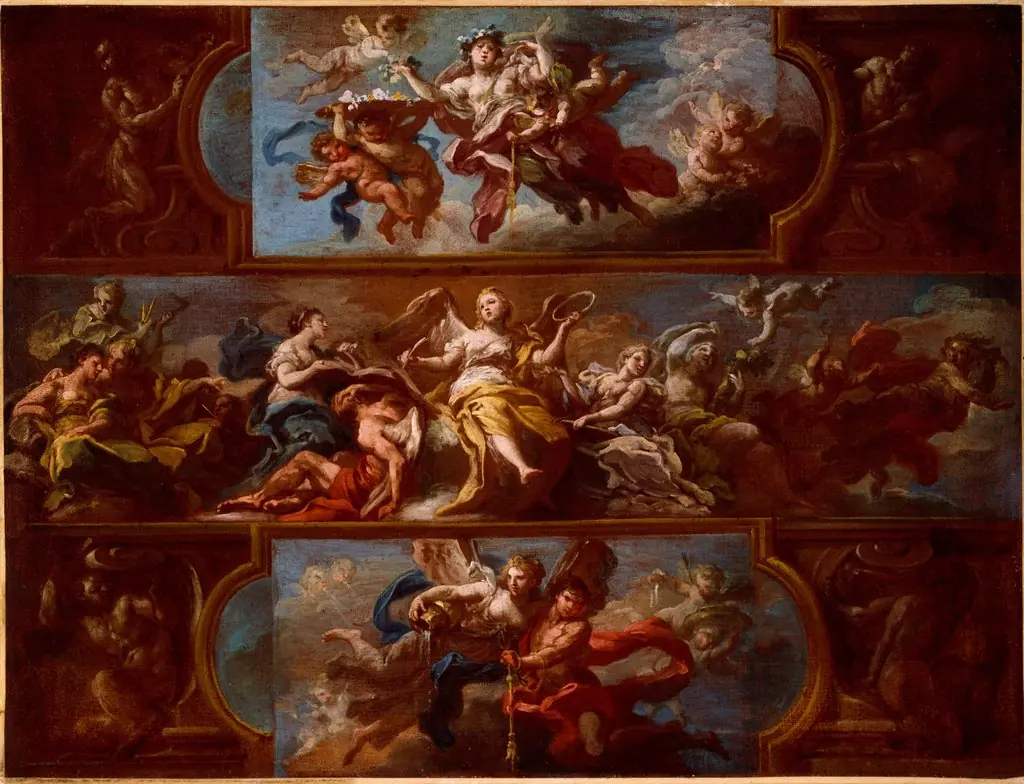 Allegory
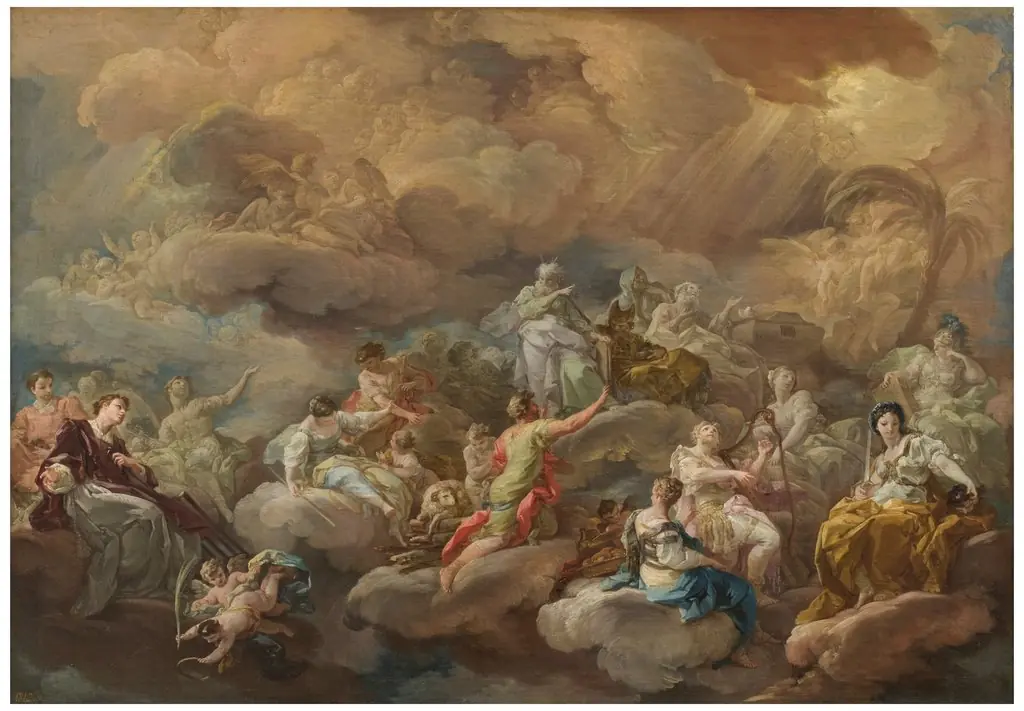 Gloria de santos
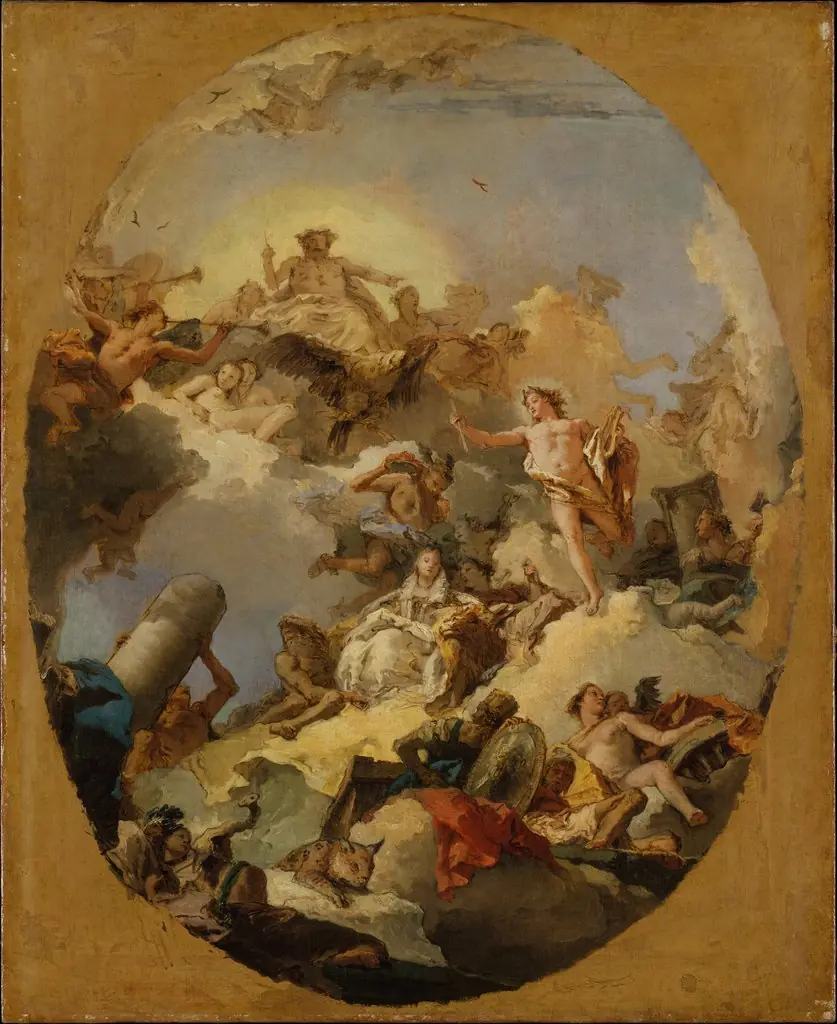 The Apotheosis of the Spanish Monarchy
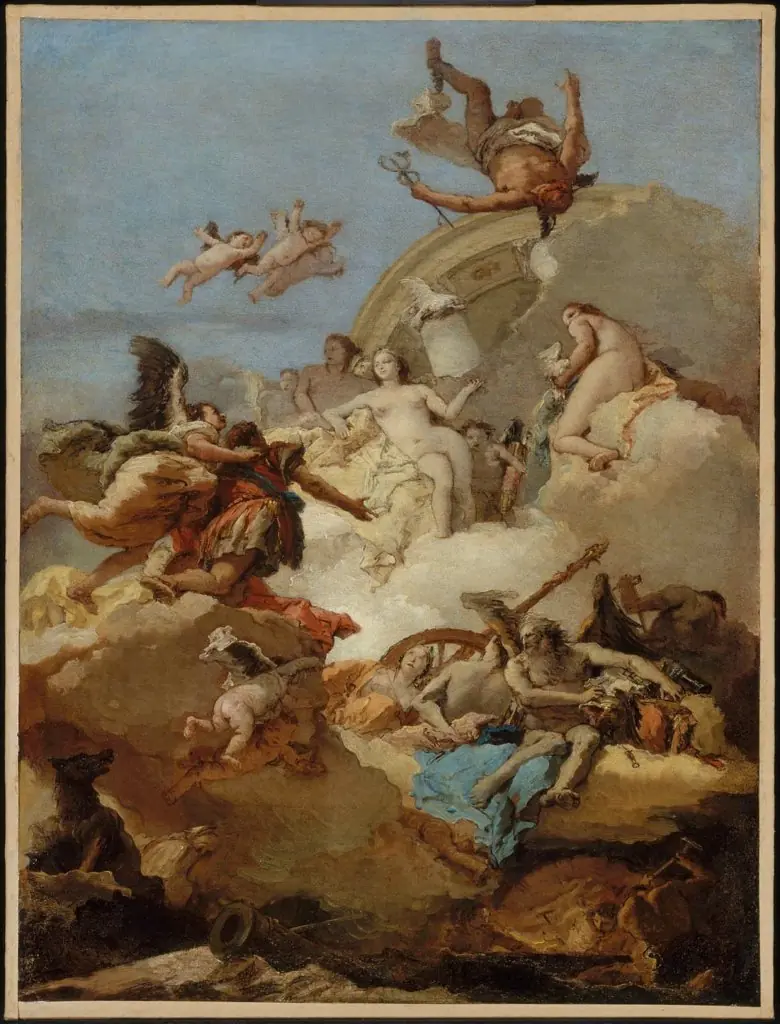 Apotheosis of Aeneas
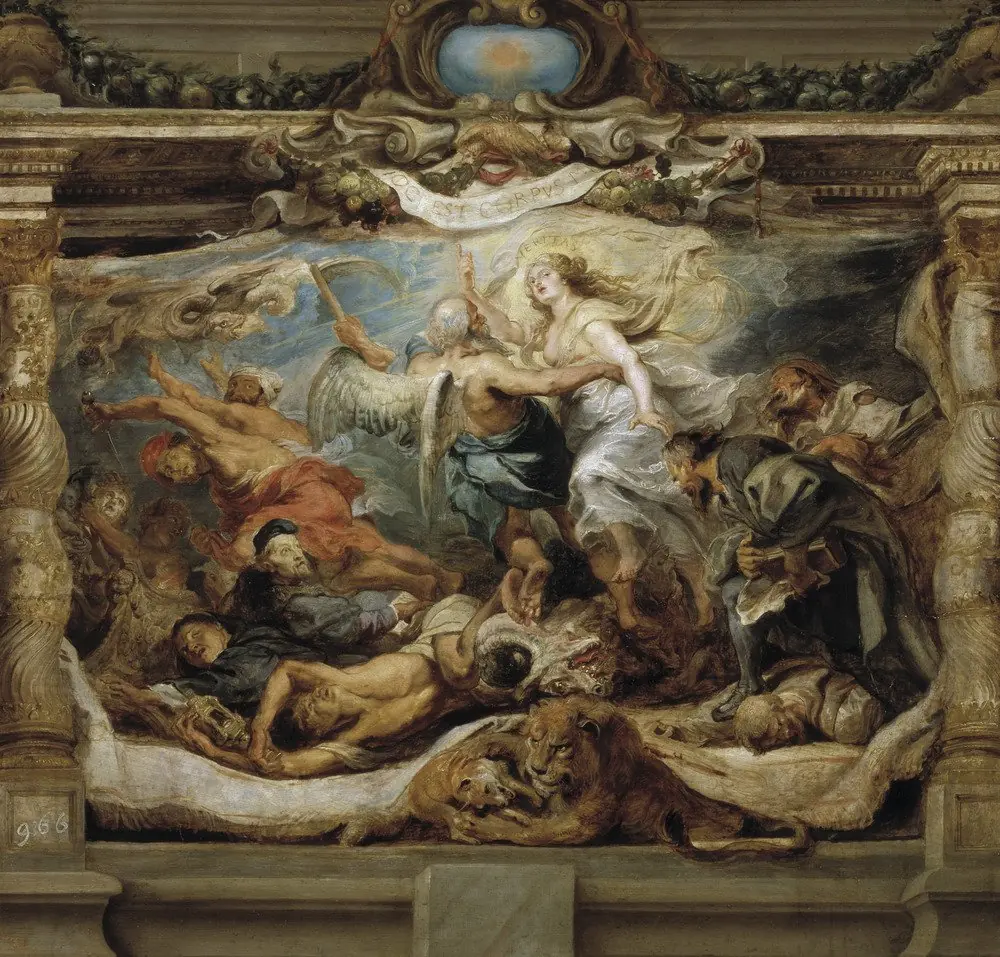 The Victory of Truth over Heresy
 Judecata lui Paris
 Sketch for a Ceiling Fresco