Artwork
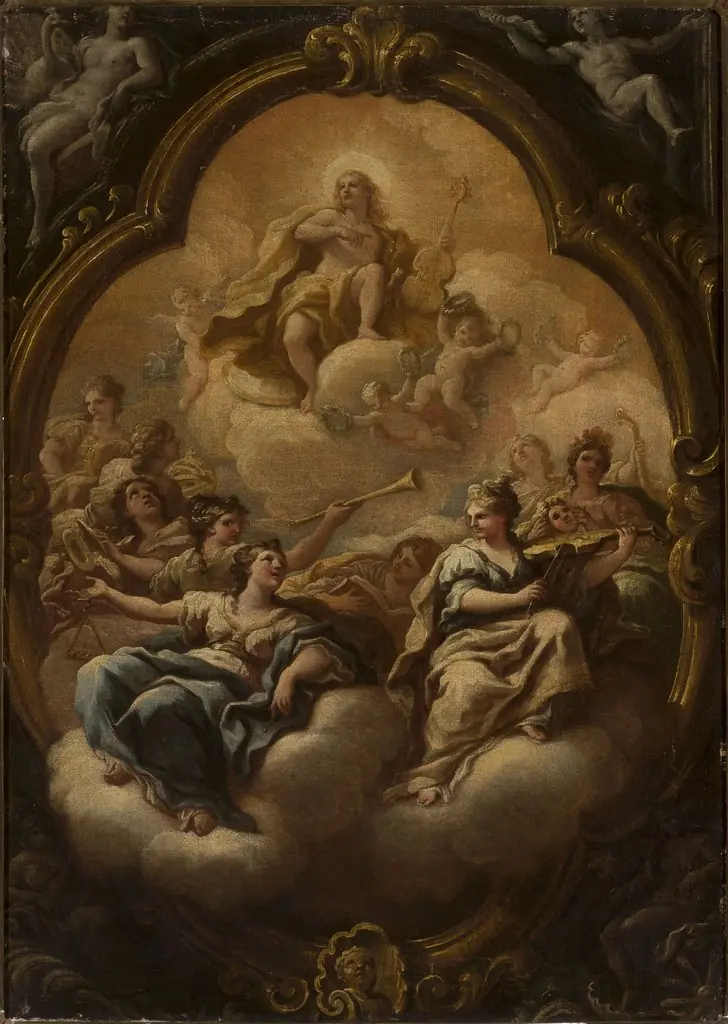
Allegorical Figures: Clemency, Prudence and Justice with Pallas, Heroic Poetry, Liberty, Discretion, History and Mercury (from the Royal State Coach for George I)
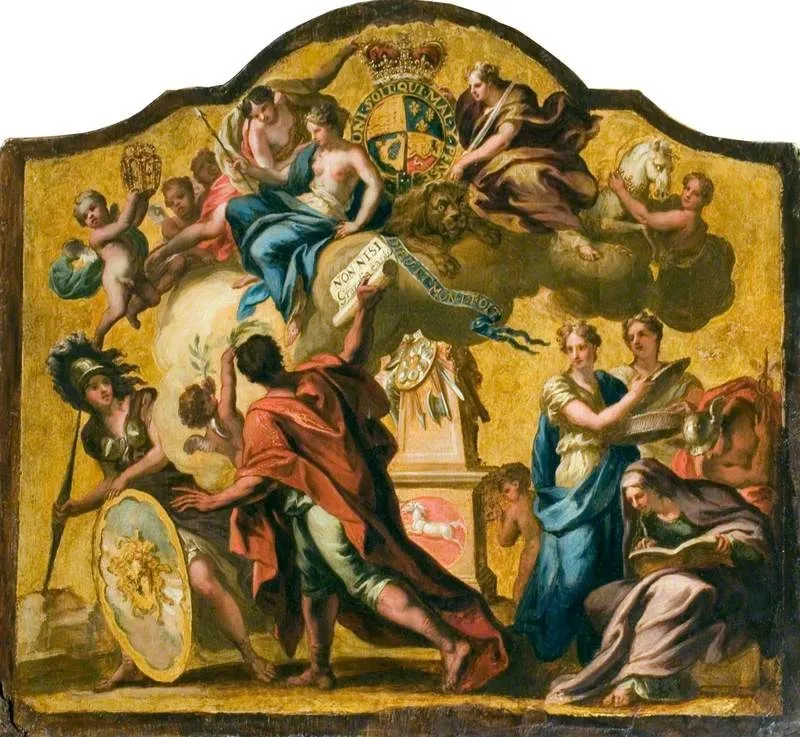
Allegorical Figures: Clemency, Prudence and Justice with Pallas, Heroic Poetry, Liberty, Discretion, History and Mercury (from the Royal State Coach for George I) is an unspecified painting by James Thornhill. It dates from 1718 and is held in the collection of the Victoria and Albert Museum.
About this work
Overview
It is a large-scale allegorical composition featuring nine personified virtues and concepts, arranged in a dynamic, cloud-bound grouping.
Painted in 1718 by James Thornhill, this work originally adorned the Royal State Coach of King George I. It is a large-scale allegorical composition featuring nine personified virtues and concepts, arranged in a dynamic, cloud-bound grouping. The painting is now held in the Victoria and Albert Museum, where it survives as a rare example of British decorative painting from the early 18th century, intended for royal ceremonial use rather than private display.
Subject & Meaning
The figures represent abstract ideals central to monarchical authority: Clemency, Prudence, Justice, Liberty, Discretion, History, and Heroic Poetry, alongside Pallas (Athena) and Mercury. Each is rendered with symbolic attributes—scales, books, laurel wreaths, wings—to convey their roles in sustaining just rule. The arrangement suggests a divine endorsement of George I’s reign, weaving classical mythology with contemporary political ideology to legitimize power through moral and intellectual virtue.
Technique & Style
Thornhill employed bold, saturated colors—deep blues and crimson—against a warm golden background to heighten visual drama. Figures are rendered with fluid, theatrical gestures, emphasizing movement and spatial depth. Chiaroscuro is used subtly to model forms, while the dense composition avoids deep perspective, favoring a flattened, decorative plane suited to the coach’s curved surface. Details in drapery and anatomy reflect Baroque influences adapted to British tastes of the period.
History & Provenance
Commissioned for George I’s Royal State Coach, the painting was part of a larger decorative scheme meant to glorify the Hanoverian monarchy. After the coach’s use declined, the panel was removed and preserved. It entered the Victoria and Albert Museum’s collection in the 19th century, where it remains one of the few surviving elements of royal ceremonial art from the early Georgian era, offering insight into state-sponsored visual propaganda.
Context
Created during a period of political consolidation after the Glorious Revolution, the painting reflects efforts to align the new Hanoverian dynasty with classical ideals of governance. Thornhill, then rising as a leading British muralist, drew from Italian Renaissance and Baroque traditions, adapting them for a British audience. The work exemplifies how allegory was used to communicate legitimacy, order, and cultural continuity in a time of dynastic transition.
Legacy
Though largely forgotten outside specialist circles, the painting stands as a significant artifact of British decorative art and political iconography. It illustrates the fusion of myth and monarchy that defined early 18th-century court culture. Thornhill’s approach influenced later British muralists, and the work remains a key reference for understanding how visual symbolism reinforced state authority in the pre-industrial era.
Artist & collection
Artist
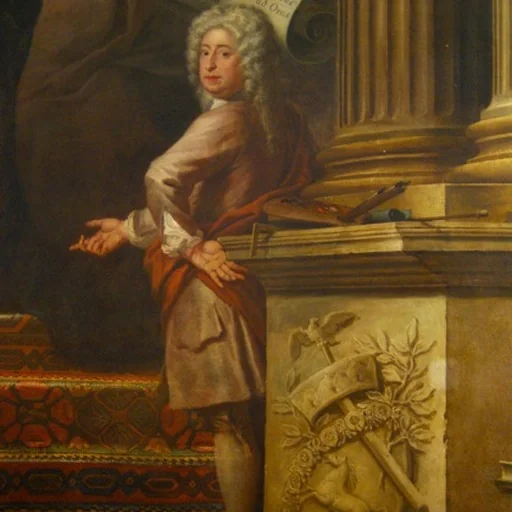
Sir James Thornhill was an English painter of historical subjects working in the Italian baroque tradition.

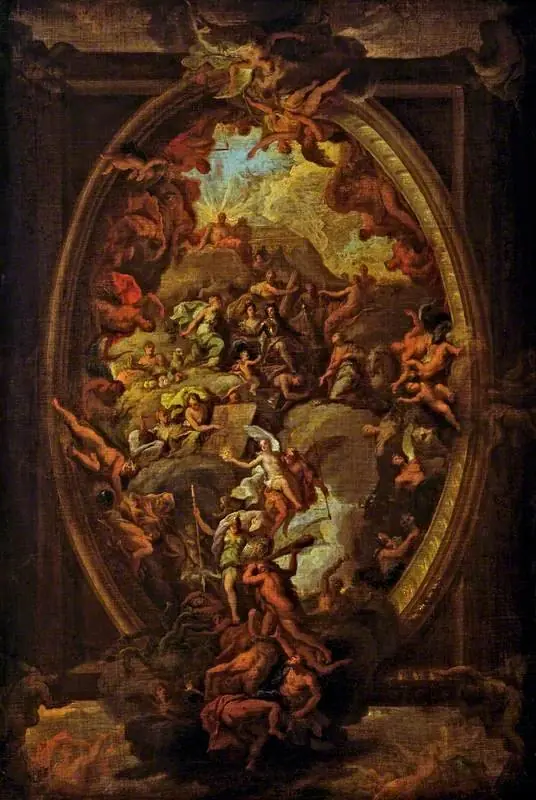 William and Mary Presenting the Cap of Liberty to Europe (sketch for the painted ceiling of the Great Hall, Greenwich Hospital)
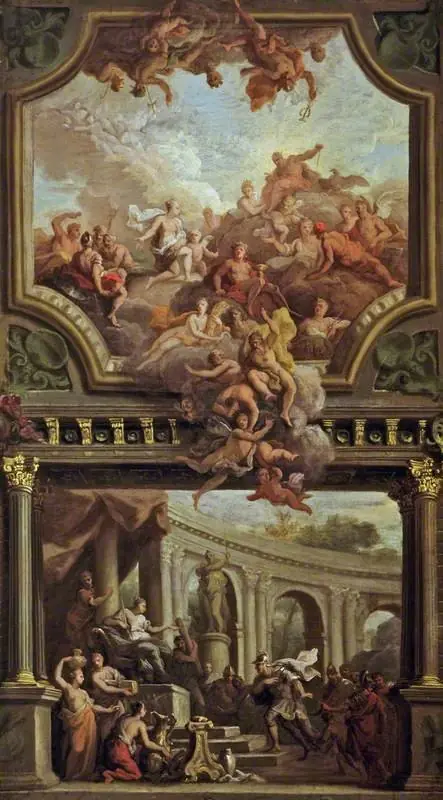 Aeneas before Dido, and Venus Supplicating Jupiter (sketch for a wall and ceiling decoration)
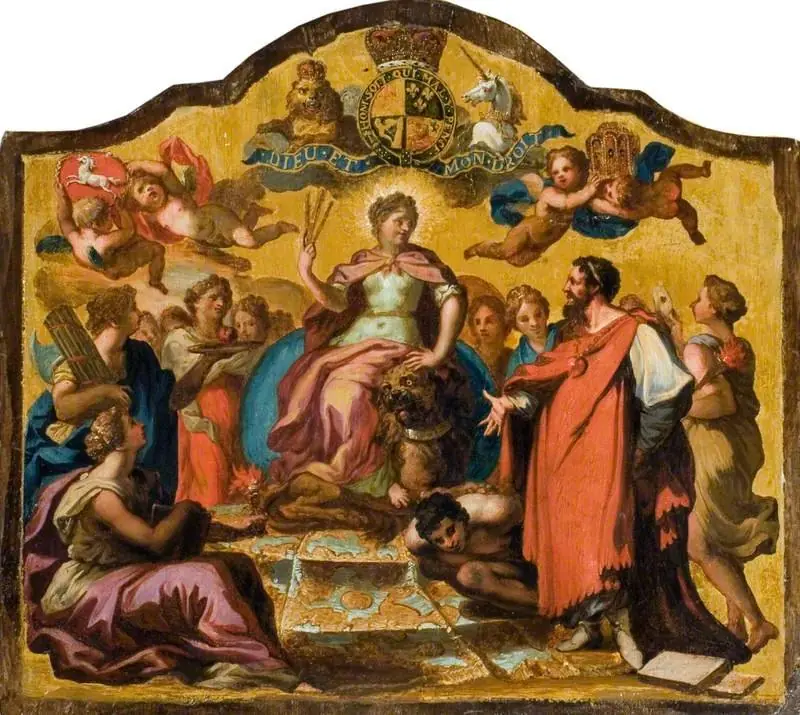 Allegorical Figures: Britannia Enthroned, Surrounded by Concord, Learning and Religion Overcoming Vice (from the Royal State Coach for George I)
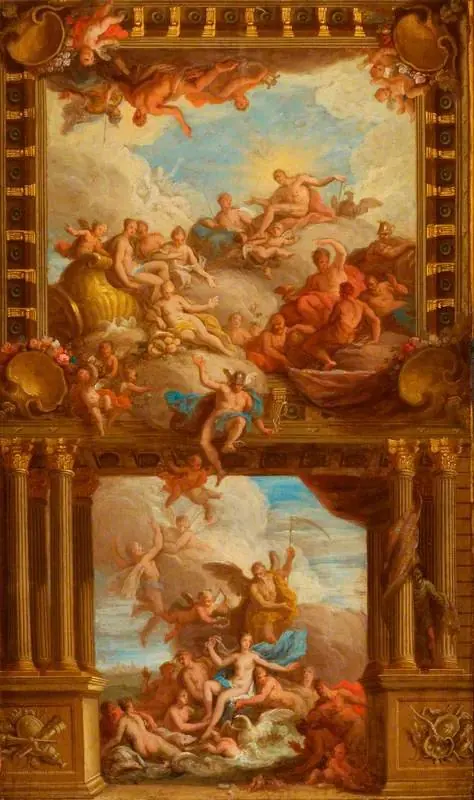 The Birth of Venus, and the Gods of Olympus (sketch for a wall and ceiling decoration)
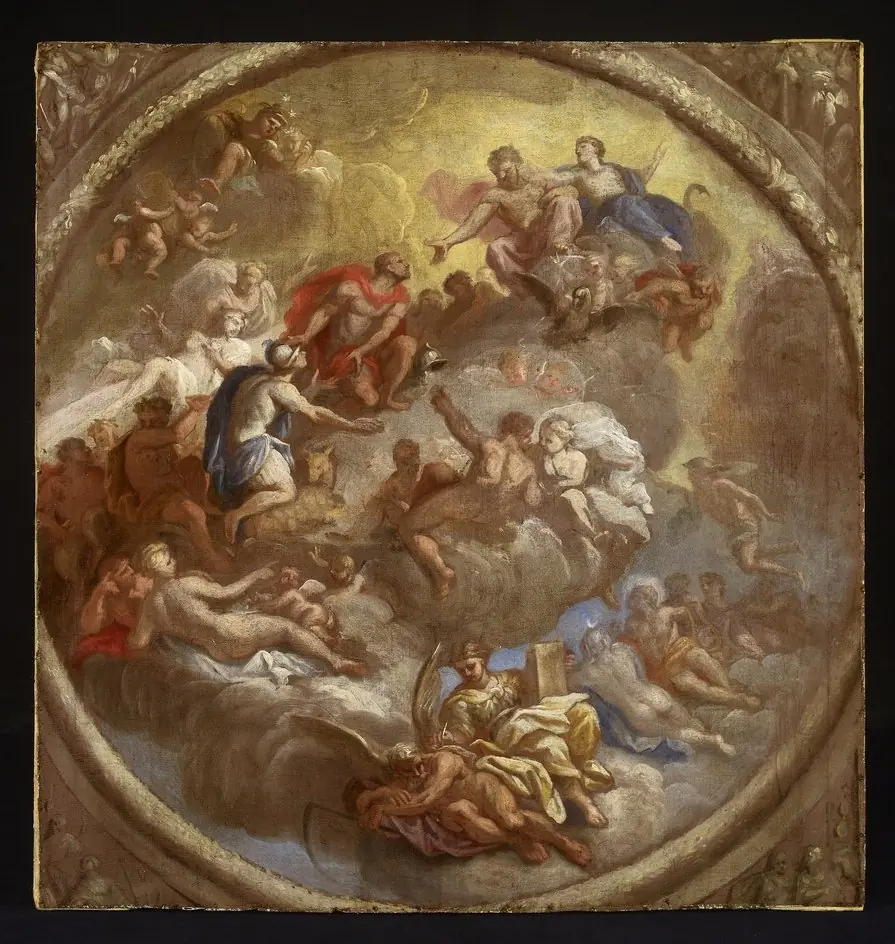 Sketch for a Ceiling Design
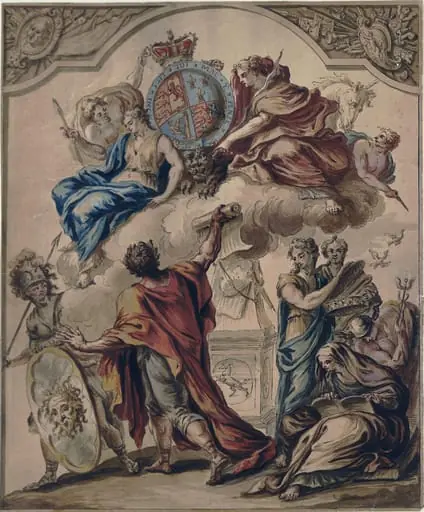 Allegorical design with figures: Clemency, Prudence and Justice with Pallas, Heroic Poetry, Liberty, Discretion, History and Mercury (preliminary design for a panel from Royal State Coach for George I)
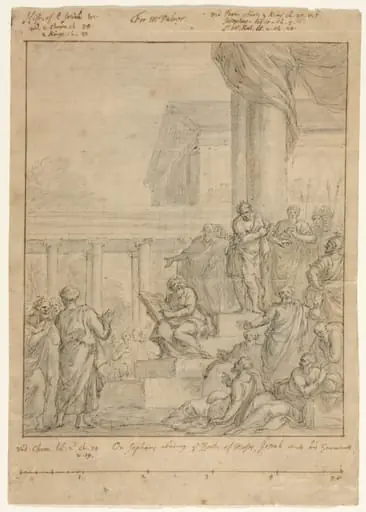 Study for King Josiah Rending his Garments
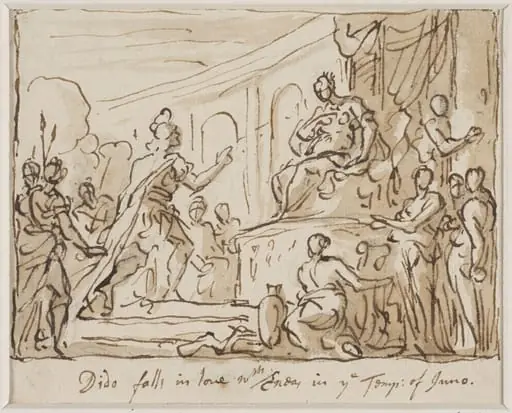 Aeneas before Dido in the Temple of Juno