Artwork
On the Banks of the Loing: Houses by the Water
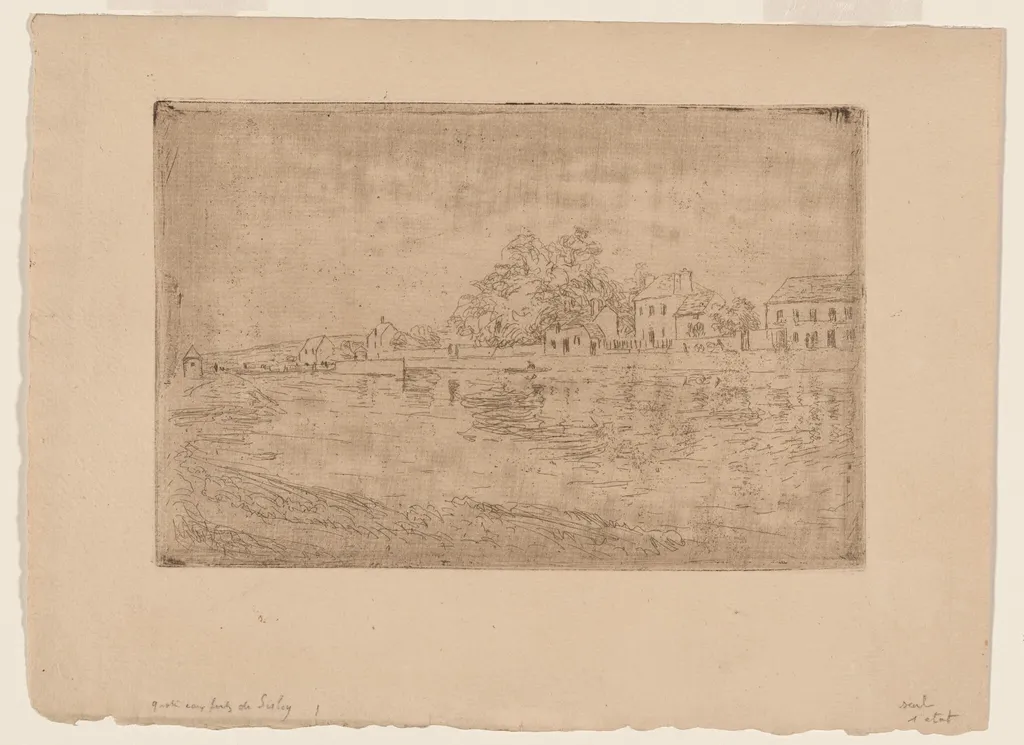
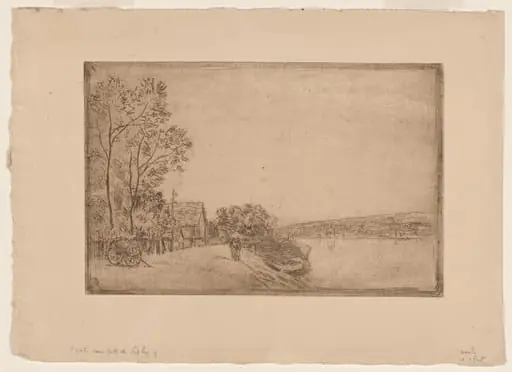
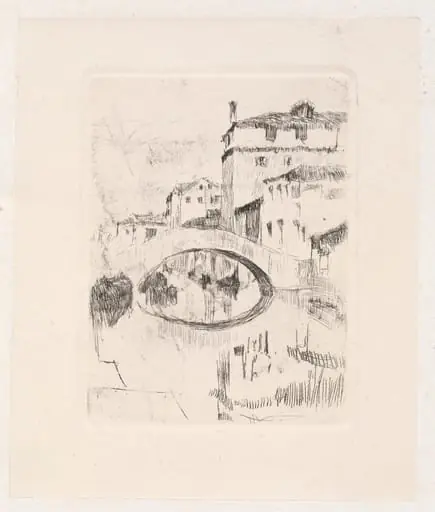
On the Banks of the Loing: Houses by the Water is an ink print by the Impressionist artist Alfred Sisley. It dates from 1890 and is held in the collection of the National Gallery of Art.
About this work
Overview
Created in 1890, *On the Banks of the Loing: Houses by the Water* is an etching with burnishing on laid paper by Alfred Sisley.
Created in 1890, *On the Banks of the Loing: Houses by the Water* is an etching with burnishing on laid paper by Alfred Sisley. Though born in Paris to British parents, Sisley lived most of his life in France and remained devoted to landscape subjects. This print captures a quiet riverside moment along the Loing, reflecting his lifelong commitment to observing nature directly and translating its subtle shifts in light and atmosphere.
Subject & Meaning
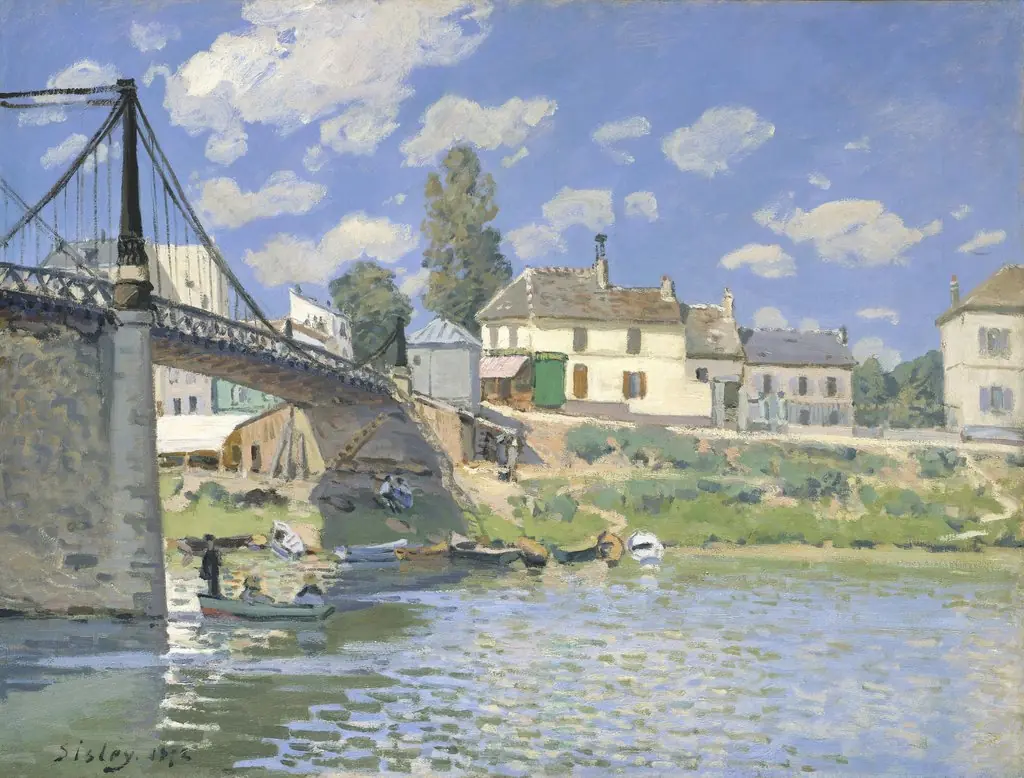
The scene portrays modest dwellings nestled along the riverbank, their forms softened by surrounding trees and reflected in the still water. A small boat drifts near the shore, suggesting quiet human presence without intrusion. The composition avoids narrative drama, instead emphasizing tranquility and the harmony between architecture and natural surroundings. Sisley’s focus lies in the quiet rhythm of rural life, rendered with restraint and sensitivity.
Technique & Style
Sisley employed etching, a method involving incised lines on a metal plate, enhanced by burnishing to soften edges and modulate tone. The paper’s laid texture adds subtle grain, reinforcing the tactile quality of the scene. Delicate, fluid strokes define water ripples and foliage, while the houses are suggested with minimal detail. The technique favors immediacy over finish, mirroring the fleeting effects of daylight and atmosphere central to his aesthetic.
History & Provenance
The print was made during Sisley’s later years, when he frequently returned to the Loing valley, a region he had painted extensively since the 1870s. Few of his etchings survive, making this work a rare example of his graphic output. It remained in private collections after his death in 1899, with no major public exhibition history noted until the 20th century, when interest in his printed works grew among scholars and collectors.
Context
In the 1890s, Sisley was largely overlooked by the French art establishment, yet continued to work in relative isolation, focusing on the countryside around Moret and the Loing. While his contemporaries explored urban scenes or bold color experiments, he persisted in quiet, plein-air observations. This etching aligns with his broader practice: a quiet resistance to artistic trends, grounded in sustained attention to place and light.
Legacy
Though Sisley’s etchings were never widely circulated in his lifetime, *On the Banks of the Loing* now stands as a testament to his disciplined approach to landscape. Its restrained technique and subtle tonal variations influenced later printmakers drawn to intimate, observational work. The piece contributes to a broader understanding of Impressionism beyond painting, revealing how its principles extended into graphic media with equal sincerity.
Artist & collection
Artist
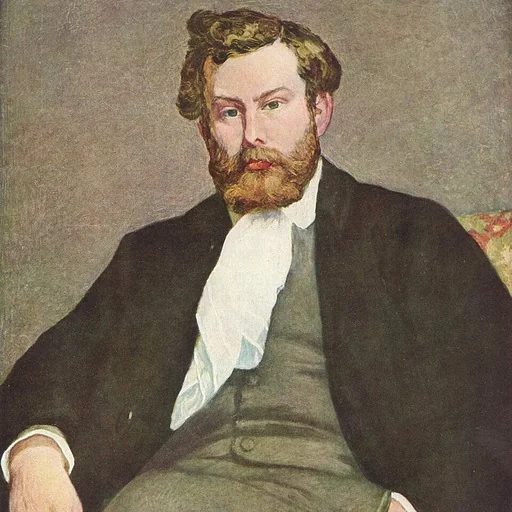
Alfred Sisley (; French: ; 30 October 1839–29 January 1899) was a French-Born British Impressionist landscape painter who was born to British parents, but spent most of his life in France.