Artwork
Old Chelsea (Old Chelsea Church)
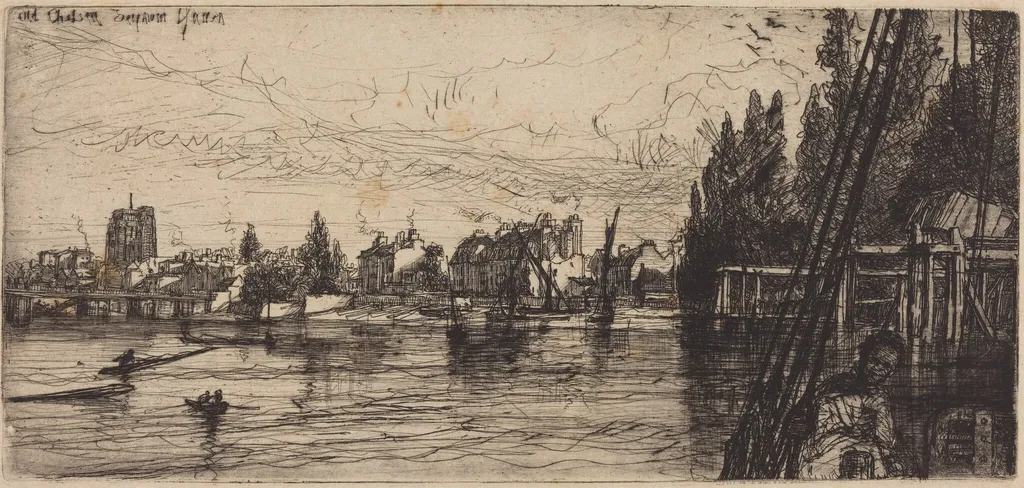
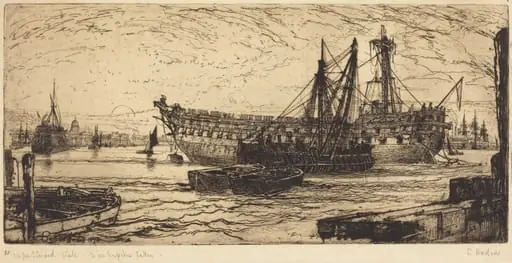
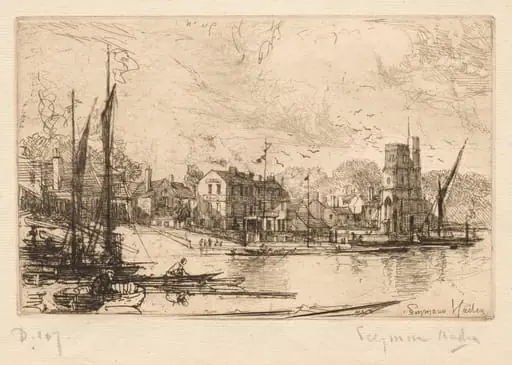
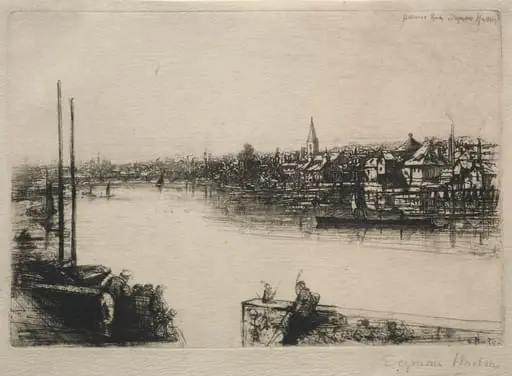
Old Chelsea (Old Chelsea Church) is an ink print by the Impressionist artist Francis Seymour Haden. It dates from 1865 and is held in the collection of the National Gallery of Art.
About this work
Overview
The composition centers on the church’s tower rising above modest riverside structures, with gentle water and sparse boats suggesting stillness.
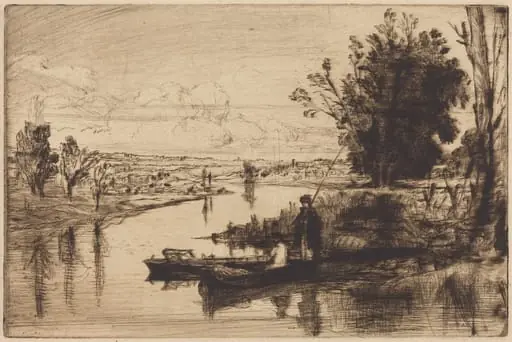
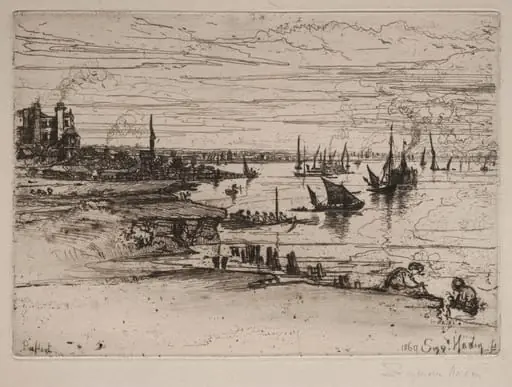
Created in 1865, Old Chelsea (Old Chelsea Church) is a print by Francis Seymour Haden, executed in etching and drypoint. It captures a quiet stretch of the River Thames near the historic church of St. Luke’s in Chelsea. The composition centers on the church’s tower rising above modest riverside structures, with gentle water and sparse boats suggesting stillness. Haden’s use of line and tone conveys a muted, contemplative mood, characteristic of his interest in landscape as a quiet, observed reality.
Subject & Meaning
The scene depicts a modest, everyday riverside setting rather than a grand monument. The church, though prominent, is not idealized—it sits nestled among ordinary buildings, its presence felt more as a local landmark than a symbol of power. The still water and sparse activity evoke solitude and timelessness. Haden’s choice of subject reflects a Victorian interest in the poetic potential of ordinary places, valuing quiet observation over dramatic narrative.
Technique & Style
Haden employed etching and drypoint to achieve a range of textures—from the fine, precise lines of architectural details to the soft, smudged shadows of trees and water. Drypoint’s burr creates rich, velvety darks, while etched lines define structure with clarity. The contrast between detailed foreground elements and hazy background forms enhances spatial depth. His technique prioritizes atmospheric effect over precision, aligning with the tonal qualities of early etching revivalists.
History & Provenance
Haden, a physician turned artist, produced this print during a period of intense engagement with printmaking in the 1860s. He was instrumental in promoting etching as a fine art medium in Britain. Old Chelsea was likely made from direct observation, as Haden frequently worked en plein air along the Thames. The print was part of a series of London river views, circulated among collectors and fellow artists, contributing to the growing appreciation of original etchings over reproductive prints.
Context
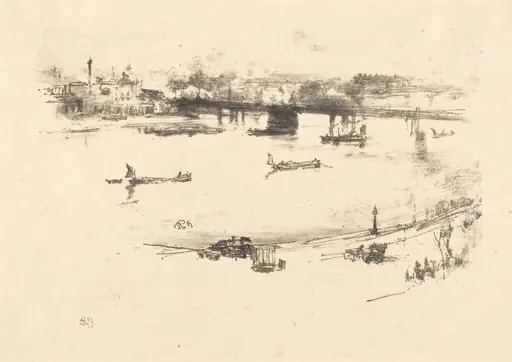
In mid-19th century Britain, etching experienced a revival as artists sought alternatives to industrialized reproduction. Haden’s work aligned with the Aesthetic Movement’s emphasis on personal expression and quiet beauty. His focus on Thames landscapes resonated with contemporaries like James McNeill Whistler, who also explored the poetic potential of urban waterways. This print reflects a broader cultural turn toward intimate, reflective depictions of place amid rapid urban change.
Legacy
Haden’s etchings, including Old Chelsea, helped establish printmaking as a legitimate artistic practice in Britain. His technical rigor and emphasis on direct observation influenced a generation of etchers, including his son-in-law Whistler. The work remains a quiet example of how everyday scenes, rendered with sensitivity, could elevate the medium. Today, it is held in major collections as a representative of the British etching revival’s quiet, introspective spirit.
Artist & collection