Artwork
On the Banks of the Loing: Six Boats at their Moorings
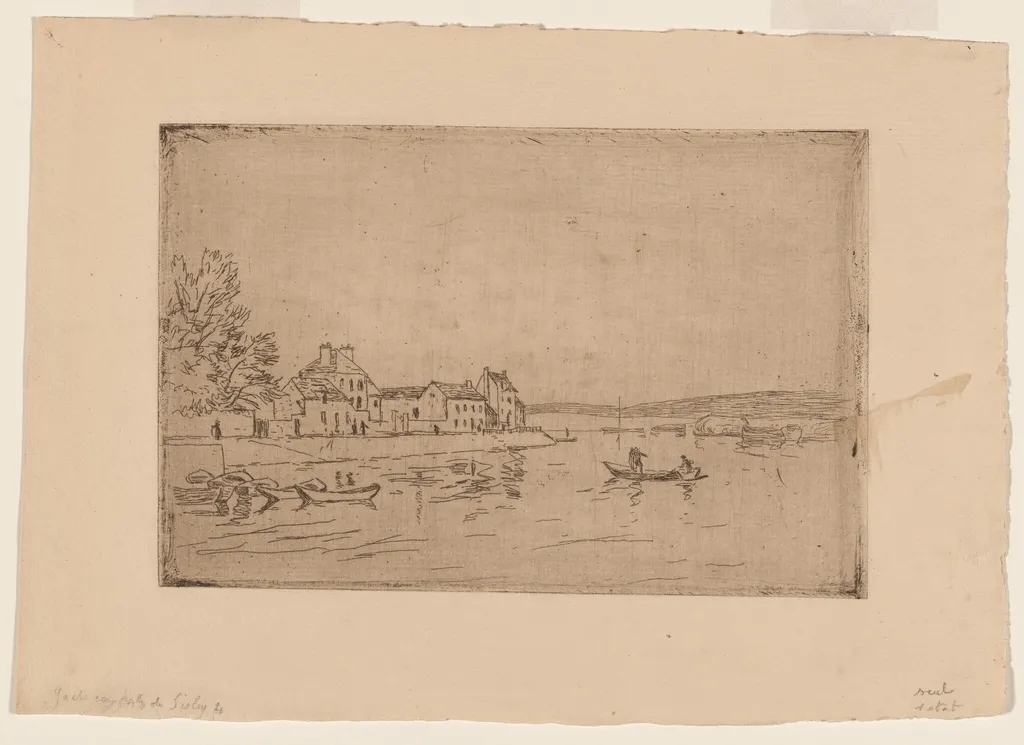
On the Banks of the Loing: Six Boats at their Moorings is an ink print by the Impressionist artist Alfred Sisley. It dates from 1890 and is held in the collection of the National Gallery of Art.
About this work
Overview
Created in 1890, *On the Banks of the Loing: Six Boats at their Moorings* is an etching by Alfred Sisley, executed on laid paper.
Created in 1890, *On the Banks of the Loing: Six Boats at their Moorings* is an etching by Alfred Sisley, executed on laid paper. Though born in Paris to British parents, Sisley remained deeply engaged with the French countryside throughout his career. This print captures a quiet riverside scene, consistent with his lifelong focus on natural environments over human activity. The work belongs to a series of prints he produced late in life, exploring the same motifs found in his paintings.
Subject & Meaning
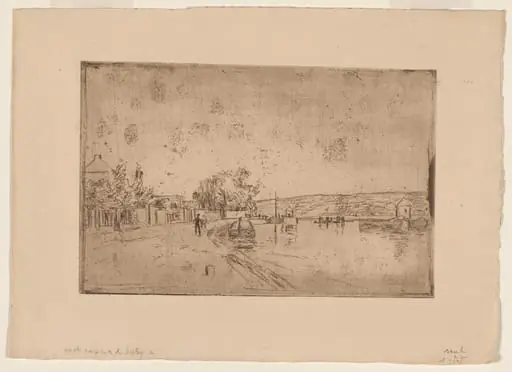
The scene depicts a tranquil stretch of the Loing River, with six boats gently anchored near a modest bank lined with trees and distant structures. One vessel holds two figures, suggesting quiet daily life, while the others rest motionless. There is no narrative drama—only the stillness of water and the subtle rhythm of rural routine. Sisley’s choice to focus on such an unremarkable moment reflects his belief in the dignity of ordinary landscapes.
Technique & Style
Sisley employed etching, a method involving incising lines into a metal plate coated with wax, then immersing it in acid to bite the exposed areas. The resulting print uses fine, fluid strokes to suggest movement in the water and the texture of foliage. The tonal range is restrained, dominated by soft browns and grays, evoking the muted light of late afternoon. The sketchlike quality mirrors his plein air painting practice, translating immediacy into print.
History & Provenance
This etching was made during Sisley’s later years, when he increasingly turned to printmaking as a means of exploring his familiar subjects beyond oil paint. Few impressions were pulled, and most survive in institutional collections. The work was not widely distributed in his lifetime, reflecting his limited commercial success. Its preservation is largely due to the interest of print collectors and museums that recognized its quiet significance.
Context
In the 1890s, Sisley lived in the village of Moret-sur-Loing, where the river and its surroundings became his primary subject. While other Impressionists explored urban life or dramatic lighting, he remained devoted to the subtle shifts of light and water in rural France. His etchings from this period were made alongside his paintings, serving as intimate studies rather than commercial products, and reveal his sustained engagement with the natural world.
Legacy
Though less celebrated than his paintings, Sisley’s etchings are now regarded as essential to understanding his artistic vision. *On the Banks of the Loing* exemplifies his ability to convey atmosphere with minimal means. The work influenced later printmakers drawn to quiet, observational landscapes. Its restrained technique and unassuming subject matter continue to resonate with those seeking depth in simplicity.
Artist & collection
Artist
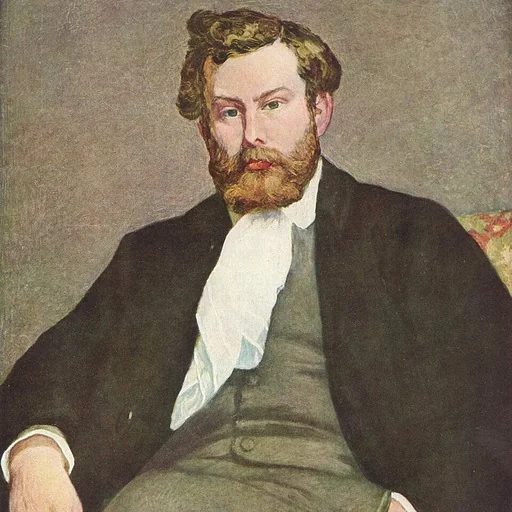
Alfred Sisley (; French: ; 30 October 1839–29 January 1899) was a French-Born British Impressionist landscape painter who was born to British parents, but spent most of his life in France.

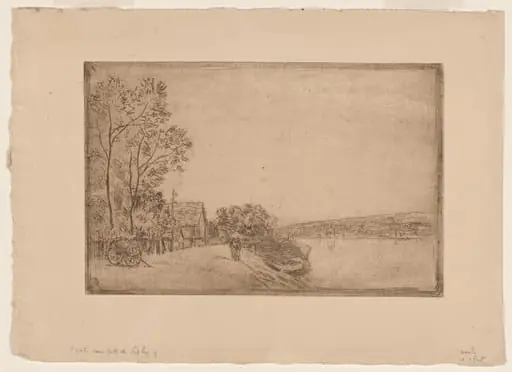 On the Banks of the Loing: The Cart
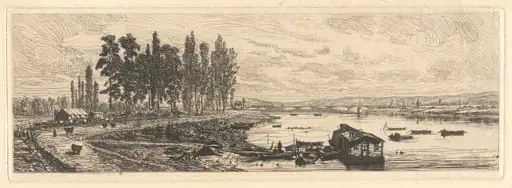 The Banks of the Seine at Bezons
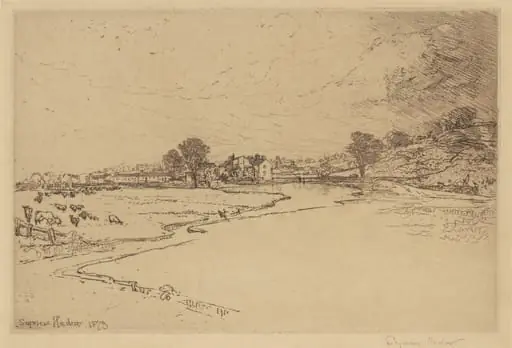 Sawley Abbey
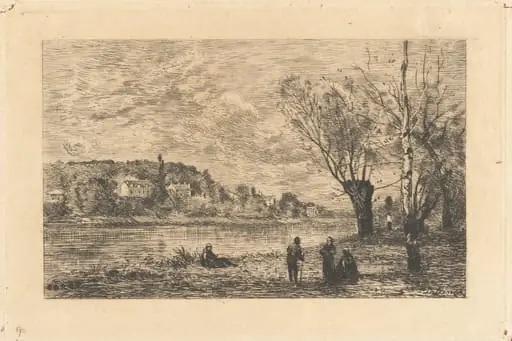 Ville d’Avray
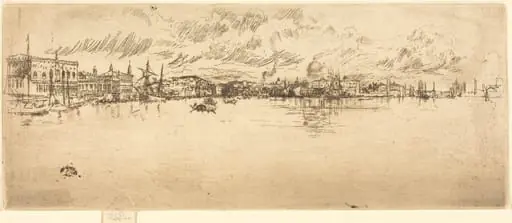 Long Venice
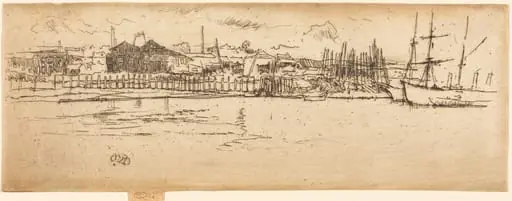 Dry-Dock, Southampton
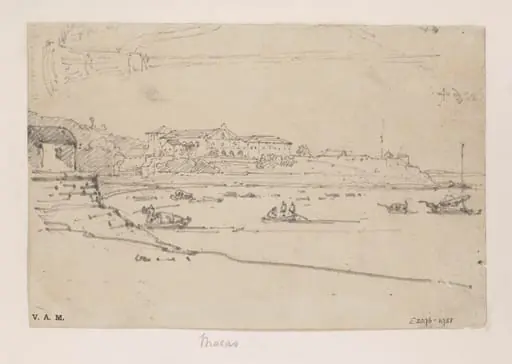 The convent and church of S. Francisco, Macau, seen from across the bay
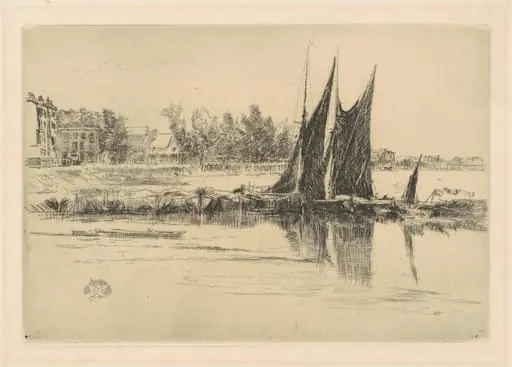 Hurlingham
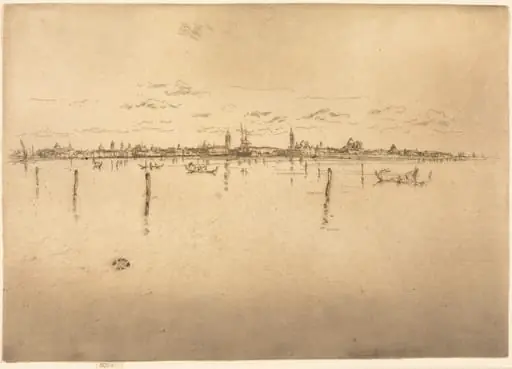 Little Venice
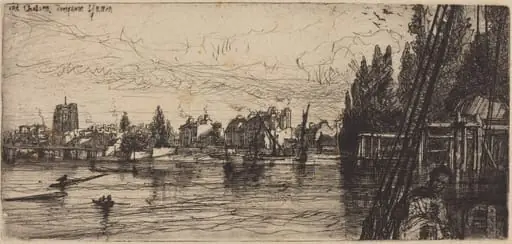 Old Chelsea (Old Chelsea Church)
 On the Banks of the Loing: The Canal Bank
 On the Banks of the Loing: Houses by the Water