Artwork
The Entombment of Christ
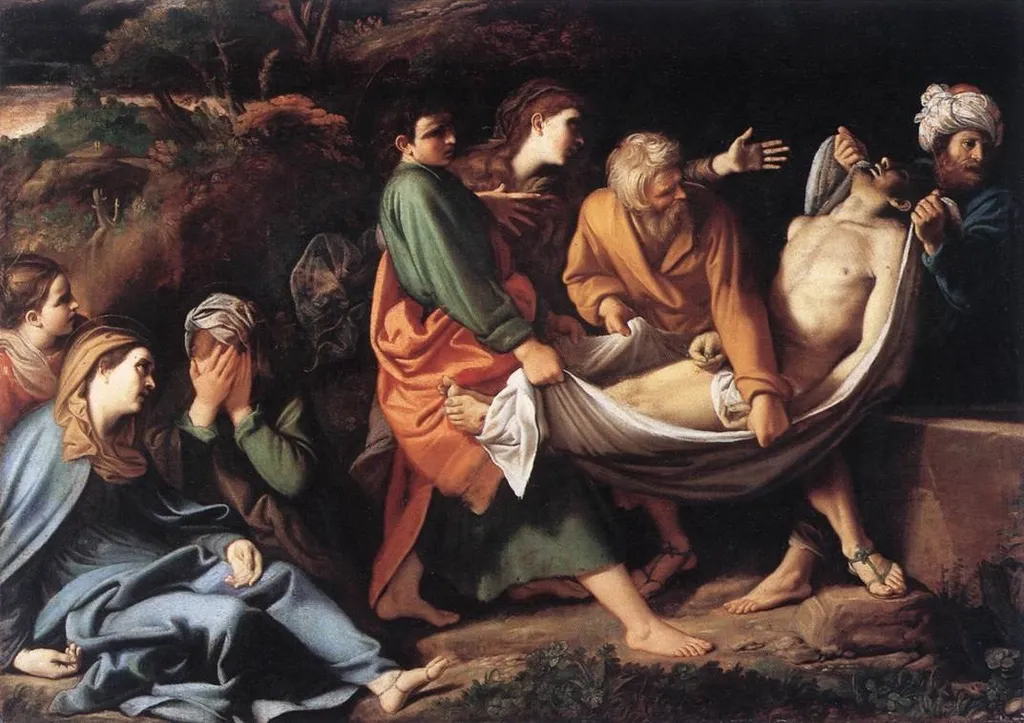
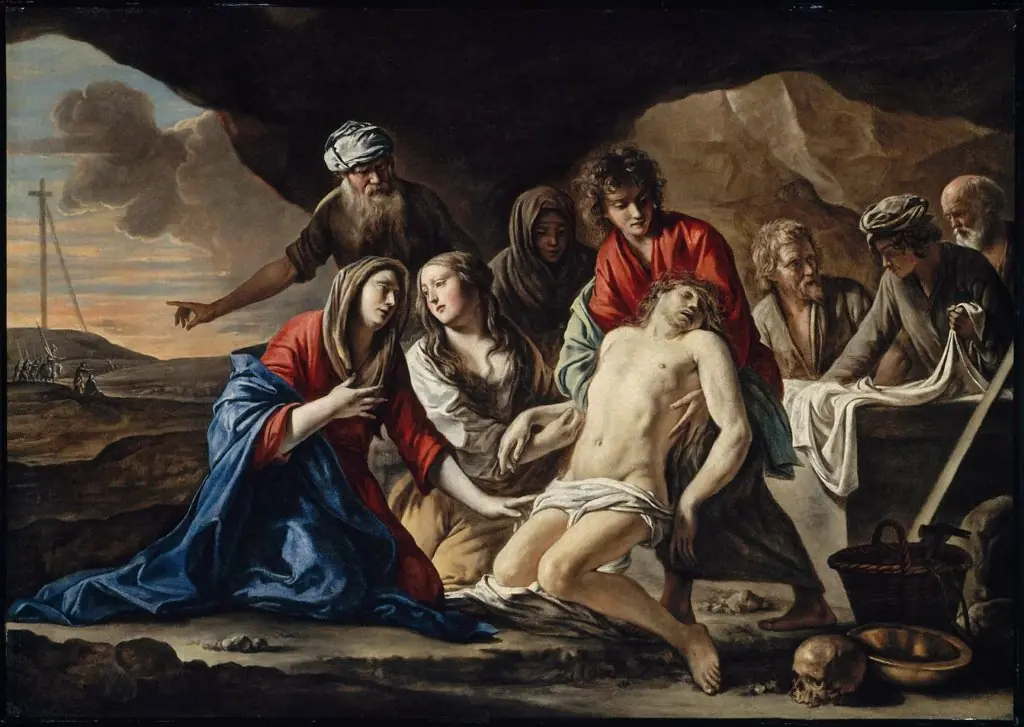
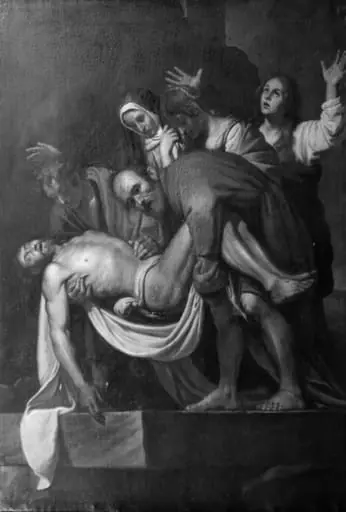
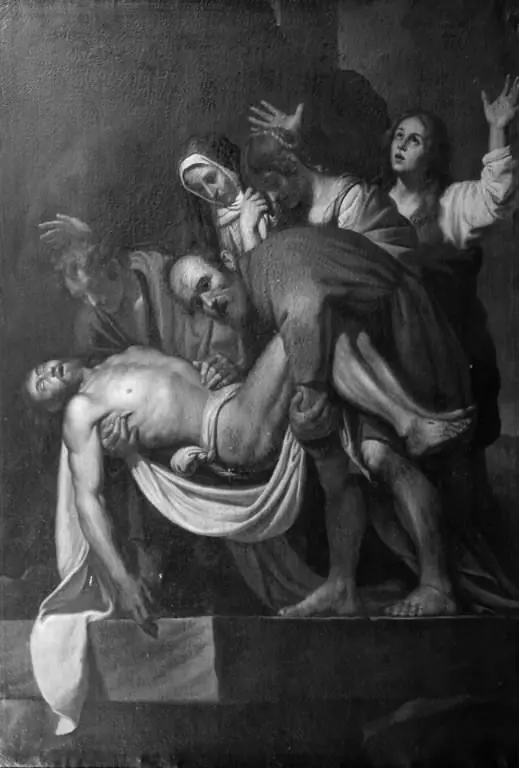
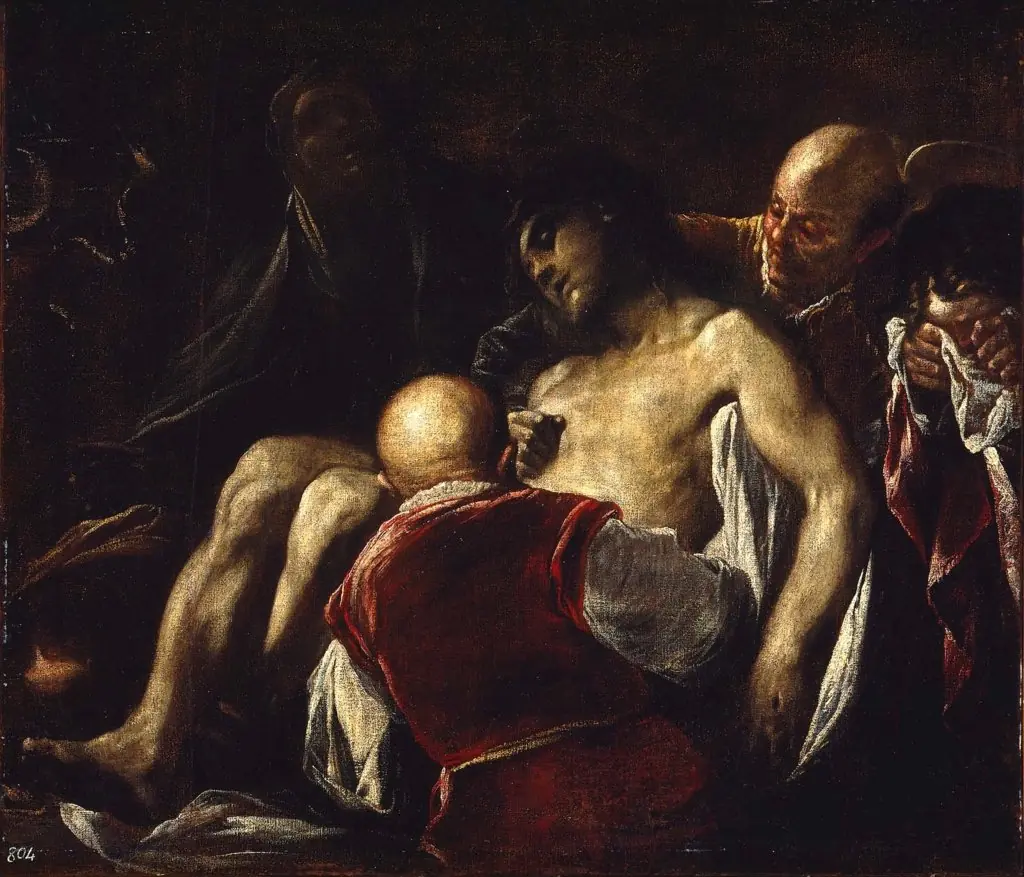
The Entombment of Christ is an oil painting by the Early Baroque Italian artist Sisto Badalocchio. It dates from 1610 and is held in the collection of the Borghese Collection.
About this work
Overview
Created in 1610 by the Bolognese painter and engraver Sisto Badalocchio, this oil on canvas presents a somber depiction of Christ’s burial. The composition gathers several figures around the wrapped body, set against a deep, shadowy backdrop that heightens the solemn atmosphere. The work is part of the early Italian Baroque movement and is currently displayed in Rome’s Galleria Borghese.
Subject & Meaning
The painting illustrates the moment when Jesus’ lifeless form is lowered into the tomb, a pivotal episode in the Passion narrative. The mournful expressions of the attendants and the stark contrast between the pallid shroud and the surrounding darkness convey a sense of reverent grief and contemplation of mortality.
Technique & Style
Badalocchio employs the chiaroscuro characteristic of early Baroque, using a limited palette of muted tones to model the figures against the tenebrous background. The brushwork is smooth, allowing the folds of the white cloth and the textures of the robes to be rendered with subtle gradations of light, enhancing the three‑dimensional presence of the scene.
History & Provenance
After its completion, the canvas entered private collections before being acquired by the Galleria Borghese, where it remains part of the museum’s holdings. Its attribution to Badalocchio aligns with his activity in Bologna and his connections to the Carracci circle, situating the work within the broader network of early 17th‑century Roman and Bolognese art.
Artist & collection
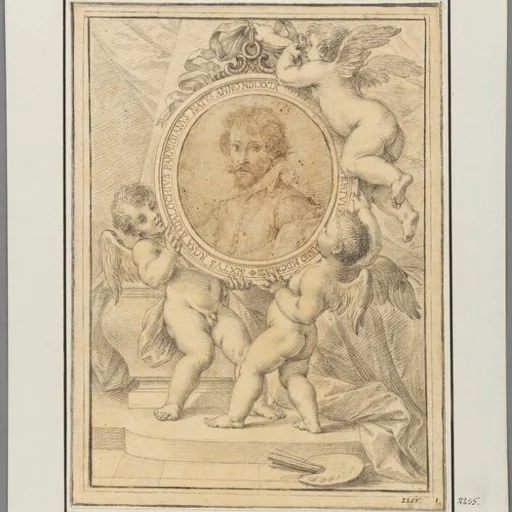
Artist
Sisto Badalocchio Rosa (28 June 1585 – c. 1619-1647) was an Italian Baroque painter and engraver of the Bolognese School.