Artwork
The illustrious exile
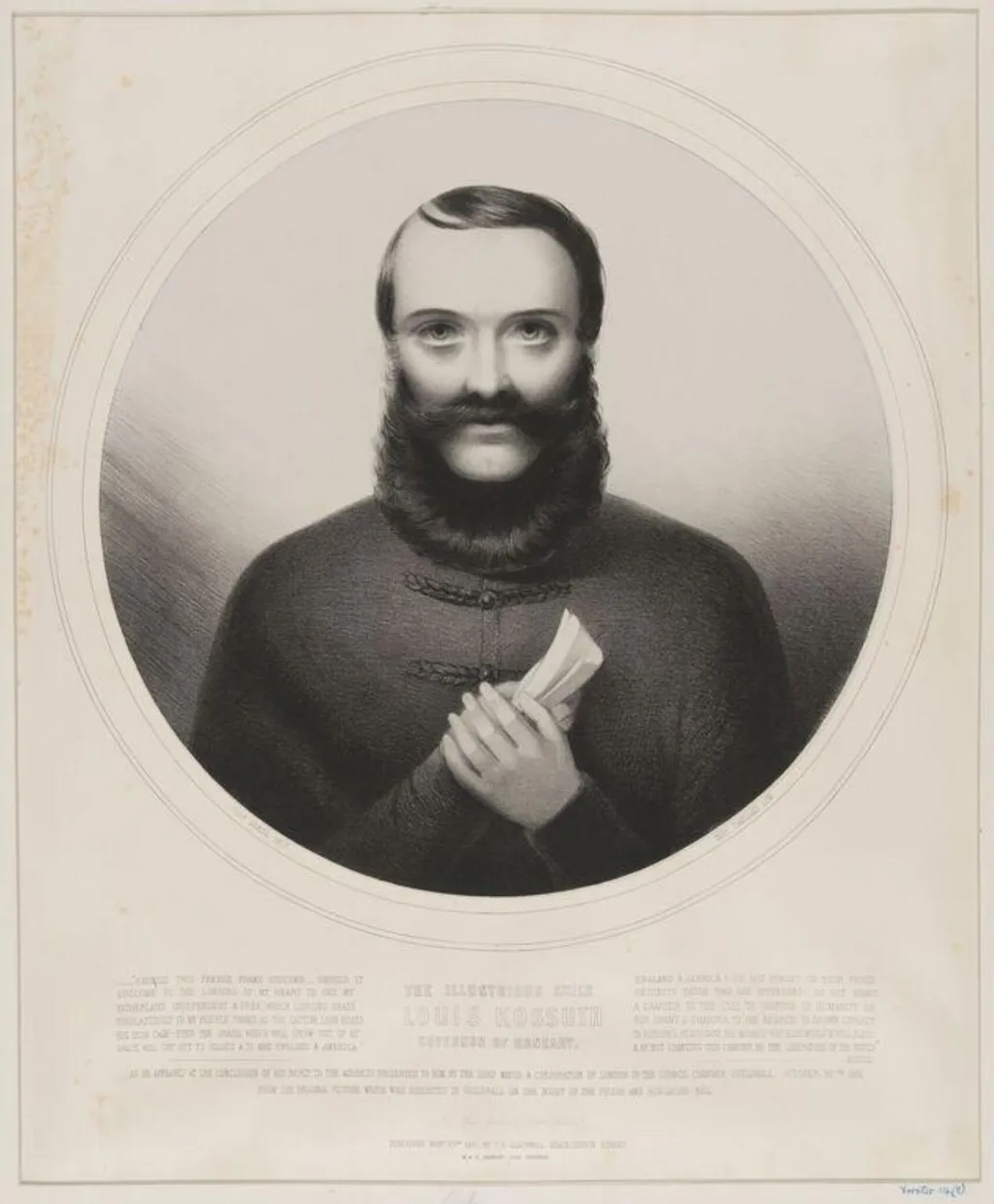
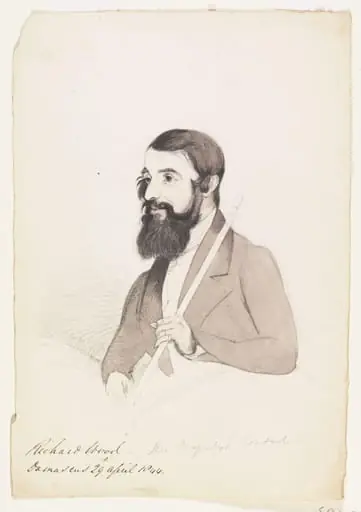
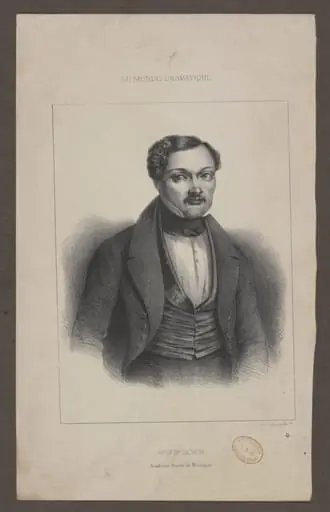
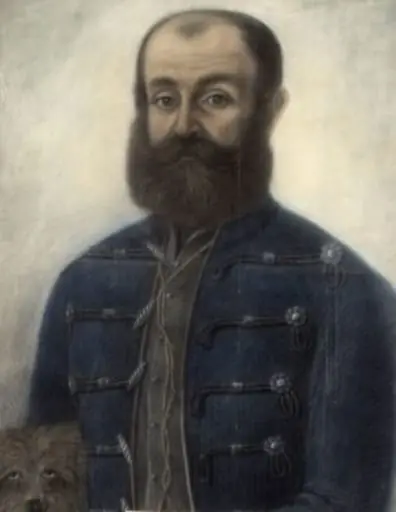
The illustrious exile is a print by the Impressionist artist Thomas Skaife. It dates from 1851 and is held in the collection of the Victoria and Albert Museum. This black-and-white lithograph portrays Lajos Kossuth, a central figure in Hungary’s 1848 revolution, depicted as a solemn statesman.
About this work
Overview
Created after a public appearance in London, the print captures his likeness from a portrait drawn during the 1851 Polish and Hungarian ball at Guildhall.
This black-and-white lithograph portrays Lajos Kossuth, a central figure in Hungary’s 1848 revolution, depicted as a solemn statesman. Created after a public appearance in London, the print captures his likeness from a portrait drawn during the 1851 Polish and Hungarian ball at Guildhall. The composition isolates him against a neutral background, emphasizing his presence through stark tonal contrasts and precise linework typical of mid-19th-century printmaking.
Subject & Meaning
Kossuth is shown holding folded documents, symbolizing his role as a leader and advocate for Hungarian autonomy. His full beard and high-collared coat reflect the dignified, almost clerical bearing common among revolutionary figures of the era. The direct gaze and unadorned setting convey resolve and moral authority, aligning his image with ideals of liberty and national self-determination, rather than personal glorification.
Technique & Style
Executed as a lithograph, the image relies on tonal gradations achieved through ink and stone etching. Sharp contrasts between light and shadow define Kossuth’s facial features and the texture of his coat, while the plain background eliminates distraction. The surrounding border text identifies him formally as 'Governor of Hungary,' reinforcing the print’s function as both portrait and political statement.
History & Provenance
The image originates from a sketch made at the 1851 Polish and Hungarian ball in London’s Guildhall, where Kossuth was welcomed by exiled communities. The lithograph was likely produced shortly after to meet demand among sympathizers in Britain and beyond. Its circulation helped sustain international awareness of Hungary’s cause following the suppression of the 1848 uprising.
Context
In the wake of Hungary’s failed revolution, Kossuth’s exile in Britain made him a symbol of liberal nationalism. Prints like this circulated widely among reformist circles, serving as visual propaganda that framed him not as a rebel, but as a legitimate leader under duress. The medium of lithography allowed for mass reproduction, making such portraits accessible to a broad, politically engaged public.
Legacy
This print contributed to the enduring visual identity of Kossuth as a national hero in Hungary and a figure of international liberal admiration. Though the political context has faded, the image remains a representative example of how 19th-century portraiture merged personal likeness with ideological messaging, preserving the face of revolution in the public memory through reproducible media.
Artist & collection
Artist
Thomas Skaife carried his camera like a spy kit, popping up at rallies to catch the electricity in the air.