Artwork
H Beard Print Collection
H Beard Print Collection is a print by the Romanticist artist Charles John Smith. It dates from 1838 and is held in the collection of the Victoria and Albert Museum.
About this work
He put this funny picture in to show how silly those long-ago writers could look.
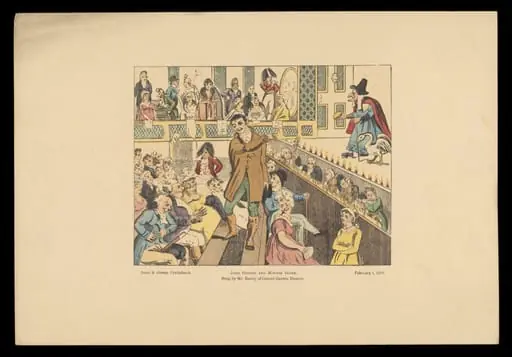
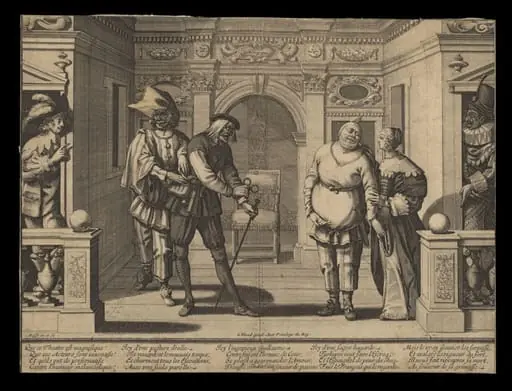
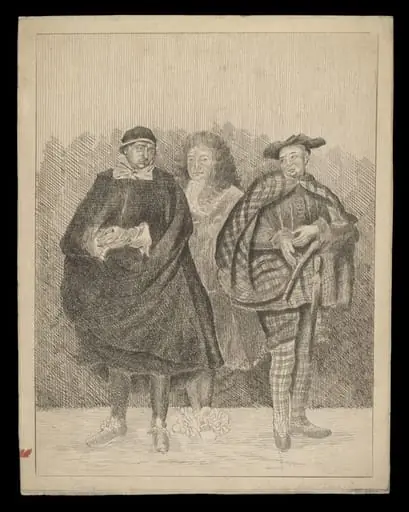
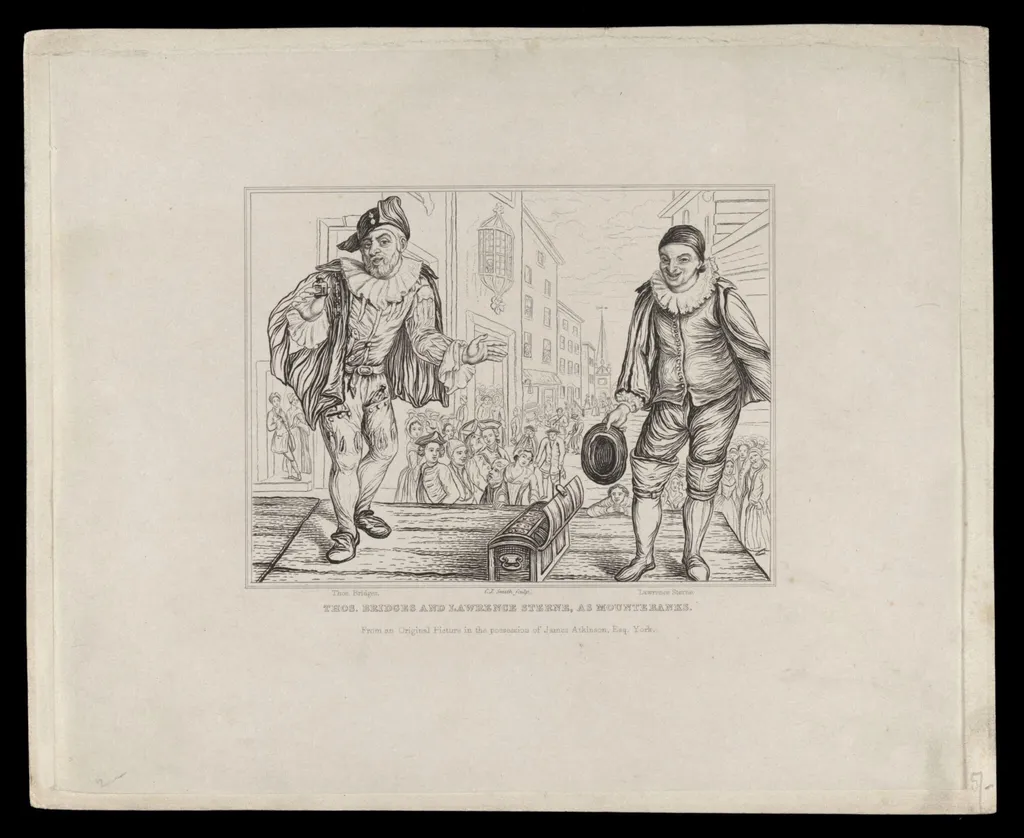
This print shows two writers turned into street performers. They’re from the 1700s but dressed like quack doctors selling tricks. The artist made this in 1838 for a book about old bookshops.
The book’s author wrote about strange old prints and places. He put this funny picture in to show how silly those long-ago writers could look. A real travel book from 1838 is the source.
Look up Smith, Charles John next.
Overview
This 1838 print depicts 18th-century writers Thomas Bridges and Laurence Sterne in a humorous, anachronistic context as mountebanks, or street performers peddling tricks. The image was created for inclusion in a travel book.
Subject & Meaning
The print playfully reimagines two literary figures from the 1700s as quack doctors, highlighting the perceived absurdity or theatricality of their personas through this caricature. The contrast between their historical roles as writers and the depicted street performers underscores the humorous intent.
Technique & Style
While specific artistic techniques are not detailed, the print's style is characterized by its illustrative purpose, suggesting a blend of detail and caricature common in 19th-century book illustrations, particularly those meant to entertain or satirize.
History & Provenance
Published in 1838 as part of Dibdin's 'A Bibliographical Antiquarian and Picturesque Tour in the Northern Counties of England and Scotland', the print's creation is attributed to an unnamed artist working for this project. Further attribution or provenance details are not provided.
Context
The print appears in a book focused on antiquarian pursuits, old bookshops, and quirky historical finds, suggesting its inclusion was to illustrate the whimsical or less serious side of literary history, as perceived by the book's author.
Legacy
The print's legacy is not explicitly outlined in the provided information, implying its significance may lie more in its illustrative role within Dibdin's book rather than standalone artistic impact. Its portrayal of historical figures in a humorous light may reflect contemporary views on 18th-century literary personalities.
Artist & collection