Artwork
H Beard Print Collection
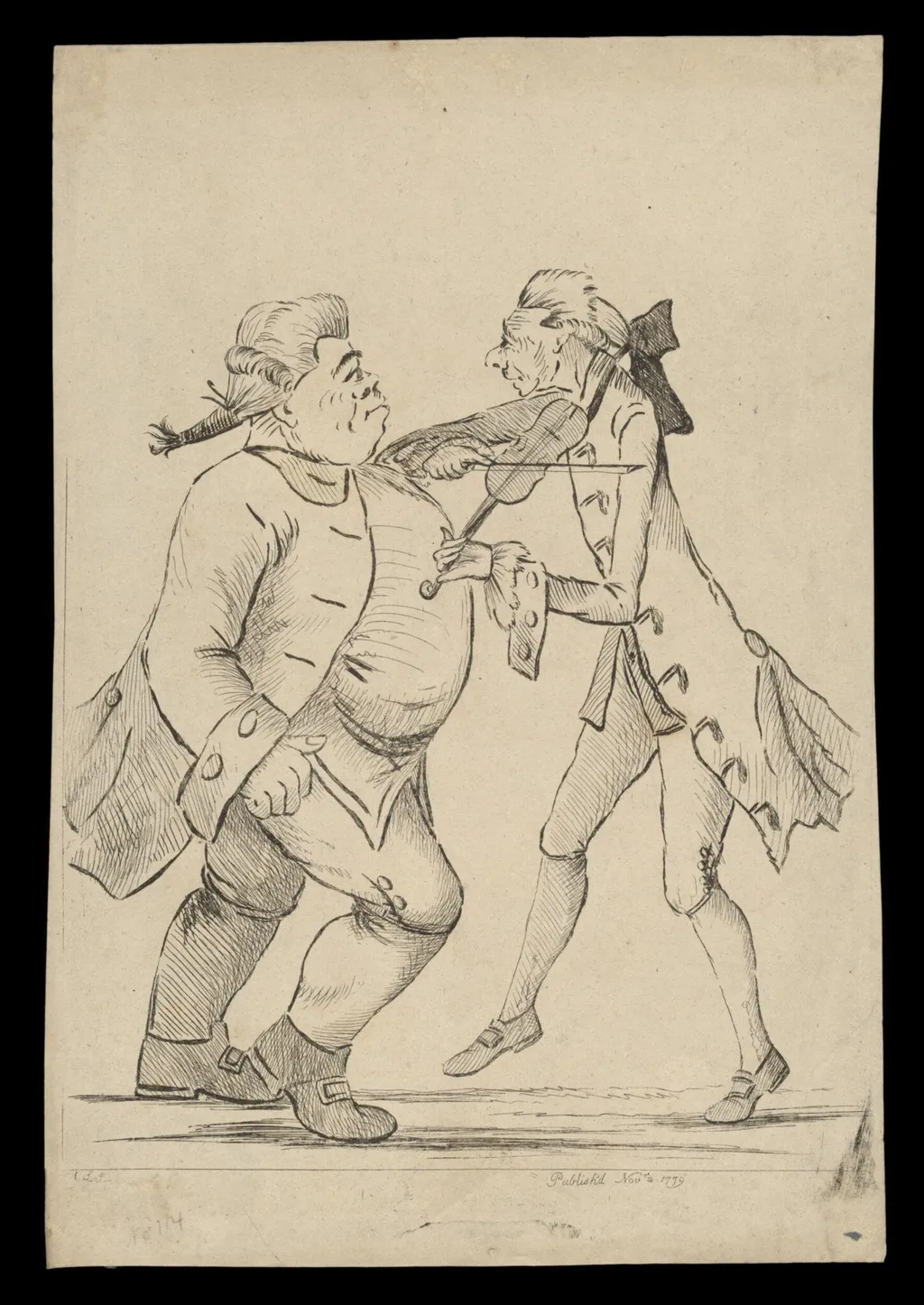
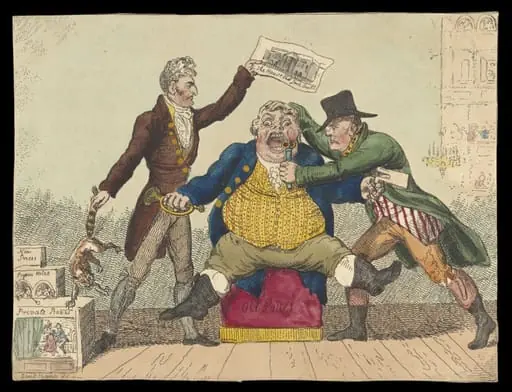
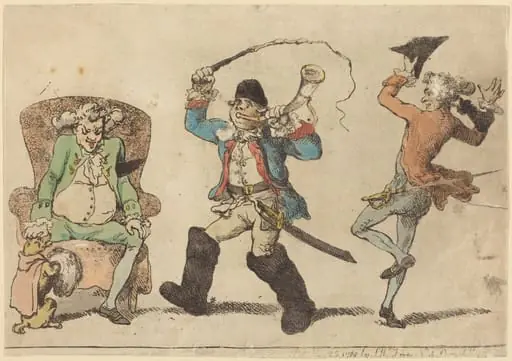
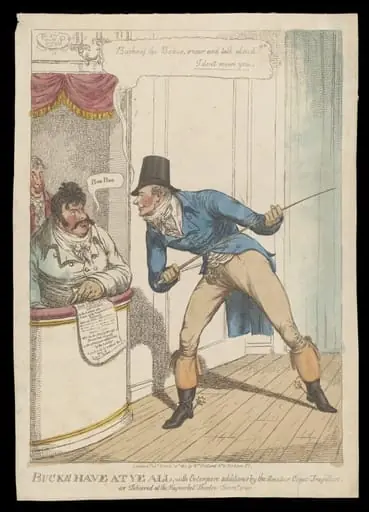
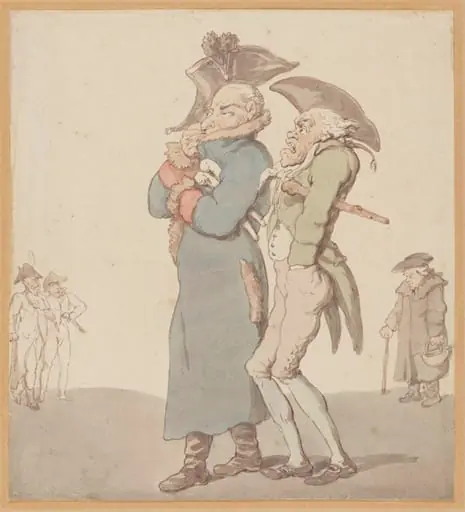
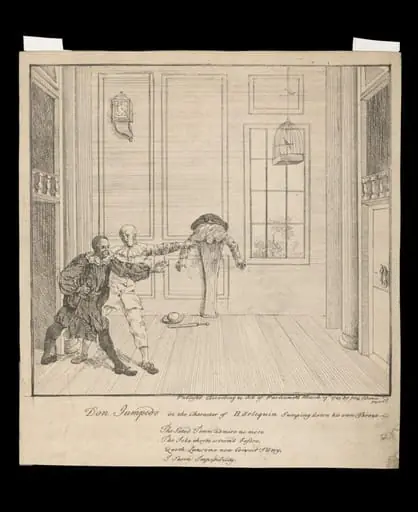
H Beard Print Collection is a print by the Romanticist artist Charles Loraine Smith. It dates from 2 and is held in the collection of the Victoria and Albert Museum. A hand-printed image from 1779, attributed to the artist Smith, depicts a robust figure dancing beside a slender fiddler.
About this work
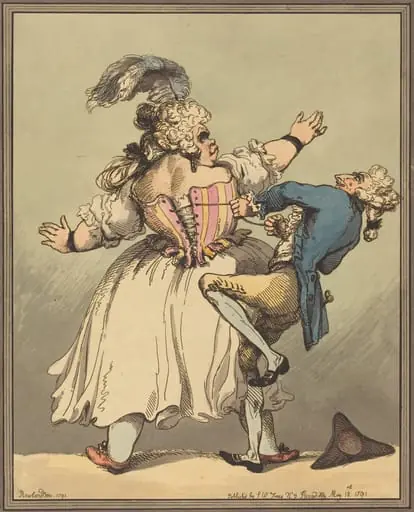
This is a print from 1779 showing a chubby man dancing while a skinny man fiddles. The artist, Smith, captured motion in a small space.
Romantic artists liked mood and drama more than perfect details. This print feels lively, like a quick sketch you’d hang in a tavern.
Look up the Victoria and Albert Museum to see where it lives.
Overview
A hand-printed image from 1779, attributed to the artist Smith, depicts a robust figure dancing beside a slender fiddler. Executed in a small format, the print captures a moment of informal merriment with energetic lines and minimal detail. Its composition suggests spontaneity, evoking the atmosphere of popular entertainment rather than formal portraiture.
Subject & Meaning
The scene portrays a contrast between two figures: one corpulent and animated in dance, the other gaunt and absorbed in playing the fiddle. This pairing reflects common folk motifs of the era, where physical disparity was used to heighten humor and rhythm. The image likely served as light entertainment, resonating with audiences familiar with pub performances and street musicians.
Technique & Style
The print employs loose, fluid lines to suggest movement rather than precise anatomical accuracy. Shading is minimal, and contours are simplified, prioritizing gesture over realism. This approach aligns with emerging Romantic sensibilities that favored emotional expression and immediacy over academic precision, making the scene feel spontaneous and alive.
History & Provenance
Created in 1779, the print entered the H. Beard Collection, later acquired by the Victoria and Albert Museum in London. Its survival suggests it was widely circulated, possibly sold as a cheap decorative item for domestic or public spaces. No record of the artist’s full identity remains, indicating it was likely a commercial work rather than a fine art piece.
Context
In late 18th-century Britain, such prints were common in taverns and homes, reflecting popular culture beyond elite art circles. They often depicted musicians, dancers, and satirical figures, serving as visual anecdotes. The print’s informal tone and focus on everyday revelry place it within a broader tradition of broadsheet imagery aimed at the middling classes.
Legacy
Though not signed by a major artist, the print endures as a record of vernacular visual culture. Its preservation in the V&A underscores its value as a document of social life and popular aesthetics. It contributes to understanding how ordinary people engaged with imagery, valuing liveliness and character over technical perfection.
Artist & collection

Artist
Charles Loraine Smith was a British artist and politician. He inherited his family seat in Enderby, Leicestershire while still a boy. He was a keen horseman and his paintings of animals are well regarded. He painted…