Artwork
Un Début a la chasse
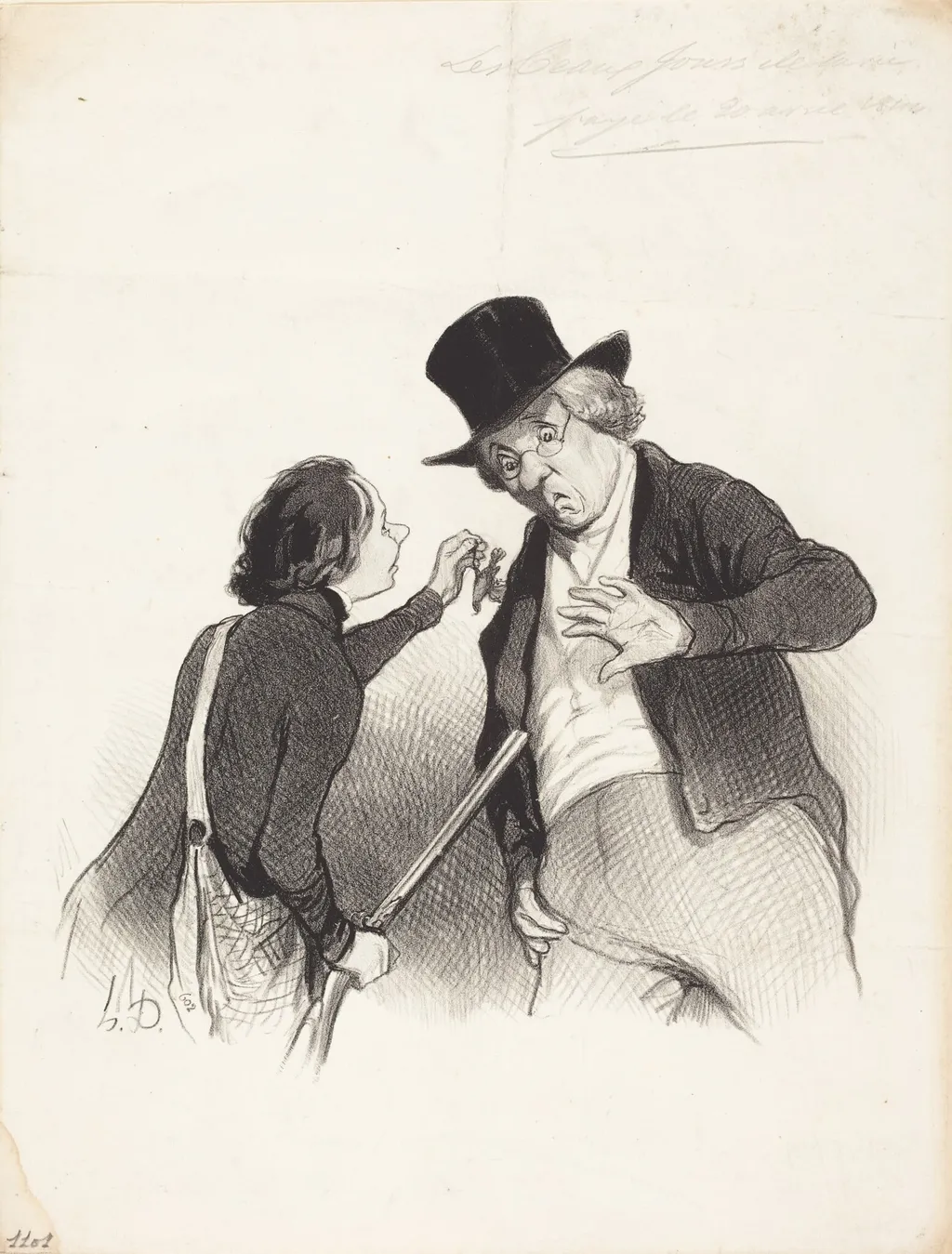
Un Début a la chasse is an ink print by the Romanticist artist Honoré Daumier. It dates from 1844 and is held in the collection of the National Gallery of Art.
About this work
Overview
Unlike his more overtly political satires, this work focuses on domestic interaction, yet still carries subtle social observation.
Created in 1844, *Un Début à la chasse* is a lithograph by Honoré Daumier that captures a quiet moment between two generations. Unlike his more overtly political satires, this work focuses on domestic interaction, yet still carries subtle social observation. Executed in the lithographic technique, it reflects Daumier’s skill in translating everyday life into printed form, consistent with his broader engagement with French print culture through publications like *Le Charivari*.
Subject & Meaning
The image portrays an elderly man and a young boy, possibly grandfather and grandson, preparing for a hunting outing. The man, dressed in formal attire, gestures as he imparts knowledge, while the boy listens attentively, carrying a basket. The scene suggests the transmission of tradition, but the man’s urban clothing and the absence of actual hunting gear hint at a ritual more symbolic than practical. It subtly critiques the pretensions of the middle class adopting aristocratic pastimes without the means or context.
Technique & Style
Daumier employed lithography, a process involving drawing on limestone with greasy materials, then printing the image. His line work is precise yet expressive, capturing the texture of wool, leather, and fabric through varied hatching and tone. Facial expressions are rendered with psychological nuance, and the figures are grounded in naturalistic posture and proportion. The composition is tightly framed, focusing attention on the interaction between the two figures without extraneous detail.
History & Provenance
The print was produced during Daumier’s most active period as a social commentator, when he regularly contributed to illustrated periodicals. Though not as widely circulated as his political caricatures, *Un Début à la chasse* was likely published in *Le Charivari* as part of a series depicting bourgeois customs. Its survival in museum collections today reflects its status as a representative example of Daumier’s non-political yet socially observant printmaking.
Context
In mid-1840s France, under the July Monarchy, the rising bourgeoisie sought to emulate aristocratic lifestyles, often through performative rituals like hunting. Daumier, a republican sympathizer, frequently mocked such pretensions. While this print avoids direct political satire, it aligns with his broader critique of social aspiration. The absence of actual hunting tools and the urban dress of the figures underscore the disconnect between appearance and reality in middle-class identity.
Legacy
Daumier’s lithographs, including this one, helped redefine printmaking as a vehicle for nuanced social observation rather than mere caricature. *Un Début à la chasse* exemplifies his ability to convey complex human dynamics with minimal detail. Later artists and illustrators drew from his empathetic realism, and the work remains a reference point for understanding how everyday scenes could carry implicit social commentary in 19th-century France.
Artist & collection
Artist
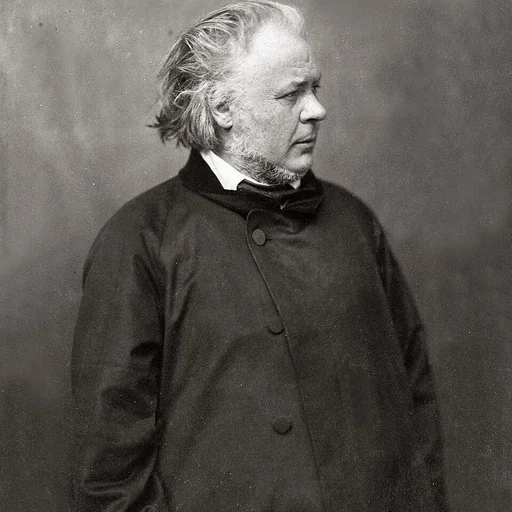
Honoré-Victorin Daumier was a French painter, sculptor, and printmaker, whose many works offer commentary on the social and political life in France, from the Revolution of 1830 to the fall of the Second French Empire in 1870.

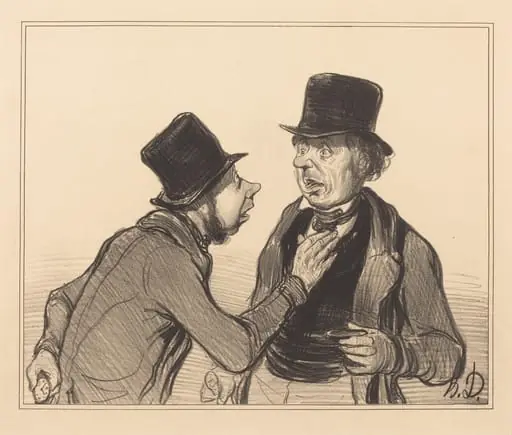 Oui Monsieur vous n'êtes pas de Paris...
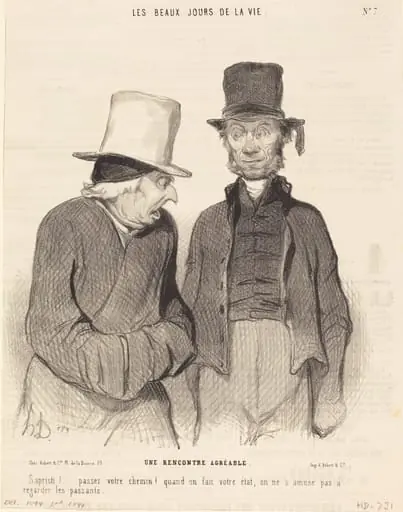 Une Rencontre agréable
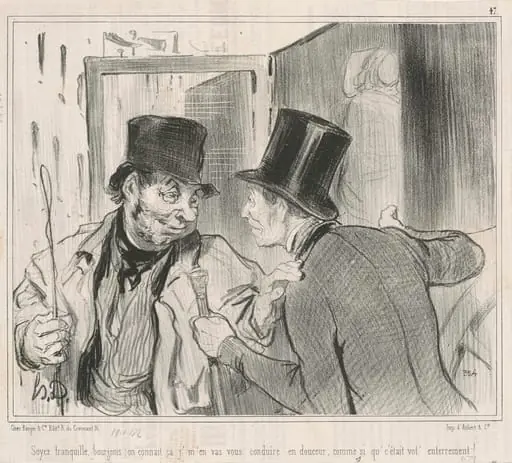 Soyez tranquille bourgeois, on connait
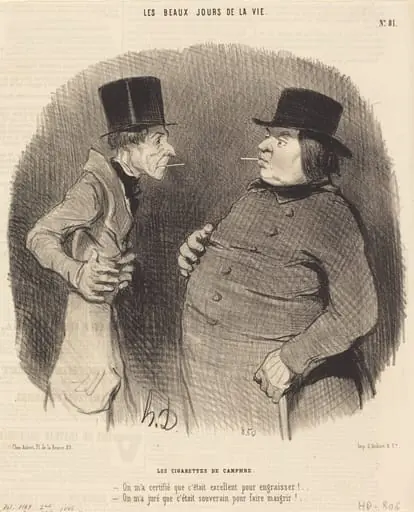 Les Cigarettes de camphre
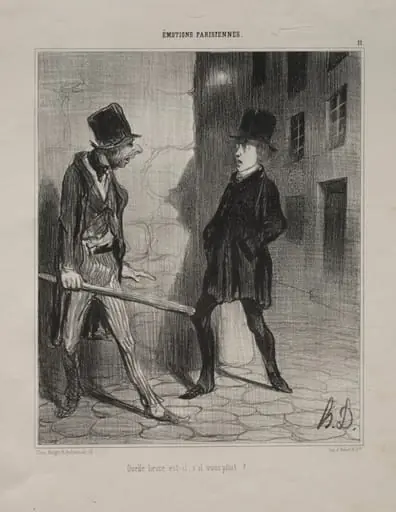 What Time is it, Please?
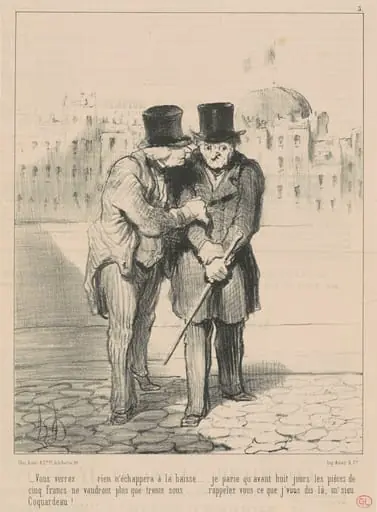 Vous verrez ... rien n'échappera a la baisse ...
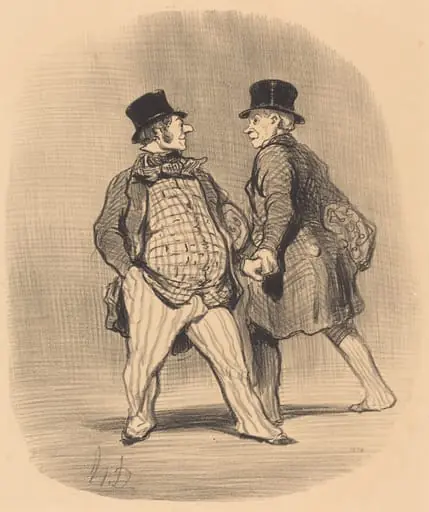 Confrère, méfiez-vous du petit baron...
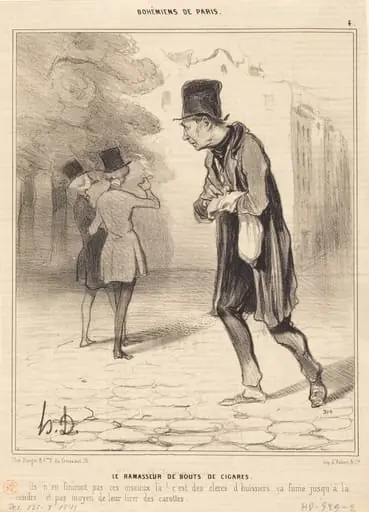 Le Ramasseur de bouts de cigares
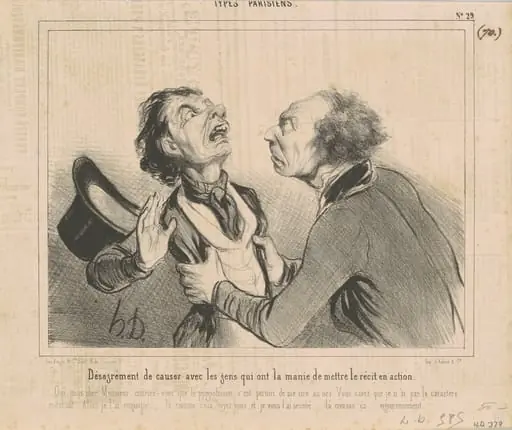 Désagrément de causer avec les gens...
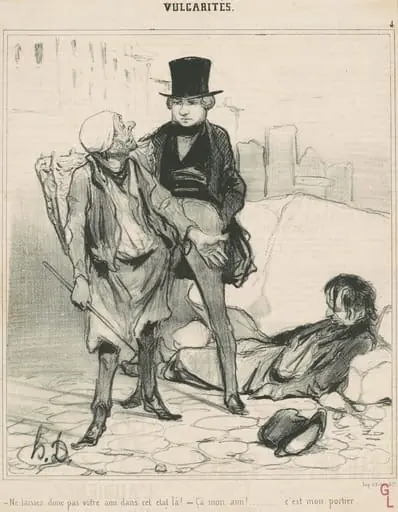 Ne laissez donc pas votre ami dans cet état la!
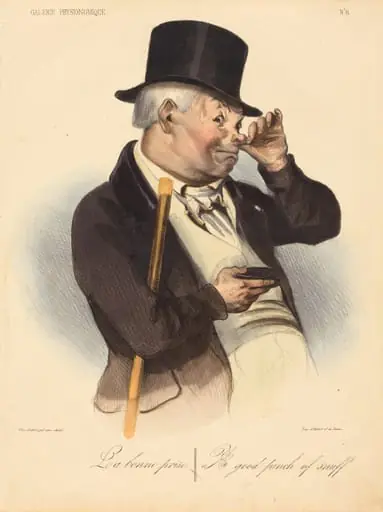 La bonne prise
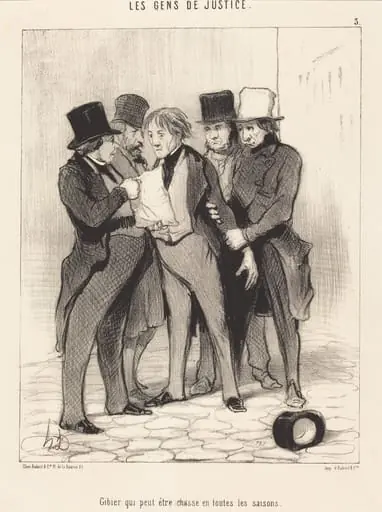 Gibier qui peut être chassé en toutes les saisons