Artwork
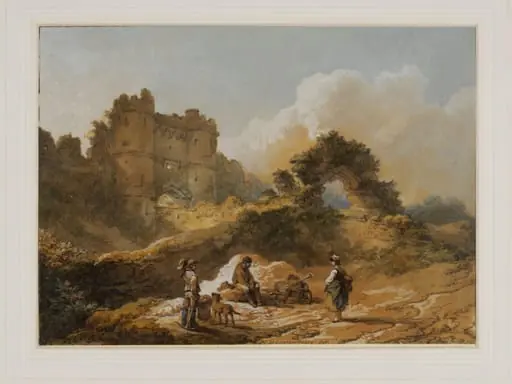
Sunset. A Castle by the river.
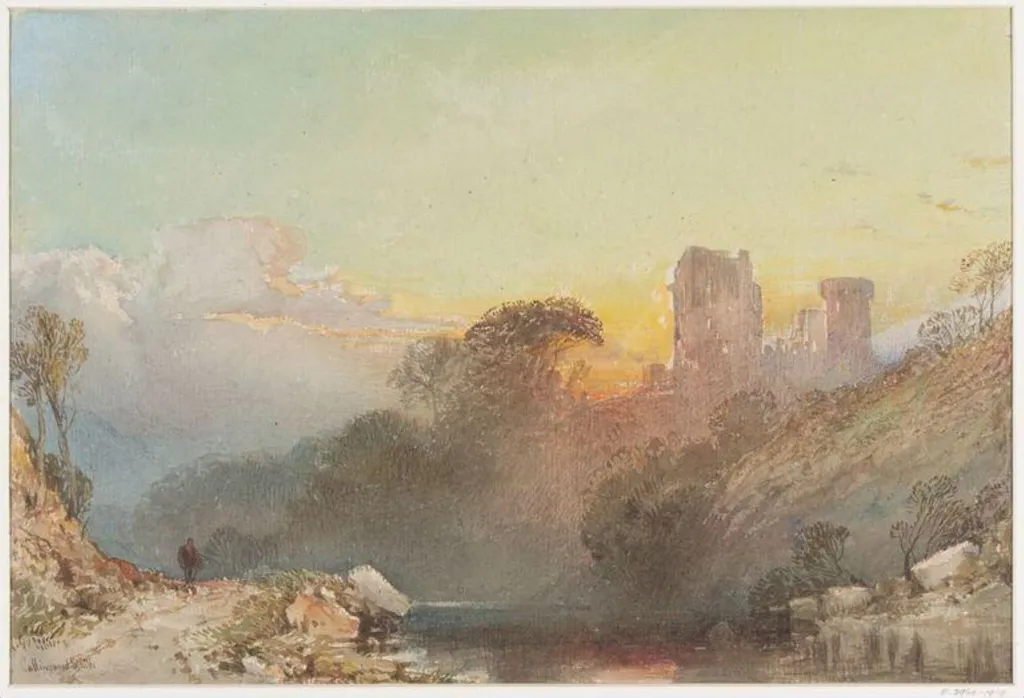
Sunset. A Castle by the river. is a drawing by the Romanticist artist William Collingwood Smith. It dates from 1815 and is held in the collection of the Victoria and Albert Museum. A watercolor drawing captures a tranquil riverside scene at dusk, featuring a distant castle silhouetted against a glowing horizon.
About this work
Overview
A watercolor drawing captures a tranquil riverside scene at dusk, featuring a distant castle silhouetted against a glowing horizon. The composition emphasizes stillness and solitude, with soft washes of color suggesting the fading light. Delicate, blurred edges dissolve boundaries between land, water, and sky, evoking a hazy, atmospheric mood rather than precise detail.
Subject & Meaning
The castle, elevated and distant, stands as a silent witness to the quiet moment by the river. A solitary figure, minimally rendered, underscores the scale of nature and the passage of time. The absence of human activity invites contemplation, framing the landscape not as a place of action but of reflection, where architecture and wilderness coexist in quiet harmony.
Technique & Style
The artist employed translucent watercolor washes with minimal linework, allowing pigments to bleed and soften at the edges. Cool blues in the river and sky contrast with warm ochres and golds on the castle’s towers, heightening the sense of twilight. Smudged contours and layered glazes mimic atmospheric haze, creating a dreamlike dissolution of form.
History & Provenance
The drawing is held in the collection of the Victoria and Albert Museum, where it is cataloged as part of a broader group of 19th-century British landscape studies. Its modest scale and intimate character suggest it was made as a personal sketch, possibly during travel, rather than as a finished exhibition piece.
Context
Created during a period when watercolor was increasingly valued for its ability to capture fleeting natural effects, this work aligns with Romantic-era interests in mood, solitude, and the sublime. It reflects a shift from topographical precision toward emotional resonance in landscape representation, common among amateur and professional artists alike.
Legacy
Though unsigned and undated, the drawing contributes to an understudied body of intimate landscape sketches that reveal how artists engaged with nature beyond grand narratives. Its quiet composition continues to resonate in collections focused on the poetic potential of watercolor in the 19th century.
Own this work as a print
Artist & collection
Artist
William Collingwood Smith carried a sketchbook like others carry phones, filling it with quick pencil lines of canals, bridges, and church steeples wherever he walked.

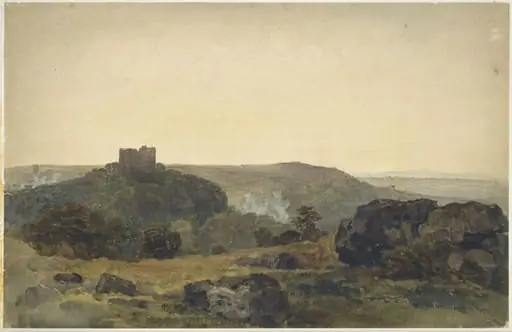 Conisborough Castle, Yorkshire
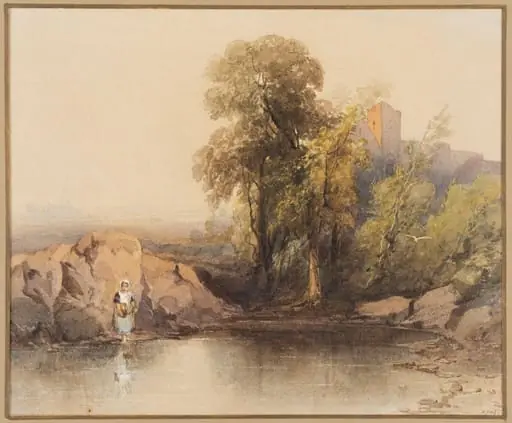 Pond and trees sunset
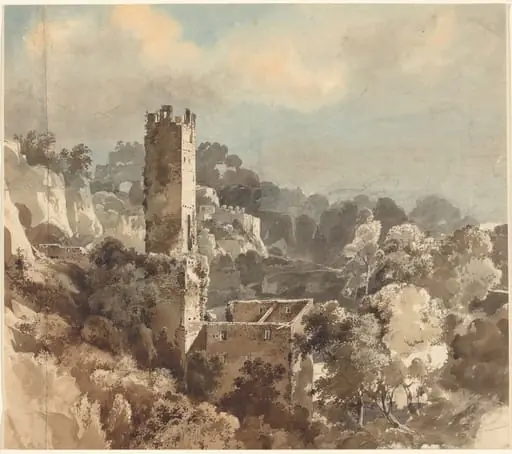 Ruins of a Fortified Tower among Wooded Hills
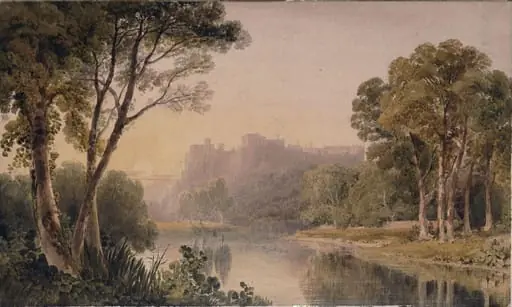 View of Windsor Castle
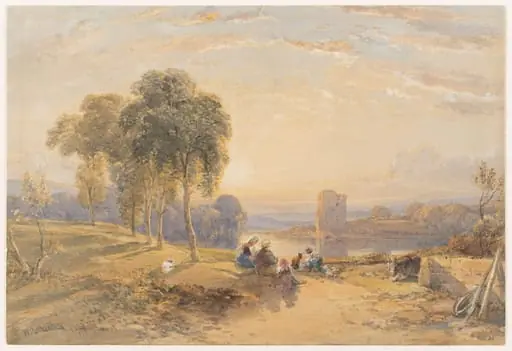 Landscape : Evening
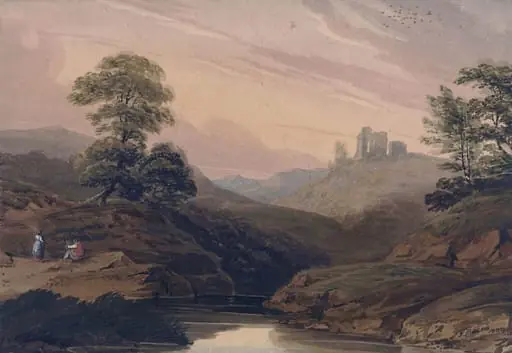 Mountainous Landscape with Stream and Ruin
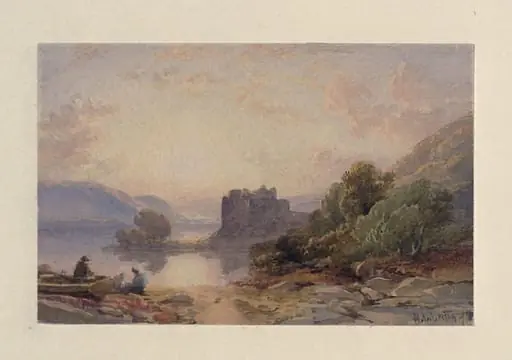 Sunset at Loch Awe
 Landscape with Ruined Temple: Sunrise
 River Scene: A Composition
 Warkworth Castle, Northumberland
 Mountainous landscape in 'Salvator Rosa's country'
 Carisbrooke Castle, Isle of Wight