Artwork
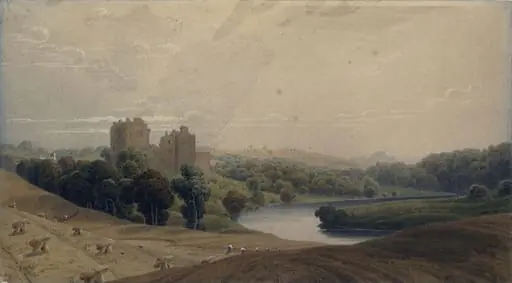
Conisborough Castle, Yorkshire
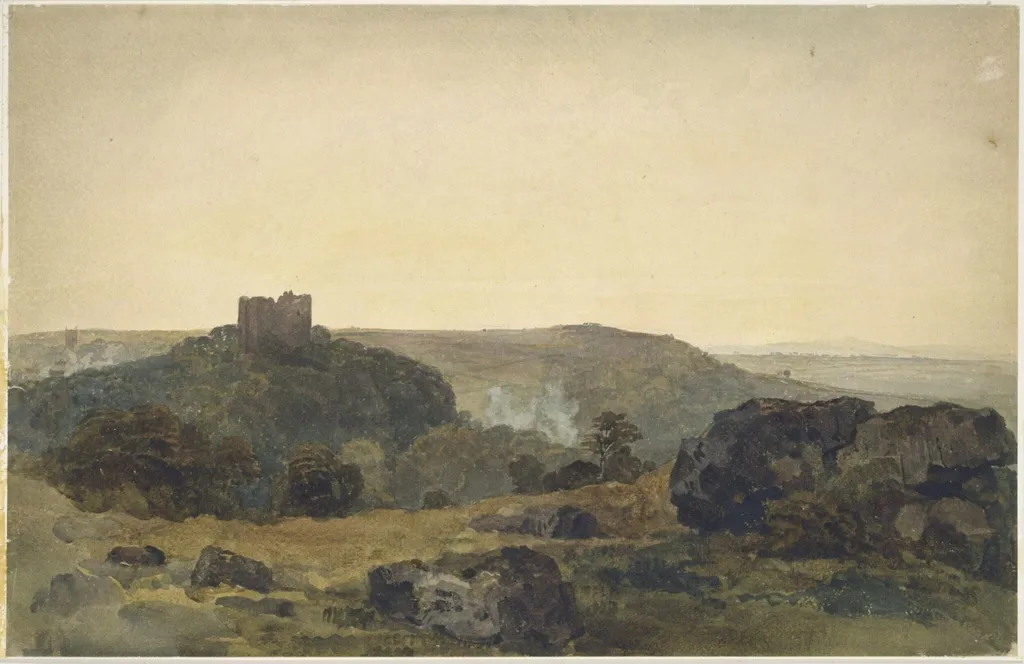
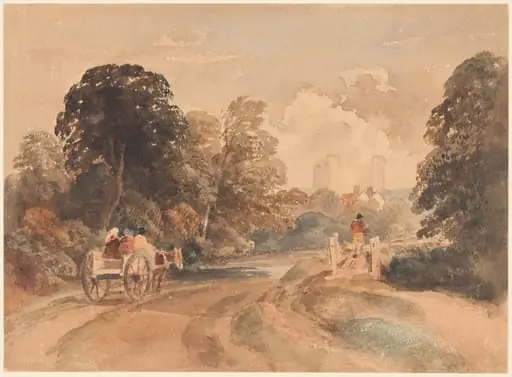
Conisborough Castle, Yorkshire is a watercolor work on paper by the Romanticist artist Peter De Wint. It dates from 1800 and is held in the collection of the Victoria and Albert Museum.
About this work
Overview
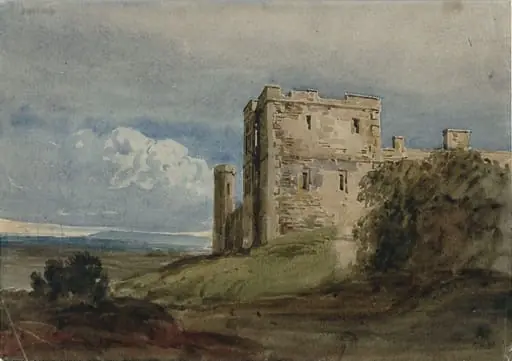
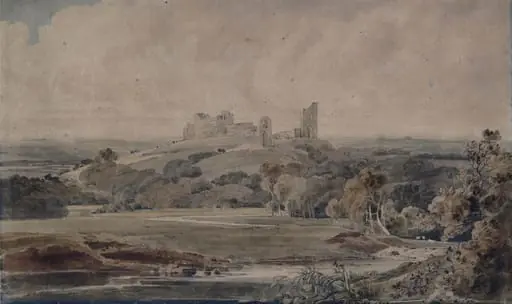
Peter De Wint created a watercolour depiction of Conisborough Castle in Yorkshire, capturing its isolated ruin against a quiet landscape.
Peter De Wint created a watercolour depiction of Conisborough Castle in Yorkshire, capturing its isolated ruin against a quiet landscape. Executed in transparent water-based pigments, the work emphasizes atmospheric tone over precise detail, reflecting the artist’s interest in natural light and topographical observation. The medium allows for fluid washes that blend seamlessly with the terrain, reinforcing the sense of age and solitude.
Subject & Meaning
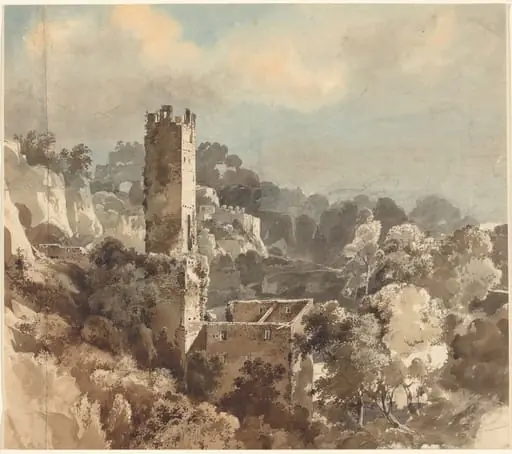
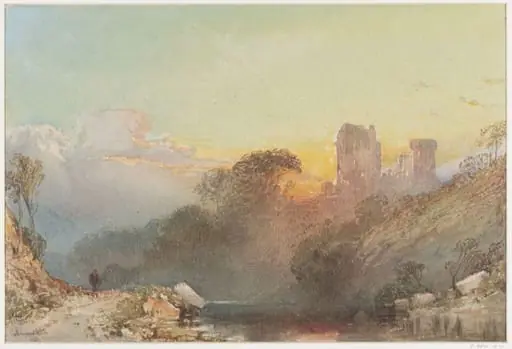
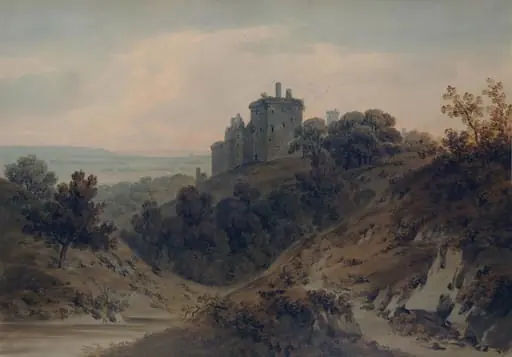
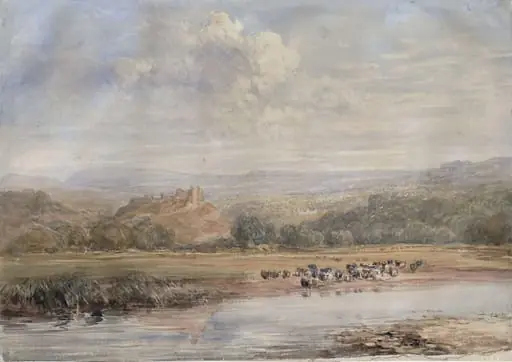
The painting presents Conisborough Castle as a weathered relic perched on a rocky outcrop, its stonework softened by time and erosion. Surrounded by sparse vegetation and uneven ground, the structure stands apart from human activity, suggesting abandonment and the quiet passage of centuries. The empty horizon and pale sky amplify its isolation, evoking a mood of contemplative decay rather than romantic grandeur.
Technique & Style
De Wint employed loose, layered watercolour washes to suggest texture without definition — rocks, foliage, and masonry emerge through subtle tonal shifts rather than sharp lines. The sky fades into a soft, unmodulated haze, dissolving the horizon. Wet-on-wet techniques allow pigments to bleed naturally, creating an effect of atmospheric depth and spontaneity, characteristic of his topographical approach to landscape.
History & Provenance
Painted during the early 19th century, the work reflects De Wint’s travels through northern England, where he documented historic sites with scholarly precision. It entered the Victoria and Albert Museum’s collection as part of a broader effort to preserve British watercolour traditions. The piece remains a representative example of his systematic recording of architectural ruins in their natural settings.
Context
In the early 1800s, interest in medieval ruins grew alongside Romantic sensibilities, though De Wint avoided overt sentimentality. His depictions of castles like Conisborough were grounded in direct observation, aligning with topographical drawing traditions rather than idealized landscapes. This work contributes to a body of watercolours that documented England’s architectural heritage with quiet accuracy.
Legacy
De Wint’s watercolours of Conisborough Castle helped establish a model for recording historic sites through understated, observational technique. His use of watercolour to convey both structure and atmosphere influenced later topographical artists. The painting endures as a quiet record of a ruin’s presence in the landscape, valued for its restraint and fidelity to place.
Own this work as a print
Artist & collection