Artwork
Άτιτλο

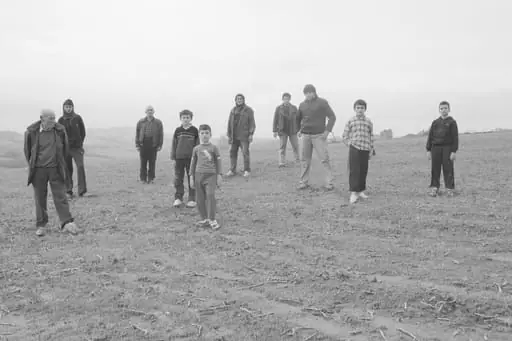
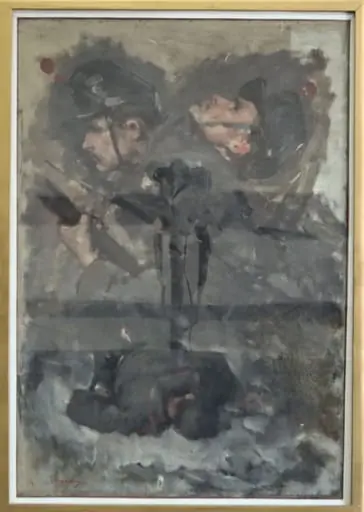
Άτιτλο is a photography by SOFIA GRIGORIADOU. It dates from 2006 and is held in the collection of the Athens School of Fine Arts. This work consists of a transient arrangement of everyday objects placed on a public street.
About this work
Overview
This work consists of a transient arrangement of everyday objects placed on a public street. Designed to exist only briefly, it resists permanent documentation, relying instead on photographic records to preserve its presence. The setup invites observation without offering clear resolution, emphasizing impermanence as a core condition of the piece.
Subject & Meaning
The objects—common, unadorned, and seemingly unrelated—suggest a quiet commentary on urban neglect or fleeting human presence. Their arrangement avoids symbolic clarity, instead prompting viewers to consider the significance of discarded or overlooked items in public space. The work does not declare meaning but cultivates contemplation around absence and temporality.
Technique & Style
The artist employs assemblage in a site-specific context, selecting items for their mundane familiarity rather than aesthetic value. Placement is deliberate yet unstructured, avoiding formal composition in favor of spontaneous-seeming order. The work’s reliance on photography as its primary medium underscores its resistance to physical permanence.
History & Provenance
Documented only through a single photograph, the work lacks a traditional exhibition history. It was likely created and dismantled within hours, leaving no physical trace. Its existence is confirmed solely through the image, which may have been taken by the artist or an observer, making its origin and intent partially obscured.
Context
This piece aligns with late 20th-century practices that challenge art’s material permanence, such as land art and conceptual street interventions. It reflects a broader interest in ephemeral gestures within urban environments, responding to the rhythms of city life rather than institutional frameworks.
Legacy
Though unaffiliated with any known movement or artist, the work contributes to a quiet tradition of transient public interventions. Its legacy lies not in influence or replication, but in its quiet assertion that meaning can emerge from impermanence, and that art need not endure to resonate.
Artist & collection
Artist