Artwork
Γεωμετρική κατασκευή
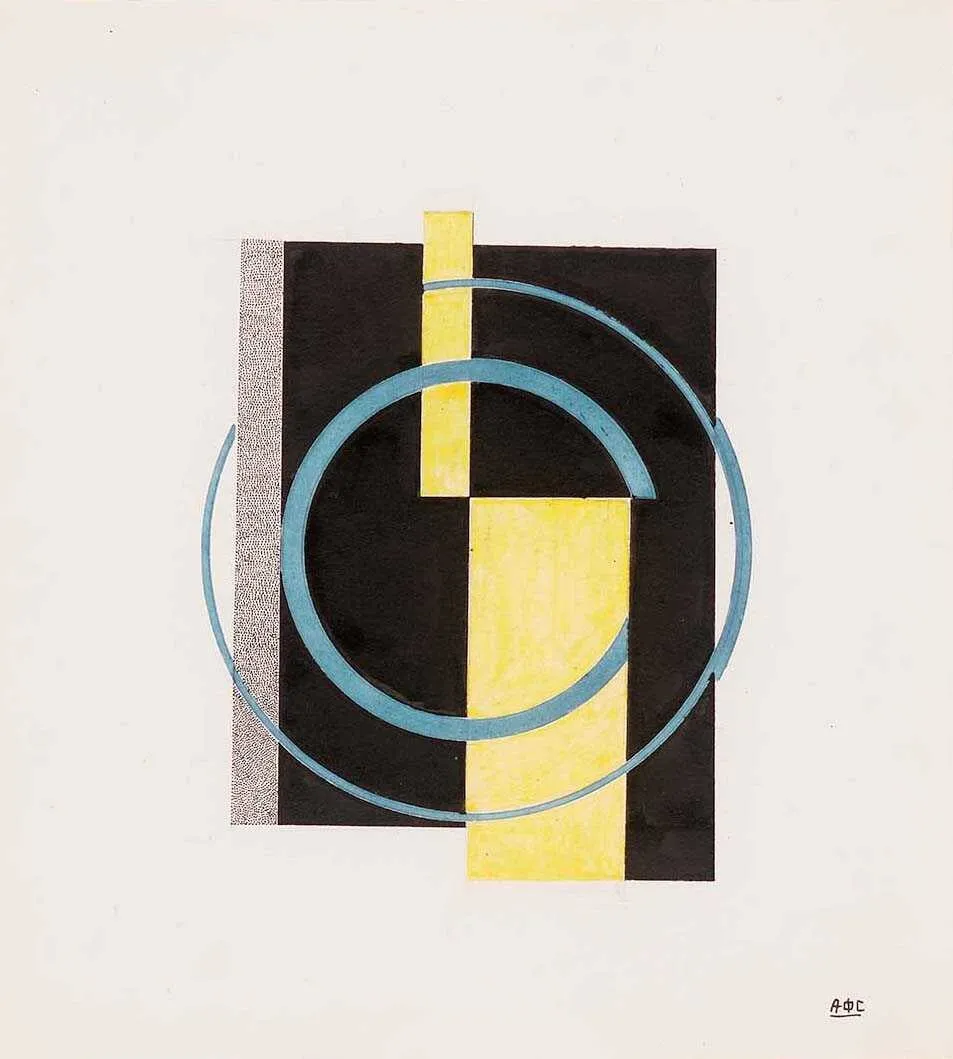
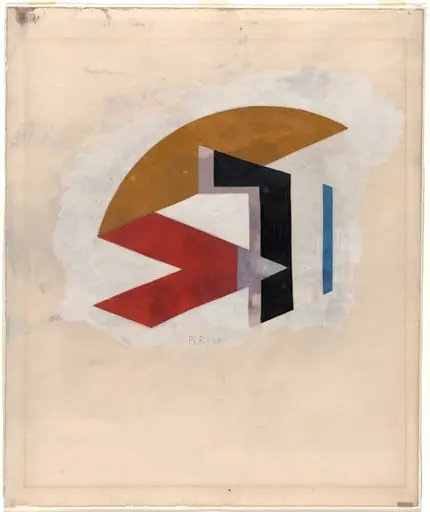
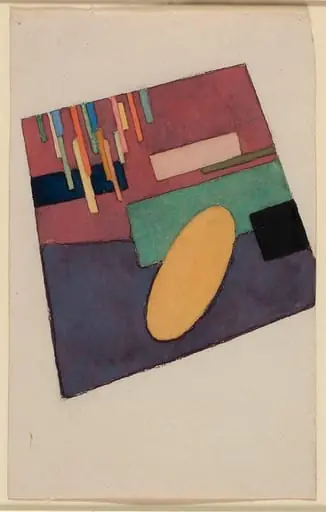
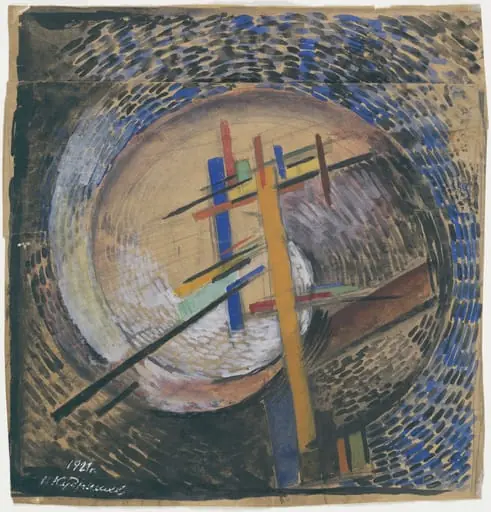
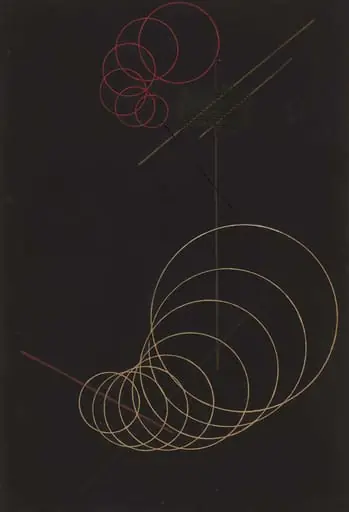
Γεωμετρική κατασκευή is a drawing by Antonina Sofronova. It dates from 1922 and is held in the collection of the Metropolitan Organisation of Museums of Visual Arts of Thessaloniki – MOMus.
About this work
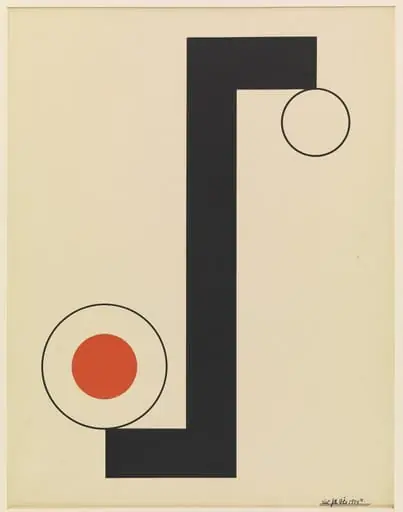
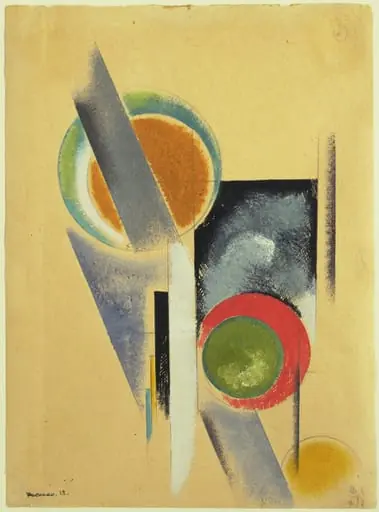
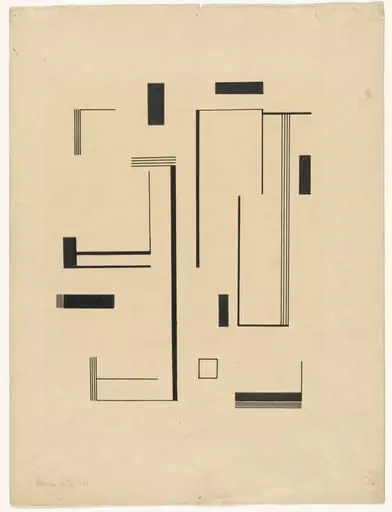
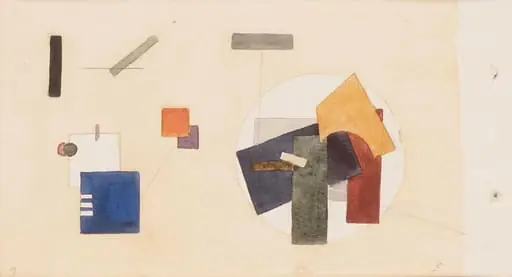
This drawing shows shapes and lines arranged in a tight pattern. You’ll see curves and straight lines locked together in a grid.
Sofronova built these shapes to study how they relate. It feels like a puzzle where each piece has a perfect spot. Her work sits between painting and design, not quite one or the other.
Try looking up Sofronova, Antonina (1892-1966) to see more.
Overview
This drawing exemplifies her focus on geometric relationships as a means of artistic exploration.
Antonina Sofronova, active in early 20th-century Russia, was associated with the Constructivist movement, which emphasized materiality and structural inquiry over pure abstraction. Her work emerged from the broader avant-garde context, influenced by figures like Vladimir Tatlin, and sought to investigate form through disciplined composition rather than expressive gesture. This drawing exemplifies her focus on geometric relationships as a means of artistic exploration.
Subject & Meaning
The drawing presents no representational subject; instead, it isolates semicircular and linear forms as autonomous elements. Their precise arrangement suggests an investigation into spatial harmony and structural balance. Sofronova treated these shapes as variables in a visual system, examining how curvature and rigidity interact within a confined field, evoking a sense of ordered tension rather than narrative or symbolism.
Technique & Style
Sofronova employed a restrained, methodical approach, using clean lines and tightly interlocked shapes to create a grid-like structure. The composition avoids ornamentation, favoring clarity and spatial economy. Her technique bridges the observational rigor of Cubism with Constructivism’s functional ethos, resulting in works that feel both analytical and deliberate, as if designed for study rather than display.
History & Provenance
Sofronova studied under Ilya Mashkov and participated in the Russian avant-garde circles of the 1910s and 1920s. Her work was produced during a period of intense experimentation in Soviet art, though she remained less documented than her male contemporaries. This drawing likely originated from her personal studies, reflecting the pedagogical and investigative nature of Constructivist practice during its formative years.
Context
Emerging alongside movements that rejected traditional representation, Sofronova’s work responded to the era’s interest in art as a system of formal logic. While Malevich pursued pure abstraction and Tatlin emphasized industrial materials, she focused on the relational dynamics between basic geometric units. Her drawings occupied a liminal space between fine art and design, reflecting Constructivism’s broader ambition to unify art with structural thought.
Legacy
Sofronova’s contributions remain understudied, overshadowed by more prominent figures of the Russian avant-garde. Yet her precise geometric investigations offer insight into the quieter, systematic side of Constructivism—where form was not merely expressed but tested. Her drawings serve as records of an artistic inquiry into structure, influencing later generations interested in the intersection of art, mathematics, and design.
Artist & collection
Museum
Metropolitan Organisation of Museums of Visual Arts of Thessaloniki – MOMus
Continue through works from the same source collection.