Artwork
The Eight Immortals of the Wine Cup
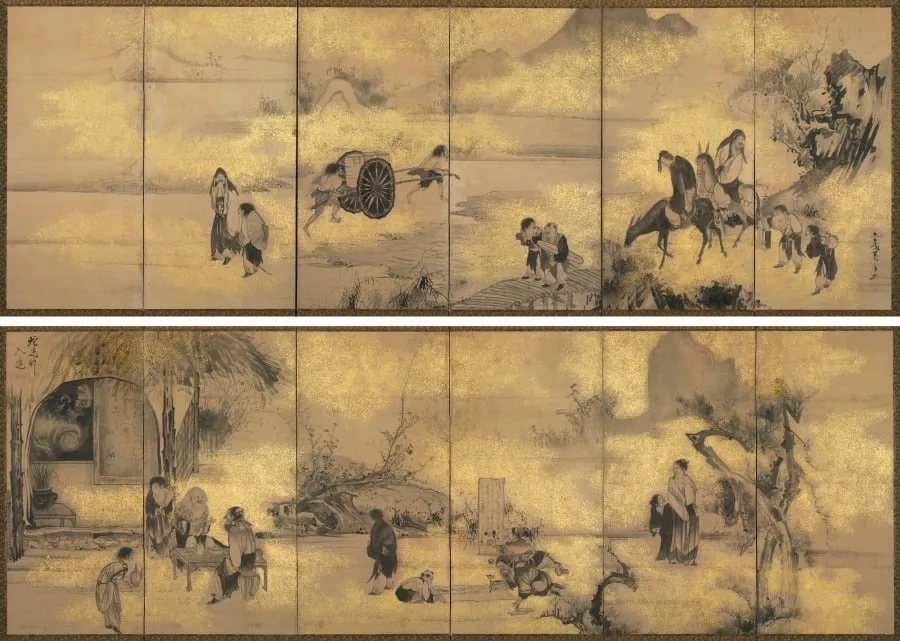
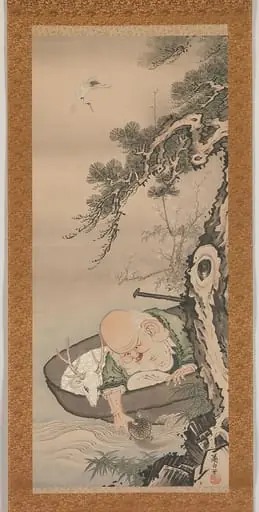
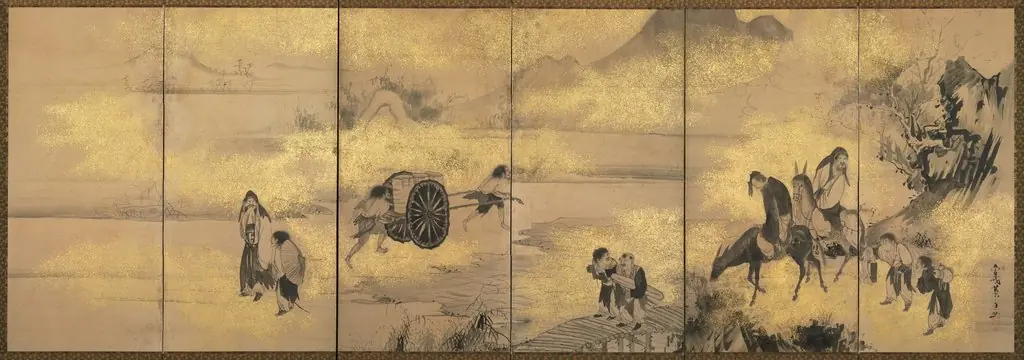
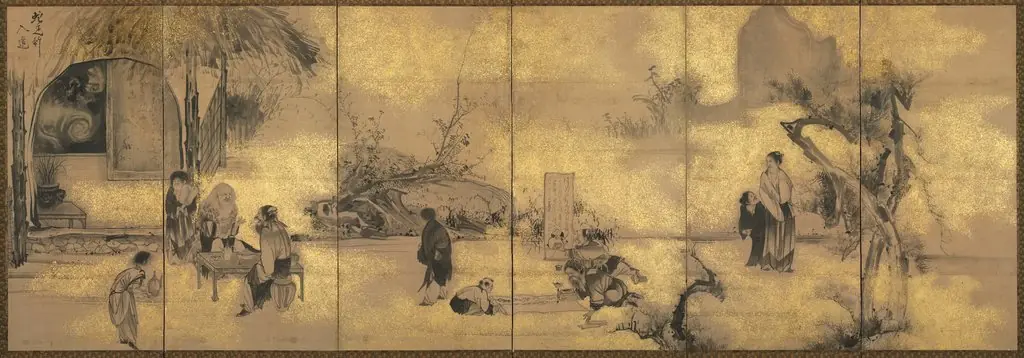
The Eight Immortals of the Wine Cup is an unspecified painting by the Nihonga artist Soga Shōhaku. It dates from 1704 and is held in the collection of the Cleveland Museum of Art. In this late‑Edo painting, the artist renders eight scholarly figures, each clutching a wine cup, gathered beneath a twisted pine.
About this work
The Edo middle class loved lighthearted scenes, so he turned a serious theme about escaping government work into a party.
You see eight tipsy scholars in long robes, swaying under a gnarled pine tree, wine cups in hand.
These men are actually Chinese poets from an old poem, but Shōhaku painted them as a joke. The Edo middle class loved lighthearted scenes, so he turned a serious theme about escaping government work into a party. The tree looks like it’s laughing too—its branches twist into faces.
If you like this playful style, look up Edo period (1615–1868) for more art made for everyday people.
Overview
In this late‑Edo painting, the artist renders eight scholarly figures, each clutching a wine cup, gathered beneath a twisted pine. Their exaggerated, jovial expressions and swaying postures convey a scene of convivial drunkenness rather than solemn retreat.
Subject & Meaning
The work draws on Du Fu’s eighth‑century Chinese poem that celebrates eight literati who abandoned official duties for rural revelry. By emphasizing their merriment, the painter transforms the original theme of withdrawal into a lighthearted commentary on the pleasures of escape.
Technique & Style
Executed in the bold brushwork characteristic of the period, the composition balances delicate line with vigorous ink washes. The pine’s contorted branches are rendered to suggest smiling faces, reinforcing the painting’s playful tone through visual pun.
History & Provenance
Created during the late Edo era (c. 1800s), the piece reflects the growing demand among chonin—urban merchants and artisans—for art that entertained rather than instructed. It was likely circulated in private collections that favored humorous genre scenes.
Context
The Edo period saw a shift from the austere Chinese motifs favored by earlier scholars toward subjects that resonated with everyday Japanese life. This painting exemplifies that trend, merging a classical Chinese literary reference with a distinctly Japanese taste for wit and social satire.
Artist & collection
Artist
Shōhaku spent his life in Kyoto, the creative heart of Japan, where he painted scrolls and screens that looked nothing like the soft landscapes of his day.