Artwork
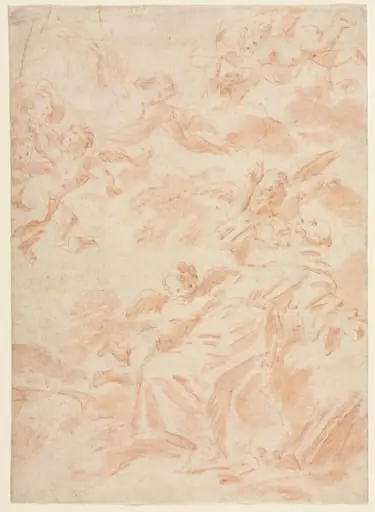
Minerva commending the arts of sculpture, architecture, painting and music to Jupiter
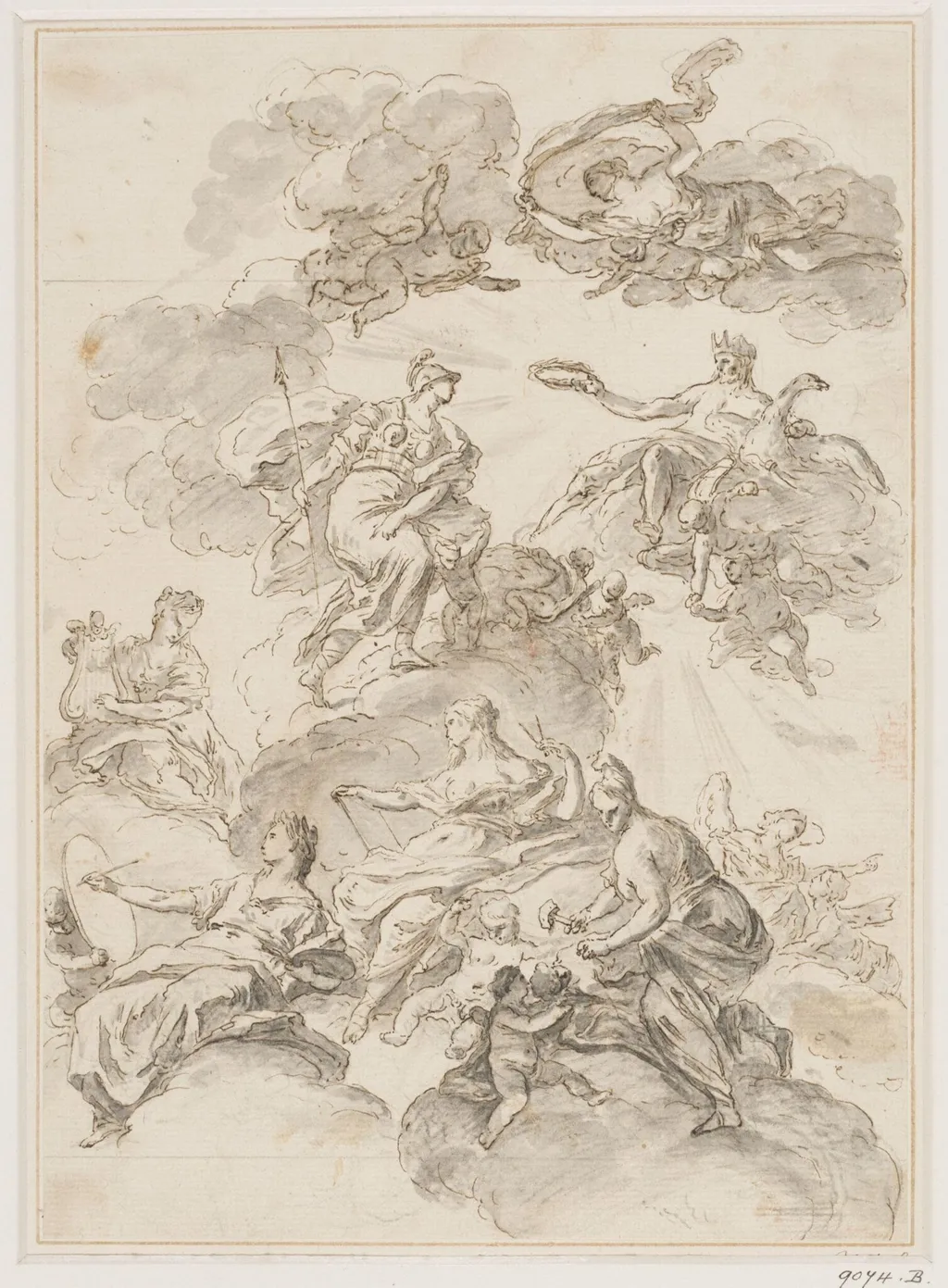
Minerva commending the arts of sculpture, architecture, painting and music to Jupiter is a drawing by the Baroque artist Francesco Solimena. It dates from 1657 and is held in the collection of the Victoria and Albert Museum.
About this work
Overview
Though primarily known as a painter, Solimena produced numerous preparatory drawings, this one serving as a study for a larger altarpiece or ceiling scheme.
Created in 1657 by Francesco Solimena, this drawing depicts Minerva presenting the arts to Jupiter. Executed in ink and wash, it reflects Solimena’s early Baroque style, marked by energetic composition and fluid line work. Though primarily known as a painter, Solimena produced numerous preparatory drawings, this one serving as a study for a larger altarpiece or ceiling scheme. It resides in the Victoria and Albert Museum’s collection of European drawings.
Subject & Meaning
The scene illustrates Minerva, goddess of wisdom and the arts, introducing sculpture, architecture, painting, and music to Jupiter, king of the gods. Each art form is personified by a figure holding symbolic tools or instruments, while winged attendants and floating forms suggest celestial elevation. The composition elevates the arts as divine gifts, aligning them with cosmic order and intellectual authority under Jupiter’s gaze.
Technique & Style
Solimena employed rapid, expressive pen strokes and diluted ink washes to convey motion and volume. Figures are rendered with loose, gestural lines, avoiding rigid detail in favor of dynamic posture and implied movement. The swirling clouds and overlapping forms create a sense of atmospheric depth, characteristic of Baroque draftsmanship. The sketch-like quality suggests spontaneity, as if capturing a moment of divine revelation in real time.
History & Provenance
The drawing was made early in Solimena’s career, during his formative years under the influence of Luca Giordano and Mattia Preti. It likely served as a preparatory study for a commissioned ceiling painting, though the final work has not been definitively identified. The drawing entered the Victoria and Albert Museum’s collection in the 19th century, part of a broader acquisition of Italian drawings from private European collections.
Context
In mid-17th-century Naples, artistic patronage often favored mythological themes that glorified intellectual and creative pursuits. Solimena’s drawing reflects the era’s intellectual climate, where the arts were seen as extensions of divine order. The composition echoes classical precedents but adapts them with Baroque dynamism, responding to both religious and secular commissions that sought to elevate cultural achievement through allegory.
Legacy
This drawing exemplifies Solimena’s transition from exuberant Baroque energy toward later classical restraint. It remains a key example of Italian draftsmanship from the period, illustrating how preparatory studies could function as independent works of expressive power. Its preservation in the V&A underscores its importance in understanding the development of Neapolitan art and the role of drawing in Baroque artistic practice.
Artist & collection

Artist
Francesco Solimena (4 October 1657 – 3 April 1747) was a prolific Italian Baroque painter, one of an established family of painters and draughtsmen.

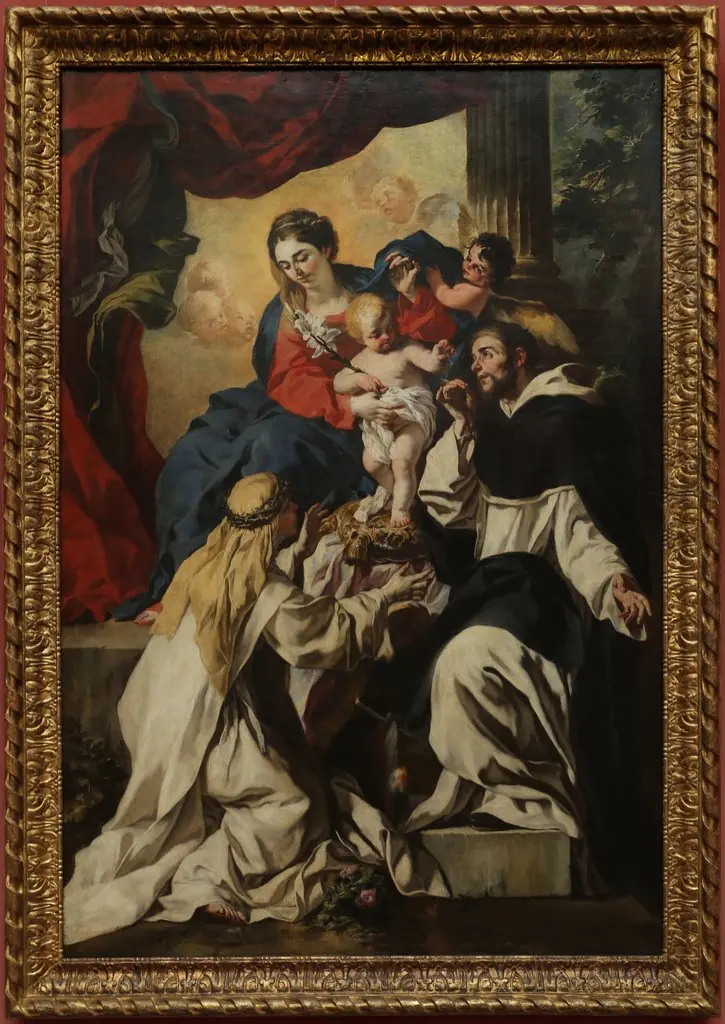
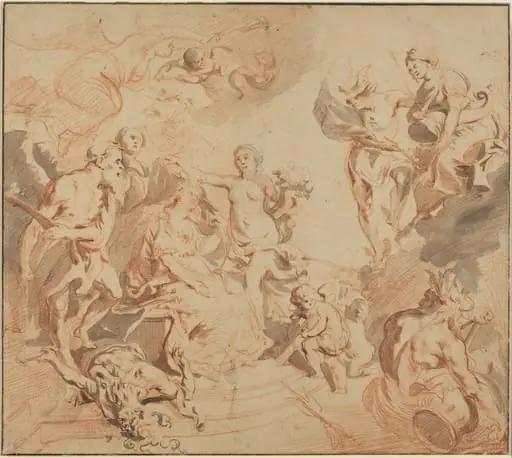 Antwerp Blessed with Abundance
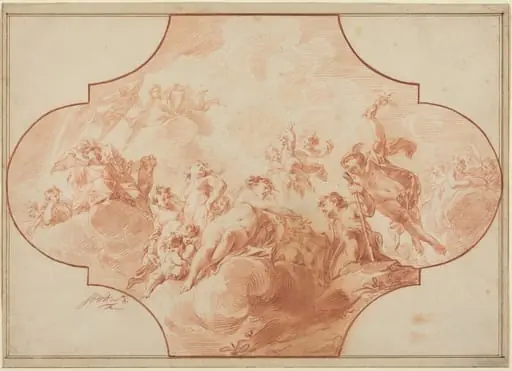 The Judgment of Paris
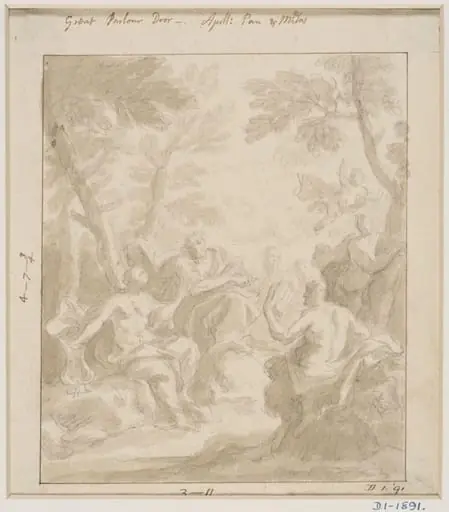 Design for an overdoor painting depicting Apollo, Pan and Midas
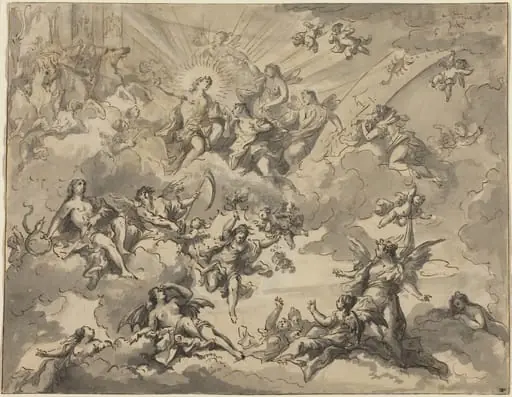 Apollo and the Muses
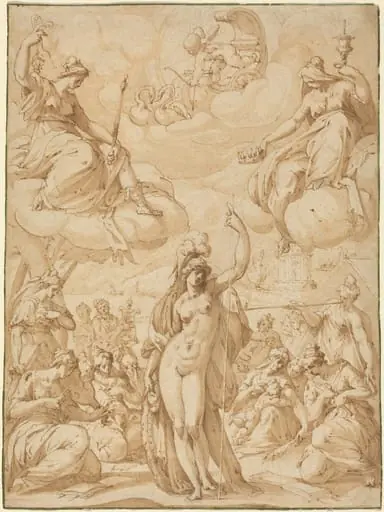 Allegory of Minerva as the Head of the Muses
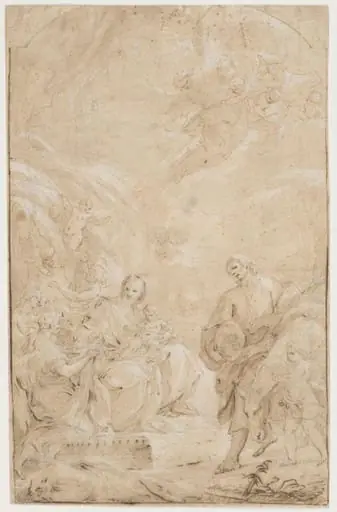 Untitled
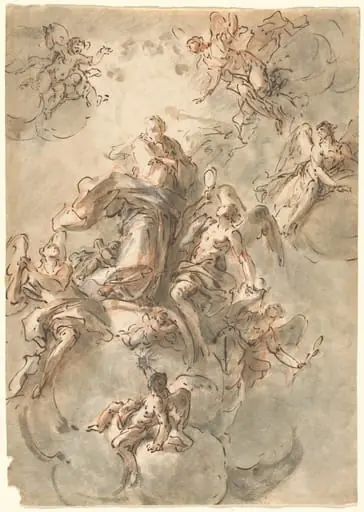 Virgin of the Immaculate Conception
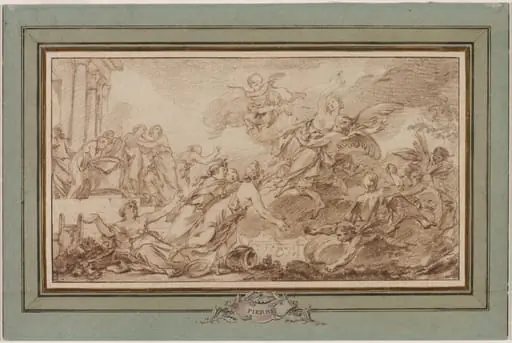 Boreas Abducting Oreithyia
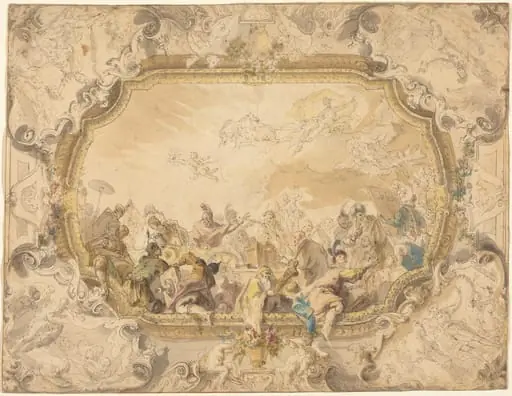 A Ceiling with Apollo Presiding over Military and Historical Learning
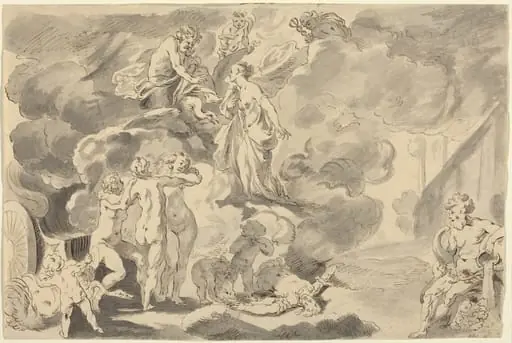 Death of Phaeton
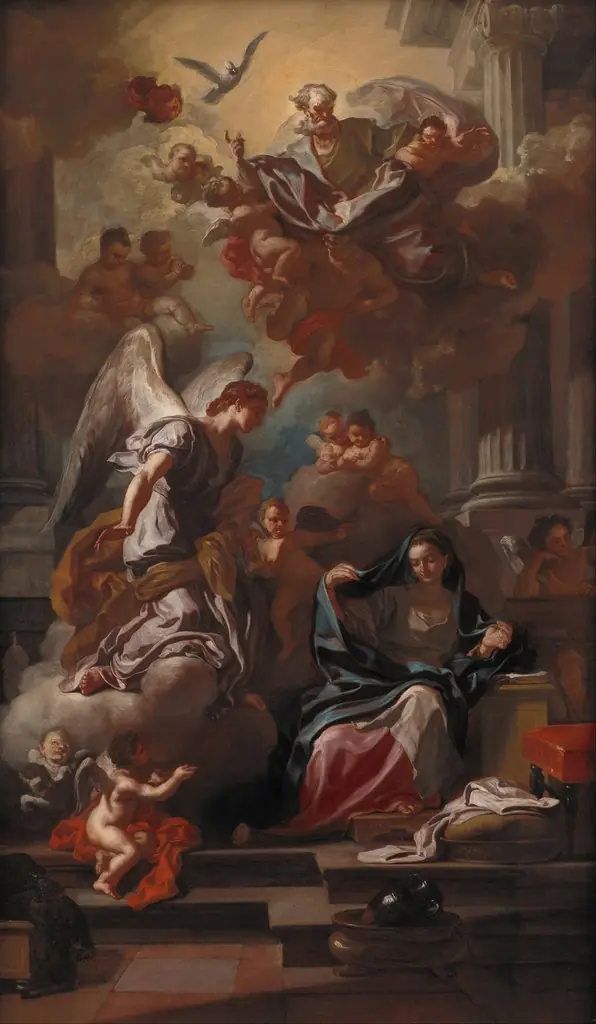
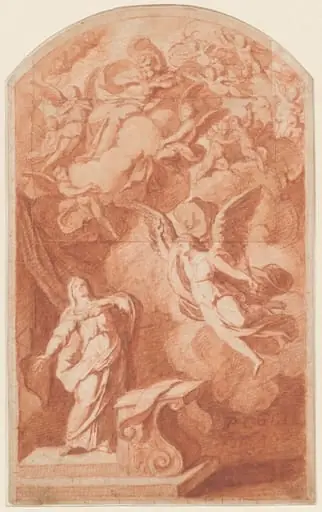 The Annunciation
 The Stigmatization of Saint Francis