Artwork
Interior of the Church of Virgin Mary in Kraków
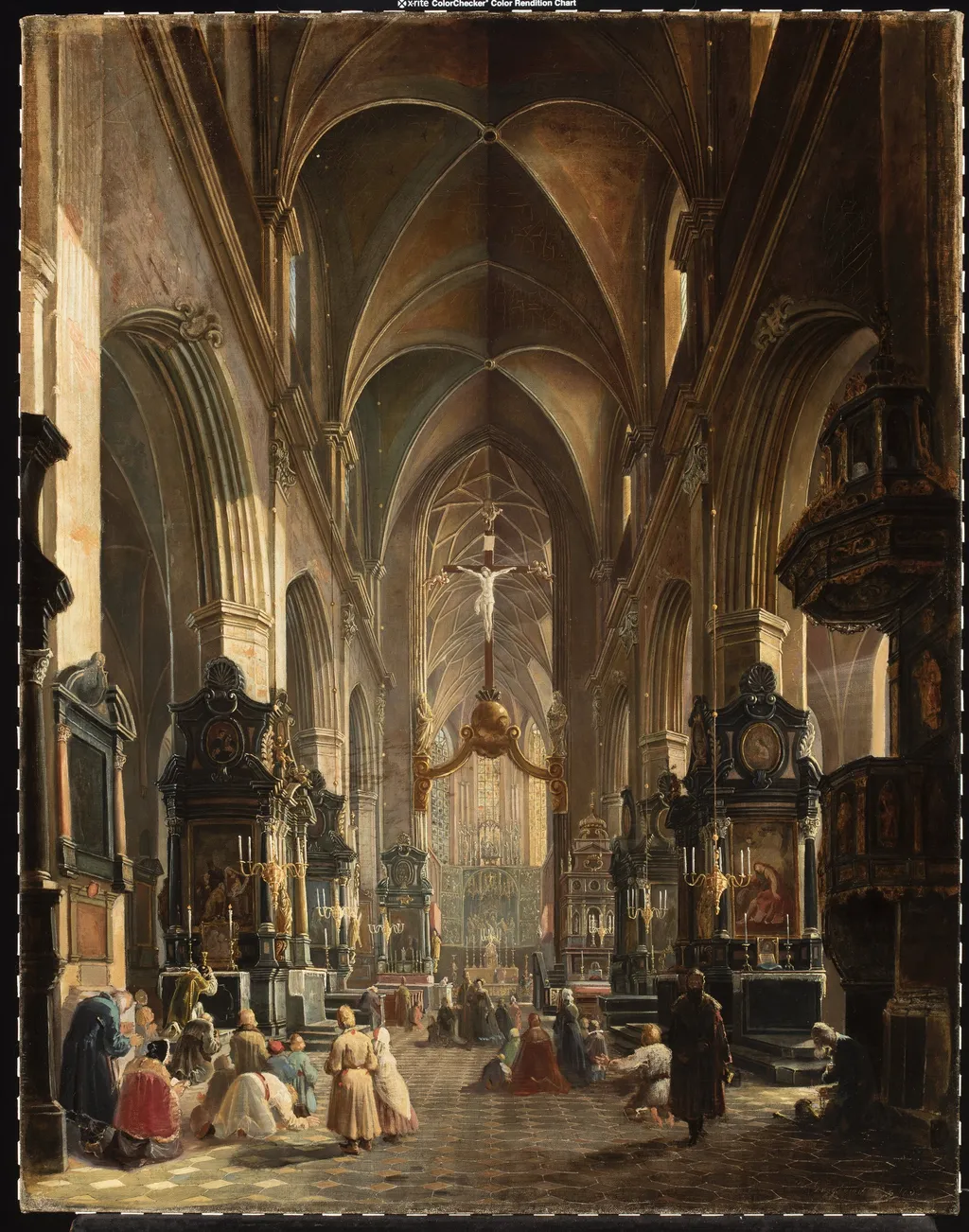
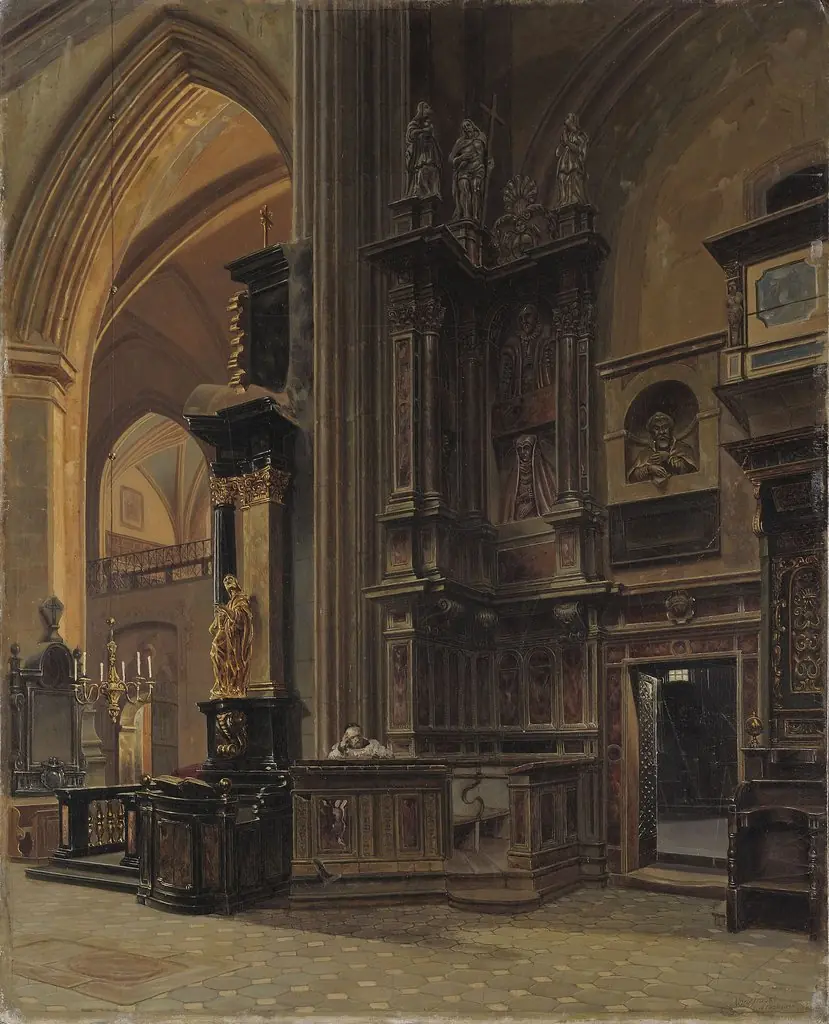
Interior of the Church of Virgin Mary in Kraków is an oil painting by the Realist artist Aleksander Gryglewski. It dates from 1858 and is held in the collection of the National Museum in Warsaw.
About this work
Overview
As a professor at the Kraków Academy of Fine Arts, Gryglewski applied careful observation to render sacred architecture with quiet precision.
Painted in 1858 by Aleksander Gryglewski, this oil on canvas work captures the interior of the Church of the Virgin Mary in Kraków. As a professor at the Kraków Academy of Fine Arts, Gryglewski applied careful observation to render sacred architecture with quiet precision. The painting belongs to the realist tradition, prioritizing factual representation over idealization. It is now part of the National Museum in Warsaw’s permanent collection.
Subject & Meaning
The scene portrays the nave of a Gothic church, filled with architectural detail and quiet human presence. Figures are shown in private acts of devotion—kneeling, standing, or simply pausing—emphasizing personal spirituality rather than ceremonial spectacle. The absence of dramatic lighting or overt symbolism invites reflection on the ordinary sacred, where architecture and stillness become vessels for contemplation.
Technique & Style
Gryglewski employed subtle gradations of color to convey the texture of stone, the weight of shadow, and the warmth of interior light. Cool blues and grays define recesses and vaults, while ochres and soft browns animate the walls and floor. The brushwork is restrained, avoiding flourish in favor of clarity. Perspective is carefully constructed to guide the eye toward the distant altar, reinforcing spatial depth and quiet solemnity.
History & Provenance
Created during a period of growing national consciousness in partitioned Poland, the painting reflects an interest in preserving cultural landmarks. Gryglewski, trained in the academic tradition, documented religious architecture as both artistic subject and national heritage. The work entered the National Museum in Warsaw’s collection in the late 19th century, where it has remained as part of Poland’s documented artistic record.
Context
In mid-19th-century Poland, realism emerged as a response to Romantic idealism, favoring direct observation of everyday and sacred life. Gryglewski’s depiction of a functioning church interior aligns with broader efforts to record Poland’s architectural identity under foreign rule. Unlike grand historical scenes, this work finds dignity in the mundane rituals of worship, offering a quiet counterpoint to political turmoil.
Legacy
The painting stands as an early example of Polish realist interior painting, influencing later artists who turned to ecclesiastical spaces as subjects of cultural memory. Its restrained tone and attention to architectural detail helped establish a visual language for documenting Poland’s religious heritage. Though not widely exhibited, it remains a significant reference in studies of 19th-century Polish art and sacred space.
Artist & collection
Artist
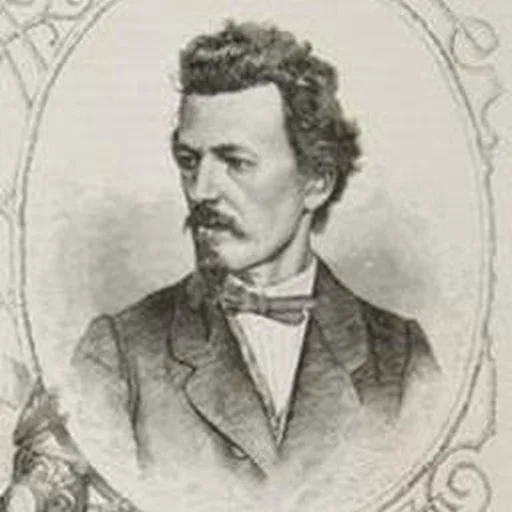
Aleksander Konstanty Gryglewski (4 March 1833 – 28 July 1879) was a Polish painter and art professor at the Kraków Academy of Fine Arts. He is primarily known for his interior portraits of notable buildings throughout Poland.

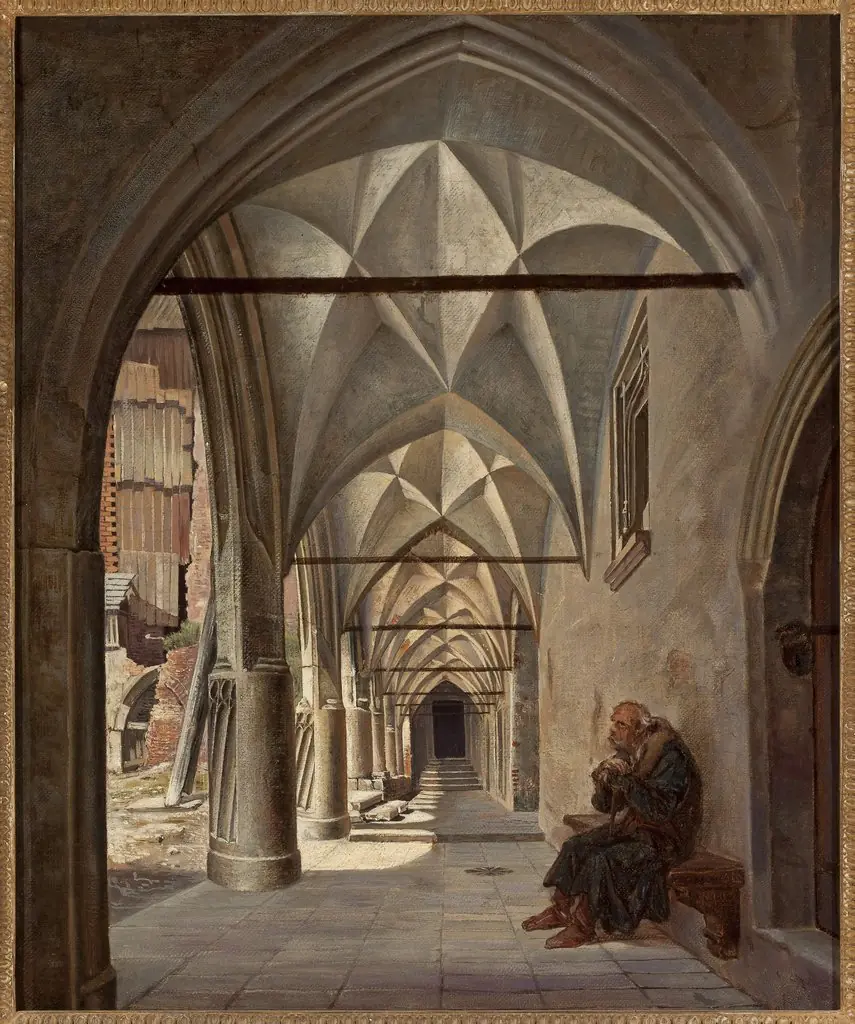
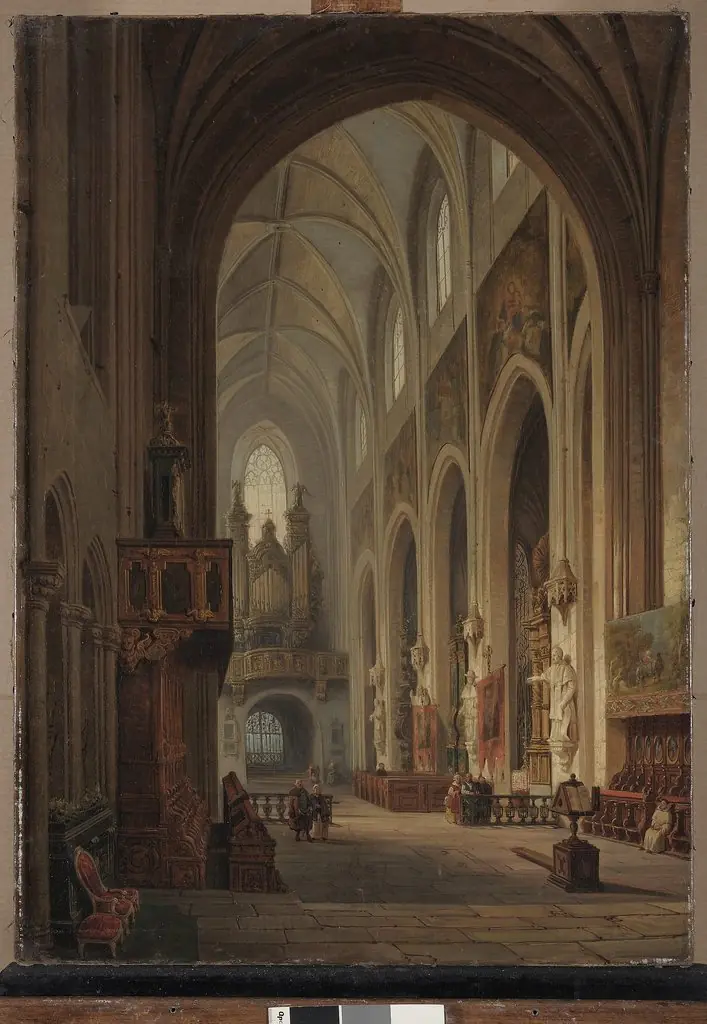 Interior of the Dominican Church in Kraków
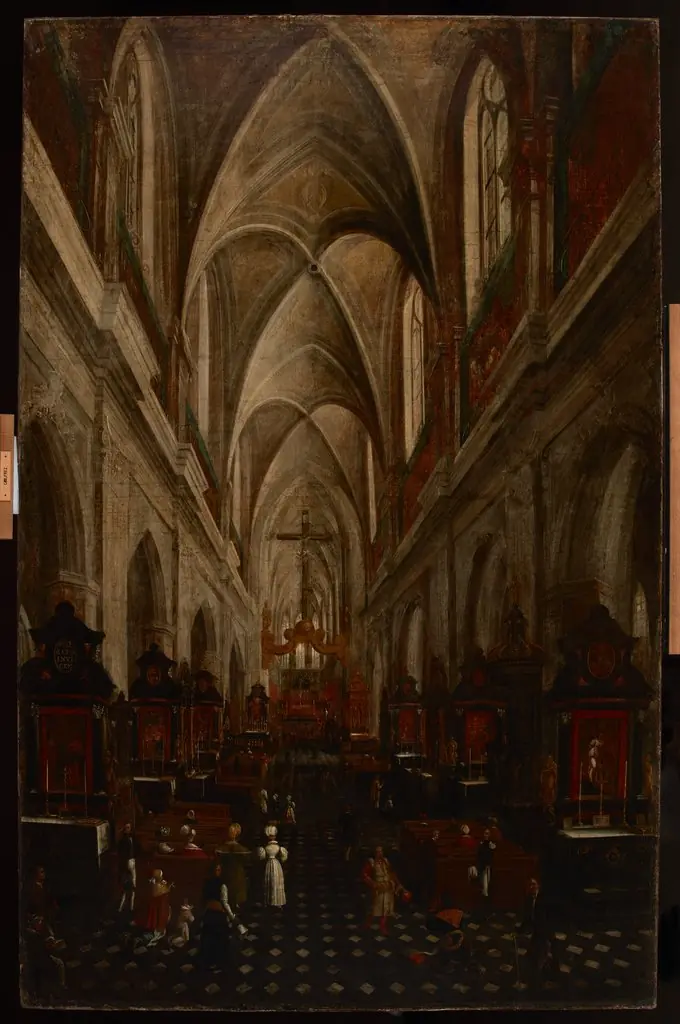 Interior of St Mary's Church in Krakow
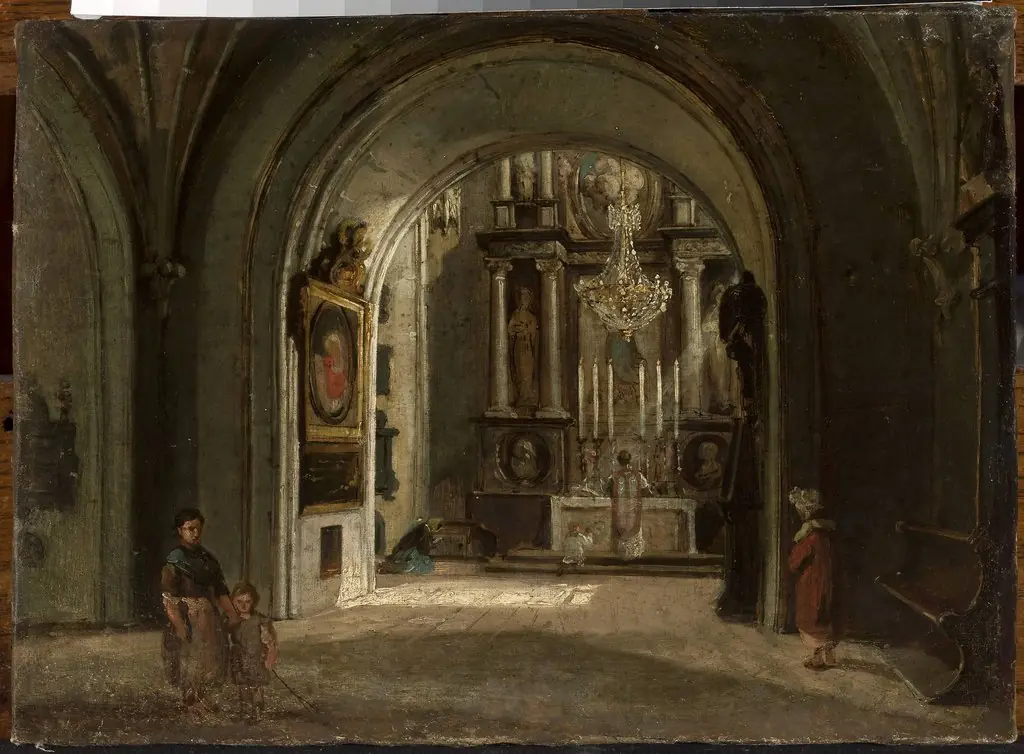 Interior of St. John’s church in Warsaw
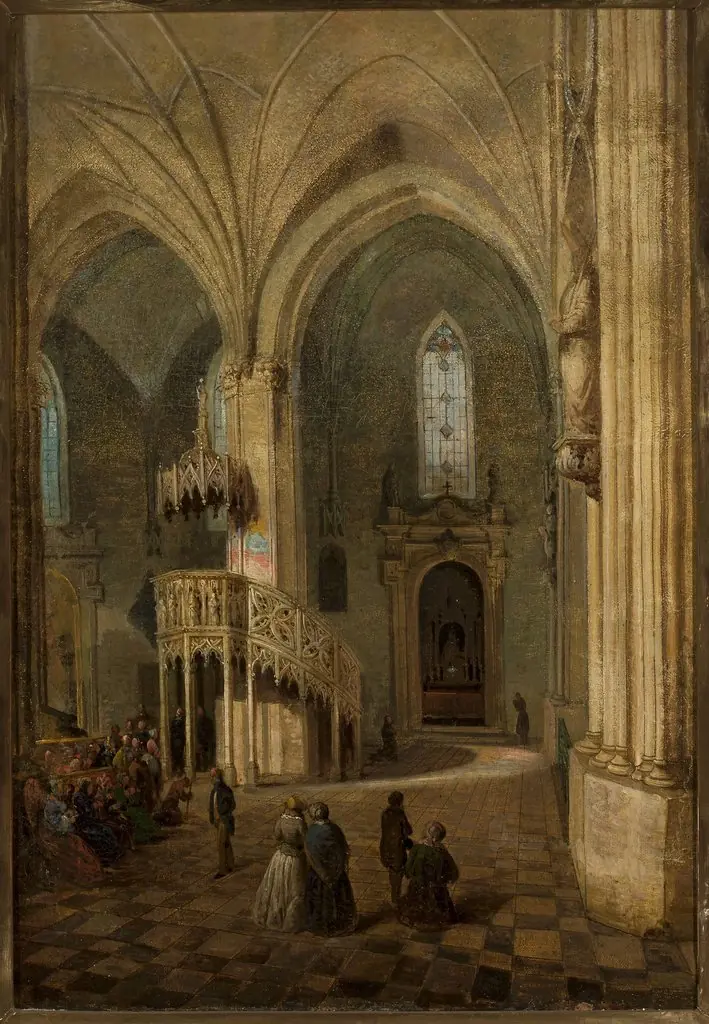 Interior of St. John’s Cathedral in Warsaw
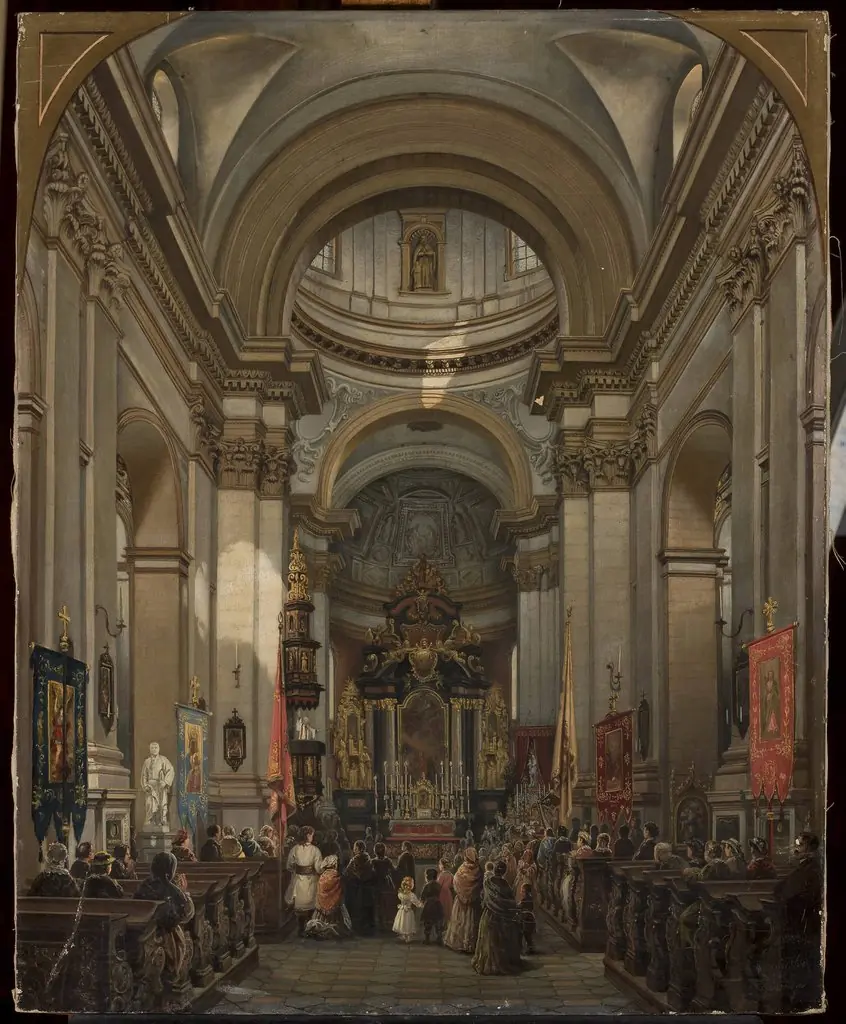 Interior of St. Peter’s church in Kraków
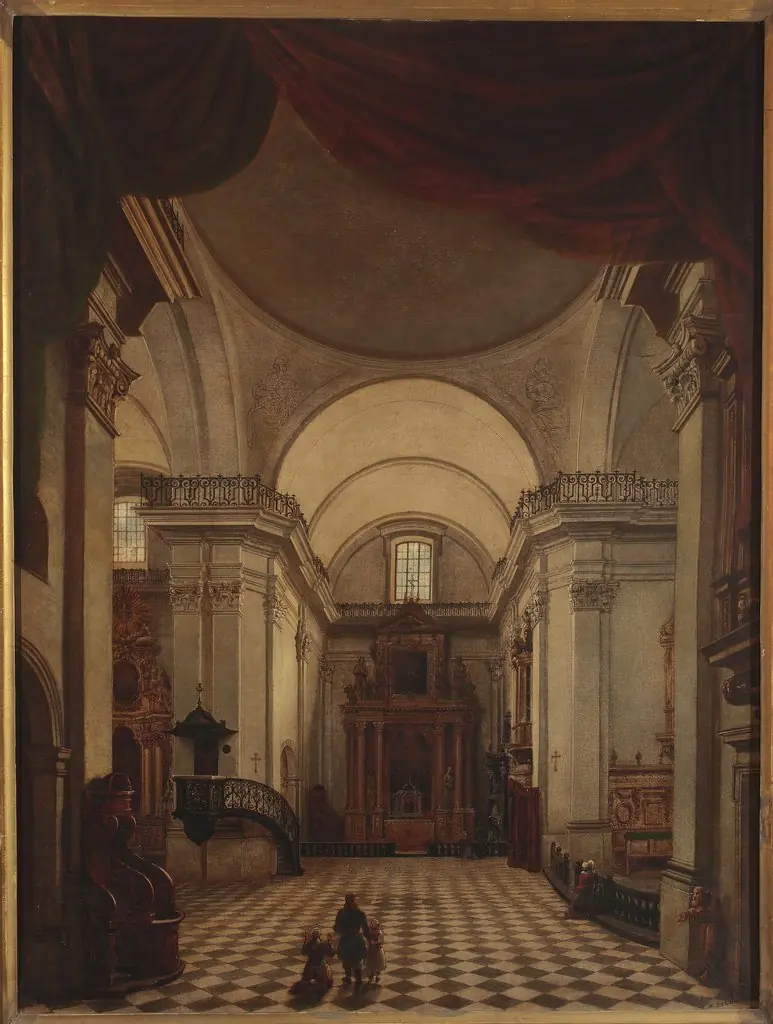 Interior of the Holy Cross Church in Warsaw
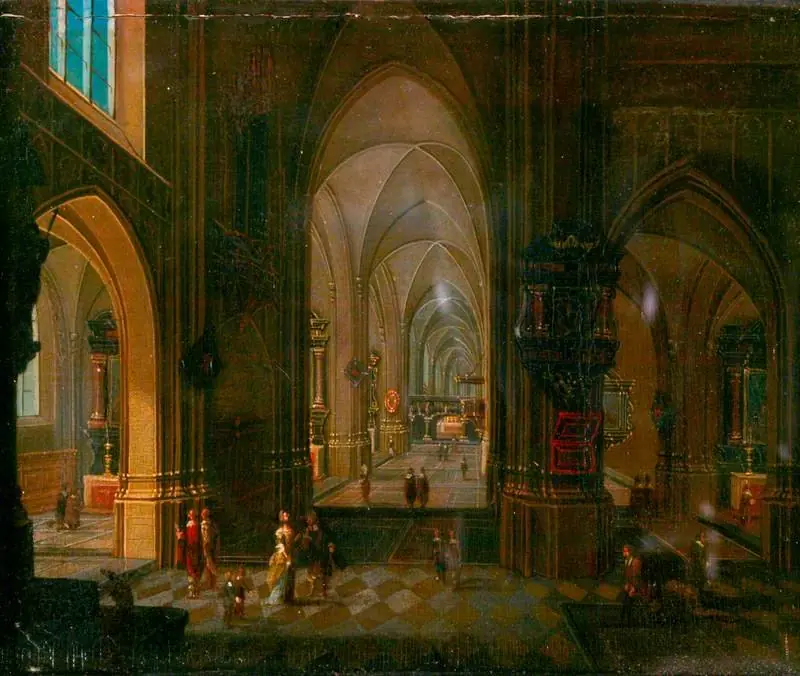 Interior of a Church
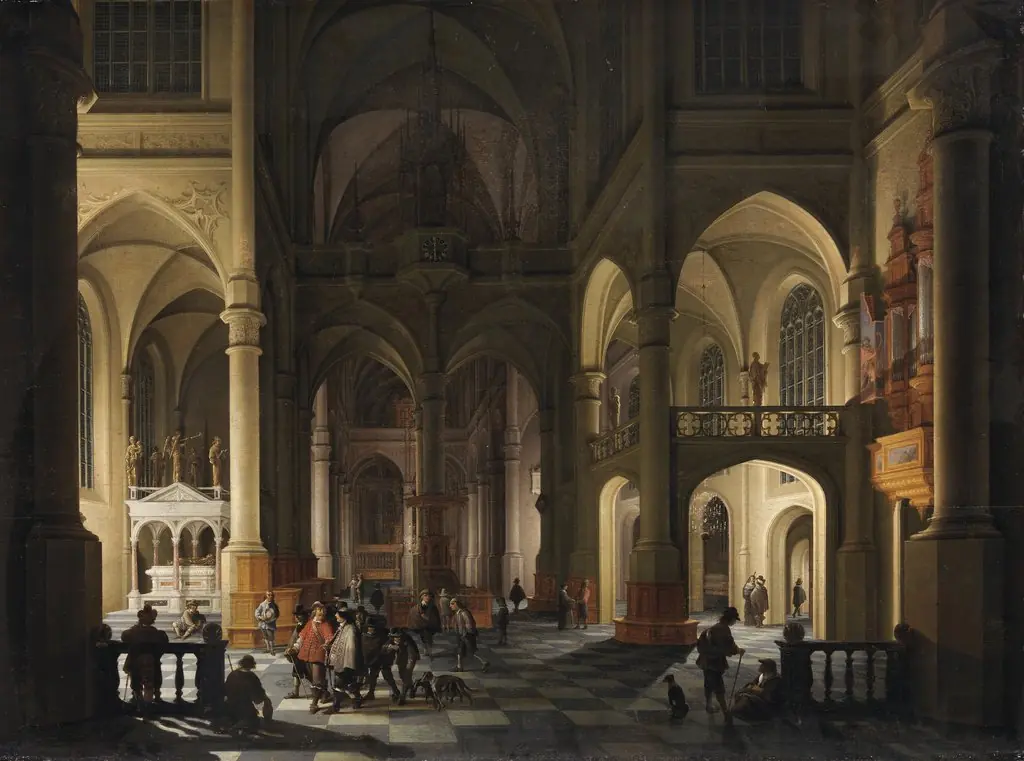 An Interior of a Church
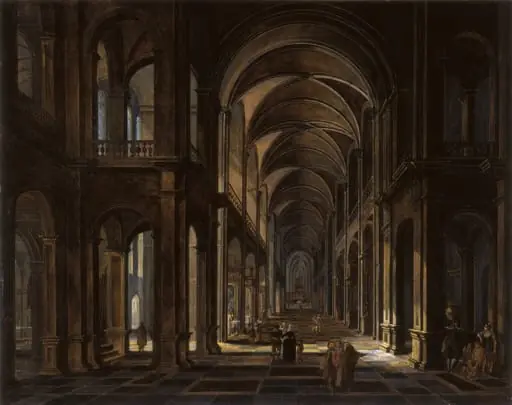 Interior of a Church