Artwork
The Contest between Apollo and Pan before King Midas
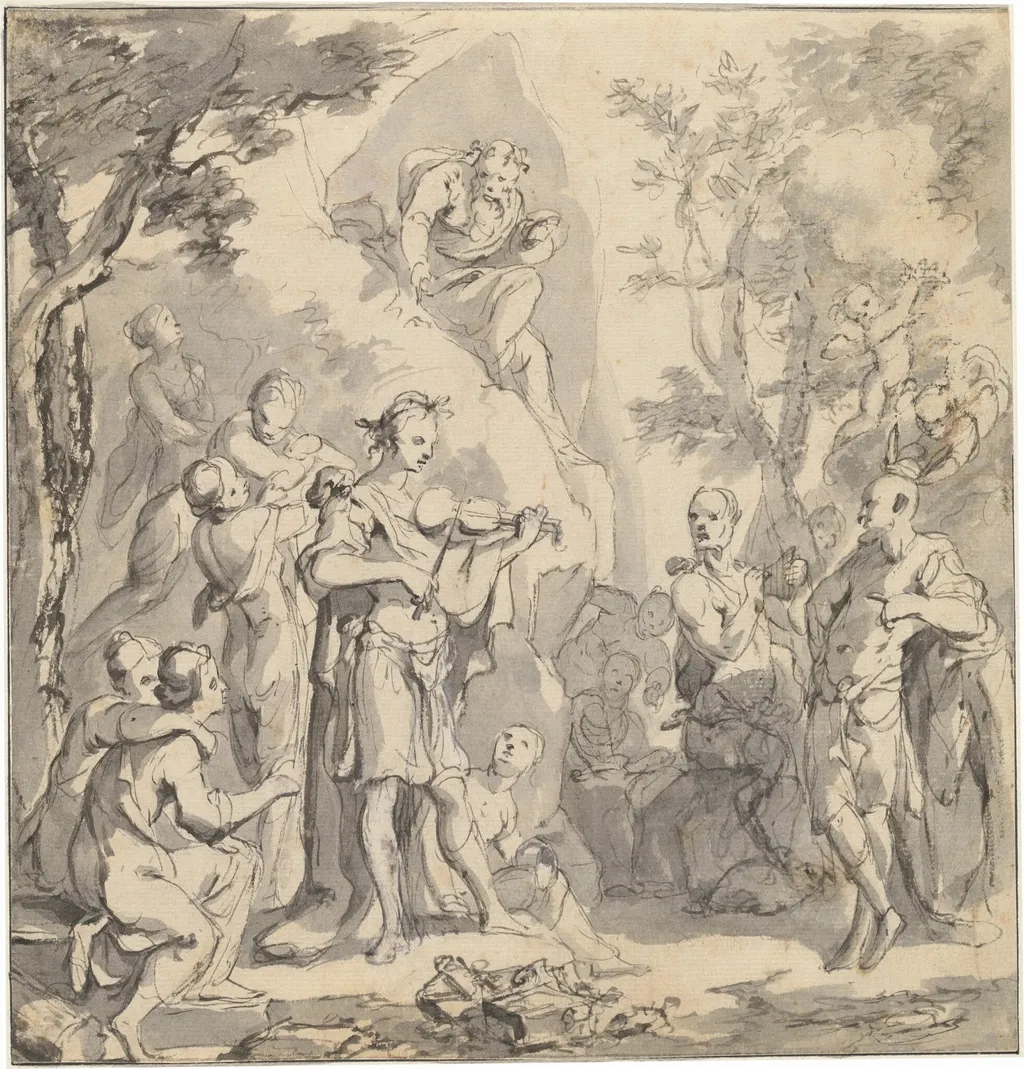
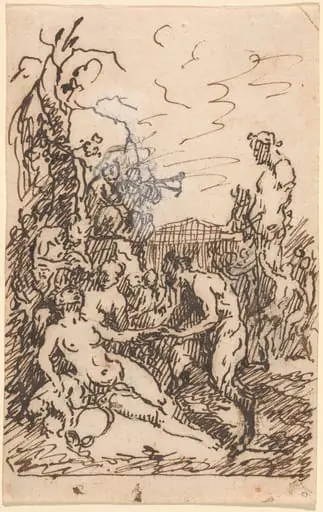
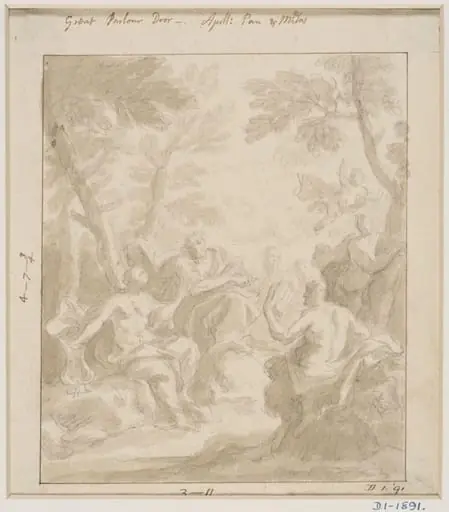
The Contest between Apollo and Pan before King Midas is an ink drawing by the Baroque artist Johann Spillenberger. It dates from 1670 and is held in the collection of the National Gallery of Art.
About this work
Overview
The composition captures a moment of musical rivalry, rendered with rapid, expressive lines and layered tonal values characteristic of Baroque draftsmanship.
This ink and wash drawing, dated around 1670, depicts a mythological scene attributed to Johann Spillenberger. Executed on laid paper with graphite underdrawing, it employs black ink, gray wash, and white gouache highlights to suggest form and atmosphere. The composition captures a moment of musical rivalry, rendered with rapid, expressive lines and layered tonal values characteristic of Baroque draftsmanship.
Subject & Meaning
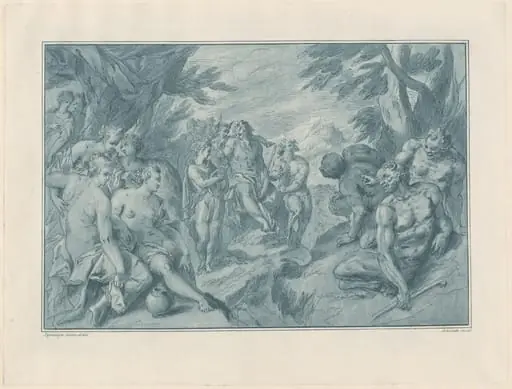
The scene illustrates the contest between the god Apollo and the satyr Pan, judged by King Midas. Apollo, associated with the lyre, opposes Pan’s rustic pipes. The figures surrounding them—dancers, observers, and children—reflect the communal nature of the event. Midas, bearded and apart, holds a staff, signaling his role as arbiter. The moment captures the tension between refined art and earthy folk tradition.
Technique & Style
The artist used loose, fluid pen strokes and diluted gray wash to model forms and suggest depth in the wooded setting. White gouache was applied selectively to highlight figures and foliage, creating contrast against the muted tones. Traces of graphite beneath indicate preliminary planning. The sketchy, atmospheric handling reflects a working method common in 17th-century preparatory drawings for larger compositions.
History & Provenance
The drawing’s early ownership is undocumented, but its style and materials align with Central European artistic circles of the late 1600s. It has been preserved as a standalone study rather than a finished work, suggesting it may have served as a design for a lost painting or print. No record of its exhibition prior to the 20th century exists.
Context
Created during the Baroque era, the drawing reflects contemporary interest in classical mythology as a vehicle for moral and aesthetic reflection. Artists often turned to mythological narratives to explore themes of superiority, judgment, and cultural values. The informal, rapid execution suggests it was part of a broader practice of visual experimentation, common among draftsmen preparing for commissioned works.
Legacy
Though not widely known outside specialized collections, the drawing exemplifies the vitality of Baroque graphic art. Its emphasis on movement, tonal contrast, and narrative detail offers insight into how mythological subjects were interpreted in private studios. It remains a testament to the role of drawing as both preparation and independent artistic expression in the 17th century.
Own this work as a print
Artist & collection


![Biblical Scene [verso], by Sebastiano Ricci](https://artifactworldgallery.com/img/sebastiano-ricci--biblical-scene-verso--d33f1e2abb3d29f7-w320.webp)