Artwork
The Musical Contest Between Apollo and Pan
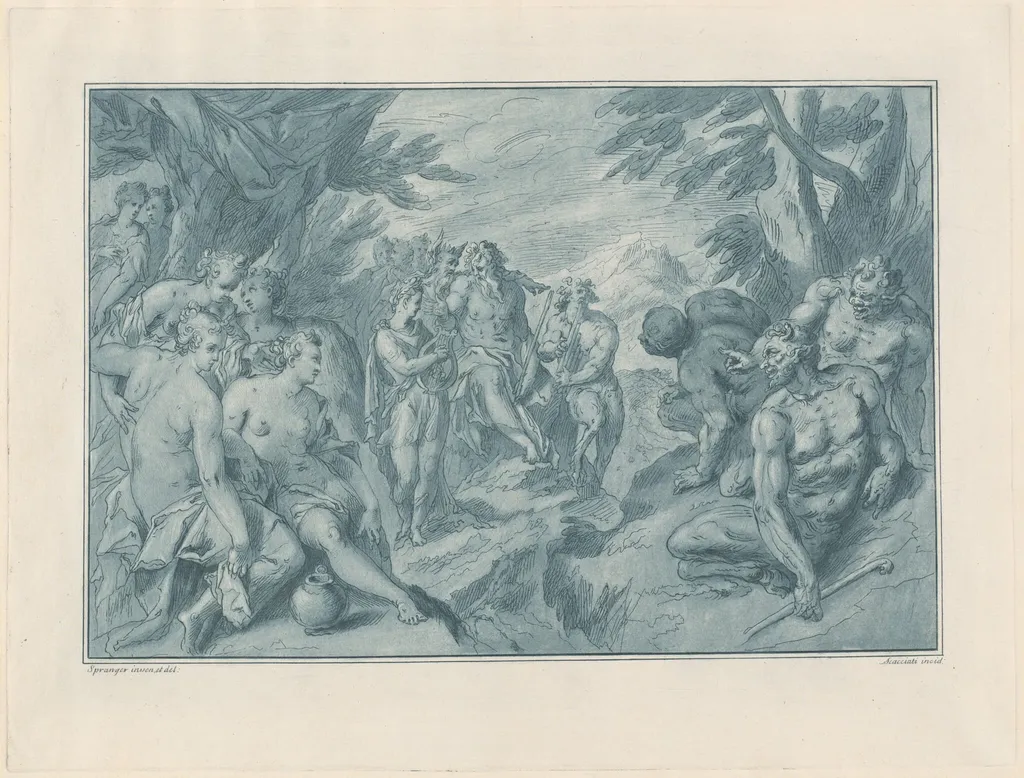
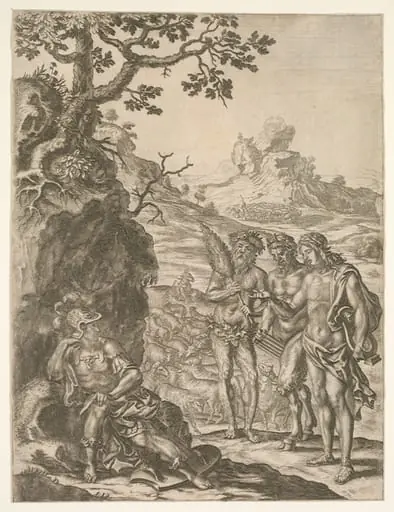
The Musical Contest Between Apollo and Pan is an ink print by the Romanticist artist Andrea Scacciati. It dates from 1766 and is held in the collection of the National Gallery of Art.
About this work
Overview
Created around 1766, this etching by Andrea Scacciati depicts a mythological contest between the gods Apollo and Pan.
Created around 1766, this etching by Andrea Scacciati depicts a mythological contest between the gods Apollo and Pan. Rendered in blue sulfur tint on laid paper, the work belongs to the printmaking tradition of 18th-century Italy. The composition captures a moment of musical rivalry, rendered with fine linear detail and a soft, atmospheric tone that enhances its narrative clarity without overt drama.
Subject & Meaning
The scene illustrates the contest between Apollo, god of music and reason, and Pan, rustic deity of the wild. Apollo plays the lyre, while Pan presents his panpipes, each judged by the mortal shepherd Midas. The surrounding figures—musicians, spectators, and nature spirits—reflect the cultural weight of the contest, symbolizing the tension between refined art and primal expression in classical thought.
Technique & Style
Scacciati employed etching with sulfur tint to achieve subtle gradations of blue, enhancing depth without obscuring fine lines. The delicate, incised strokes define figures and foliage with precision, suggesting motion through varied posture and overlapping forms. The background’s hazy trees and clouded sky are rendered with minimal detail, directing focus to the central figures while preserving a sense of natural space.
History & Provenance
The print emerged from Scacciati’s circle in Rome during the mid-18th century, a period when mythological subjects remained popular among collectors of prints. Though no early ownership records are widely documented, its preservation in institutional collections suggests it was valued for its technical refinement and adherence to classical themes favored by Enlightenment-era patrons.
Context
In mid-1700s Italy, etching was a respected medium for disseminating mythological narratives to educated audiences. Scacciati’s work aligns with broader trends in academic art that revived classical stories as moral and aesthetic allegories. Unlike later Romantic treatments, this print avoids emotional excess, favoring clarity and compositional balance rooted in Renaissance and Baroque precedents.
Legacy
While not widely known today, Scacciati’s etching exemplifies the quiet sophistication of 18th-century Italian printmaking. It reflects a period when mythological subjects were interpreted with restraint and technical discipline, serving as a bridge between Baroque grandeur and the emerging Neoclassical emphasis on order. Its survival offers insight into the circulation of classical imagery beyond painting and sculpture.
Artist & collection


 Aeneid
 Venus and Adonis
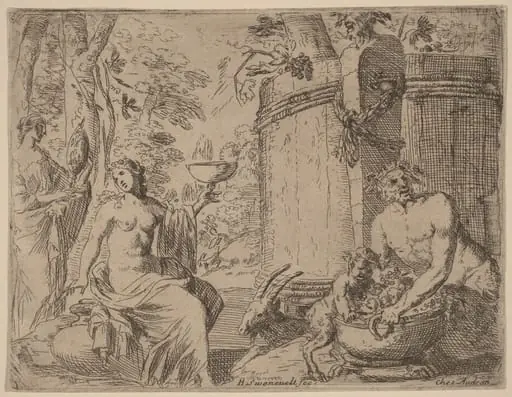 Two Nymphs and a Satyr before a Large Vat
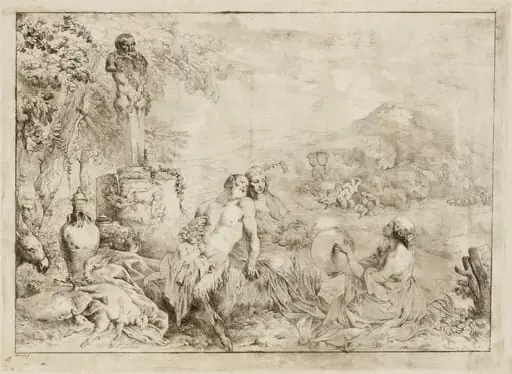 Landscape with a Satyr Family and Classical Sculpture
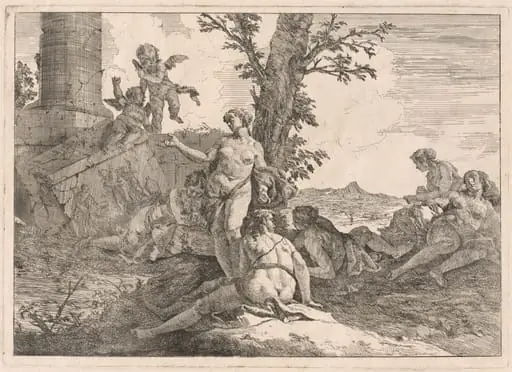 Six Nymphs and Two Cupids in a Landscape
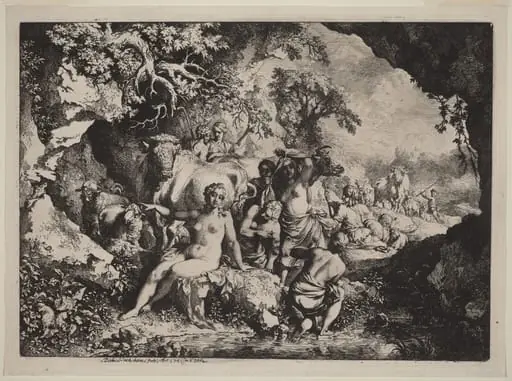 Nymphs Bathing in a Cave
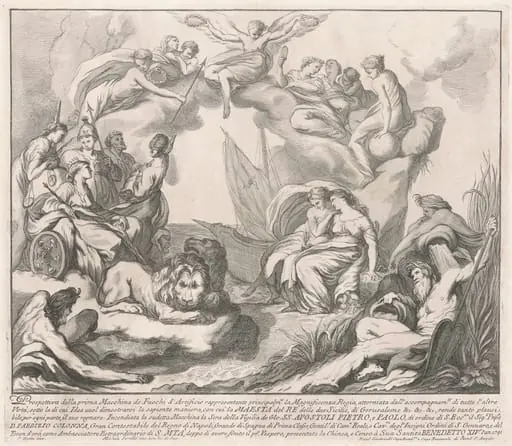 The Prima Macchina for the Chinea of 1741: Allegory of Regal Magnificence
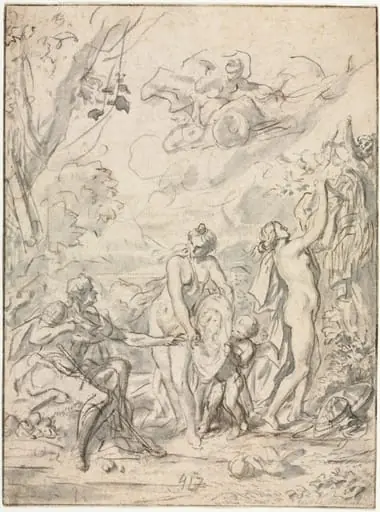 The Judgment of Paris
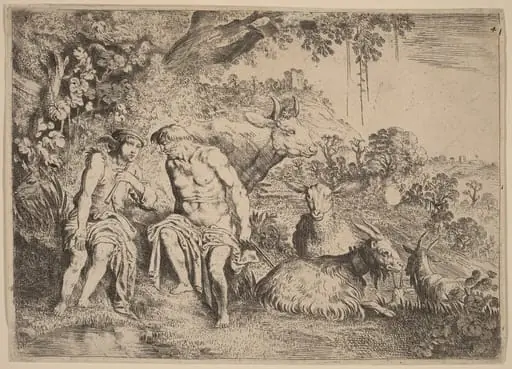 Mercury Lulling Argus to Sleep
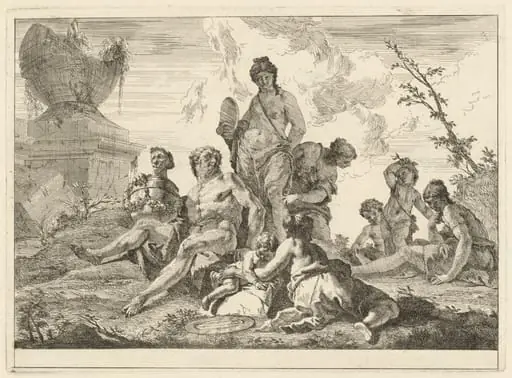 Venus and Vulcan with Three Nymphs and Three Cupids