Artwork
Untitled
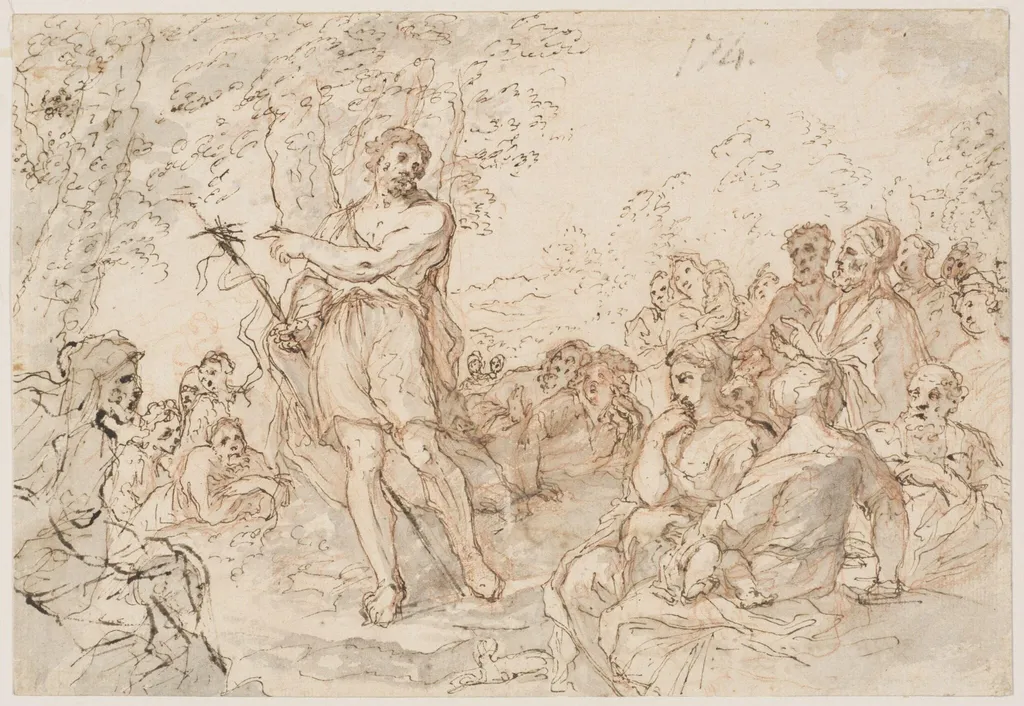
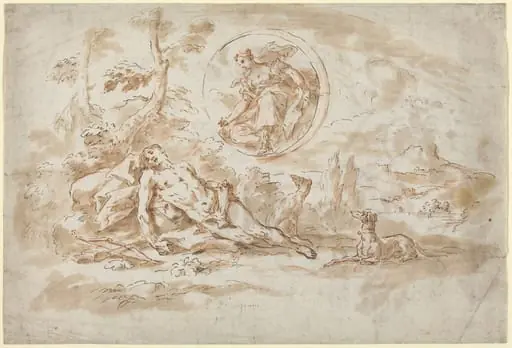
Untitled is a drawing by Paris Bordone. It is held in the collection of the Victoria and Albert Museum.
About this work
Overview
The loose handling and visible revisions reflect an artist working spontaneously, exploring form and gesture.
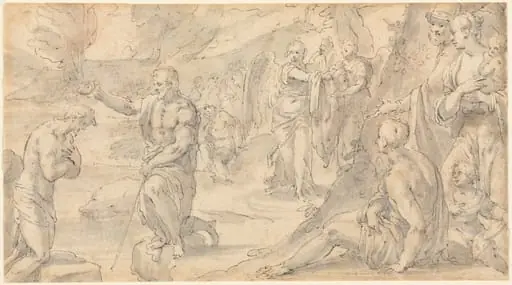
This drawing, attributed to Paris Bordone and dated circa 1650, is executed in red chalk, pen, and wash. It captures a moment of religious instruction outdoors, rendered with rapid, expressive strokes. The composition lacks finish, suggesting it was made as a preparatory study rather than a finished piece. The loose handling and visible revisions reflect an artist working spontaneously, exploring form and gesture.
Subject & Meaning
The central figure is Saint John the Baptist, depicted bare-chested and holding a staff, addressing a group of seated listeners. His raised posture and commanding gaze convey authority, while the smaller figures, turned toward him, indicate reverence and attention. The scene reflects John’s role as a prophetic voice in the wilderness, drawing followers through moral urgency rather than institutional power.
Technique & Style
Bordone employed red chalk for broad tonal areas and pen for sharp, fluid outlines, with wash adding depth and shadow. The background trees are sketched with minimal, energetic lines, avoiding detail in favor of atmospheric suggestion. Cross-hatching appears sparingly, used to model form rather than define texture, emphasizing movement over precision.
History & Provenance
The drawing’s early ownership is undocumented, but its style aligns with Bordone’s practice in the mid-16th century, though the date of circa 1650 may reflect later attribution or copying. It likely originated as part of a series of studies for larger compositions, possibly religious altarpieces or fresco designs, common in Venetian workshops of the period.
Context
During the mid-1500s, Venetian artists frequently used quick figure studies to develop narrative scenes for commissions. Drawings like this served as visual notes, capturing gesture and spatial relationships before final execution. The informal quality reflects a working method valued for its immediacy, contrasting with the polished finish expected in finished paintings.
Legacy
This drawing exemplifies the Renaissance tradition of preparatory sketching as a vital component of artistic process. Its unpolished nature preserves the artist’s decision-making, offering insight into how composition and expression were developed on paper. Such works are now valued not as incomplete, but as direct records of creative thought.
Artist & collection
Artist
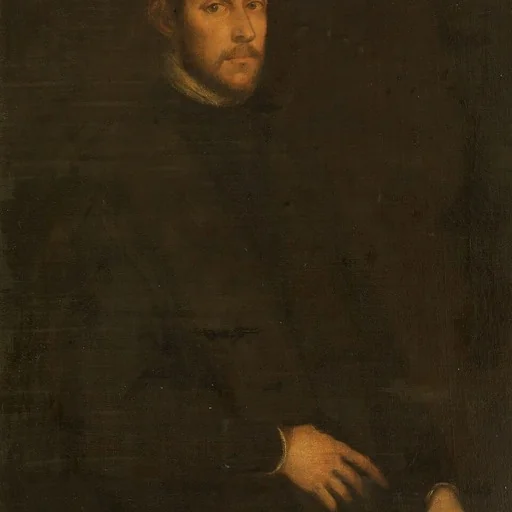
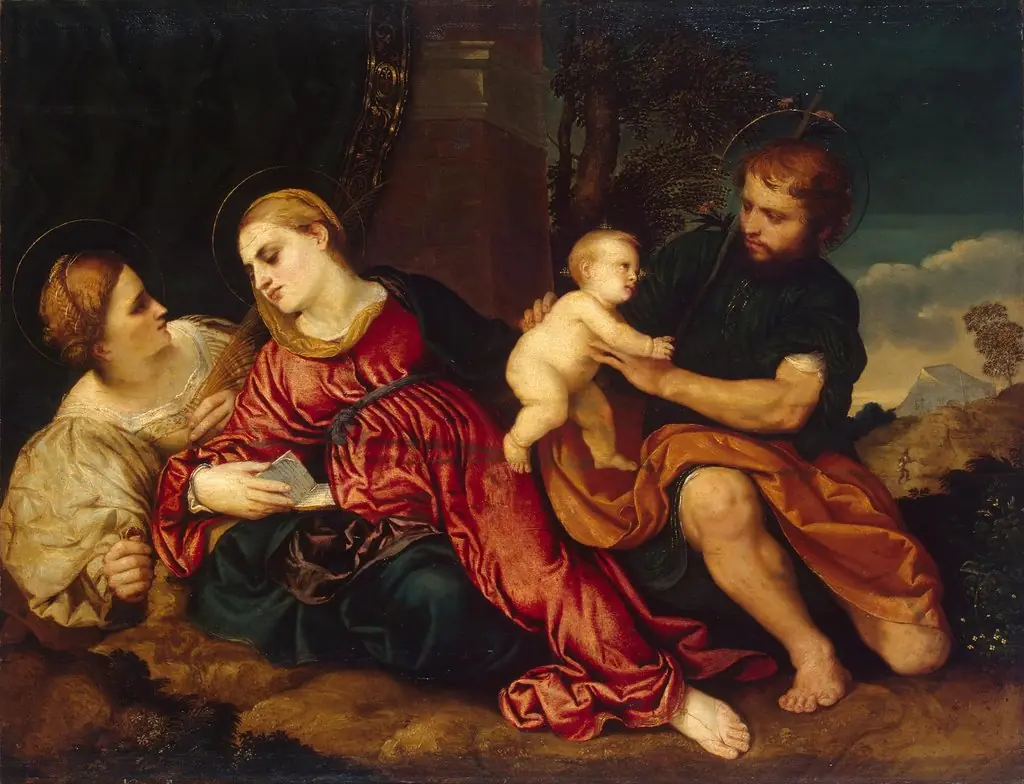
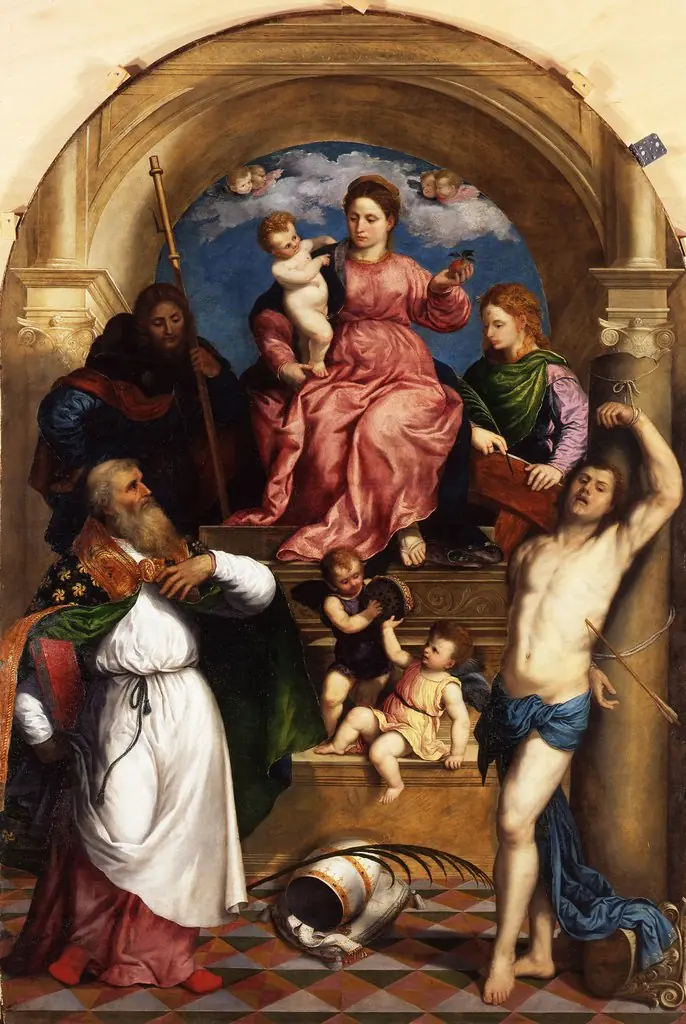
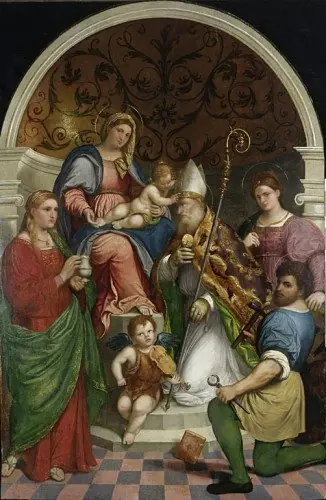
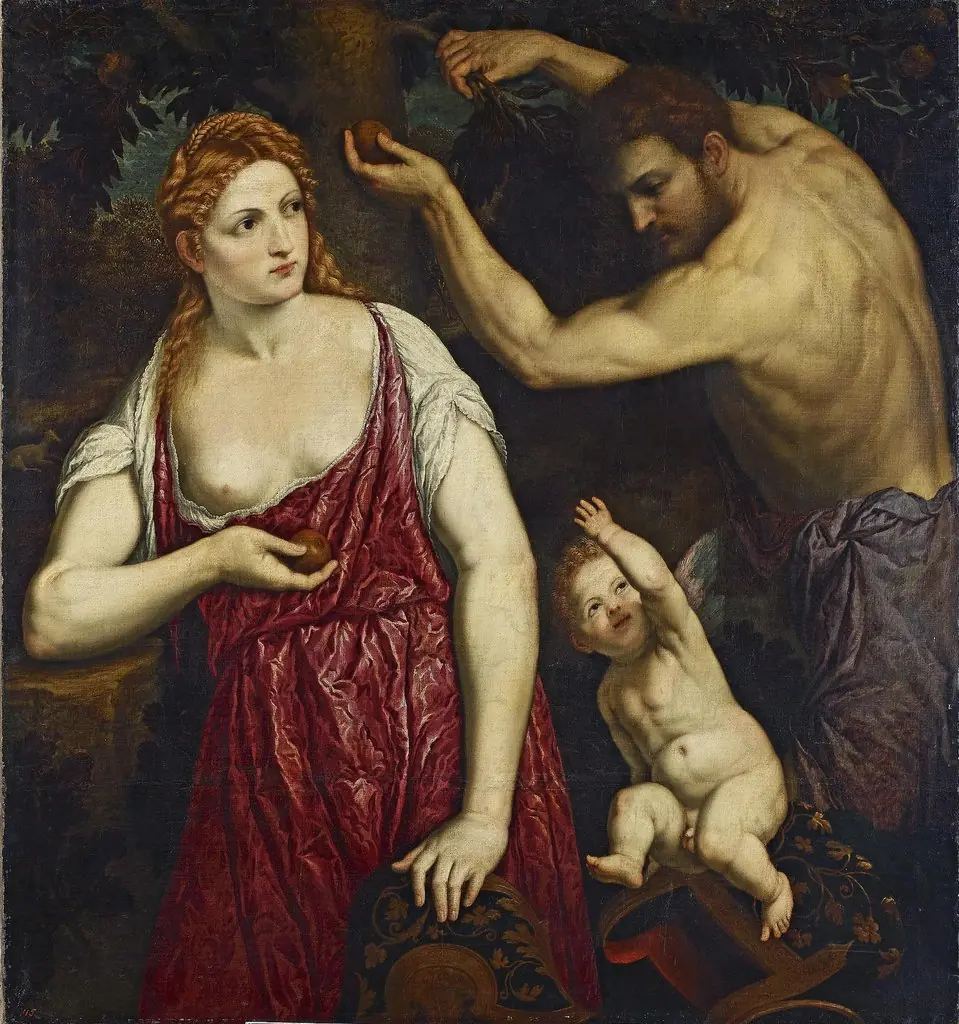
Paris Bordone (Paris Paschalinus Bordone; 5 July 1500 – 19 January 1571) was an Italian painter of the Venetian Renaissance who, despite training with Titian, maintained a strand of Mannerist complexity and provincial vigor.

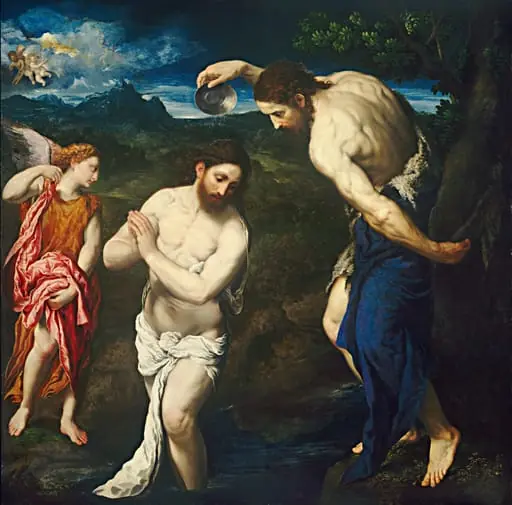
 The Baptism of Christ
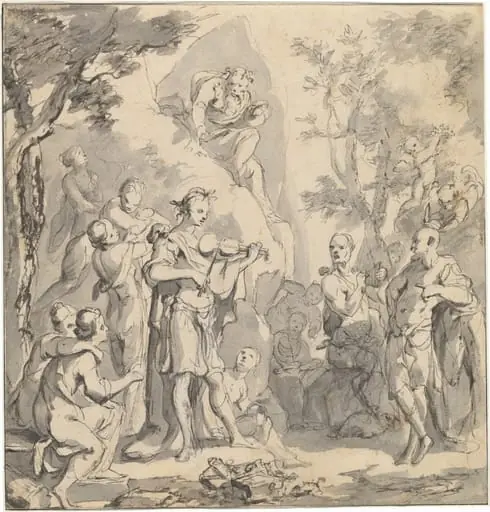 The Contest between Apollo and Pan before King Midas
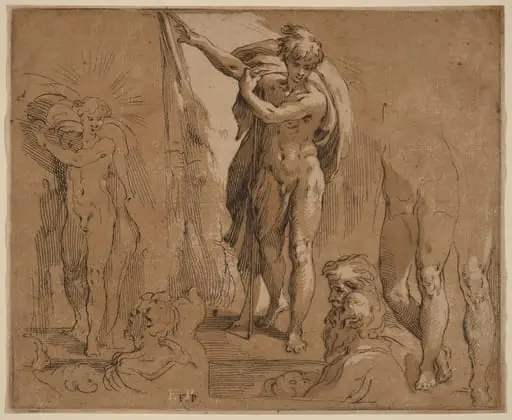 Saint John the Baptist
![Study for the "Madonna della Scodella" [recto], by Correggio](https://artifactworldgallery.com/img/correggio--study-for-the-madonna-della-scodella-recto--cec1475fbb0f2ca2-w320.webp) Study for the "Madonna della Scodella" [recto]
Study for the "Madonna della Scodella" [recto]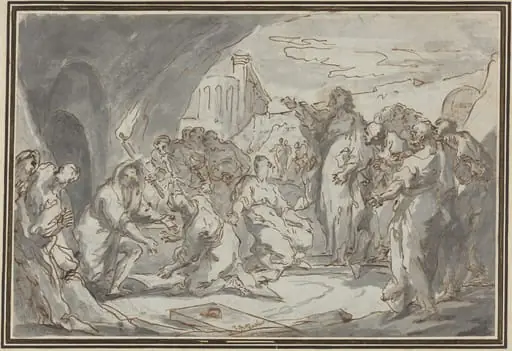 The Raising of Lazarus
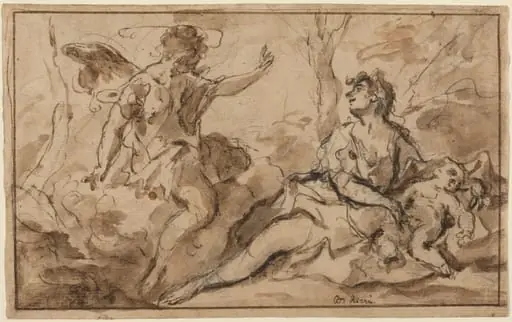 The Angel Appearing to Hagar and Ishmael
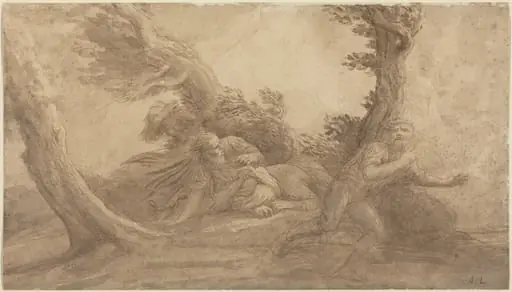 Clap of Thunder
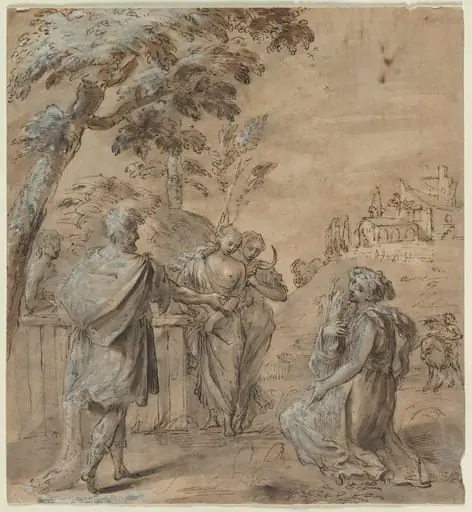 Ruth and Boaz (recto)
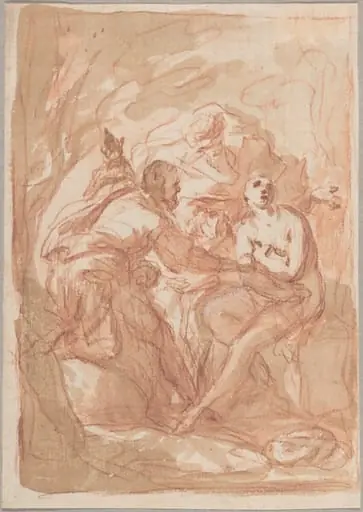 Susanna and the Elders
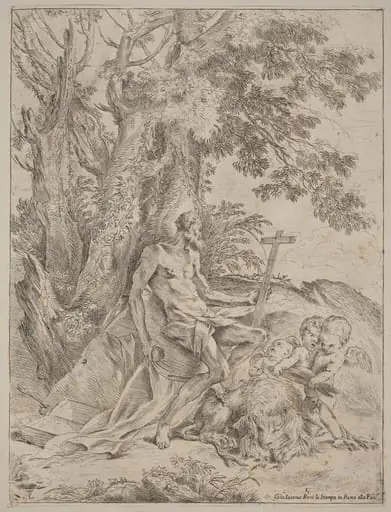 Saint Jerome
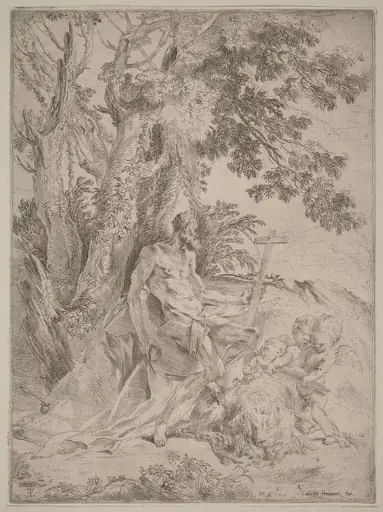 Saint Jerome
 Diana and Endymion