Artwork
The River Bank at Blythburgh
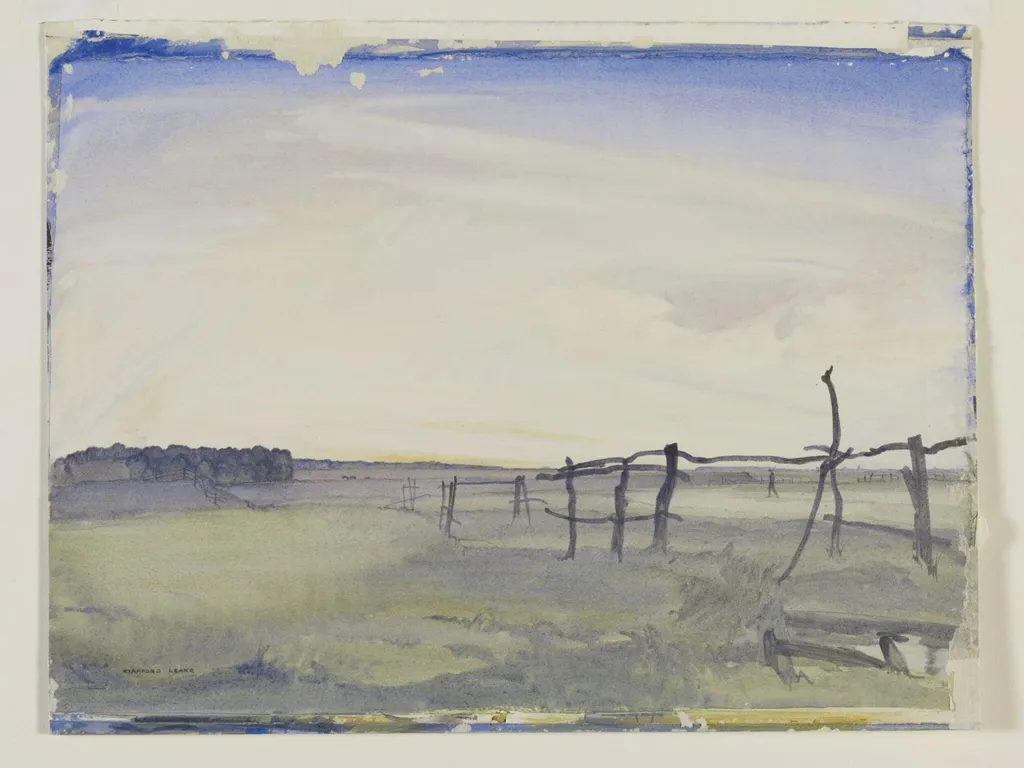
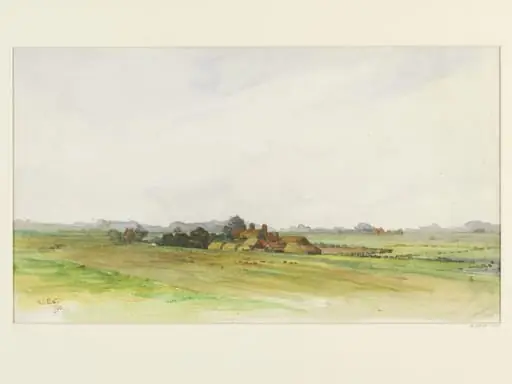
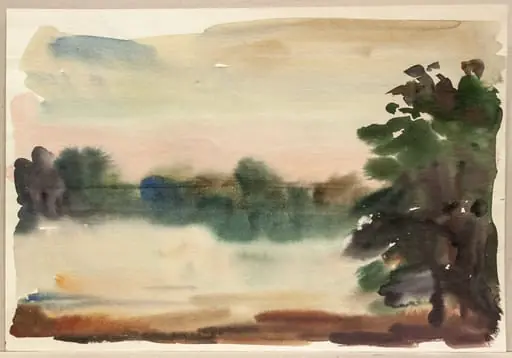
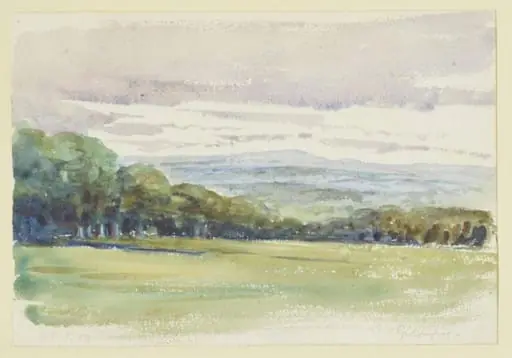
The River Bank at Blythburgh is a watercolor work on paper by the Post-Impressionist artist Stafford Leake. It dates from 1910 and is held in the collection of the Victoria and Albert Museum.
About this work
Overview
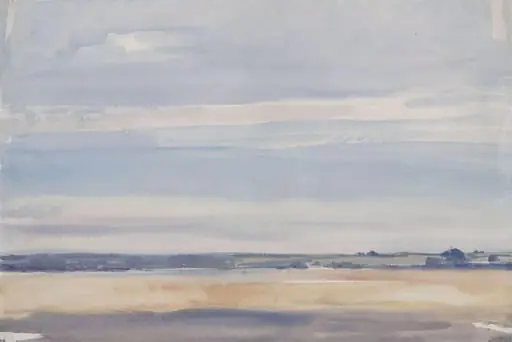
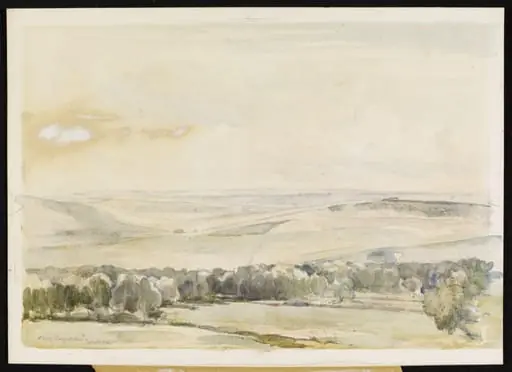
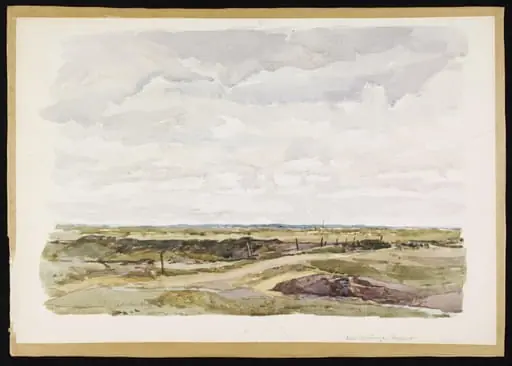
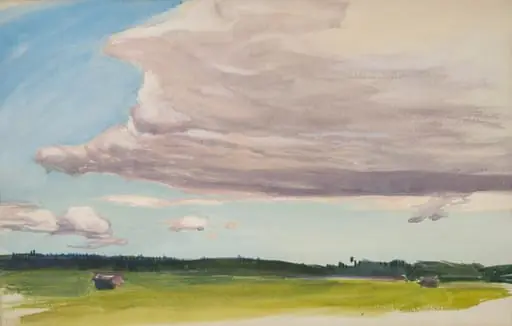
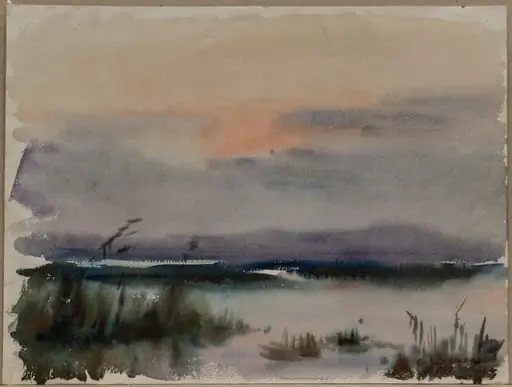
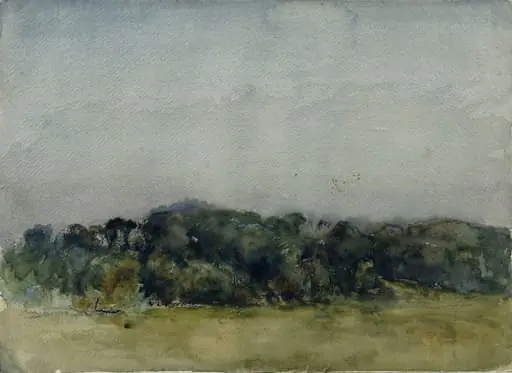
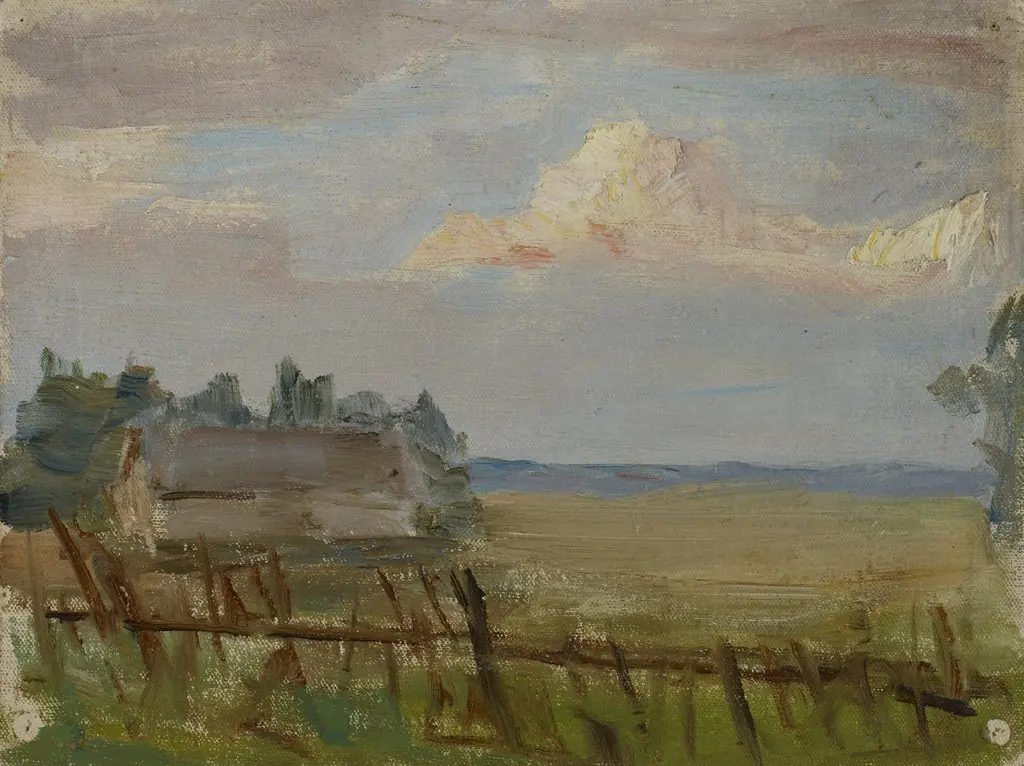
The River Bank at Blythburgh is a watercolour painting, potentially set in Suffolk, capturing a serene rural landscape with a prominent wooden fence, open meadow, and distant trees, characterized by loose brushstrokes and a soft colour palette.
Subject & Meaning
The subject is a peaceful countryside scene, with a simple fence dividing the foreground from a vast, open field leading to a treeline. The emphasis is on evoking a natural, idyllic atmosphere rather than detailed realism.
Technique & Style
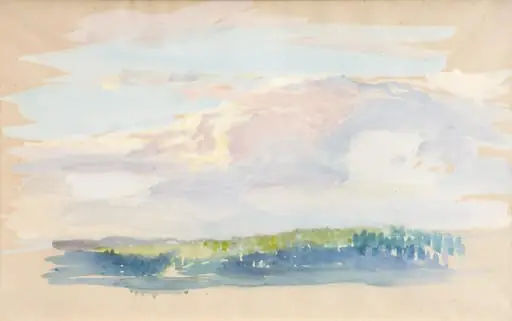
Executed with loose, quick brushstrokes, the painting conveys a sketchy, unfinished quality. The colour palette features a predominantly pale blue sky transitioning to soft yellows near the horizon, with the meadow rendered in muted greens and browns.
History & Provenance
Limited information is available on the painting's history and ownership timeline, though it is attributed to Stafford Leake.
Context
While the exact location's influence is speculative (potentially Suffolk), the work reflects a broader tradition of British watercolour landscapes emphasizing serene, natural settings.
Legacy
The painting's legacy is intertwined with its artist, Stafford Leake, with viewers drawn to it often directed towards exploring more of Leake's similarly styled works.
Own this work as a print
Artist & collection