Artwork
The Downs from Friston
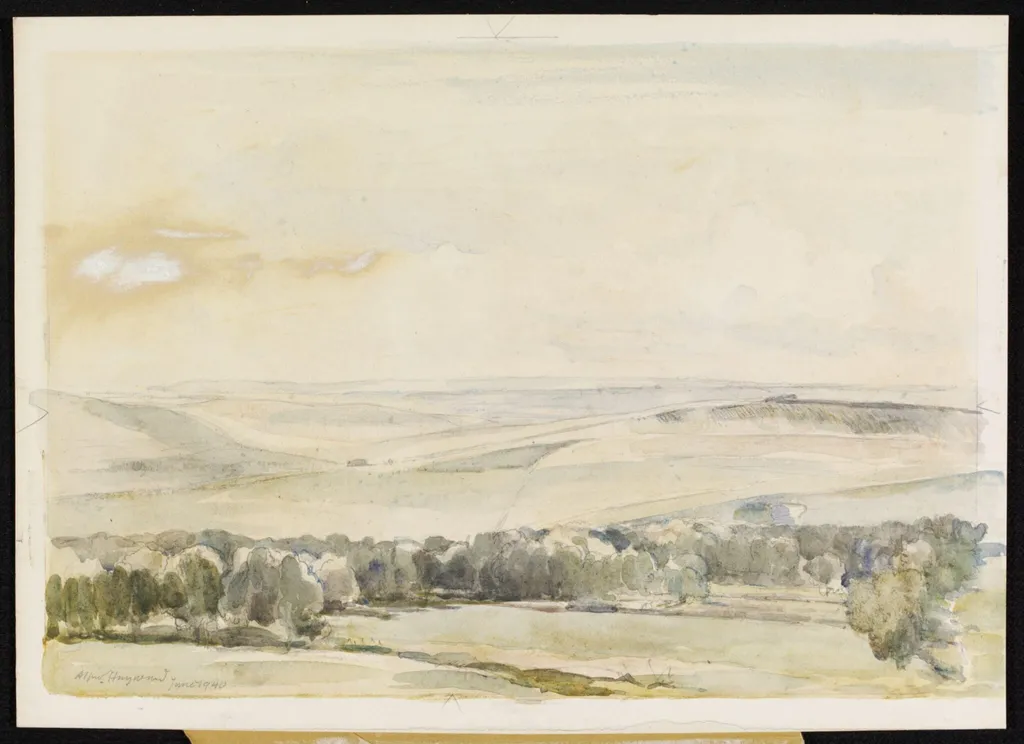
The Downs from Friston is a watercolor work on paper by Alfred Hayward. It dates from 1940 and is held in the collection of the Victoria and Albert Museum.
About this work
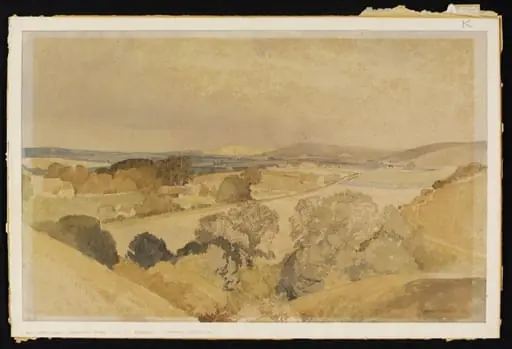
This watercolor shows a quiet countryside scene with rolling hills, a winding path, and a line of trees in the distance.
This watercolor shows a quiet countryside scene with rolling hills, a winding path, and a line of trees in the distance. The colors are soft—light blues, greens, and yellows—with a pale sky that looks warm. The brushstrokes are loose, almost sketchy, giving it a quick, natural feel.
The painting was made in June 1940, a time when many artists turned to landscapes for comfort. The artist signed it in the corner, but the style feels simple and unpolished, like a quick note from nature.
If you like this kind of loose, outdoor painting, check out Victoria and Albert Museum for more works like it.
Overview
Created in June 1940, *The Downs from Friston* is a watercolour by Alfred Hayward, produced under the *Recording Britain* initiative. This project, supported by the Pilgrim Trust and directed by Sir Kenneth Clark, enlisted artists to document rural England during wartime. Hayward’s work contributes to a broader effort to preserve visual records of landscapes perceived as vulnerable to change or destruction, capturing quiet moments of the English countryside with immediacy and restraint.
Subject & Meaning
The painting presents a gentle, unpopulated stretch of the South Downs, viewed from near Friston. Rolling hills, a meandering path, and a distant line of trees frame a scene of stillness. There is no human activity, no indication of war—only the enduring rhythm of the land. This absence may reflect a deliberate focus on continuity and resilience, offering a visual anchor amid national uncertainty, as artists turned to nature for solace and purpose.
Technique & Style
Hayward employed loose, fluid brushwork typical of watercolour sketching, allowing pigment to bleed softly across the paper. The palette is muted—pale blues, greens, and ochres—evoking early summer light without dramatic contrast. The composition feels spontaneous, almost diary-like, with no heavy detailing or finish. This unpolished approach underscores the work’s function as a direct observation, prioritizing atmosphere over precision.
History & Provenance
Commissioned during the early months of the Second World War, the painting was part of a state-backed effort to archive Britain’s rural heritage. Over 1,500 works were collected by the *Recording Britain* project, with Hayward’s included in the archive now held by the Victoria and Albert Museum. Signed in the corner, the piece retains its original context as a documented record, not a commercial artwork, reflecting its institutional purpose and wartime origins.
Context
In 1940, as Britain faced aerial bombardment and societal upheaval, artists were mobilized to record landscapes at risk from development or conflict. The *Recording Britain* initiative responded to fears of cultural erasure, positioning rural scenes as symbols of national identity. Hayward’s quiet depiction aligns with this mission—not as propaganda, but as a quiet act of preservation, affirming the value of ordinary places in extraordinary times.
Legacy
The painting endures as part of a significant wartime archive, offering insight into how artists responded to crisis through observation rather than intervention. Its unassuming style and modest scale contrast with grander war art, yet its value lies in its authenticity. Today, it remains a touchstone for understanding how cultural memory was actively curated during a period of national vulnerability.
Artist & collection
Artist
Alfred Hayward painted quiet English landscapes in watercolour during the early 1940s.

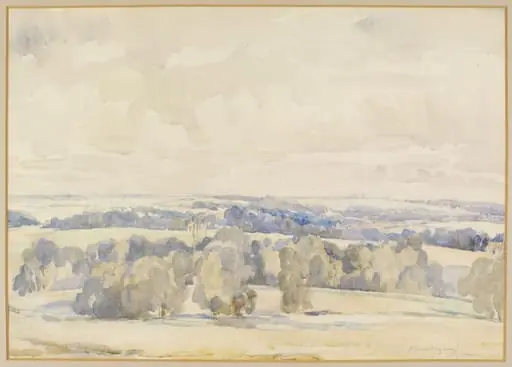
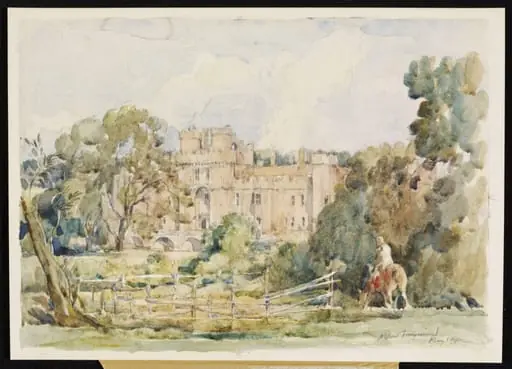
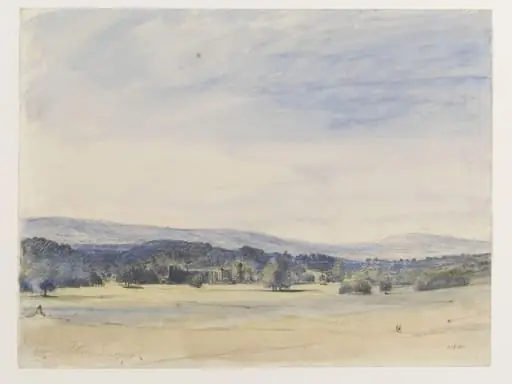 The ruins of a Cowdray House
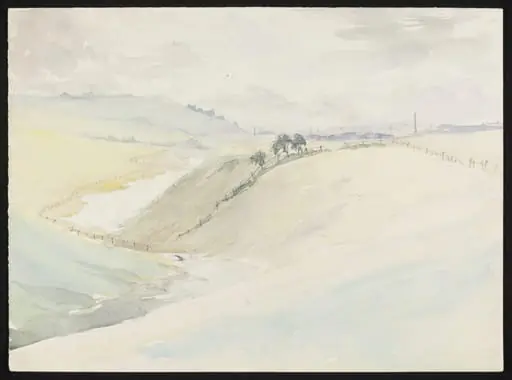 Looking towards Bury from the North of the city
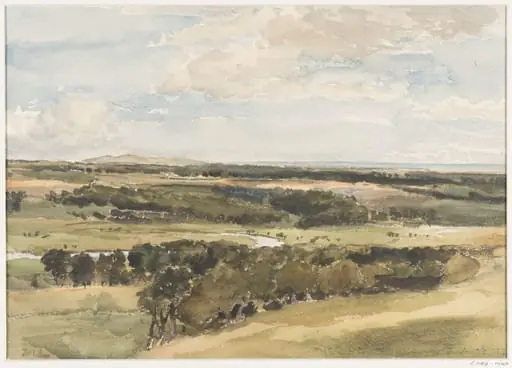 Arundel Park
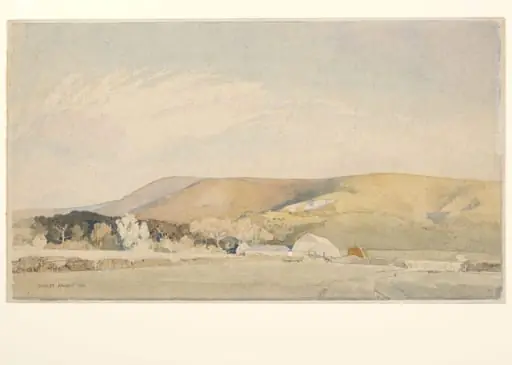 Lodge Barn, near Ditchling
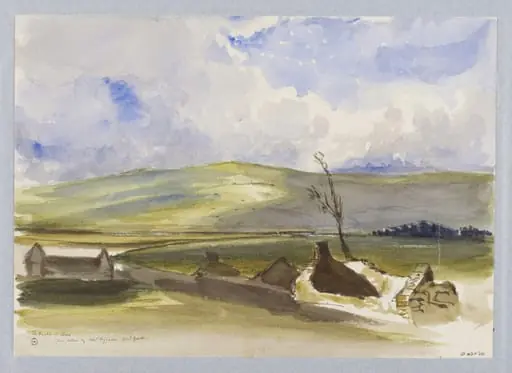 Sketches made during the Campaign of 1854-55 in the Crimea, Circassia and Constantinople
 The Southdown, Underhill Road; Edburton, and the Road Eastwards
 View from Calne Golf Course near Heddington
 The Sea of Galilee from the heights of Safad
 West Wittering