Artwork
Tombstone of Leszek the Black in the Dominican Church in Krakow
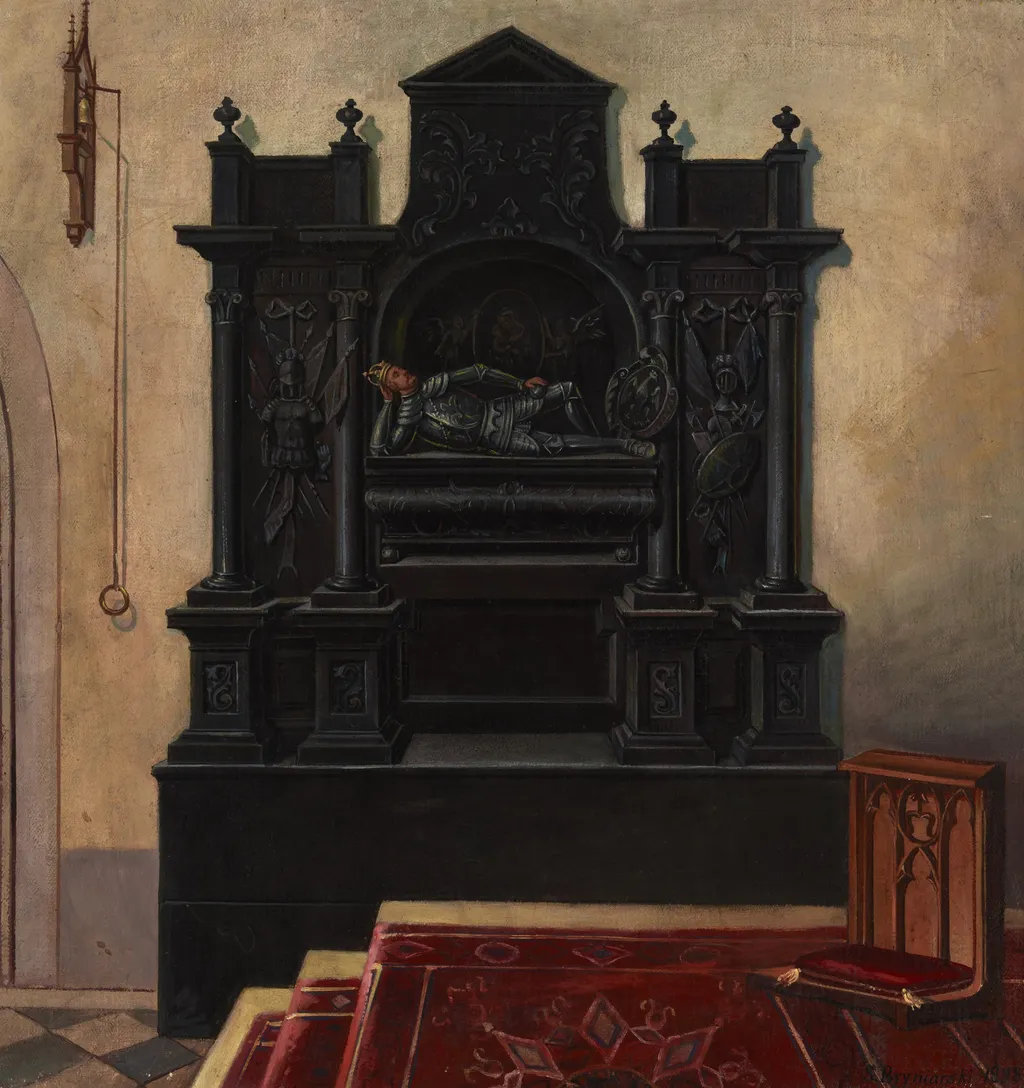
Tombstone of Leszek the Black in the Dominican Church in Krakow is an oil painting by Stanisław Bryniarski. It dates from 1900 and is held in the collection of the National Museum in Kraków.
About this work
Overview
It resides today in the National Museum in Kraków, where it serves as a historical record of a significant religious and funerary site.
Painted in 1900 by Stanisław Bryniarski, this oil on canvas work captures the tomb of Leszek the Black, a 13th-century Polish duke, located within the Dominican Church in Kraków. The painting is not a photograph but a carefully composed interpretation, emphasizing the monument’s solemn presence. It resides today in the National Museum in Kraków, where it serves as a historical record of a significant religious and funerary site.
Subject & Meaning
The painting centers on the tomb of Leszek the Black, a ruler of the Piast dynasty known for his piety and political influence. The recumbent effigy on the stone, surrounded by Gothic arches and ornamental stonework, reflects medieval ideals of noble mortality. The red rug and cushion suggest ritual use, hinting at ongoing devotional practices, while the dim lighting reinforces the tomb’s role as a space of quiet reverence.
Technique & Style
Bryniarski employs chiaroscuro to model the tomb’s carved surfaces, enhancing the three-dimensionality of the stone and the folds of the effigy’s garments. The palette is restrained—deep browns, muted reds, and shadowed grays—creating a somber, contemplative mood. Details like the wooden chair and rug are rendered with precision, grounding the scene in tangible reality while avoiding theatricality.
History & Provenance
The painting was completed in 1900 as part of a broader interest in Poland’s medieval heritage during the Partitions. Bryniarski documented historical monuments across the country, and this work was acquired by the National Museum in Kraków shortly after its creation. It has remained in the museum’s collection since, serving as both artistic and archival material.
Context
At the turn of the 20th century, Polish artists and intellectuals sought to preserve national identity through the documentation of historical sites. Bryniarski’s work aligned with this movement, capturing religious monuments that symbolized continuity amid foreign rule. The Dominican Church, where the original tomb stands, was a center of spiritual and political life in medieval Kraków.
Legacy
Bryniarski’s painting remains a key visual reference for scholars studying the material culture of medieval Polish nobility. It exemplifies early 20th-century efforts to reconcile historical accuracy with artistic interpretation. While not widely exhibited, it continues to inform conservation and scholarly work on the tomb’s original condition and context.
Artist & collection


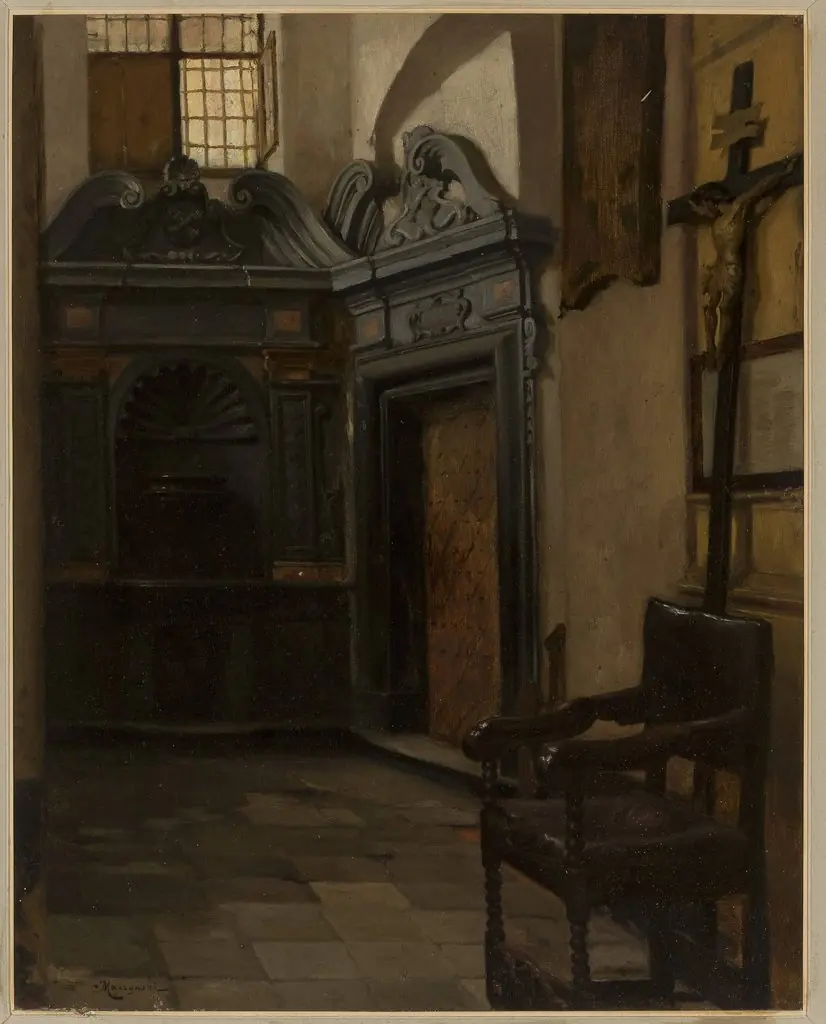 Sacristy
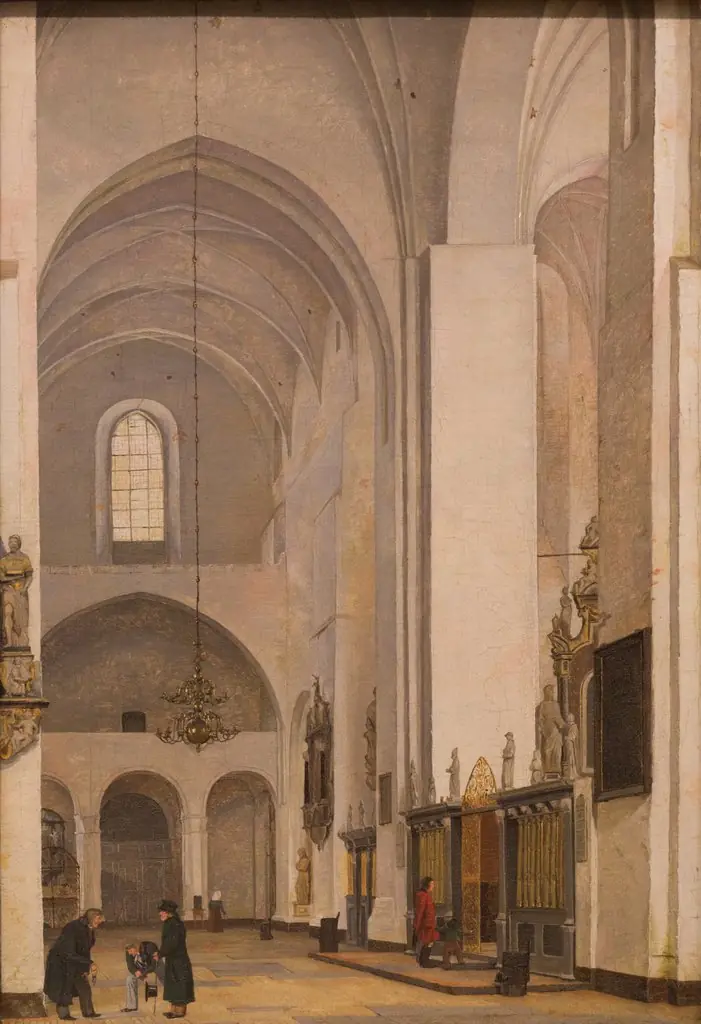 The Transept of Århus Cathedral
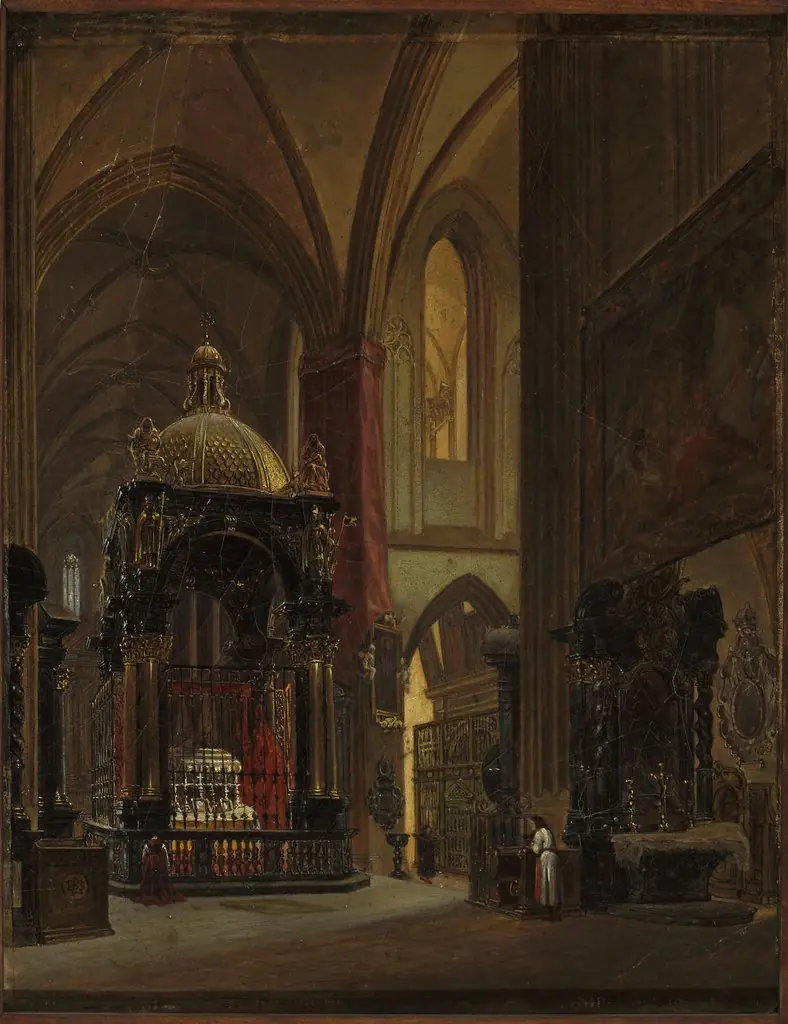 Interior of the Wawel Cathedral
 Interior of St Wolfgang's Church in Rothenburg
 Church interior
 Interior of a Chapel at the Parish Church in Krosno
 A Family beside the Tomb of Prince William i in the Nieuwe Kerk, Delft
 Choir Stalls in the Salvator Church in Bruges
 The Crypt in the Monastry of San Benedetto in Subiaco, Italy
 Cathedral of Saint John at 's-Hertogenbosch