Artwork
Sacristy
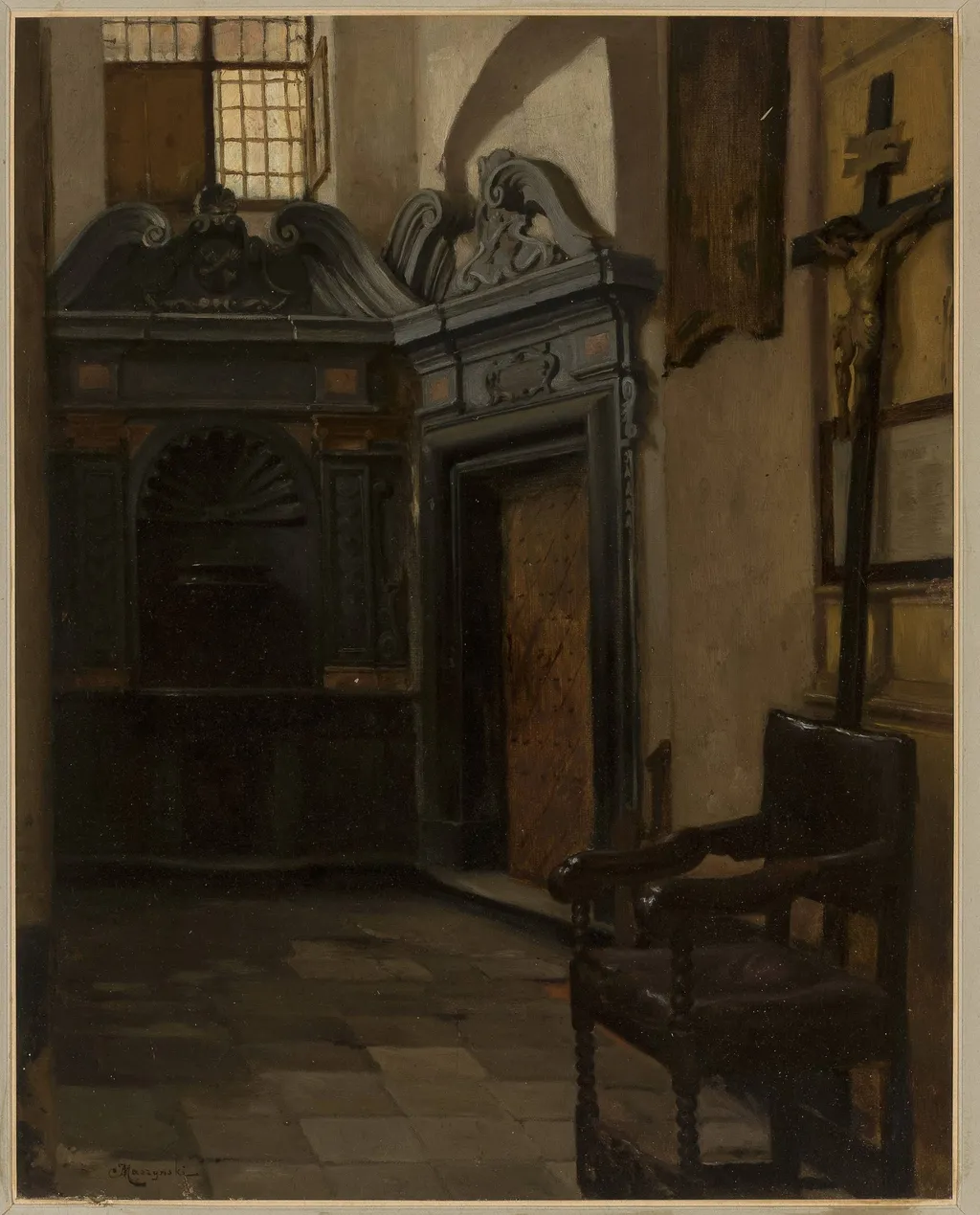
Sacristy is an unspecified painting by Julian Maszyński. It dates from 1884 and is held in the collection of the National Museum in Warsaw.
About this work
Overview
Painted around 1884 by Julian Maszyński, Sacristy is an interior scene depicting a quiet, unadorned religious space. The work is part of the collection at the National Museum in Warsaw. Its subdued palette and careful attention to light and shadow reflect a quiet realism, capturing a moment of stillness within a functional ecclesiastical environment rather than a ceremonial one.
Subject & Meaning
The painting presents a sacristy—a room used for storing vestments and sacred objects—without human figures, emphasizing absence and solitude. The ornate cabinet, cross, and chair suggest ritual use, yet the emptiness invites contemplation. The quiet atmosphere may reflect the private, preparatory nature of clerical duties, evoking reverence through stillness rather than grandeur.
Technique & Style
Maszyński employs subtle tonal gradations to model the room’s architecture, using soft light from a high window to define surfaces and cast gentle shadows.
Maszyński employs subtle tonal gradations to model the room’s architecture, using soft light from a high window to define surfaces and cast gentle shadows. The stone floor and carved wood are rendered with restrained detail, avoiding ornamentation in favor of atmospheric coherence. The composition is balanced and deliberate, with spatial depth achieved through chiaroscuro rather than perspective lines.
History & Provenance
The painting entered the National Museum in Warsaw’s collection in the late 19th or early 20th century, likely acquired directly from the artist or through a Polish cultural institution. Its preservation reflects early institutional interest in domestic and ecclesiastical genre scenes by Polish painters, though Maszyński’s broader oeuvre remains less documented than his contemporaries.
Context
Created during a period when Polish artists increasingly turned to intimate, everyday subjects under foreign partition, Sacristy aligns with a broader trend of quiet realism. Unlike grand historical or religious narratives, this work focuses on the overlooked spaces of spiritual life, resonating with contemporary European tendencies toward psychological interiority in painting.
Legacy
While not widely exhibited beyond Poland, Sacristy stands as a quiet example of late 19th-century Polish interior painting. It contributes to the understanding of how artists of the time engaged with sacred space not as a site of spectacle, but as a place of quiet ritual and personal reflection, influencing later generations interested in atmospheric realism.
Artist & collection

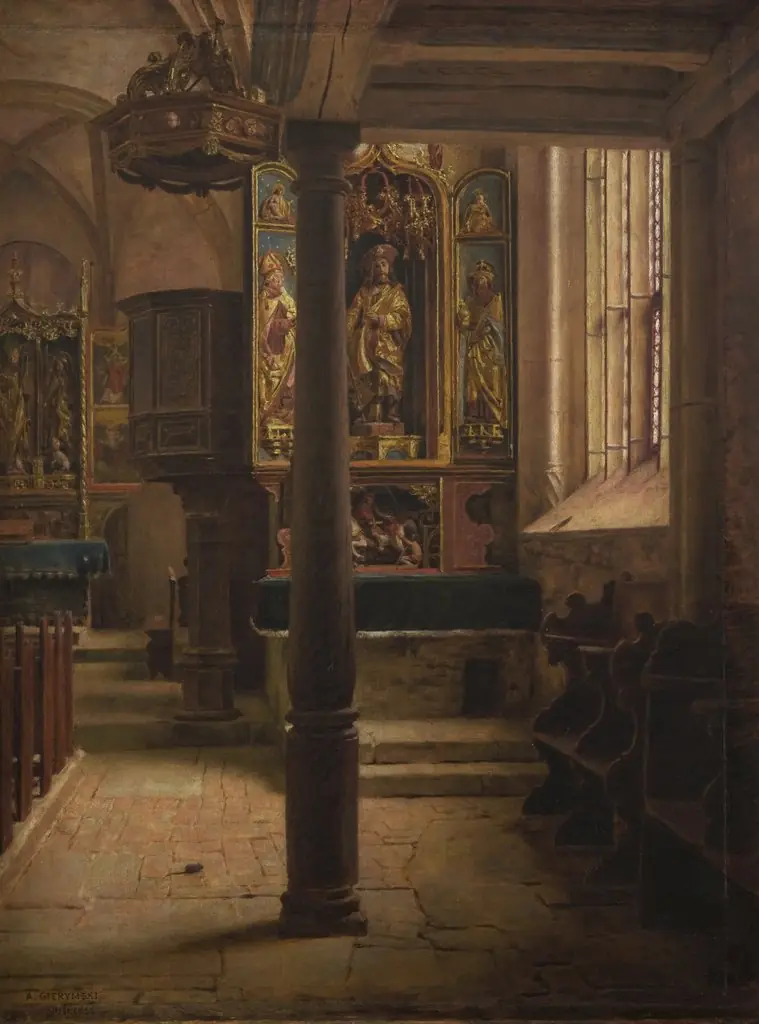 Interior of St Wolfgang's Church in Rothenburg
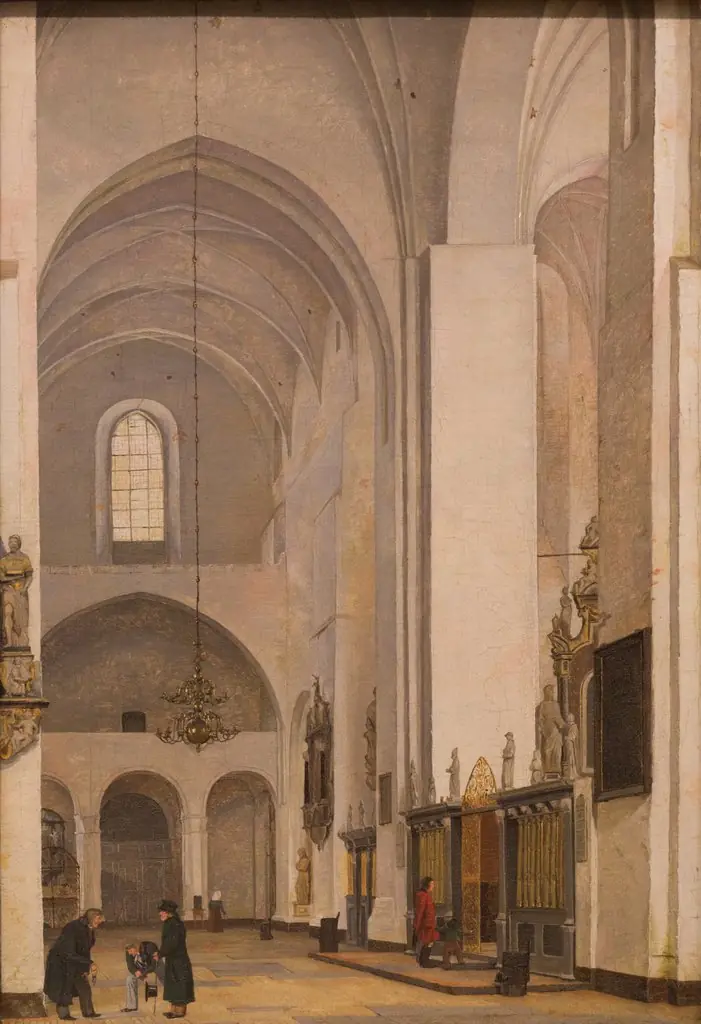 The Transept of Århus Cathedral
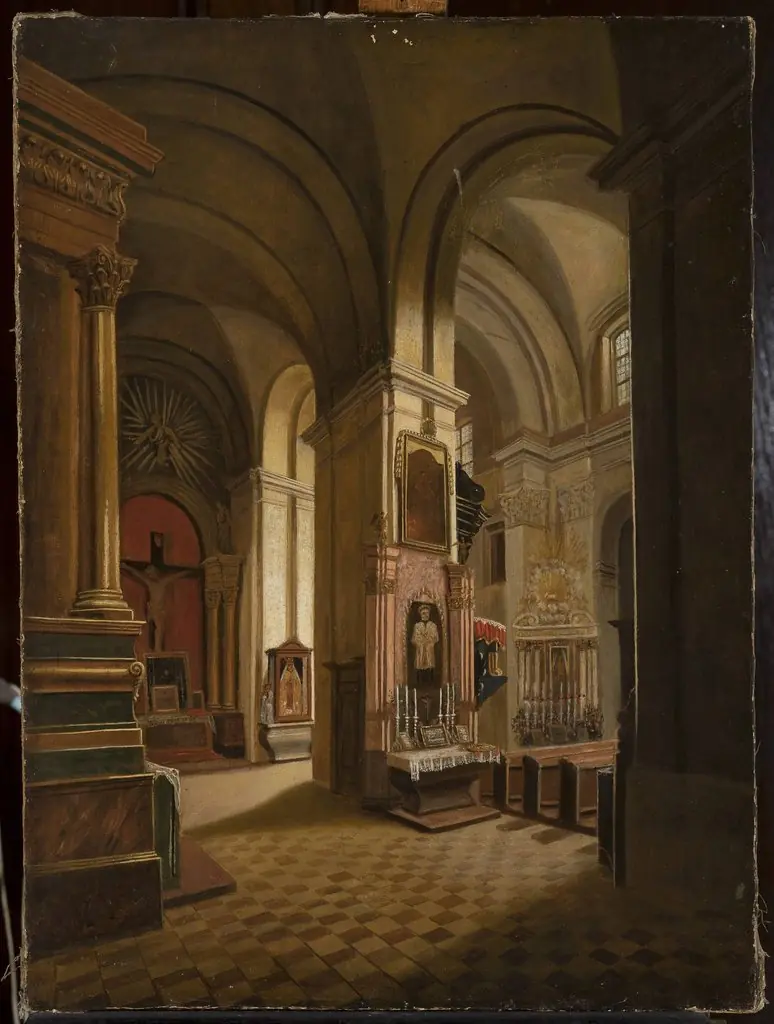 Church interior
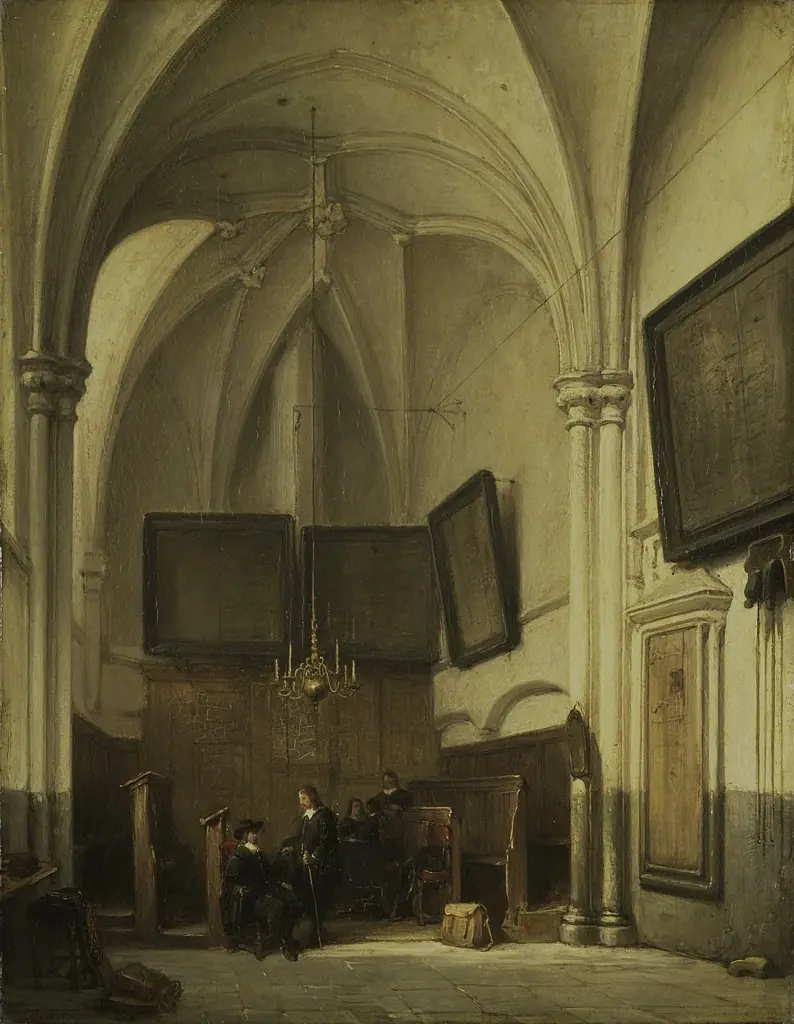 Vestry of the Church of St Stephen in Nijmegen
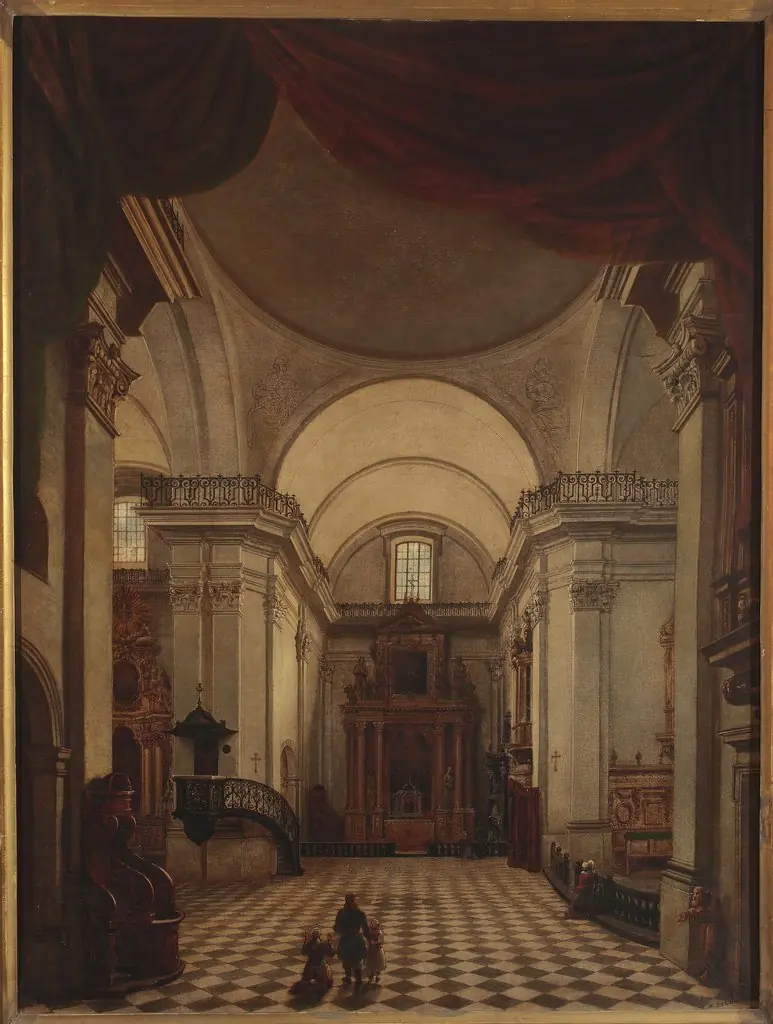 Interior of the Holy Cross Church in Warsaw
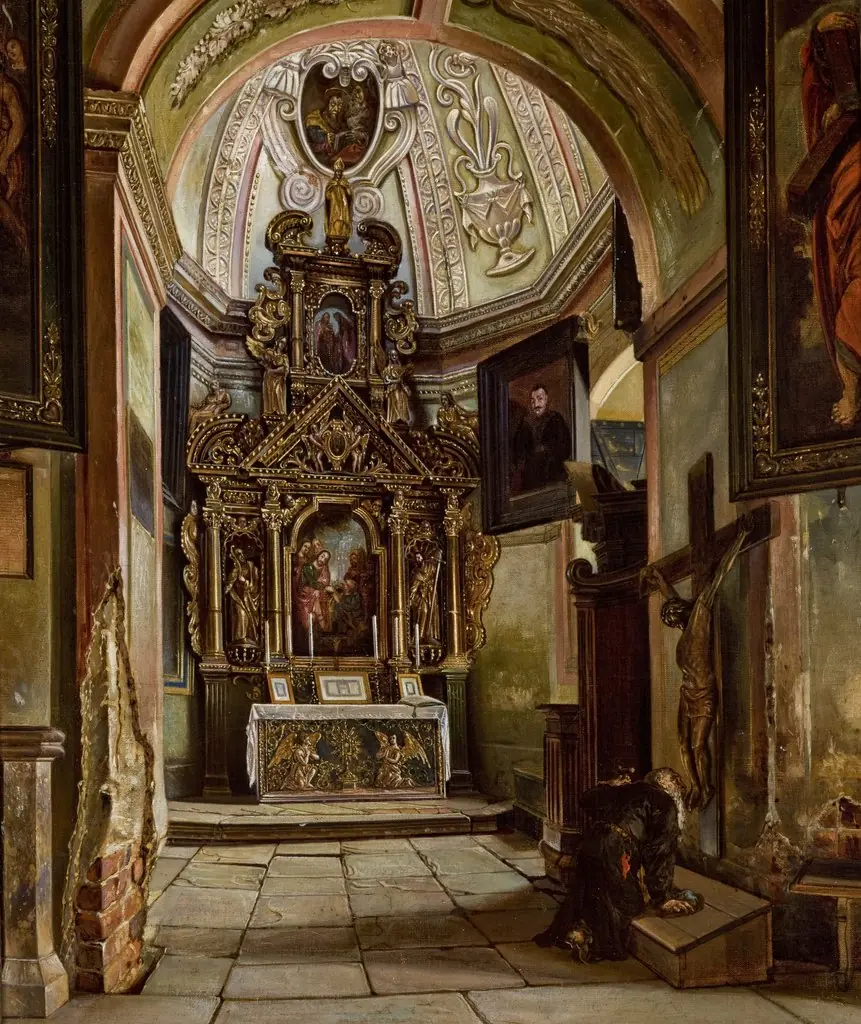 Interior of a Chapel at the Parish Church in Krosno
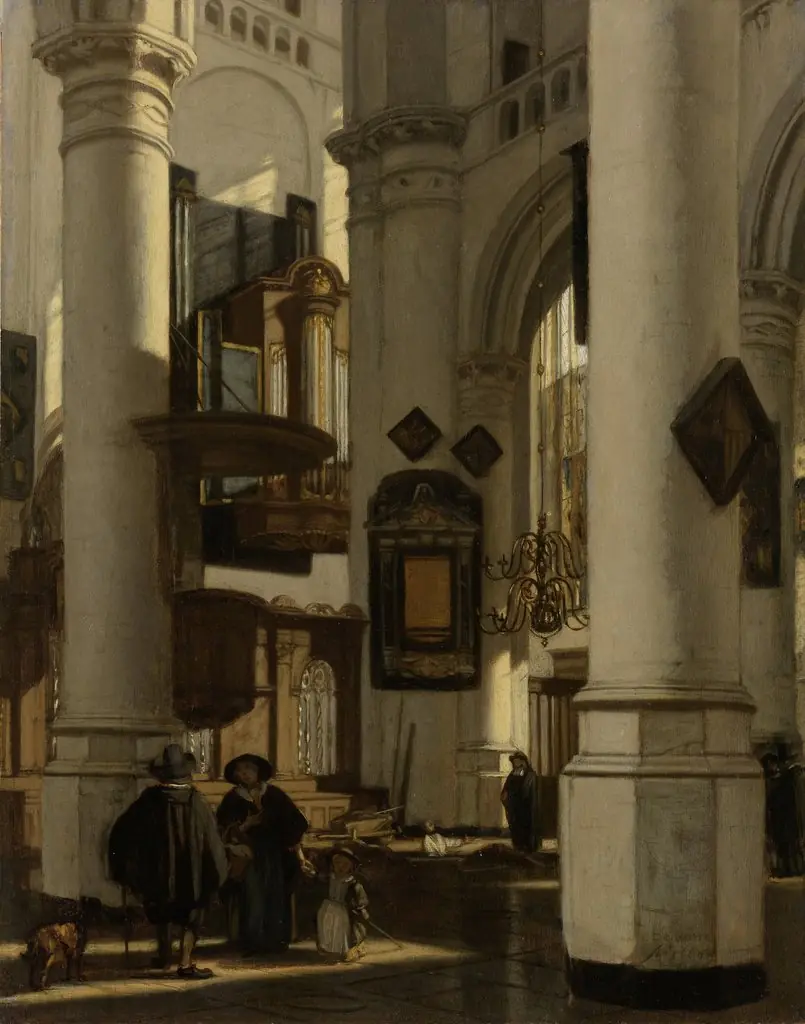 Interior of a Protestant, Gothic Church, with a Gravedigger in the Choir
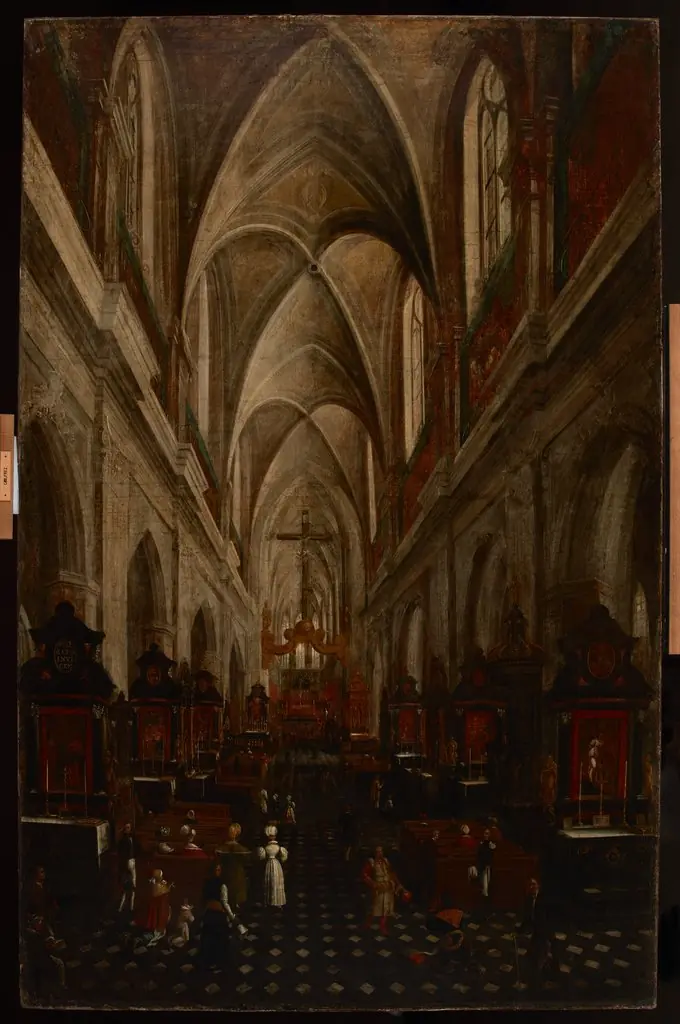 Interior of St Mary's Church in Krakow
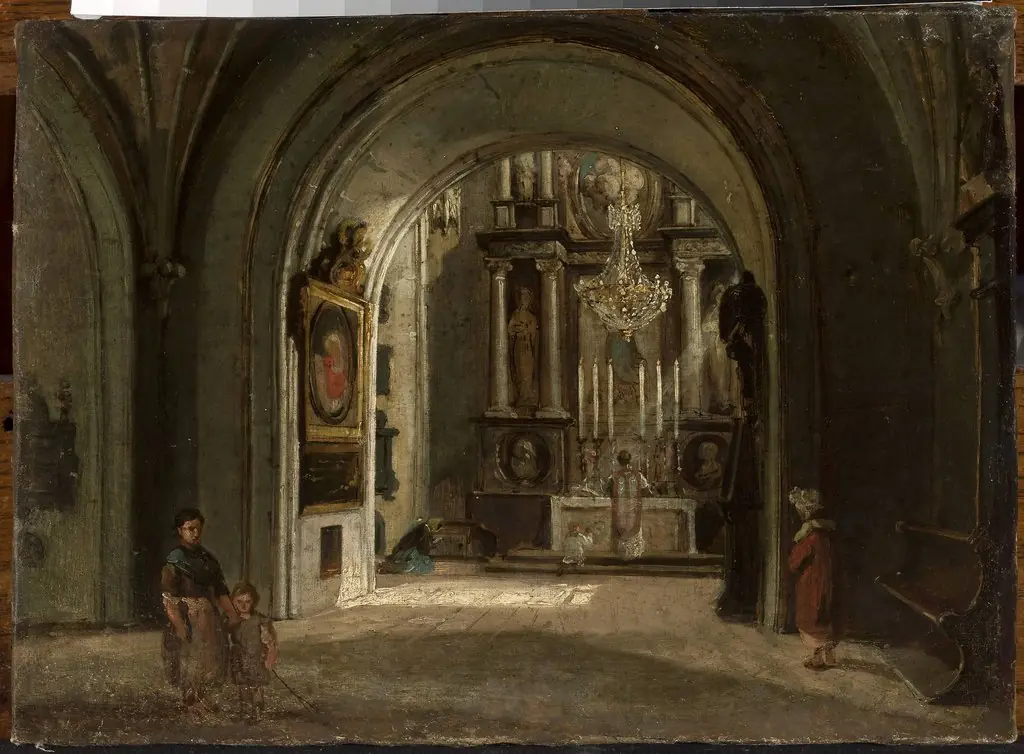 Interior of St. John’s church in Warsaw
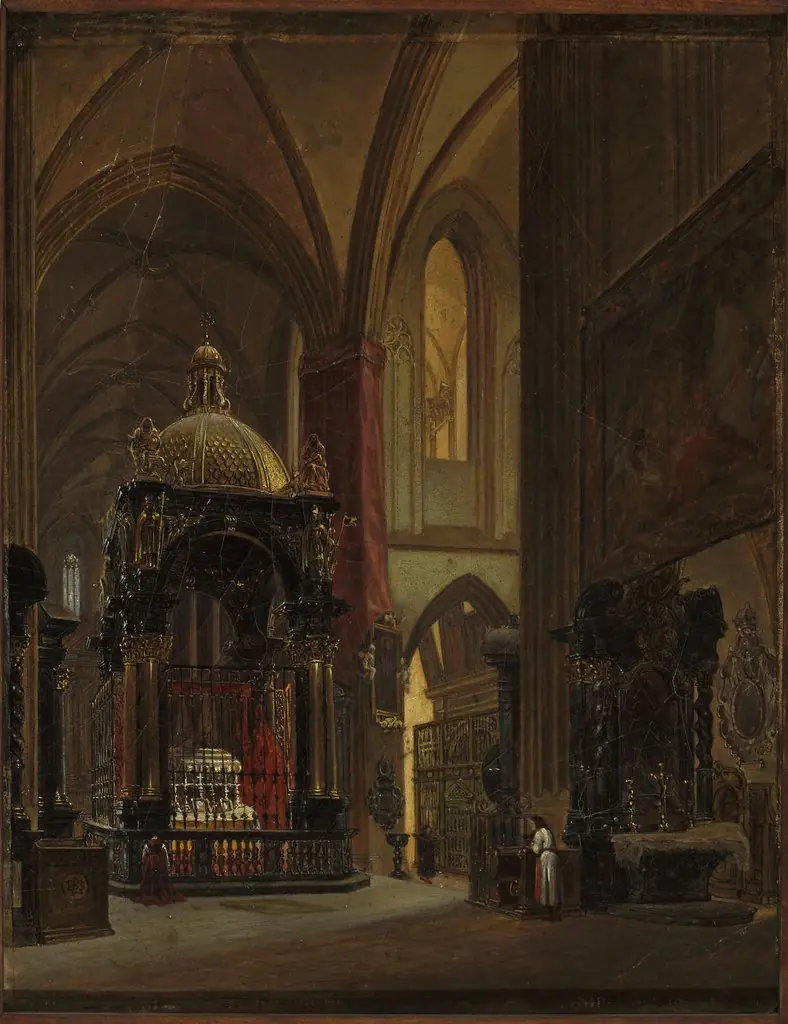 Interior of the Wawel Cathedral
 Interior of a Protestant Gothic church with motifs of the Oude and the Nieuwe Kerk in Amsterdam
 Interior of Saint Mary’s Basilica in Kraków