Artwork
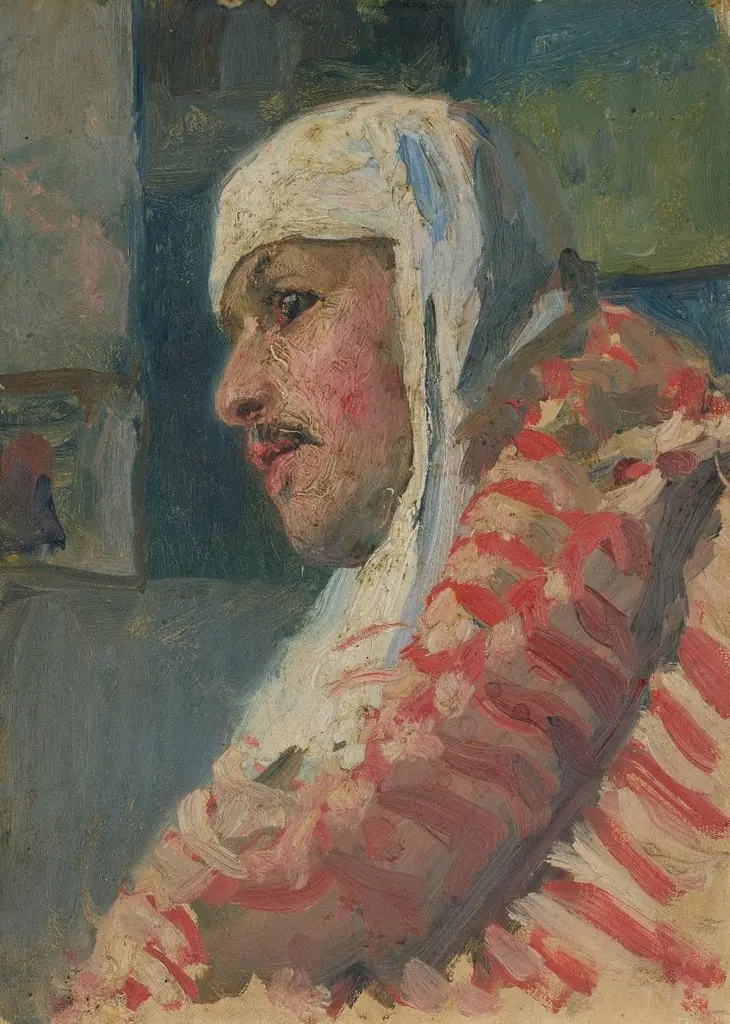
Autoportret - Tatar
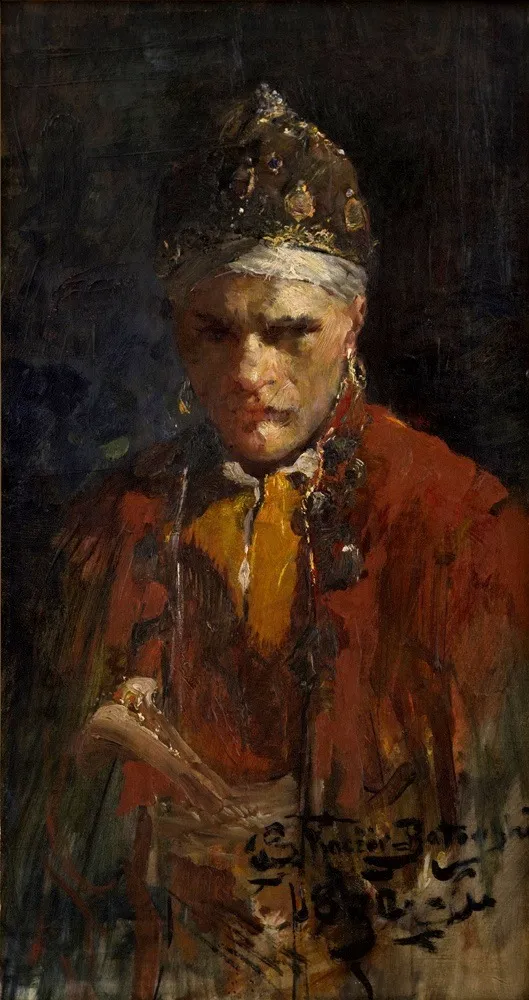
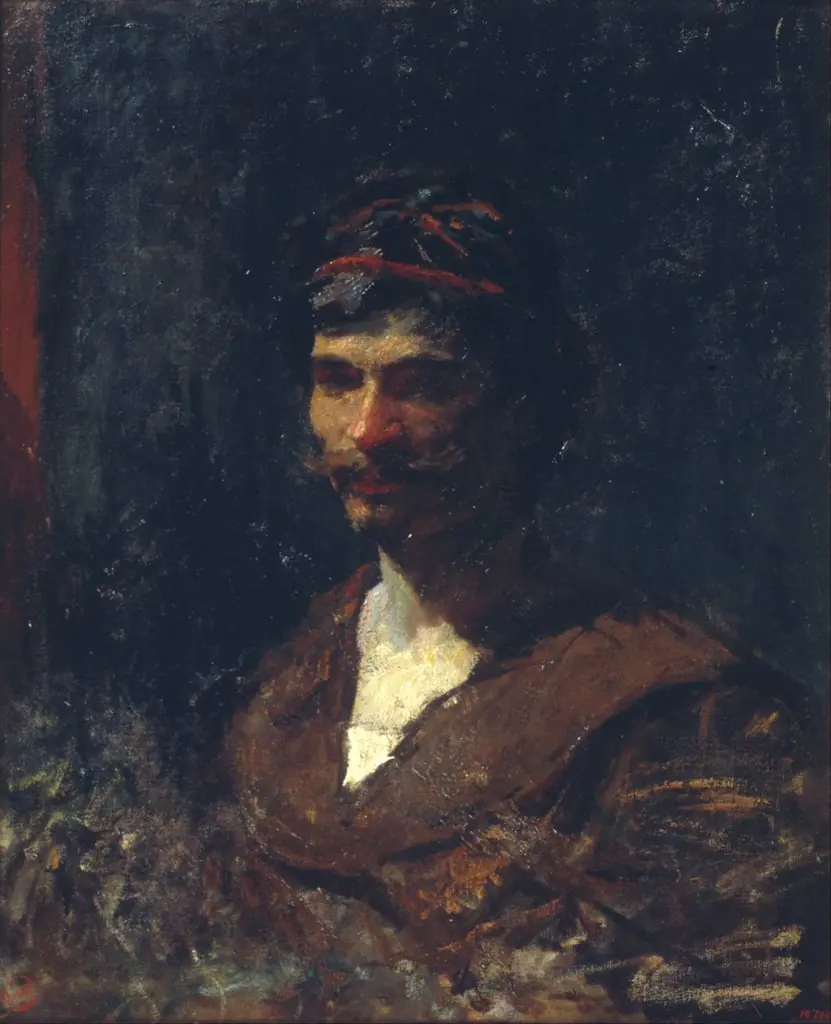
Autoportret - Tatar is an oil painting by Stanisław Kaczor-Batowski. It dates from 1896 and is held in the collection of the National Museum in Kraków.
About this work
Overview
Stanisław Kaczor-Batowski painted his self-portrait titled *Autoportret – Tatar* in 1896 using oil on canvas. A Polish artist trained across several European academies, he developed a style rooted in realism with romantic undertones. The work is part of the National Museum in Kraków’s permanent collection, reflecting his engagement with personal and cultural identity through portraiture.
Subject & Meaning
The painting presents the artist dressed in a red robe with gold-trimmed details and a distinctive hat, holding a cane. The attire evokes Eastern or Orientalizing influences, possibly referencing the Tatar communities of Eastern Europe. His serious gaze and composed posture suggest introspection, not theatrical display, implying a quiet assertion of identity beyond conventional Western norms.
Technique & Style
Kaczor-Batowski employed careful brushwork to render fabric textures and subtle shifts in light across the robe and hat.
Kaczor-Batowski employed careful brushwork to render fabric textures and subtle shifts in light across the robe and hat. The palette is restrained yet rich, with deep reds and muted tones creating a somber elegance. The background remains indistinct, focusing attention on the figure’s form and expression, consistent with his academic training and preference for psychological depth over narrative detail.
History & Provenance
Created during a period of intense artistic exchange in Central Europe, the painting was completed after Kaczor-Batowski’s studies in Vienna, Munich, Paris, and Rome. It entered the National Museum in Kraków’s collection soon after its completion, likely through direct acquisition or donation. Its preservation reflects institutional recognition of his contribution to Polish portraiture in the late 19th century.
Context
In the 1890s, Polish artists often explored regional and ethnic identities amid the partitions of Poland. Kaczor-Batowski’s choice of attire may reflect broader cultural fascination with the Tatars of the Polish-Lithuanian Commonwealth, a minority group with a long history in the region. The portrait thus operates as both personal statement and subtle cultural reference within a politically fragmented landscape.
Legacy
Though not widely exhibited outside Poland, *Autoportret – Tatar* remains a key example of Kaczor-Batowski’s ability to merge personal introspection with historical allusion. It contributes to scholarly understanding of how late 19th-century Polish artists negotiated identity through dress and symbolism, offering a quiet counterpoint to more overt nationalist imagery of the era.
Artist & collection
Artist
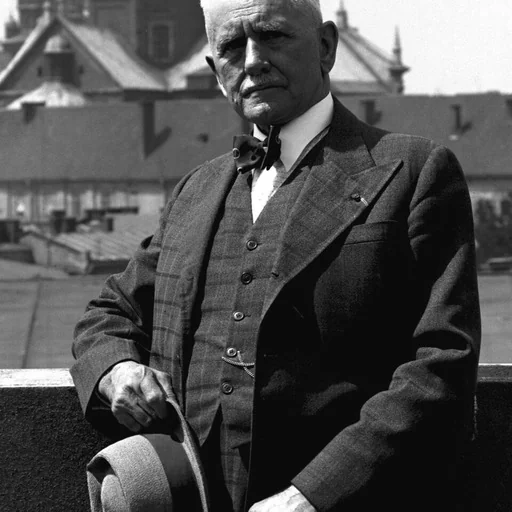
Stanisław Kaczor-Batowski (29 January 1866 – 5/12 May 1946) was a Polish painter who specialised in realist and romanticist works.