Artwork
Untitled
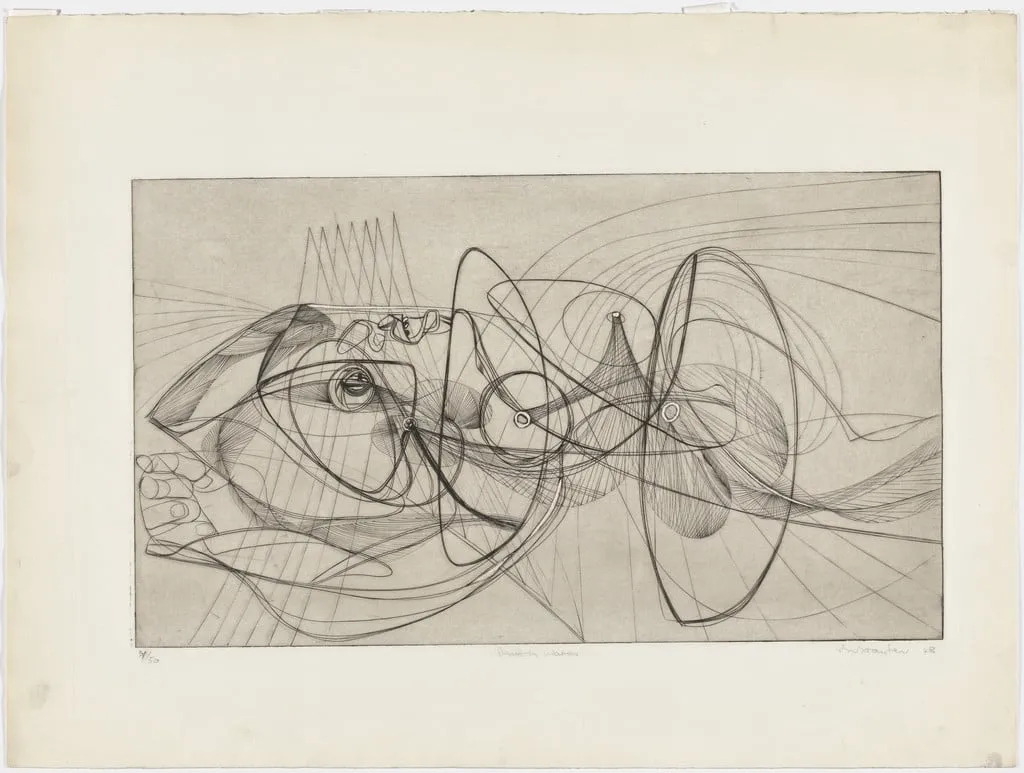
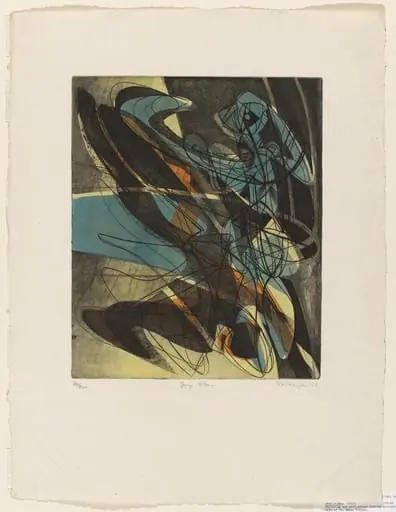
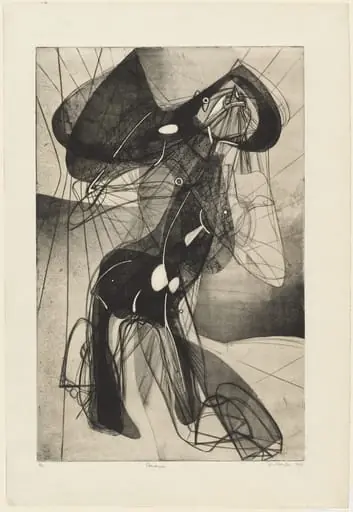
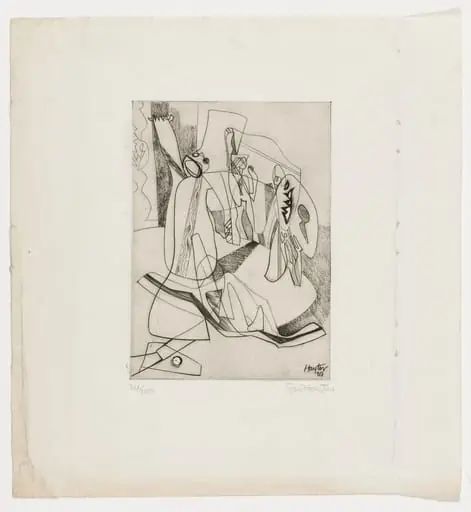
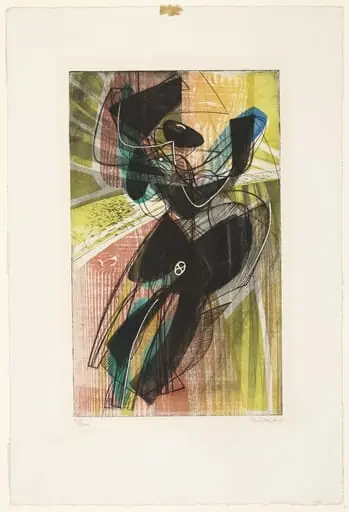
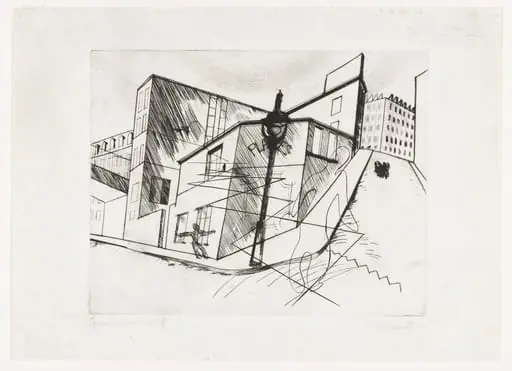
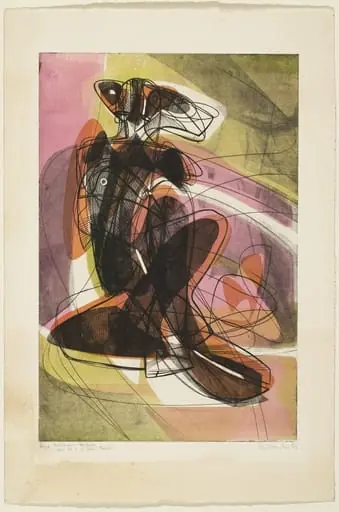
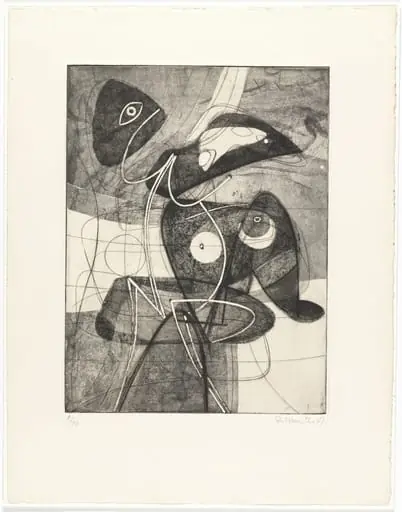
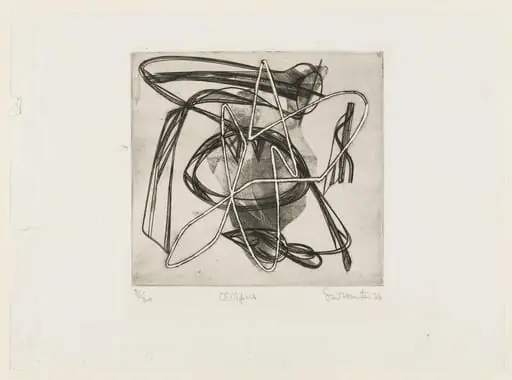
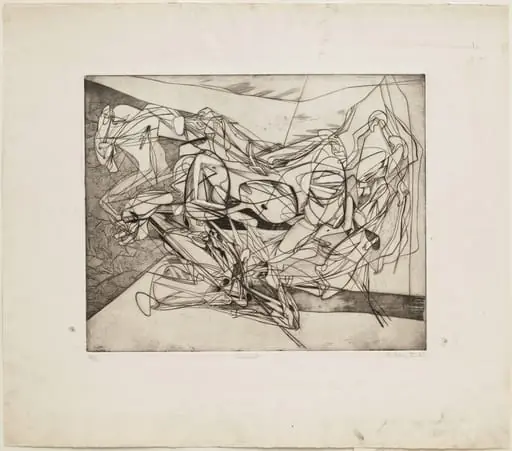
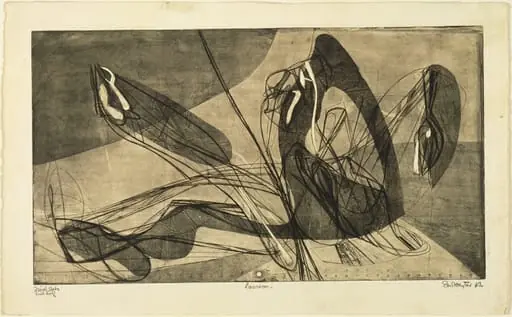
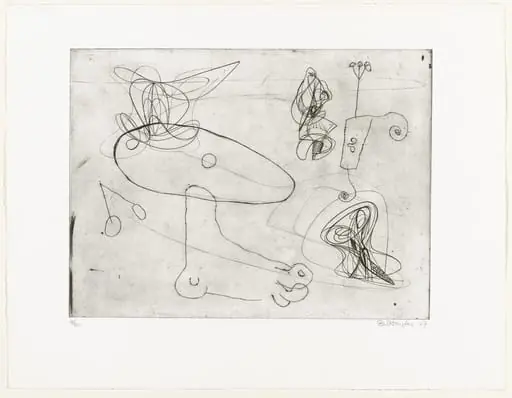
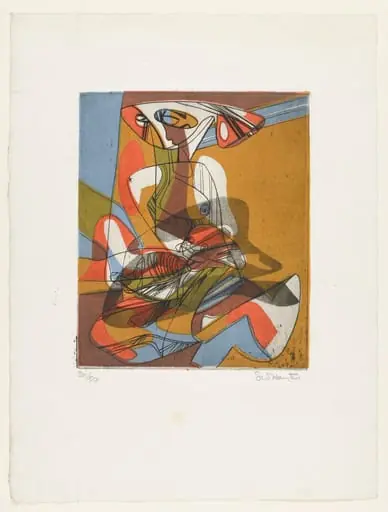
Untitled is an ink print by Stanley William Hayter. It dates from 1948 and is held in the collection of the Museum of Modern Art.
About this work
Overview
Created in 1948, this engraving by Stanley William Hayter is a black-ink composition on a light ground, emphasizing line over tone.
Created in 1948, this engraving by Stanley William Hayter is a black-ink composition on a light ground, emphasizing line over tone. It belongs to a body of work produced after his move to New York, where he continued refining his printmaking methods. The piece avoids narrative clarity, instead focusing on the interplay of form and texture through dense, intersecting strokes. Hayter’s approach here reflects his lifelong interest in the expressive potential of engraving as a medium.
Subject & Meaning
Two abstracted facial forms overlap in the composition, their contours fused by swirling, angular lines. Rather than depicting recognizable individuals, the shapes suggest psychological or emotional states—fragmented, entangled, and in flux. The absence of detail invites interpretation without anchoring the image to a specific identity. Hayter’s intent seems less about representation and more about evoking inner tension through visual complexity.
Technique & Style
Hayter employed engraving tools to incise fine, precise lines into a metal plate, creating a network of sharp angles and fluid curves that intersect unpredictably. The contrast between dense clusters and sparse areas generates a sense of depth and movement. The all-black ink on light paper heightens the graphic intensity, while the web-like texture suggests both structure and chaos. His technique merges controlled craftsmanship with spontaneous, gestural energy.
History & Provenance
Produced during Hayter’s time in New York, this work emerged from his continued experimentation at Atelier 17, which he had relocated from Paris in 1940. Though no specific ownership history is documented for this piece, it aligns with the broader output of his postwar period, when he collaborated with American abstract artists and expanded the technical boundaries of printmaking. The work reflects his enduring influence on mid-century print studios.
Context
In the late 1940s, Hayter’s work bridged European surrealism and emerging American abstract expressionism. While his earlier prints often referenced dream imagery, this piece leans toward non-representational form, echoing the period’s broader shift toward abstraction. His studio remained a vital space for cross-cultural exchange, and this engraving exemplifies how printmaking evolved beyond reproduction into a primary medium for avant-garde expression.
Legacy
Hayter’s innovations in engraving techniques, including his use of viscosity printing and layered mark-making, reshaped modern printmaking. This untitled work exemplifies his commitment to line as both structure and emotion. Though not widely exhibited, it stands as a quiet testament to his role in elevating printmaking to the status of independent artistic expression, influencing generations of printmakers who followed.
Artist & collection
Artist
Stanley William Hayter (27 December 1901 – 4 May 1988) was an English painter and master printmaker associated in the 1930s with surrealism and from 1940 onward with abstract expressionism.