Artwork
Landscape with cottages and trees
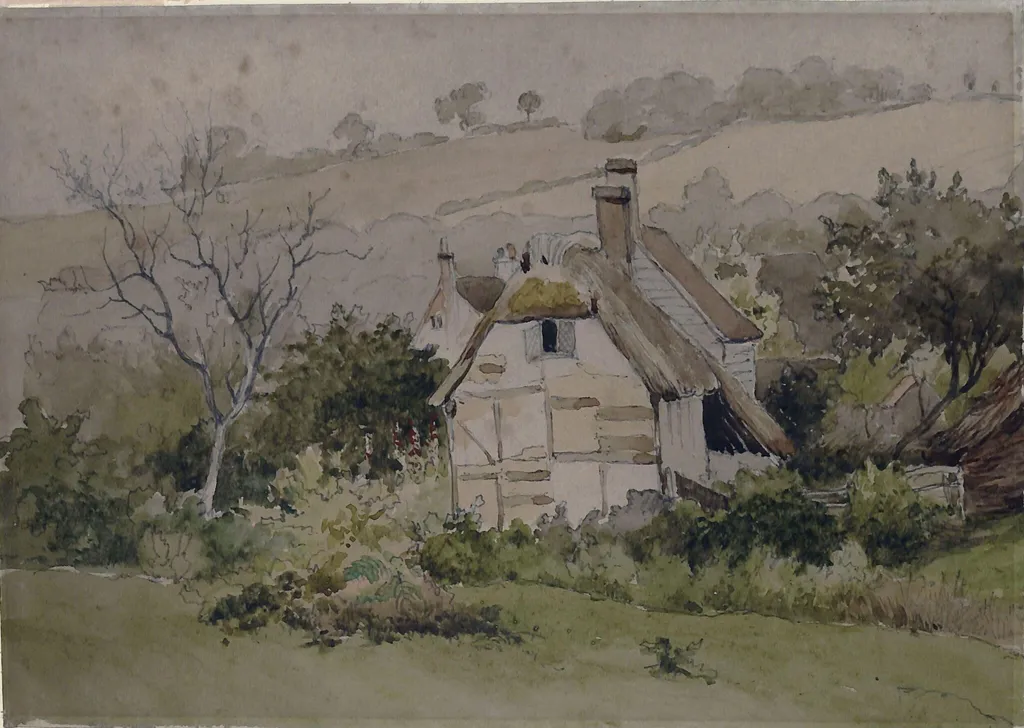
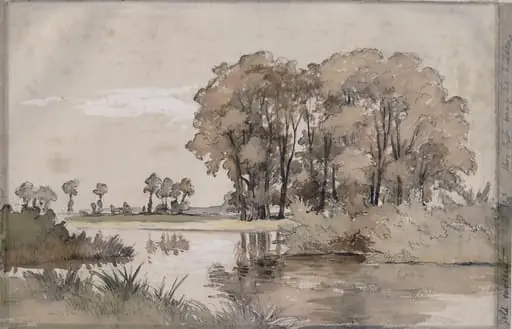
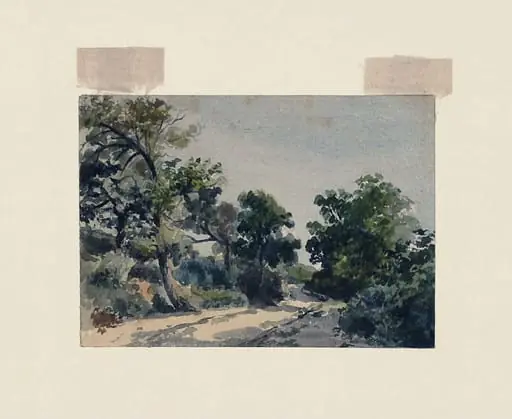
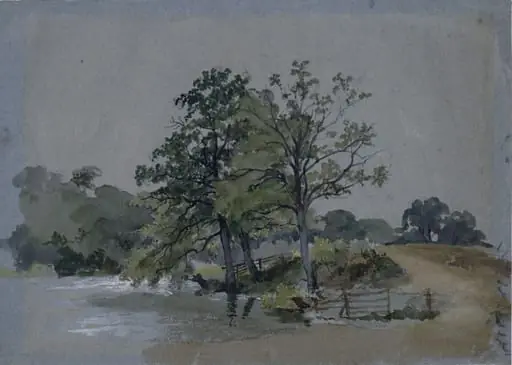
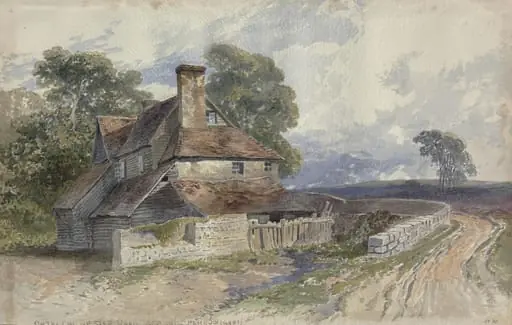
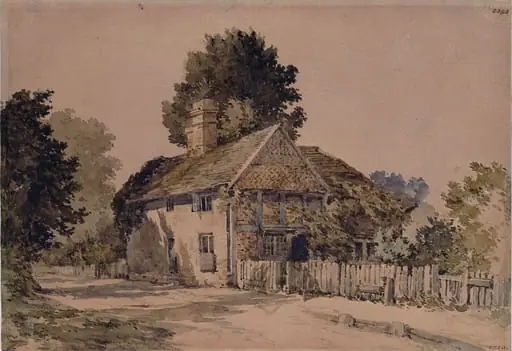
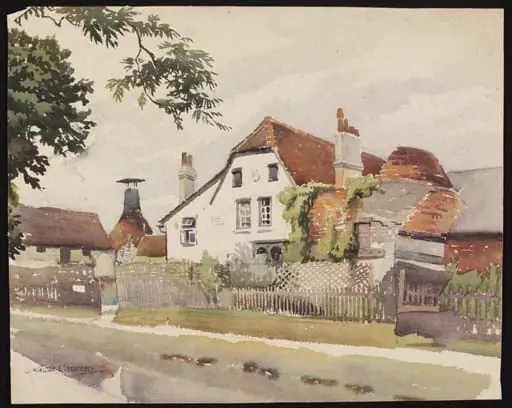
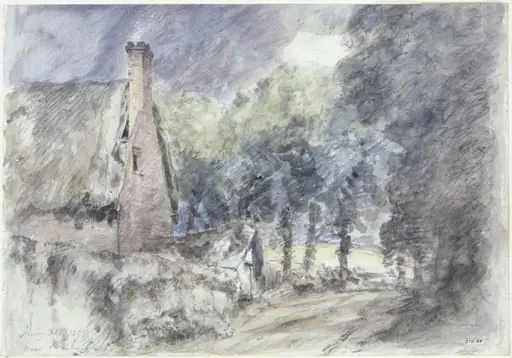
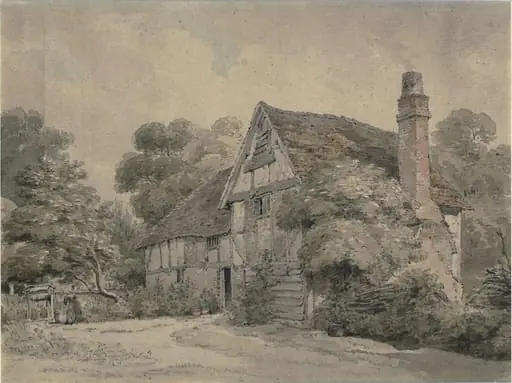
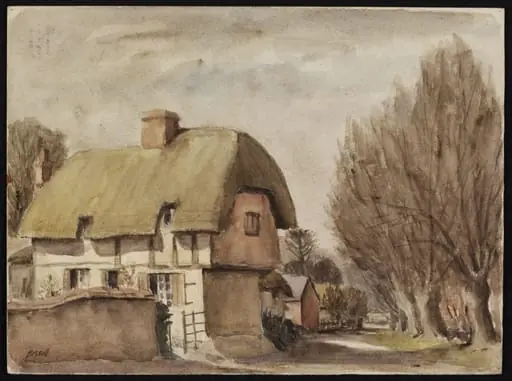
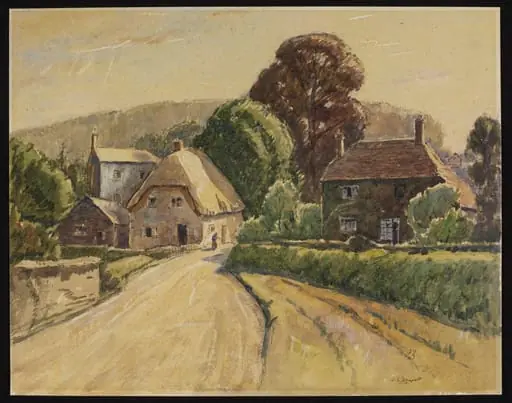
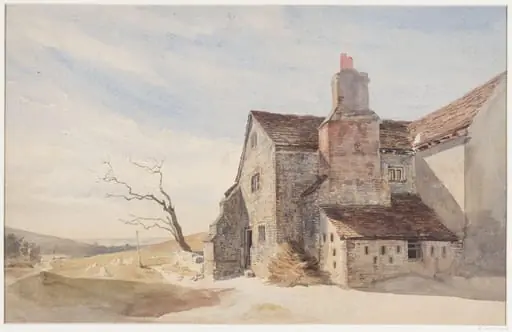
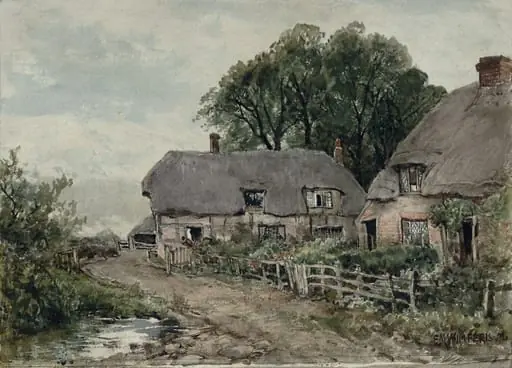
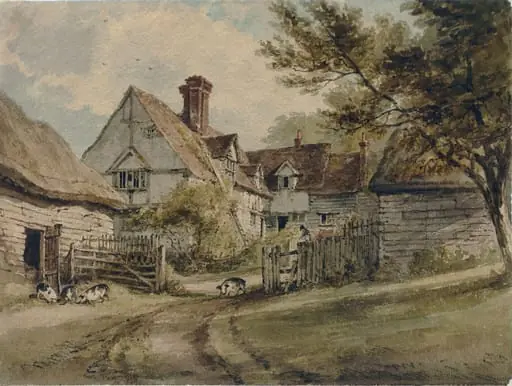
Landscape with cottages and trees is a watercolor work on paper by the Hudson River School artist James Stark. It dates from 1825 and is held in the collection of the Victoria and Albert Museum. This watercolour portrays a quiet rural landscape dominated by modest cottages surrounded by dense foliage.
About this work
Overview
This watercolour portrays a quiet rural landscape dominated by modest cottages surrounded by dense foliage.
This watercolour portrays a quiet rural landscape dominated by modest cottages surrounded by dense foliage. The composition centers the dwellings amid trees, with soft, layered washes creating a sense of depth. Light tones in the sky contrast gently with the darker, muted hues of the vegetation and structures, evoking a tranquil, unhurried atmosphere typical of 19th-century British landscape watercolours.
Subject & Meaning
The scene presents an unembellished view of rural life, with cottages integrated naturally into the landscape rather than dominating it. There is no human presence, suggesting solitude or quiet endurance. The emphasis on harmony between architecture and nature implies a reverence for the pastoral, reflecting broader cultural ideals of simplicity and retreat from urbanization during the period.
Technique & Style
Executed in transparent watercolour, the work relies on delicate layering and controlled washes to suggest texture and form. Greens dominate the foliage, varied through subtle tonal shifts, while brown pigments define the cottages with minimal detail. The absence of sharp outlines and the soft edges between elements reflect a preference for atmospheric effect over precise rendering, characteristic of the medium’s expressive potential.
History & Provenance
The painting’s origin is undocumented, but its style and materials align with amateur and professional watercolourists active in Britain between the late 18th and mid-19th centuries. It likely belonged to a private collection, possibly created as a personal study or gift. No exhibition history or notable ownership records are known, suggesting it was not widely circulated during its time.
Context
Produced during a period when landscape watercolour was gaining institutional recognition in Britain, this work reflects the era’s fascination with the countryside as a site of moral and aesthetic reflection. Though not tied to a specific movement, its sensitivity to light and natural forms resonates with the quieter, introspective tendencies of Romantic-era landscape art, distinct from grander historical or dramatic treatments.
Legacy
The painting contributes to a broader tradition of British watercolour landscape, valued for its restraint and observational honesty. While not associated with a major artist, it exemplifies the quiet, everyday beauty that sustained the medium’s popularity among collectors and practitioners. Its endurance lies in its unassuming presence, offering a modest but enduring record of rural life through a sensitive hand.
Artist & collection

Artist
Robert Conroy Goldston was an American history writer and the son of Philip Henry Goldston and Josephine Conroy.