Artwork
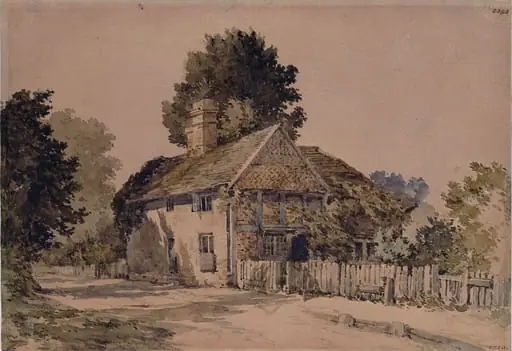
Old Cottage, Ibthorpe
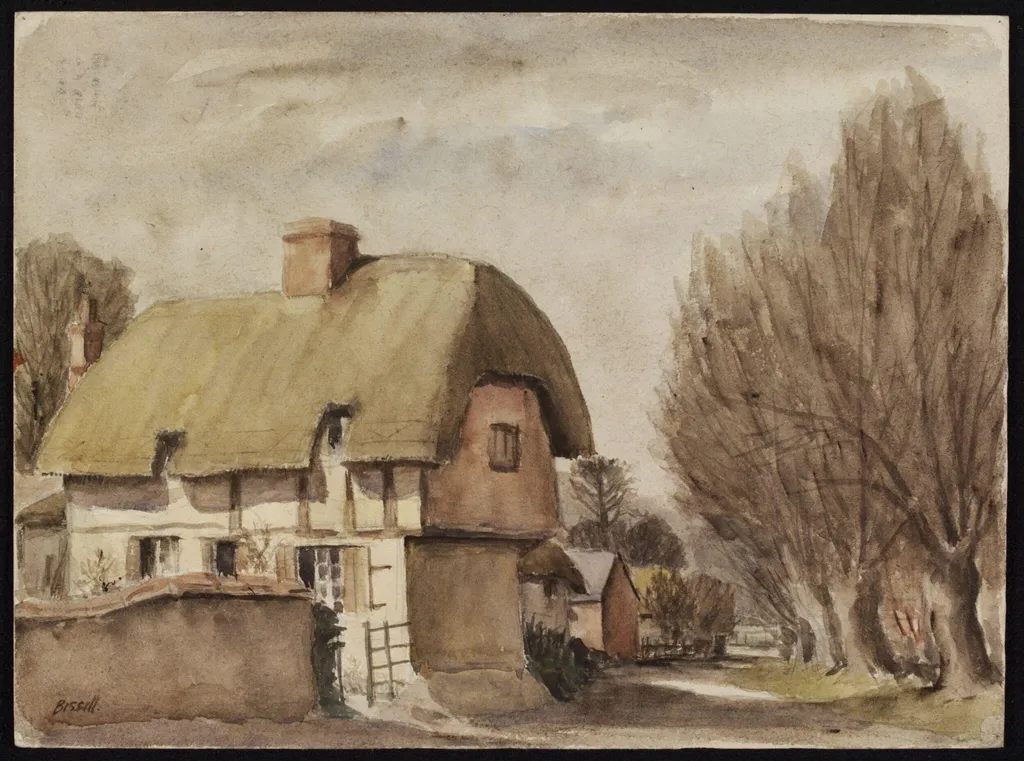
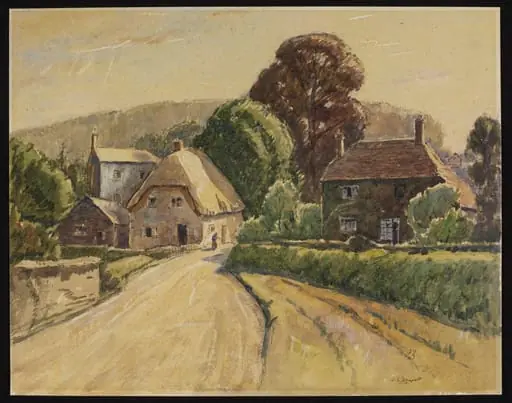
Old Cottage, Ibthorpe is a watercolor work on paper by Bissill. It dates from 1940 and is held in the collection of the Victoria and Albert Museum.
About this work
Overview
It was created as part of the Recording Britain initiative, a wartime effort to visually archive landscapes at risk from conflict and urban change.
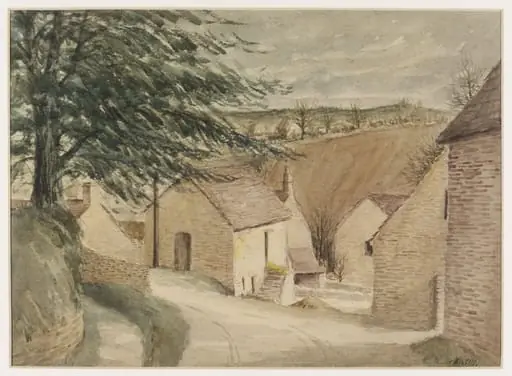
Painted in 1940 by Bissill, this watercolour captures a rural cottage in Ibthorpe, Hampshire. Executed in soft, muted tones, the work reflects the quiet dignity of vernacular architecture. It was created as part of the Recording Britain initiative, a wartime effort to visually archive landscapes at risk from conflict and urban change. The piece is signed and dated, affirming its place within a documented national project.
Subject & Meaning
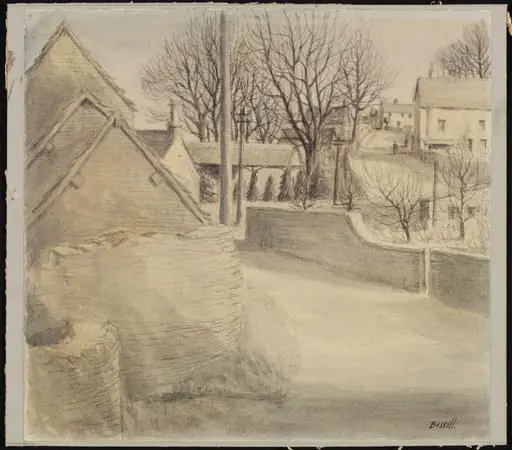
The painting centers on a modest, two-storey thatched cottage with half-timbered framing and a projecting upper floor. A narrow lane leads past it, flanked by leafless trees and a secondary structure in the background. The scene avoids grandeur, instead emphasizing ordinary, enduring rural life. Its quiet composition suggests a meditation on continuity amid wartime uncertainty, valuing the unremarkable as culturally significant.
Technique & Style
Bissill employed loose, fluid brushwork to convey texture and atmosphere, particularly in the trees and foliage. The palette is restrained—soft browns, greys, and muted greens—enhancing the sense of age and stillness. Washes are applied lightly, creating a faded, atmospheric quality. The sketch-like handling suggests immediacy, as if the scene was observed and recorded on-site with minimal revision.
History & Provenance
Created during the Second World War, the painting was produced under the Recording Britain project, funded by the Pilgrim Trust and overseen by Sir Kenneth Clark. The initiative commissioned artists to document threatened vernacular architecture across England. Bissill’s work entered the collection of the Victoria and Albert Museum, where it remains as part of a broader archive of wartime visual documentation.
Context
The Recording Britain project emerged in 1940 as a response to fears of cultural loss—both from aerial bombardment and postwar modernization. Artists were deployed to record buildings, landscapes, and village scenes before they vanished. This painting reflects a national effort to preserve identity through art, prioritizing local character over monumental landmarks during a time of upheaval.
Legacy
Bissill’s watercolour endures as one of thousands of works in the Recording Britain archive, now held primarily by the V&A. It contributes to a historical record of pre-war rural England, offering insight into everyday environments that have since changed or disappeared. The piece exemplifies how art served as a quiet form of cultural preservation during national crisis.
Artist & collection
Artist
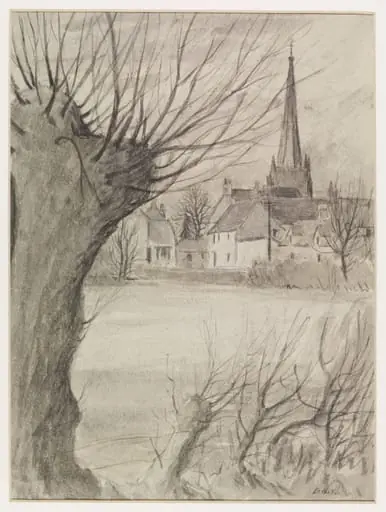
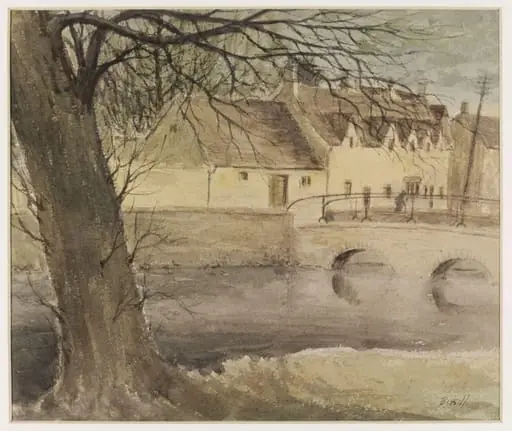
This artist created watercolors of English villages around 1940. They painted Quenington Village, The Village Way in Winson, Lechlade, The River Coln at Bibury, and Old Cottage in Ibthorpe. Close your eyes and picture…