Artwork
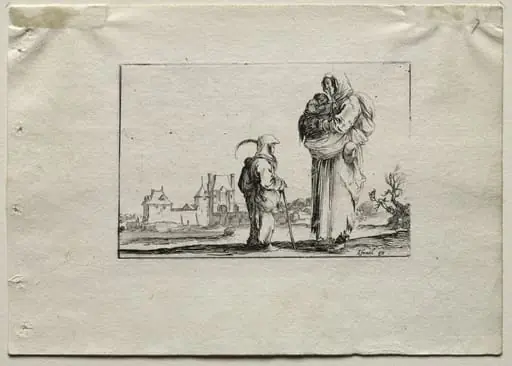
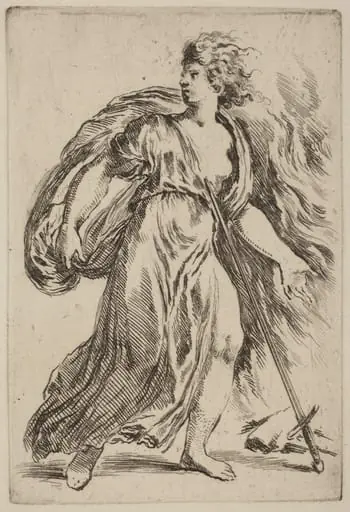
Caprices: Standing Beggar Woman Carrying a Child on her Back
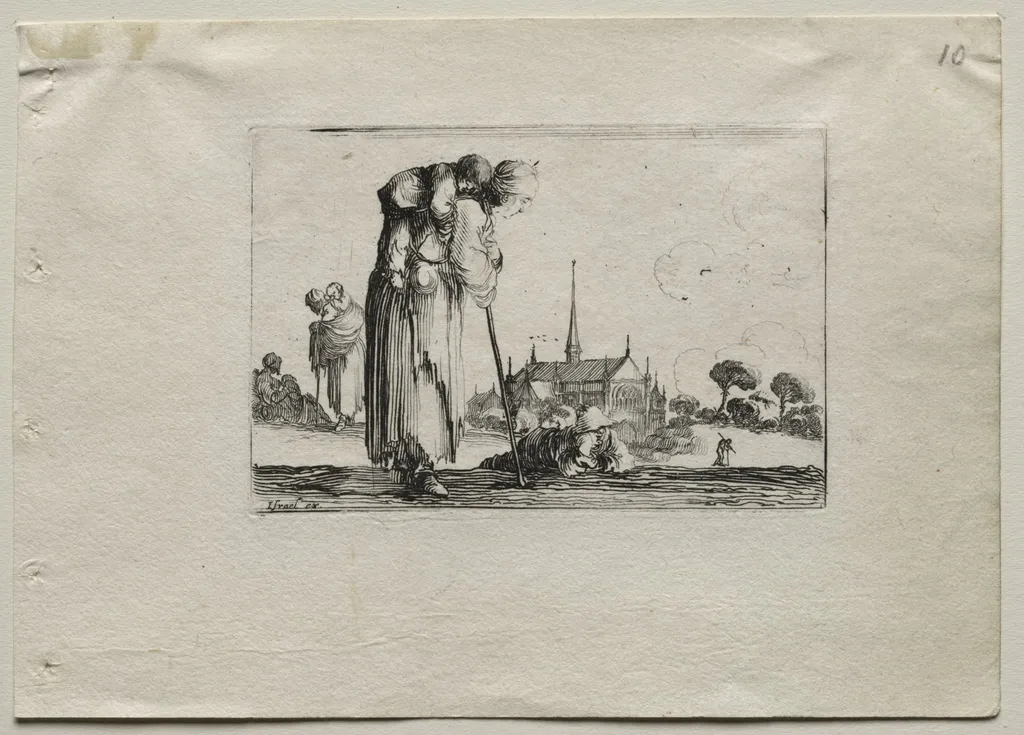
Caprices: Standing Beggar Woman Carrying a Child on her Back is a print by the Baroque artist Stefano Della Bella. It dates from 1642 and is held in the collection of the Cleveland Museum of Art.
About this work
Overview
Della Bella, a Florentine artist known for his prolific output in printmaking, captured scenes of ordinary life with quiet observation.
Created around 1642 by Stefano della Bella, this etching is part of a series exploring social types in early modern Italy. Della Bella, a Florentine artist known for his prolific output in printmaking, captured scenes of ordinary life with quiet observation. This image presents a beggar woman and child against a modest urban backdrop, rendered in delicate lines and subtle tonal contrasts that emphasize weariness rather than spectacle.
Subject & Meaning
The figure is not an individual portrait but a generalized representation of urban poverty. The woman, burdened by both child and staff, embodies resilience amid hardship. Her blurred face de-emphasizes personal identity, inviting viewers to see her as emblematic of a broader social condition. The distant church and passersby suggest a community that observes but does not intervene, reinforcing themes of neglect and invisibility.
Technique & Style
Della Bella employed etching to achieve fine, fluid lines and nuanced shading. The woman’s form is defined by sparse, deliberate strokes, while the background town is suggested with minimal detail—just a suggestion of architecture and figures. The use of light and shadow is restrained, avoiding dramatic contrasts in favor of atmospheric realism. This approach reflects a preference for observation over theatricality, even within the Baroque era.
History & Provenance
The print was produced during della Bella’s time in Florence, when he was actively documenting civic and rural life. Though the exact provenance of this specific impression is undocumented, it belongs to a larger body of work collected by European institutions in the 18th and 19th centuries. Its survival reflects the enduring interest in della Bella’s genre scenes as records of everyday existence.
Context
In mid-17th century Tuscany, economic strain and social stratification were visible in urban centers. Artists like della Bella turned from grand historical or religious subjects to depict marginalized figures, aligning with a growing interest in human experience beyond elite circles. While Baroque art often emphasized drama, this print opts for quietude, offering a counterpoint to the era’s more flamboyant tendencies.
Legacy
Della Bella’s caprices influenced later generations of printmakers who sought to document social reality with empathy rather than satire. His ability to convey dignity in hardship without sentimentality set a precedent for 18th- and 19th-century genre artists. This print remains a quiet but enduring testament to the value of observing the unnoticed in daily life.
Artist & collection
Artist
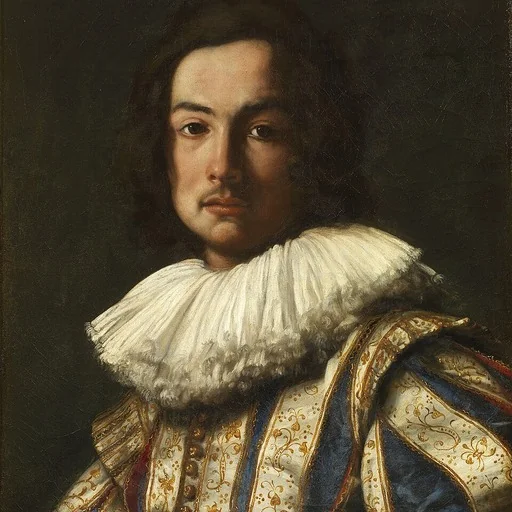
Stefano della Bella (18 May 1610 – 12 July 1664) was an Italian draughtsman and printmaker known for etchings of a great variety of subjects, including military and court scenes, landscapes, and lively genre scenes.

![The Flight into Egypt [verso], by Stefano Della Bella](https://artifactworldgallery.com/img/stefano-della-bella--the-flight-into-egypt-verso--3a100db72e6d25e3-w320.webp)