Artwork
Caprices: Seated Beggar Woman with Two Children
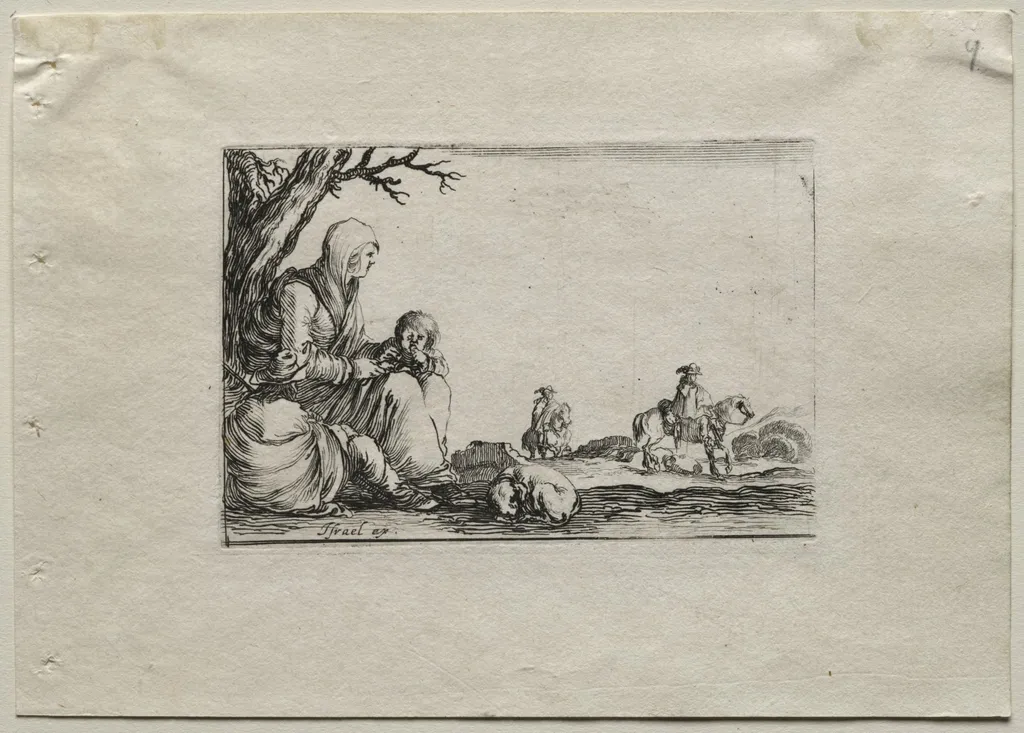
Caprices: Seated Beggar Woman with Two Children is a print by the Baroque artist Stefano Della Bella. It dates from 1642 and is held in the collection of the Cleveland Museum of Art.
About this work
Overview
Created around 1642 by the Florentine artist Stefano della Bella, this etching is one of over a thousand prints he produced during his career.
Created around 1642 by the Florentine artist Stefano della Bella, this etching is one of over a thousand prints he produced during his career. Part of a series titled Caprices, it captures a moment of quiet hardship with minimal embellishment. Della Bella’s focus on ordinary, marginalized figures distinguished his work from grand historical or mythological themes common in his era. The print reflects his mastery of line and composition in black-and-white graphic art.
Subject & Meaning
The image portrays a destitute woman seated on the ground, cradling one child while another stands beside her. Her posture and attire suggest poverty and exhaustion. A distant horseman observes from behind a tree, introducing an element of detached surveillance. The scene avoids overt sentimentality, instead presenting vulnerability as an unremarkable part of daily life. The rider’s presence may imply social indifference or the quiet watchfulness of authority.
Technique & Style
Della Bella employed fine, controlled etching lines to convey texture and form without heavy shading. The folds of the woman’s robe, the rough bark of the leaning tree, and the sparse foliage are rendered with economical precision. The background is deliberately muted, drawing focus to the figures. The absence of dramatic lighting or exaggerated motion aligns with a restrained, observational approach typical of his graphic style.
History & Provenance
The print was made during della Bella’s mature period in Florence, before his later years in Paris. It belongs to a larger body of work documenting street life, travelers, and the urban poor—subjects he returned to repeatedly. While no specific early ownership records are widely documented, the print circulated among collectors of graphic art in 17th-century Italy and France, contributing to his reputation as a keen observer of human condition.
Context
In mid-17th-century Italy, Baroque art often emphasized emotional intensity and theatricality. Della Bella’s work diverged by focusing on understated realism. His depictions of beggars and laborers were not moralizing allegories but quiet records of lived experience. This approach aligned with emerging interest in genre scenes across Europe, though his treatment remained notably restrained compared to contemporaries in the Netherlands or Spain.
Legacy
Della Bella’s prints, including this one, influenced later generations of draftsmen and printmakers who valued direct observation over idealization. His ability to convey dignity in poverty without melodrama set a precedent for 18th- and 19th-century social realism. Though less celebrated than his monumental works, this etching exemplifies his enduring contribution to the expressive potential of the graphic medium.
Artist & collection
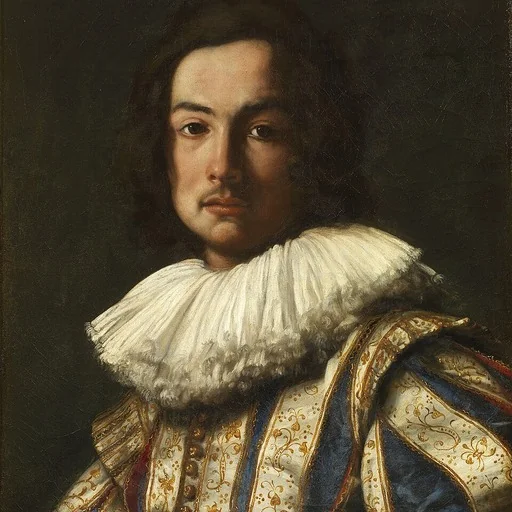
Artist
Stefano della Bella (18 May 1610 – 12 July 1664) was an Italian draughtsman and printmaker known for etchings of a great variety of subjects, including military and court scenes, landscapes, and lively genre scenes.

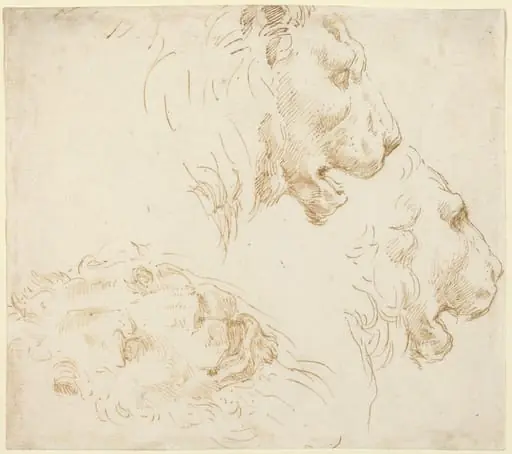
![The Flight into Egypt [verso], by Stefano Della Bella](https://artifactworldgallery.com/img/stefano-della-bella--the-flight-into-egypt-verso--3a100db72e6d25e3-w320.webp)
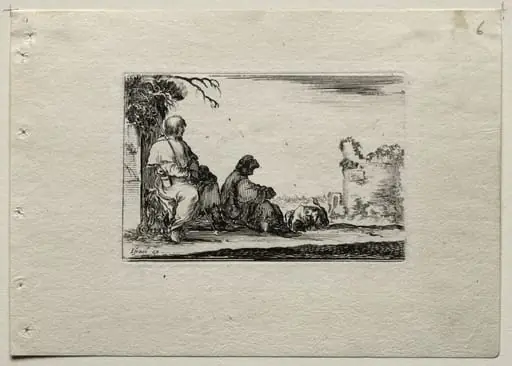 Caprices: Two Pilgrims Resting and a Peasant
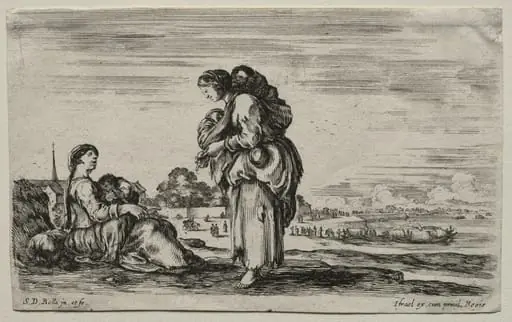 Various Figures and Landscapes: Two Mothers Chatting Together
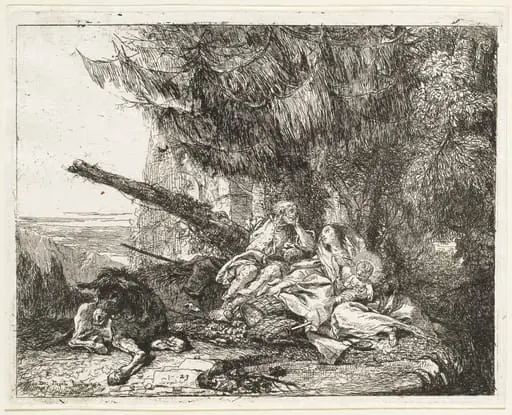 The Rest on the Flight, with Holy Family under a Tree
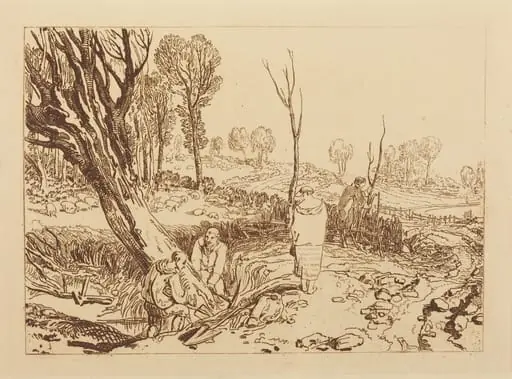 Hedging and Ditching
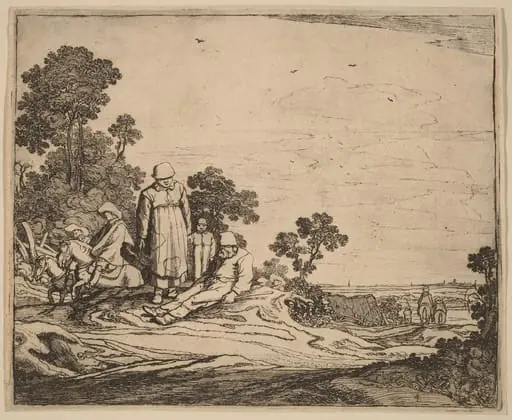 Woman and Child Standing near a Seated Peasant
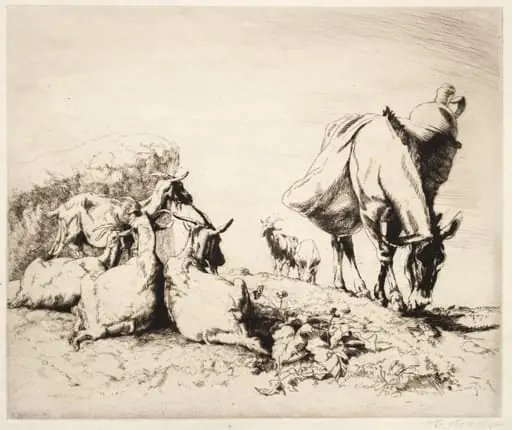 A Roadside in Spain
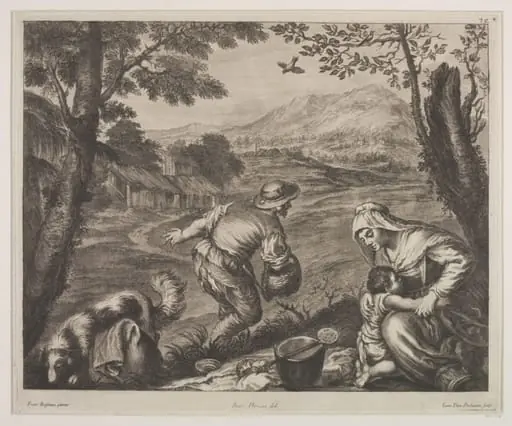 The Husbandman
 The Holy Family Disembarking
 Landscape with Peasants