Artwork
The Cats: Tsching, Batzar and Blanc-Blanc
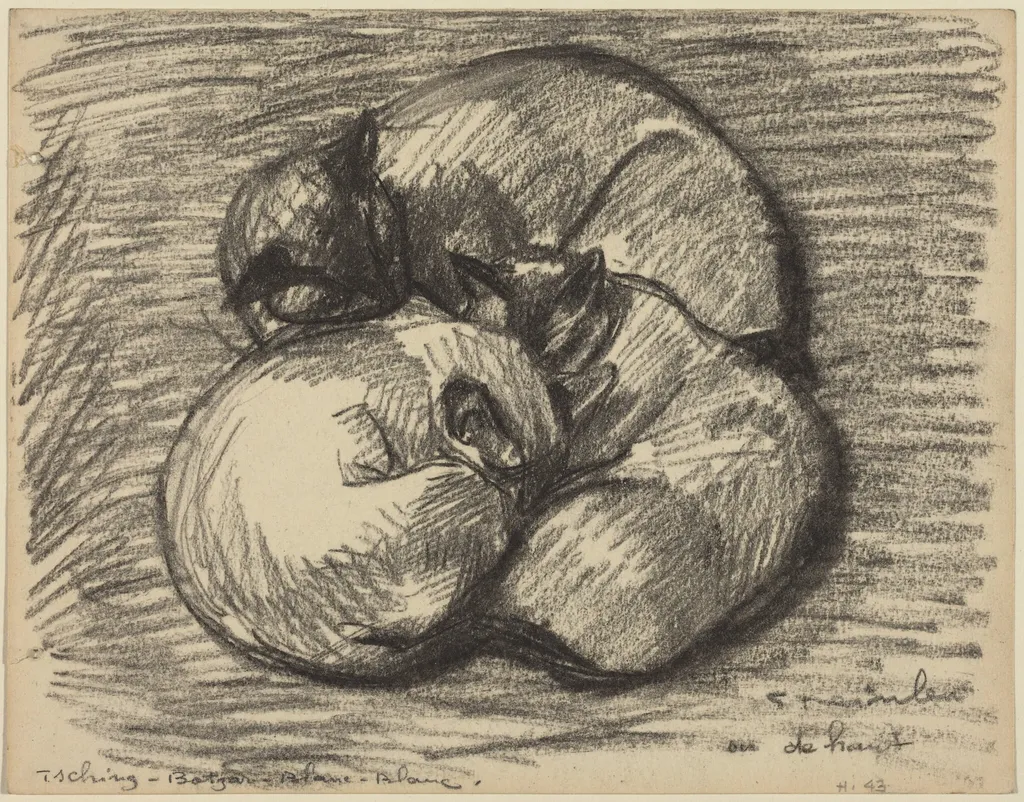
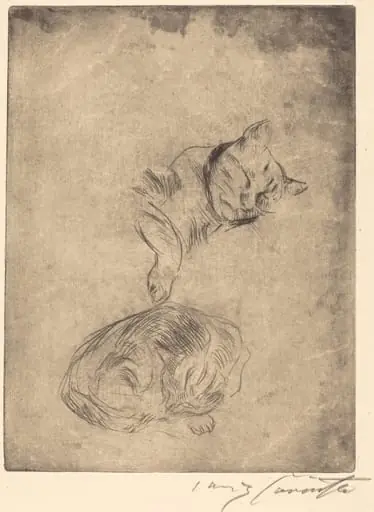
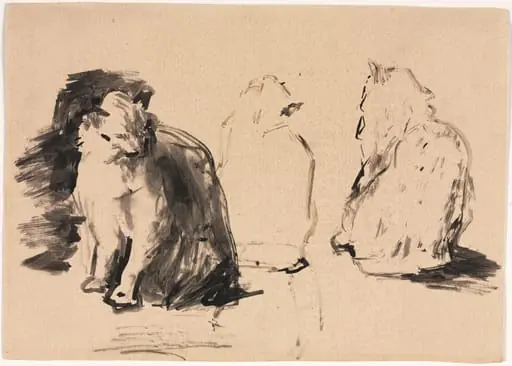
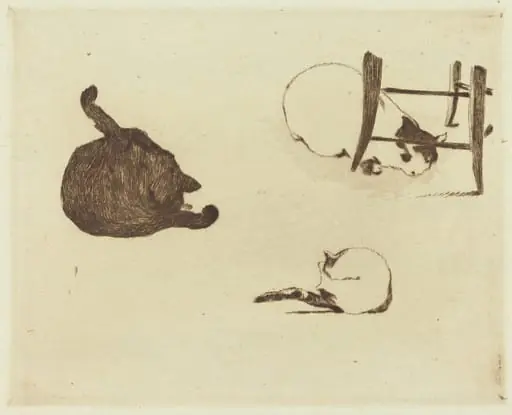
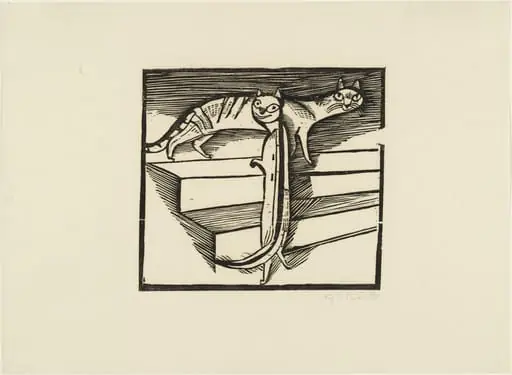
The Cats: Tsching, Batzar and Blanc-Blanc is a charcoal drawing by the Impressionist artist Théophile Alexandre Steinlen. It dates from 1891 and is held in the collection of the National Gallery of Art.
About this work
Overview
Executed with loose, tactile strokes, the work exemplifies Steinlen’s affinity for everyday subjects rendered with emotional nuance.
Created in 1891, this charcoal drawing by Théophile Alexandre Steinlen captures three cats in a state of quiet repose. Executed with loose, tactile strokes, the work exemplifies Steinlen’s affinity for everyday subjects rendered with emotional nuance. Though rooted in the Art Nouveau emphasis on fluid line and organic form, the piece avoids ornamental excess, favoring intimate observation over decorative flourish.
Subject & Meaning
The three cats—Tsching, Batzar, and Blanc-Blanc—are depicted curled together in mutual comfort, their closed eyes and relaxed postures suggesting deep rest. Steinlen, known for his social commentary, often used animals as quiet symbols of resilience and tenderness amid urban hardship. Here, the cats’ closeness may reflect a broader appreciation for simple, unguarded moments of peace, subtly countering the noise of industrial society.
Technique & Style
Charcoal allows for rich tonal variation, and Steinlen exploits its smudgable quality to model the cats’ fur with soft gradients and deliberate hatching. The background, lightly shaded in warm brown, recedes to isolate the figures, while darker accents around their forms enhance volume without harsh outlines. The drawing’s texture is palpable, revealing the artist’s hand through visible, rhythmic strokes that echo the animals’ natural contours.
History & Provenance
The drawing emerged during a period when Steinlen was deeply involved with radical periodicals in Paris, yet he consistently returned to domestic scenes as a counterpoint to political imagery. While its early ownership is undocumented, the work has remained within institutional collections since the early 20th century, valued for its quiet humanity and technical restraint among his more widely circulated posters.
Context
In late 19th-century France, cats were increasingly portrayed in art as companions rather than pests, reflecting changing urban attitudes toward domestic life. Steinlen’s frequent depictions of felines aligned with this shift, offering a gentle counter-narrative to the era’s industrial and political turbulence. His drawings of cats, unlike his posters, rarely carried overt messages—instead, they invited stillness and empathy.
Legacy
Though less celebrated than his political lithographs, this drawing exemplifies Steinlen’s ability to elevate ordinary moments through sensitivity and skill. It influenced later illustrators drawn to animal subjects and reinforced the legitimacy of charcoal as a medium for intimate, non-idealized portraiture. The work endures as a quiet testament to the dignity of everyday companionship.
Own this work as a print
Artist & collection
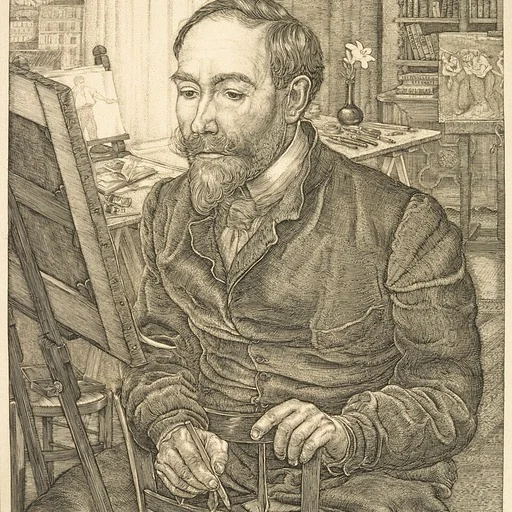
Artist
Théophile Alexandre Steinlen (November 10, 1859 – December 13, 1923), was a Swiss-born French Art Nouveau painter and printmaker. He was politically engaged and collaborated with the anarchist and socialist press.