Artwork
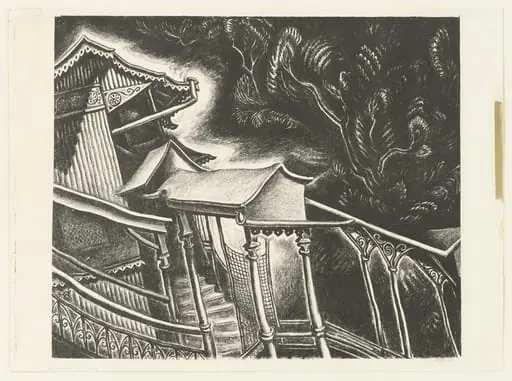
Illustration for "Peronnik the Fool": A Gargoyle
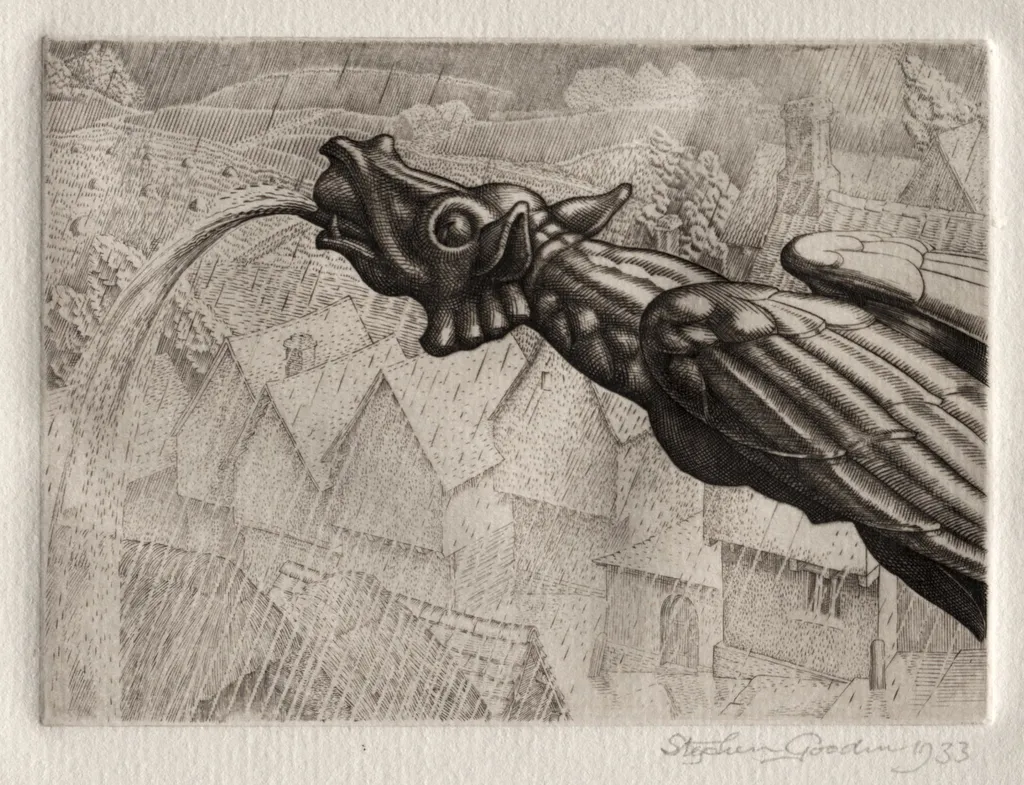
Illustration for "Peronnik the Fool": A Gargoyle is a print by Stephen Gooden. It dates from 1933 and is held in the collection of the Cleveland Museum of Art.
About this work
The background is filled with detailed buildings and a textured sky, all drawn with precise lines.
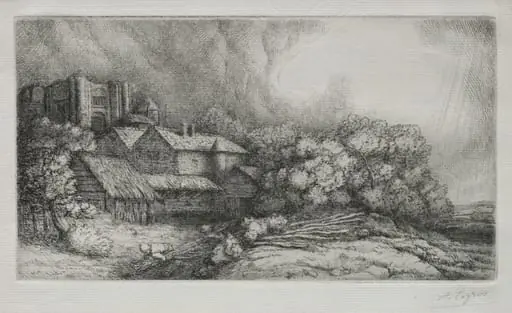
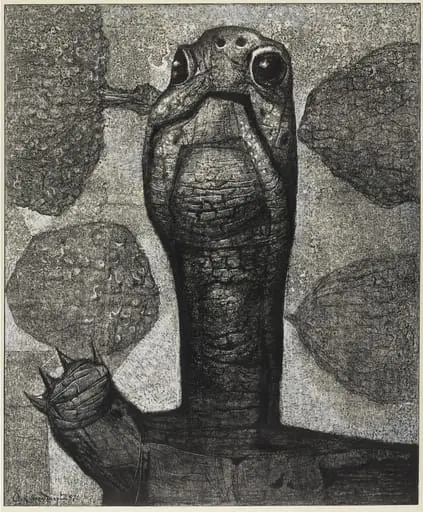
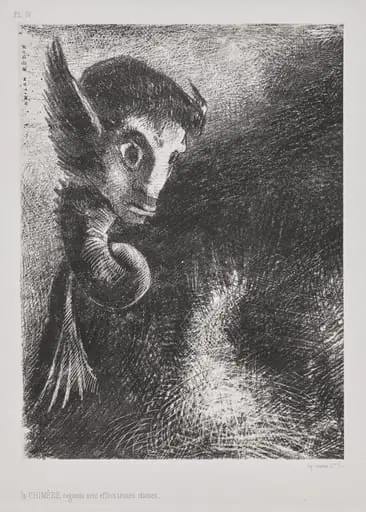
This drawing shows a gargoyle perched on a rooftop, its wings spread wide. The creature has sharp claws, a scaly body, and a fierce, almost smiling face. The background is filled with detailed buildings and a textured sky, all drawn with precise lines.
The artist focused on the gargoyle’s strange mix of strength and playfulness. Notice how the wings look both heavy and light at the same time.
Check out Stephen Gooden (British, 1892–1955) for more of his detailed, quirky drawings.
Overview
Created in 1933 by British artist Stephen Gooden, this ink drawing illustrates a gargoyle from the literary tale 'Peronnik the Fool.' Rendered with fine, controlled lines, the image captures the creature in mid-perch atop a crowded urban skyline. The work belongs to the collection of The Cleveland Museum of Art and exemplifies Gooden’s interest in blending the grotesque with subtle whimsy through meticulous draftsmanship.
Subject & Meaning
The gargoyle depicted is neither purely menacing nor entirely comic—it balances ferocity with an almost amused expression. Its wide wings and scaled form suggest protective or supernatural presence, while the playful tilt of its face introduces an element of irony. In the context of the story, it may symbolize the ambiguous nature of guardianship: both threatening and oddly endearing, embodying the folkloric duality of the fool’s world.
Technique & Style
Gooden employed precise pen-and-ink lines to define the gargoyle’s anatomy and the architectural backdrop. Textured skies and layered rooftops create depth without shading, relying on line density and cross-hatching. The wings are rendered with contrasting weights—thick contours suggest mass, while delicate feather-like strokes imply motion. This tension between solidity and lightness gives the figure an uncanny, dynamic presence.
History & Provenance
The drawing was produced as an illustration for a retelling of the Breton folktale 'Peronnik the Fool,' likely commissioned for a limited edition publication. It entered The Cleveland Museum of Art’s collection in the mid-20th century, where it remains part of their holdings of British illustrative works. No earlier ownership records are publicly documented beyond its association with Gooden’s literary commissions of the 1930s.
Context
In the 1930s, British illustrators often turned to folklore and medieval themes as a counterpoint to modernist abstraction. Gooden’s work aligned with a revival of narrative drawing, influenced by Art Nouveau and early 20th-century book illustration. His focus on fantastical creatures reflected broader cultural interest in mythic archetypes, particularly those that blurred the line between the sacred and the absurd.
Legacy
Gooden’s illustration stands as a quiet example of interwar British graphic art that prioritized craftsmanship over spectacle. Though not widely reproduced, it influenced later illustrators drawn to the expressive potential of line and folklore. The drawing endures as a testament to the quiet power of detailed, narrative-driven imagery in an age increasingly dominated by photographic reproduction.
Artist & collection

Artist
Stephen Frederick Gooden CBE, RA, RE was an English artist, engraver, illustrator and designer of banknotes.

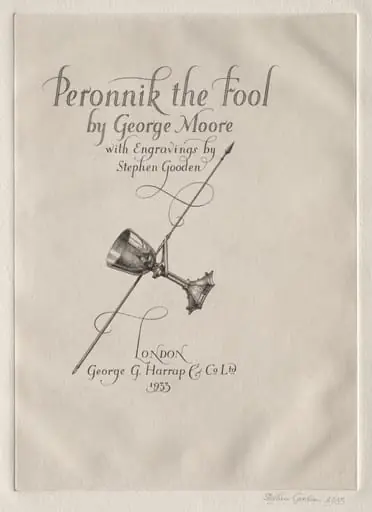 Illustrations for "Peronnik the Fool"
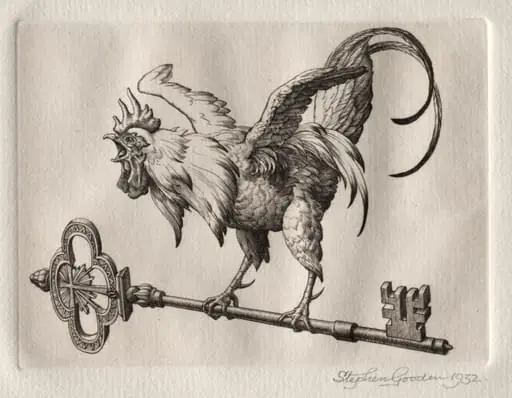 Illustration for "Peronnik the Fool": Cock Key
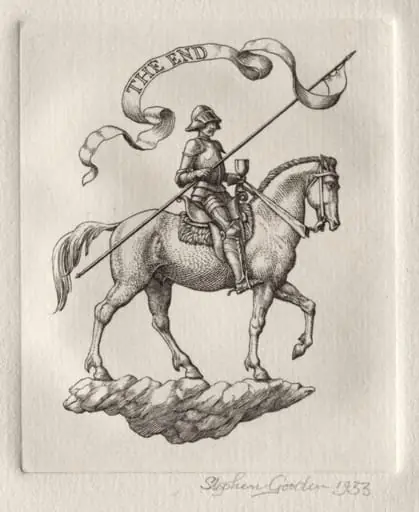 Illustration for "Peronnik the Fool": Tailpiece
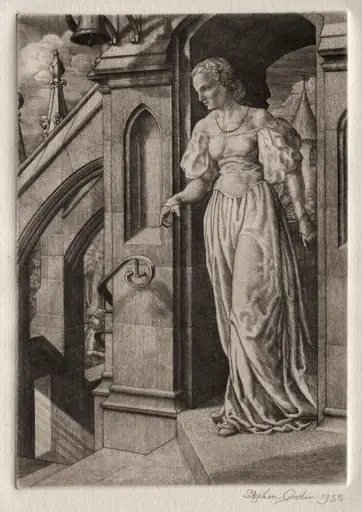 Illustration for "Peronnik the Fool": Redemonde on the Staircase
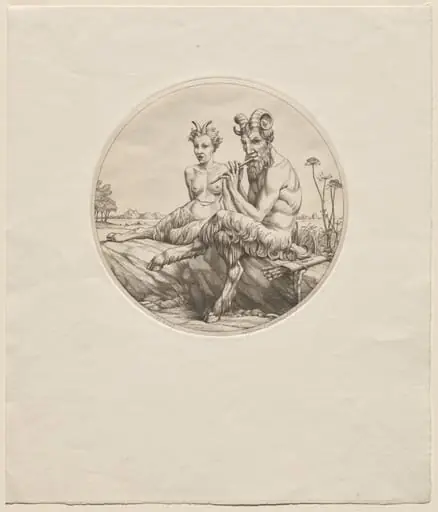 Two Satyrs
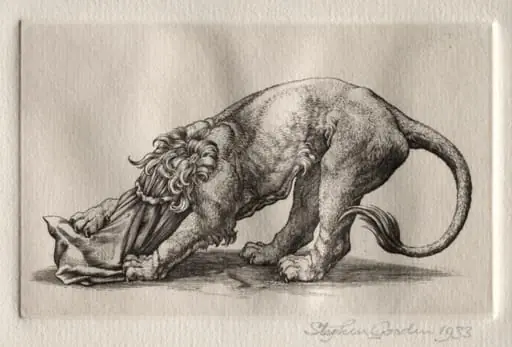 Illustration for "Peronnik the Fool": A Lion Tearing at a Sack
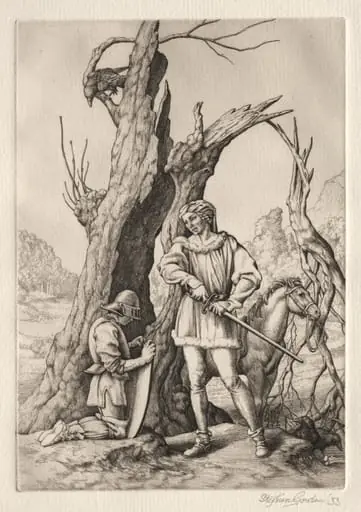 Peronnik the Fool: Peronnik and Sir Gilles
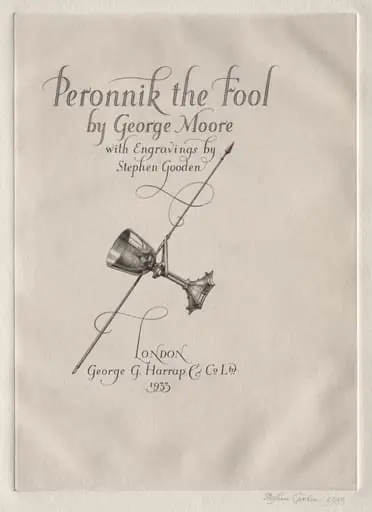 Illustration for "Peronnik the Fool": Peronnik the Fool