Artwork
Peronnik the Fool: Peronnik and Sir Gilles
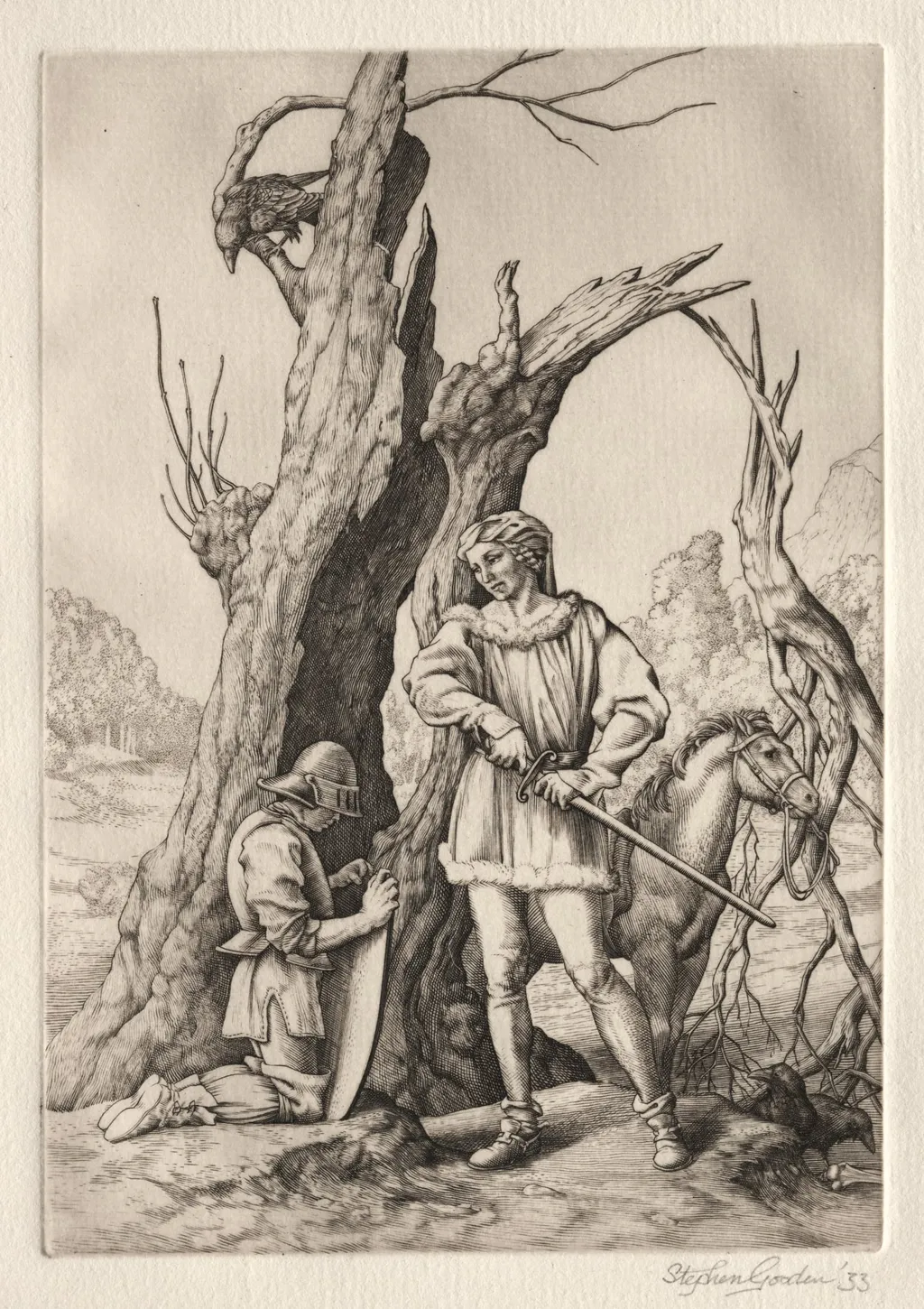
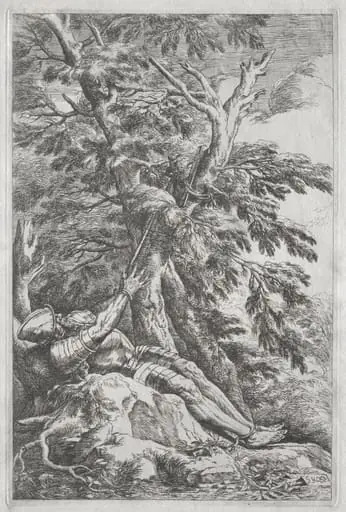
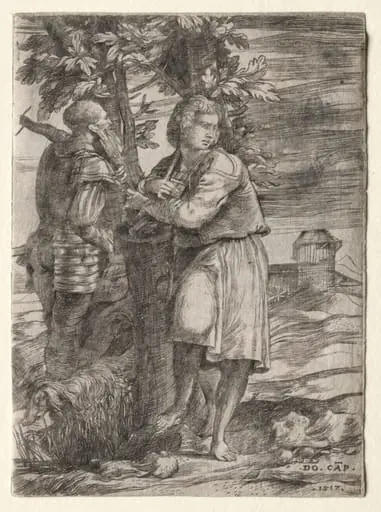
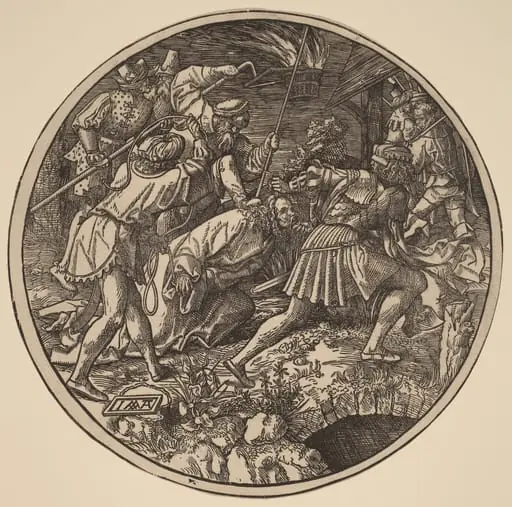
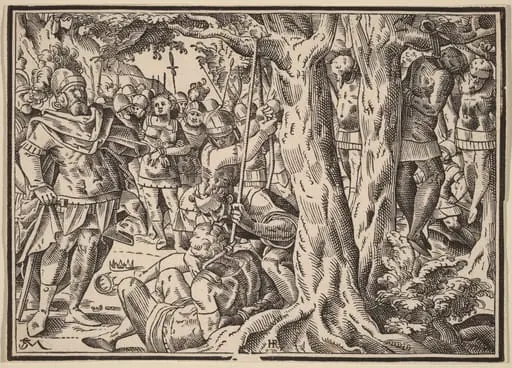
Peronnik the Fool: Peronnik and Sir Gilles is a print by Stephen Gooden. It dates from 1933 and is held in the collection of the Cleveland Museum of Art.
About this work
The background features a tree with a large hollow, and a bird perches on a branch above the kneeling man.
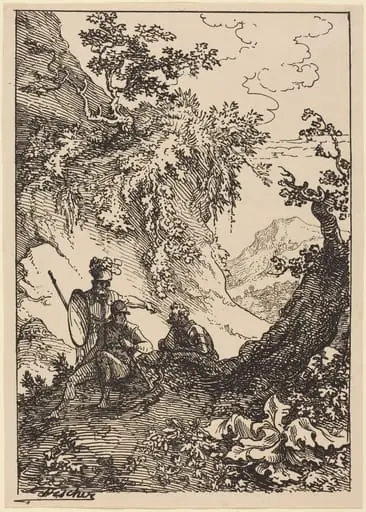
This painting depicts a scene with two men and a horse. The man on the right is dressed in a tunic and leggings, holding a sword in his right hand. He stands beside a horse, which is partially visible. On the left, another man kneels, wearing a helmet and holding a shield. The background features a tree with a large hollow, and a bird perches on a branch above the kneeling man.
In the background, a landscape with trees and a body of water is visible. The overall atmosphere of the painting suggests a narrative or allegorical scene.
For more works by the artist, explore the collection of Stephen Gooden (British, 1892–1955).
Overview
Created in 1933 by British artist Stephen Gooden, this print depicts a quiet, enigmatic moment between two figures and a horse. The scene is rendered with restrained detail, suggesting a narrative rooted in medieval or folkloric tradition rather than historical fact. Its composition balances stillness and implied motion, inviting interpretation without explicit resolution.
Subject & Meaning
Two figures are portrayed: one kneeling, armored and shielded, the other standing tall in rustic attire, sword in hand. The presence of a bird above the kneeling figure and a hollow tree in the background evokes symbolic undertones—perhaps wisdom, isolation, or transition. The title references Peronnik, a traditional Breton fool, suggesting a tale of folly, humility, or moral contrast between the figures.
Technique & Style
Gooden employed a linear, tonal approach typical of early 20th-century British printmaking. Fine hatching and subtle gradations define form without heavy shading, emphasizing contour and texture. The flatness of the background and stylized foliage reflect an interest in medieval illumination and early woodcuts, distancing the work from naturalism in favor of symbolic clarity.
History & Provenance
The work entered The Cleveland Museum of Art’s collection as part of its broader engagement with modern British prints. No record of prior ownership or exhibition history is widely documented, suggesting it was likely acquired directly from the artist or through a gallery. Gooden’s prints were seldom mass-produced, making this piece a rare example of his narrative work.
Context
Created during a period when British artists revisited medieval and folk themes as a counterpoint to industrial modernity, this print aligns with a broader revival of romanticized rural and chivalric imagery. Gooden, known for his illustrations and etchings, often drew from literary and mythic sources, situating this work within a quiet but deliberate cultural nostalgia.
Legacy
Though not widely exhibited outside institutional collections, the print remains a representative example of Gooden’s ability to merge narrative ambiguity with precise draftsmanship. It contributes to the understated legacy of British printmakers who prioritized poetic suggestion over dramatic spectacle, influencing later generations interested in symbolic, non-naturalist imagery.
Artist & collection

Artist
Stephen Frederick Gooden CBE, RA, RE was an English artist, engraver, illustrator and designer of banknotes.

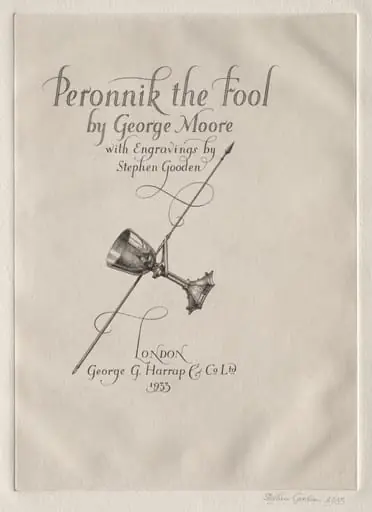 Illustrations for "Peronnik the Fool"
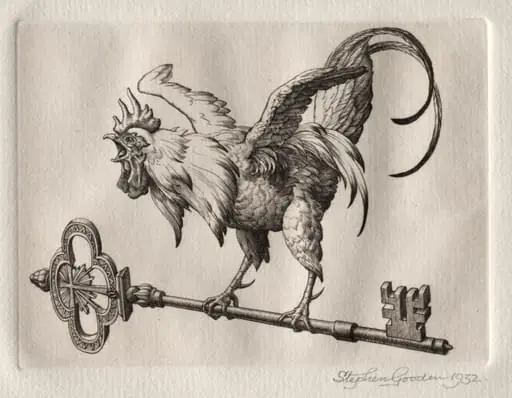 Illustration for "Peronnik the Fool": Cock Key
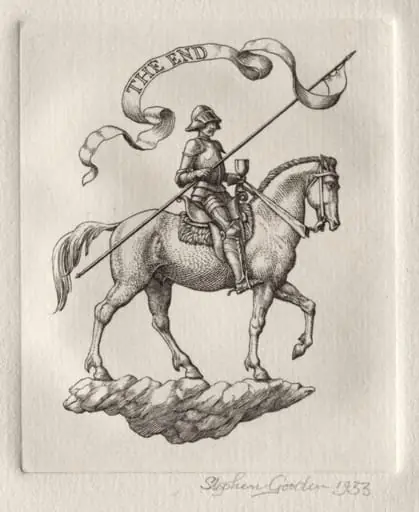 Illustration for "Peronnik the Fool": Tailpiece
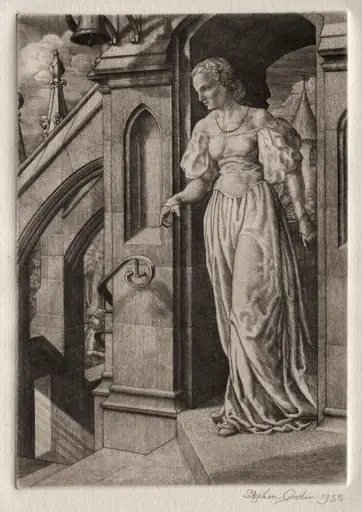 Illustration for "Peronnik the Fool": Redemonde on the Staircase
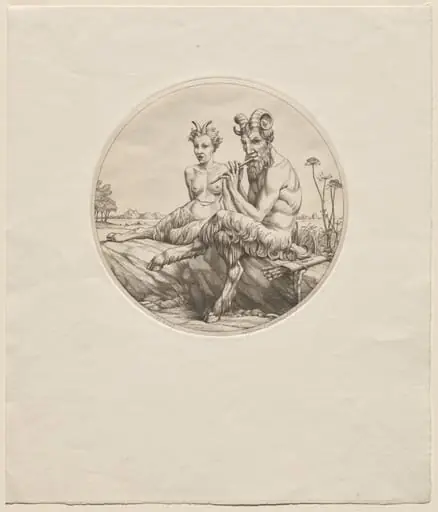 Two Satyrs
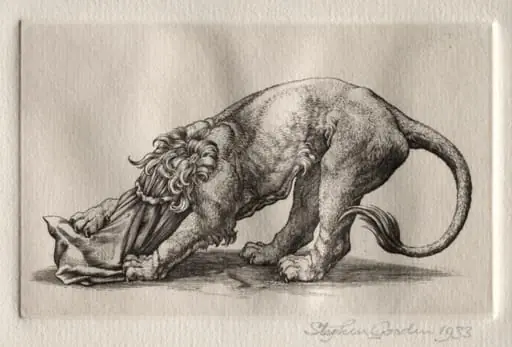 Illustration for "Peronnik the Fool": A Lion Tearing at a Sack
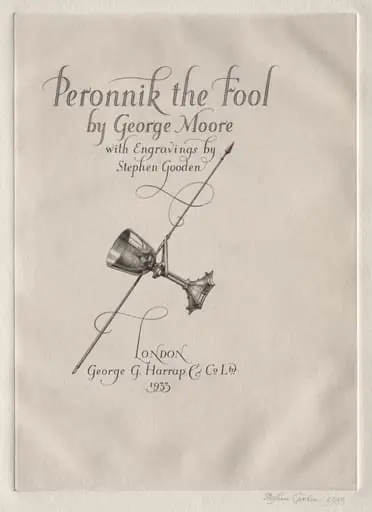 Illustration for "Peronnik the Fool": Peronnik the Fool
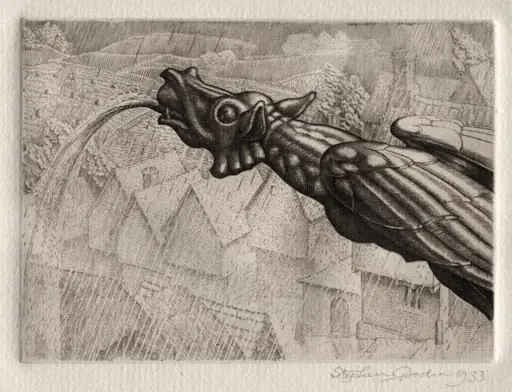 Illustration for "Peronnik the Fool": A Gargoyle