Artwork
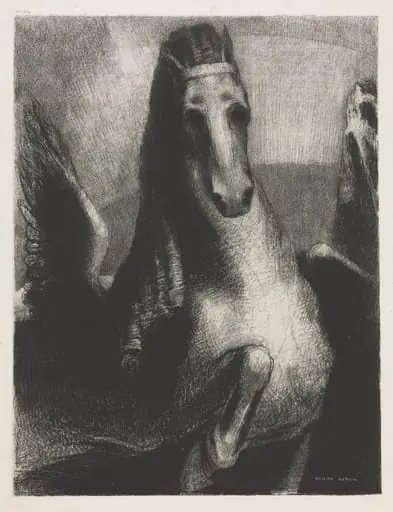
The Chimera Gazed at All Things with Fear
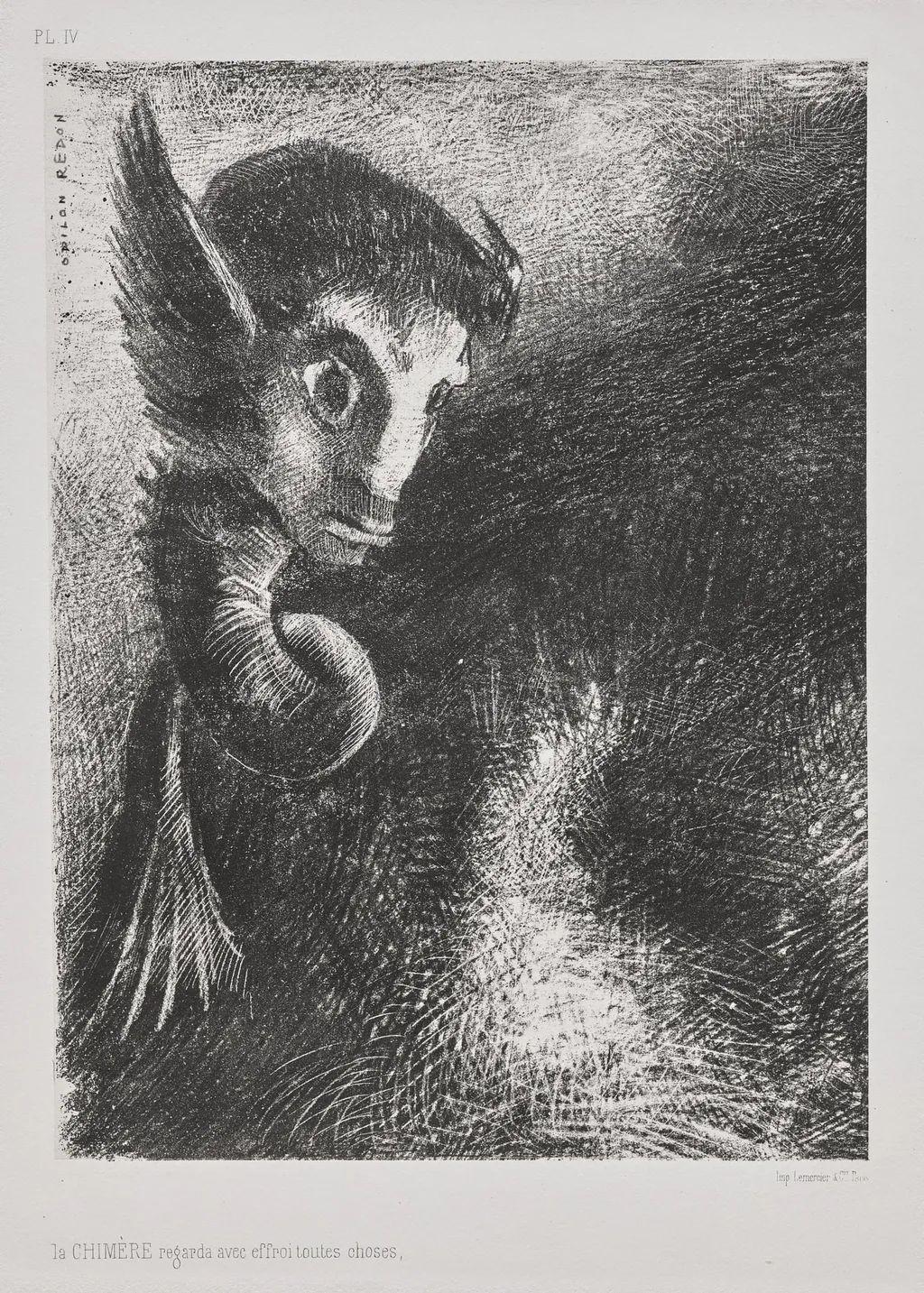
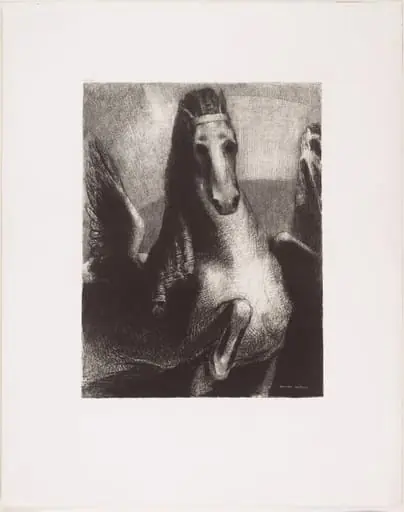
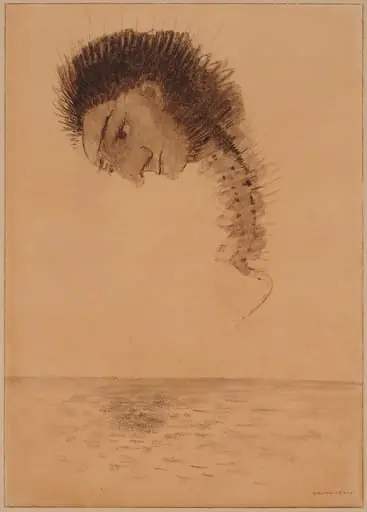
The Chimera Gazed at All Things with Fear is a print by the Impressionist artist Odilon Redon. It dates from 1886 and is held in the collection of the Cleveland Museum of Art.
About this work
Overview
Created in 1886, this lithograph by Odilon Redon belongs to his series of dark, imaginative works known as the *noirs*.
Created in 1886, this lithograph by Odilon Redon belongs to his series of dark, imaginative works known as the *noirs*. Executed in charcoal and lithographic crayon, the piece exemplifies his early focus on monochromatic printmaking. It emerged during a period when Redon’s imagery began attracting literary attention, notably through Joris-Karl Huysmans’ novel *À rebours*, which celebrated his eerie aesthetic.
Subject & Meaning
The image depicts a hybrid creature—part goat, part lion, part serpent—staring outward with wide, vacant eyes. Its posture suggests neither aggression nor dominance, but a trembling awareness. The title implies an internal dread, as if the creature perceives the world as threatening. This inversion of mythic power into vulnerability reflects Symbolist interests in psychological states over literal narratives.
Technique & Style
Redon employed loose, smudged lines and textured marks to construct the figure and its turbulent background. There is no defined outline; forms emerge from granular shadows and hazy gradients. The absence of clean contours enhances the sense of instability, as if the creature is dissolving into its surroundings. This method rejects realism in favor of emotional resonance through atmospheric ambiguity.
History & Provenance
The work was produced during Redon’s most prolific phase in printmaking, following his transition from charcoal drawings to lithography. It was likely part of a private or limited circulation before entering public collections. While specific early ownership records are sparse, its inclusion in major Symbolist exhibitions of the 1890s helped cement its place in his oeuvre.
Context
In late 19th-century France, Symbolism rejected naturalism in favor of inner experience. Redon’s imagery aligned with contemporaries like Gustave Moreau and writers such as Baudelaire, who sought to evoke mystery and the subconscious. This piece responds to a cultural shift toward exploring fear, dreams, and the uncanny as valid artistic subjects beyond traditional mythology or religion.
Legacy
Redon’s *noirs*, including this work, influenced early 20th-century movements like Surrealism, particularly in their use of ambiguous forms and psychological tension. Though less known than his later pastels, these prints established his reputation as a pioneer of visual dream logic. The piece remains a touchstone for artists interested in the emotional potential of indeterminate form.
Own this work as a print
Artist & collection
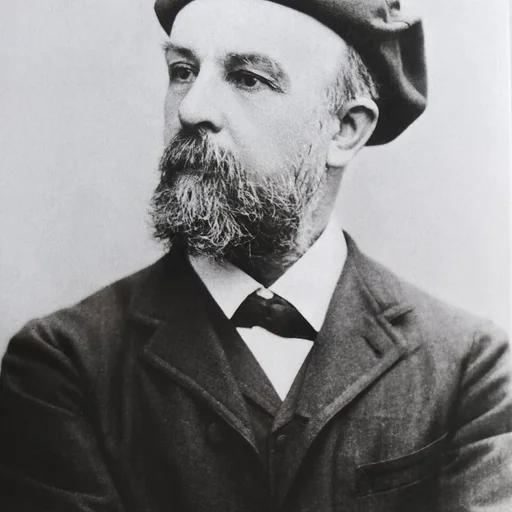
Artist
Born Bertrand-Jean Redon on 20 April 1840 in Bordeaux, the artist adopted the name Odilon from his mother, Marie-Odile.

 The Wing
 Untitled
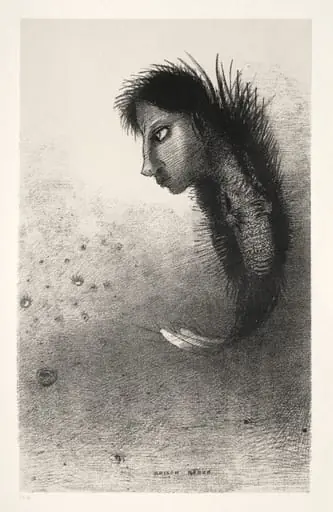 Then There Appears a Singular Being, Having the Head of a Man on the Body of a Fish
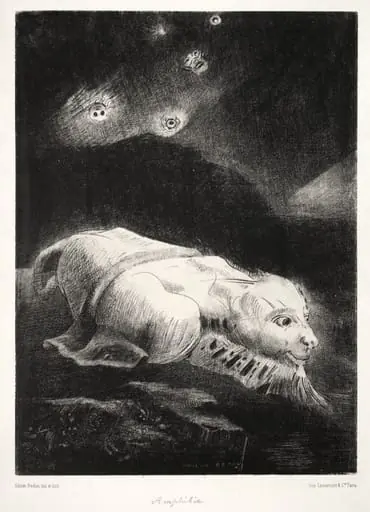 When Life Was Awakening in the Depths of Obscure Matter
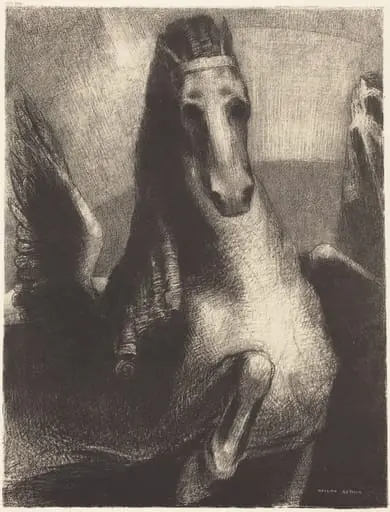 L'Aile (The Wing)
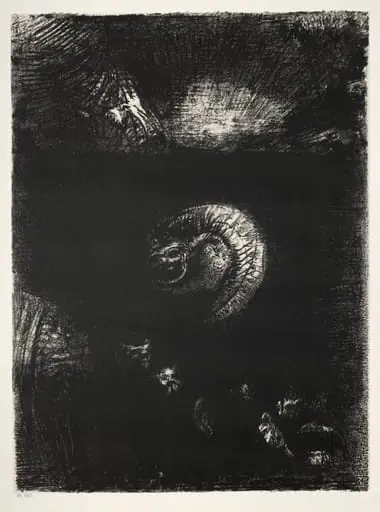 And All Manner of Frightful Creatures Arise
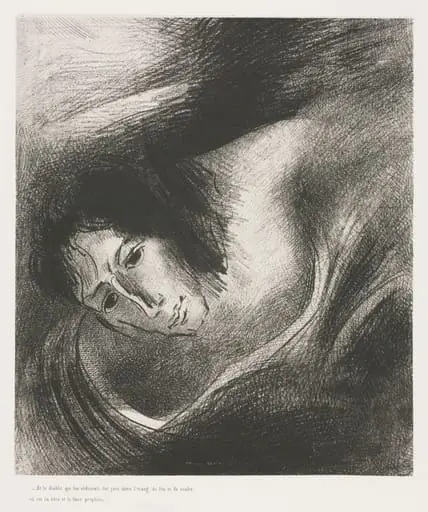 And the Devil That Deceived Them was Cast into the Lake of Fire and Brimstone, Where the Beast and the False Prophet Are
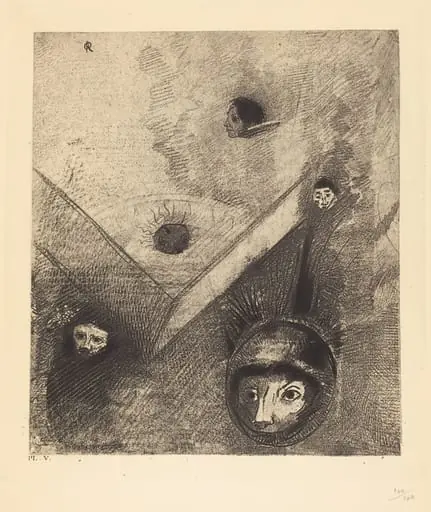 Sur le fond de nos nuits dieu de son doigt savant dessine un cauchemar multiforme et sans treve (On backdrop of our nights God with His knowing finger traces a multiform implacable nightmare)
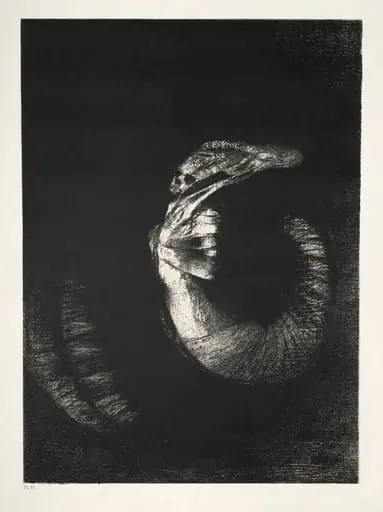 It Is a Skull Wreathed with Roses. It Dominates a Woman's Torso of Pearly Whiteness
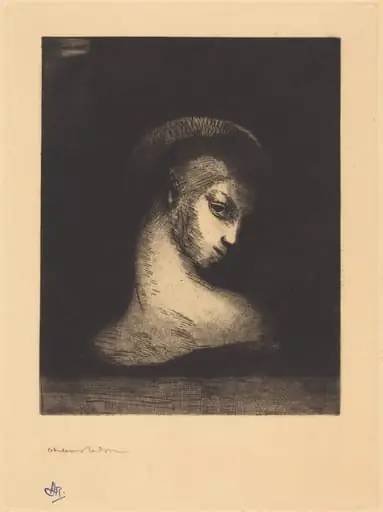 Perversité
 The Vintages!: Seven Owls and a Serpent
 Untitled