Artwork
Illustration for "Peronnik the Fool": Peronnik and Sir Gilles
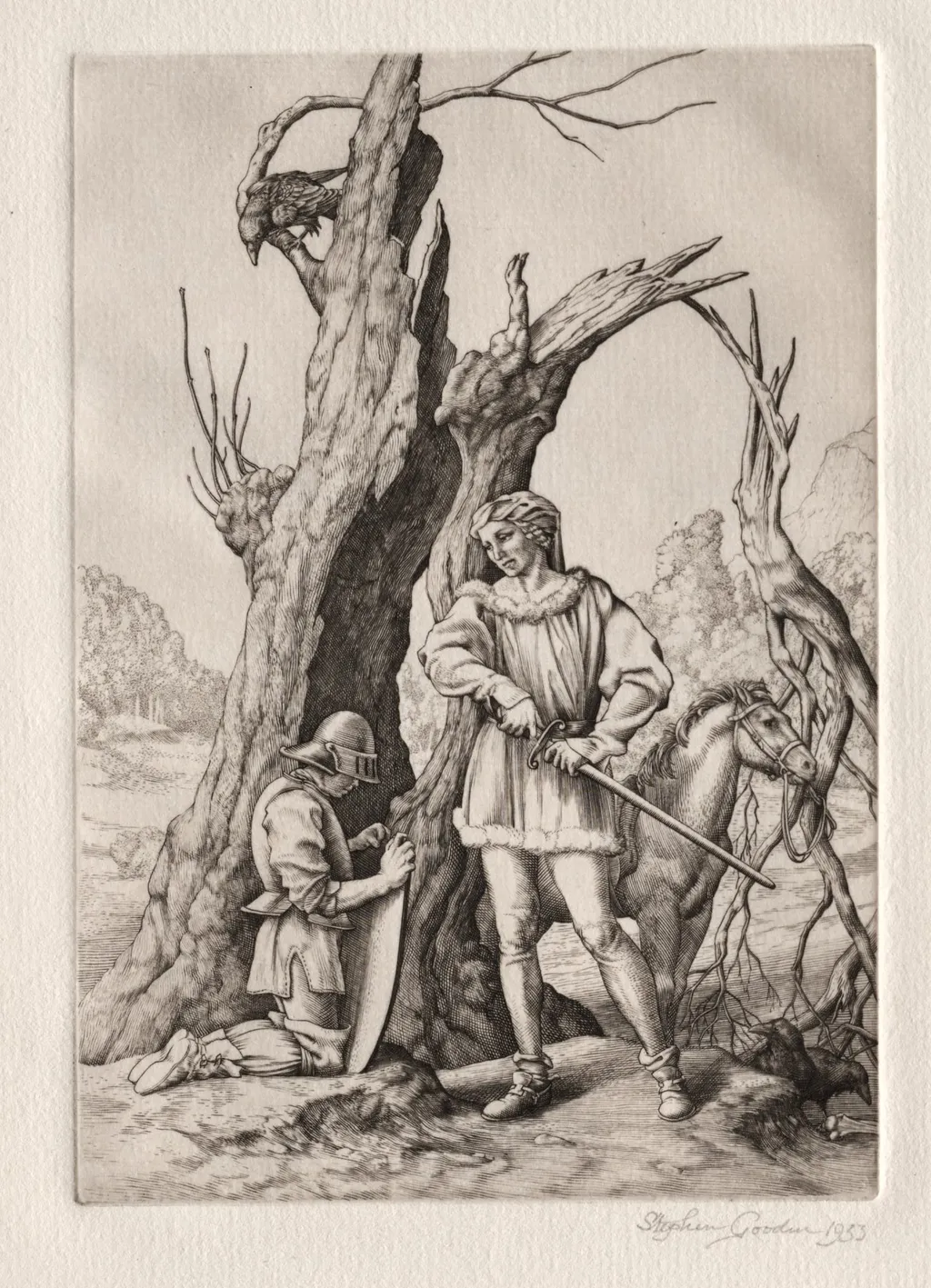
Illustration for "Peronnik the Fool": Peronnik and Sir Gilles is a print by Stephen Gooden. It dates from 1933 and is held in the collection of the Cleveland Museum of Art.
About this work
Overview
Created in 1933 by Stephen Gooden, this black-and-white print illustrates a scene from the tale of Peronnik the Fool.
Created in 1933 by Stephen Gooden, this black-and-white print illustrates a scene from the tale of Peronnik the Fool. Executed as a line drawing, it captures a moment of quiet interaction between three figures in a barren woodland. The work is part of a series of illustrations for a literary text and is held in the collection of The Cleveland Museum of Art, where it reflects Gooden’s interest in narrative illustration and early 20th-century book arts.
Subject & Meaning
The scene depicts Peronnik, the foolish yet perceptive protagonist, kneeling before Sir Gilles, a noble figure in a fur-lined cloak. A third person holds the reins of a stationary horse, suggesting a pause in travel. Peronnik appears to present something to the elder man, possibly an object of symbolic or narrative significance. The composition conveys a moment of tension and quiet revelation, characteristic of folkloric encounters where wisdom emerges from the unexpected.
Technique & Style
Gooden employed fine, expressive linework to render the figures and environment with minimal tonal variation. The trees are rendered with jagged, twisted contours, emphasizing a sense of ancient, untamed nature. The figures are defined by clear outlines and subtle shading, avoiding heavy ink washes. The restrained palette and deliberate draftsmanship reflect a revivalist approach to book illustration, prioritizing clarity and emotional nuance over decorative flourish.
History & Provenance
The print was produced as part of a 1933 illustrated edition of a folk tale featuring Peronnik the Fool. Gooden, known for his work in book illustration and printmaking, created this piece during a period of renewed interest in literary graphics. It entered The Cleveland Museum of Art’s collection through acquisition, likely as part of a broader effort to document modern illustration as a legitimate art form in the interwar years.
Context
In the early 1930s, illustrated books were still valued as cultural artifacts, even as photography and mass printing began to reshape publishing. Gooden’s work aligns with a British tradition of narrative illustration that drew from medieval and folk sources. His choice of a Celtic-inspired tale reflects a wider fascination with mythic storytelling, positioning the print within a movement that sought to preserve literary heritage through visual art.
Legacy
Though not widely reproduced beyond its original publication, the illustration remains a representative example of Gooden’s contribution to 20th-century book arts. It is studied for its precise draftsmanship and its ability to convey narrative depth through minimal means. The work continues to be referenced in discussions of illustrated literature and the role of printmaking in sustaining folk narratives during a period of rapid cultural change.
Artist & collection

Artist
Stephen Frederick Gooden CBE, RA, RE was an English artist, engraver, illustrator and designer of banknotes.

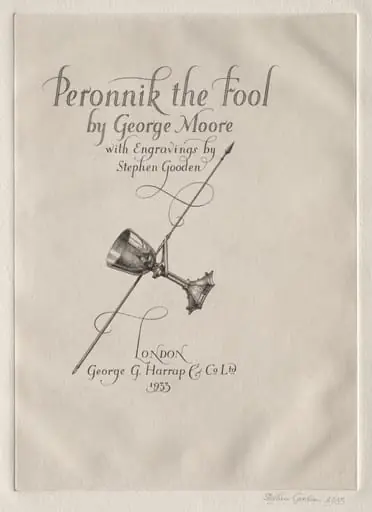 Illustrations for "Peronnik the Fool"
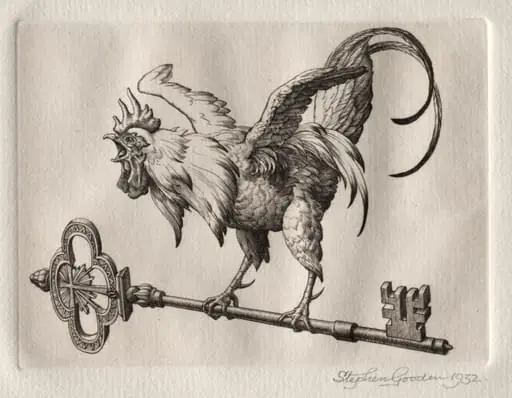 Illustration for "Peronnik the Fool": Cock Key
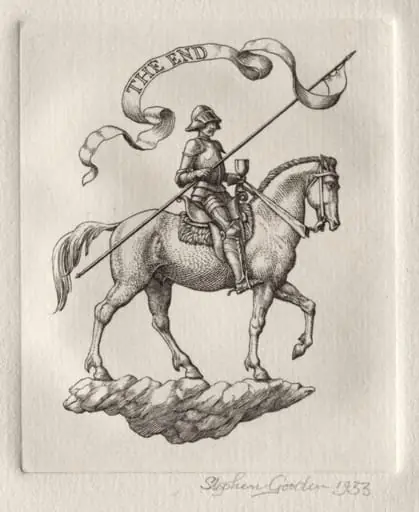 Illustration for "Peronnik the Fool": Tailpiece
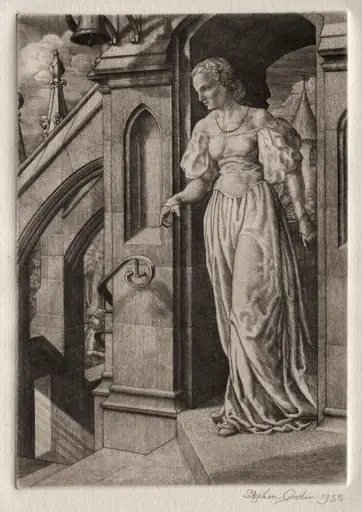 Illustration for "Peronnik the Fool": Redemonde on the Staircase
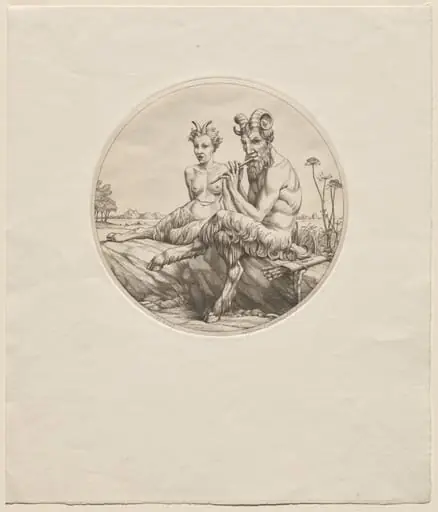 Two Satyrs
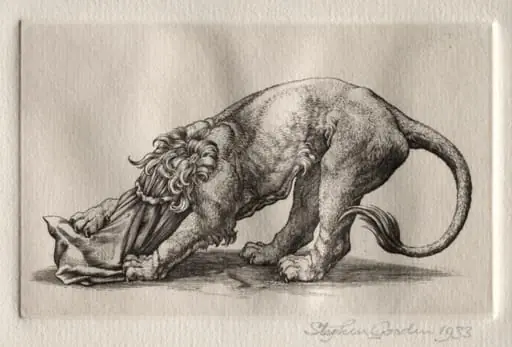 Illustration for "Peronnik the Fool": A Lion Tearing at a Sack
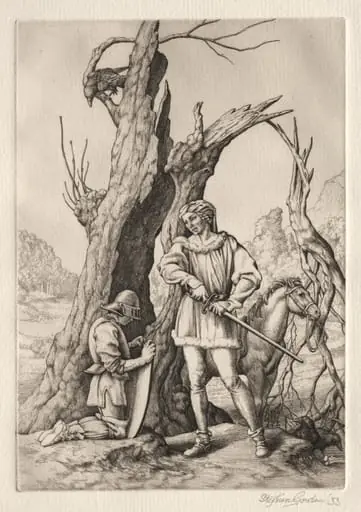 Peronnik the Fool: Peronnik and Sir Gilles
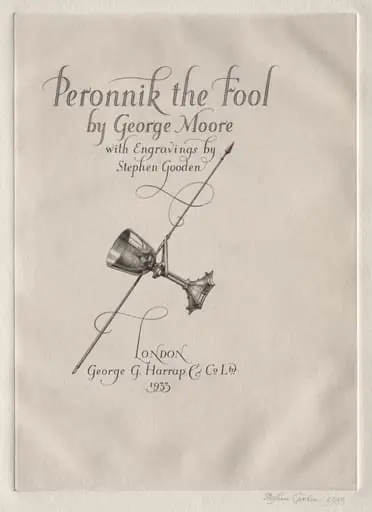 Illustration for "Peronnik the Fool": Peronnik the Fool